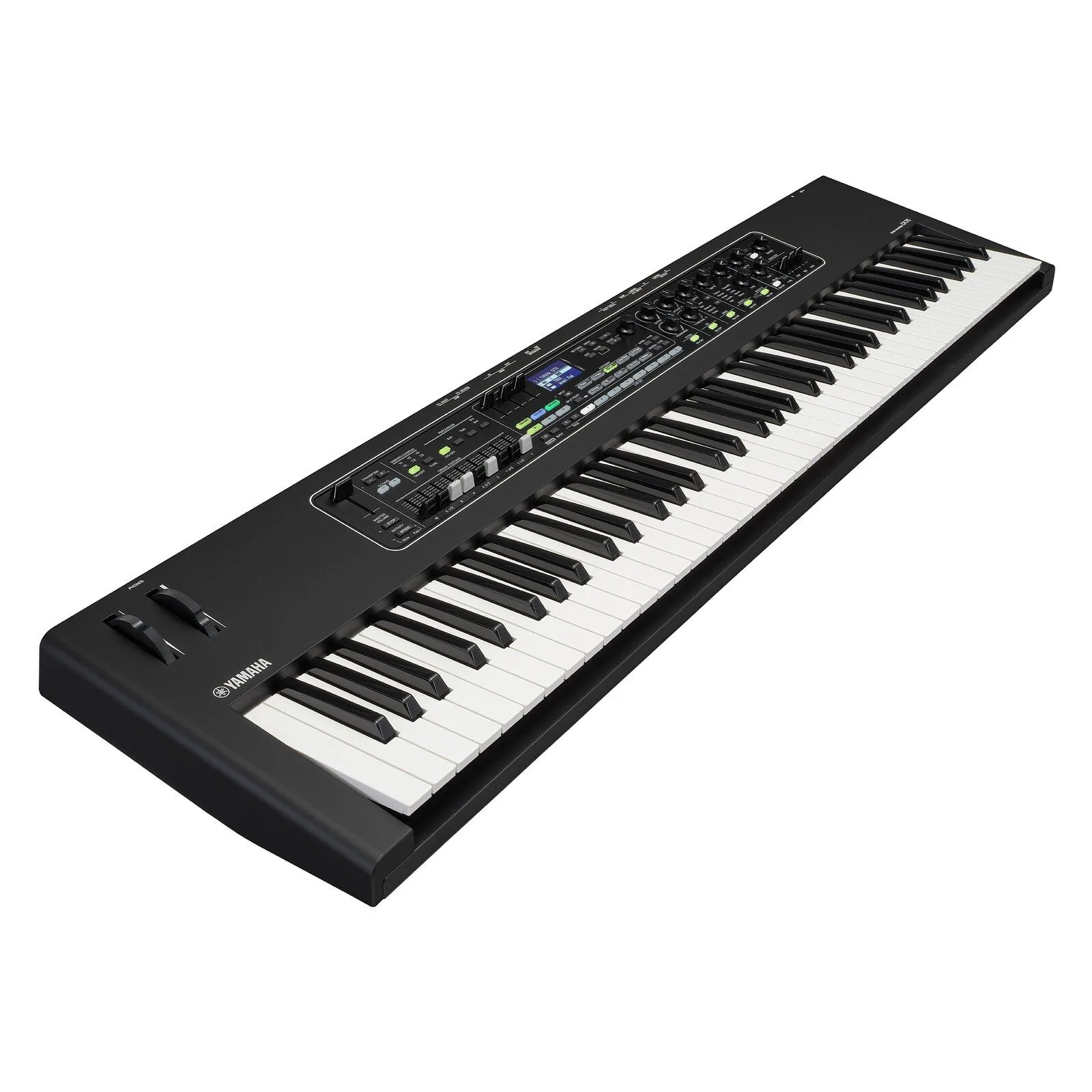
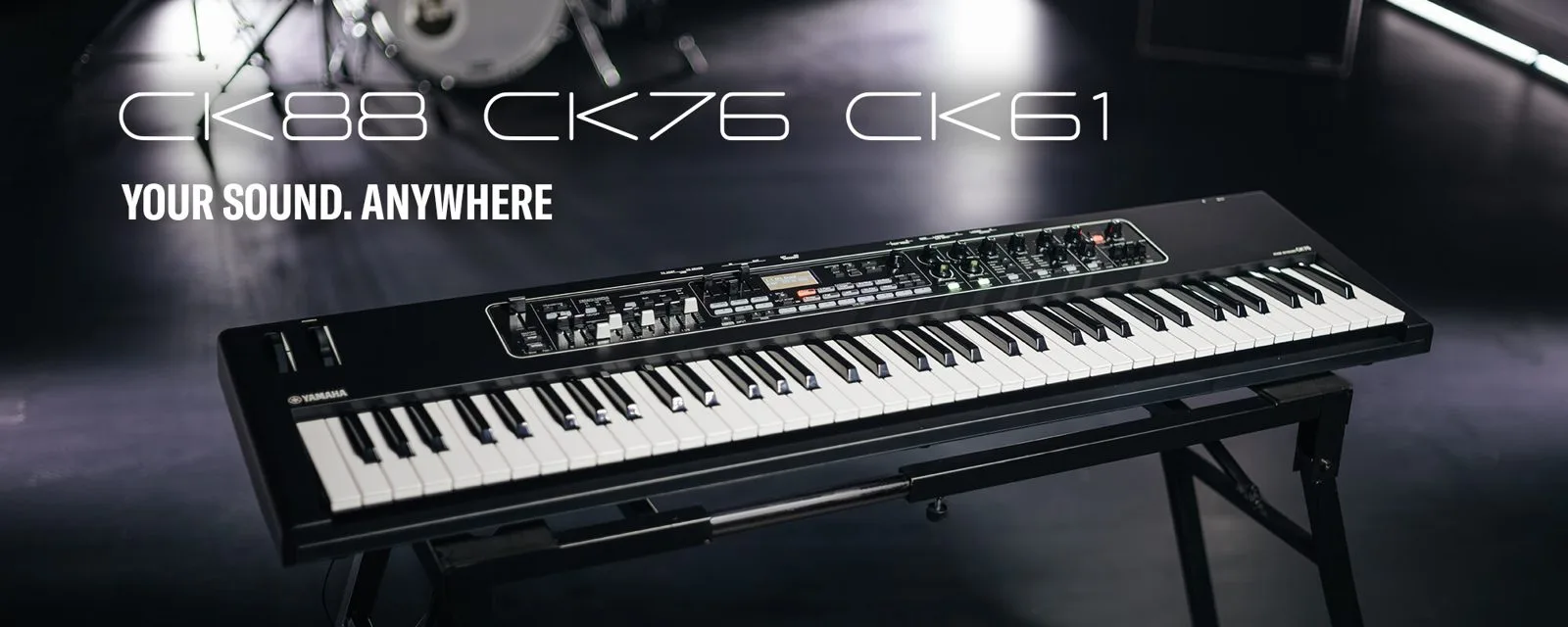
Ever since the CK61 and CK88 arrived in 2023, stage players had been asking for the model in between. Yamaha has finally delivered it: announced on 21 October 2026, the CK76 drops a 76-key board between the compact CK61 and the heavier CK88, keeping the same pitch—a complete, light, self-contained instrument built to gig without a crew.
The 76-key format players kept asking for
Seventy-six keys is the sweet spot for a lot of pop, gospel and function players: enough range for a left-hand bass part or an organ-over-piano split, without the bulk of an 88. By launching only the 61 and the 88, Yamaha left a hole in the middle of the CK line. The CK76 fills it without reinventing anything: it reuses the series’ proven architecture and simply tweaks the keybed and a few software settings.
The FSB keybed, with a reworked throw
The CK76 keeps the CK61’s semi-weighted FSB (Future System Basic) action, but Yamaha says it adds firmer initial resistance and a longer key travel. The aim is a clearer break point for acoustic piano and organ sounds while preserving the snap that suits synths and electric pianos. The CK88 remains the only model in the range with a fully weighted keybed. At 6.7 kg without batteries, the CK76 weighs far less than any comparable-length YC or CP.
363 sounds drawn from the CP and YC
The engine carries 363 voices and 128-note polyphony. The acoustic pianos come straight from Yamaha’s CP stage pianos—CFX, S700, CF3—and the organs inherit the YC modelling. On top of that sit a deep bench of electric pianos, synths, strings and brass, arranged in three sound sections you drive live. That is the whole point of the series: dedicated sliders and selectors per section, so you shape a stage sound by hand rather than diving into menus between songs. Players chasing analogue synth tones will look elsewhere, for instance to the software GForce Oberheim Matrix-12.
CK OS V2.0: three-zone splits for the whole range
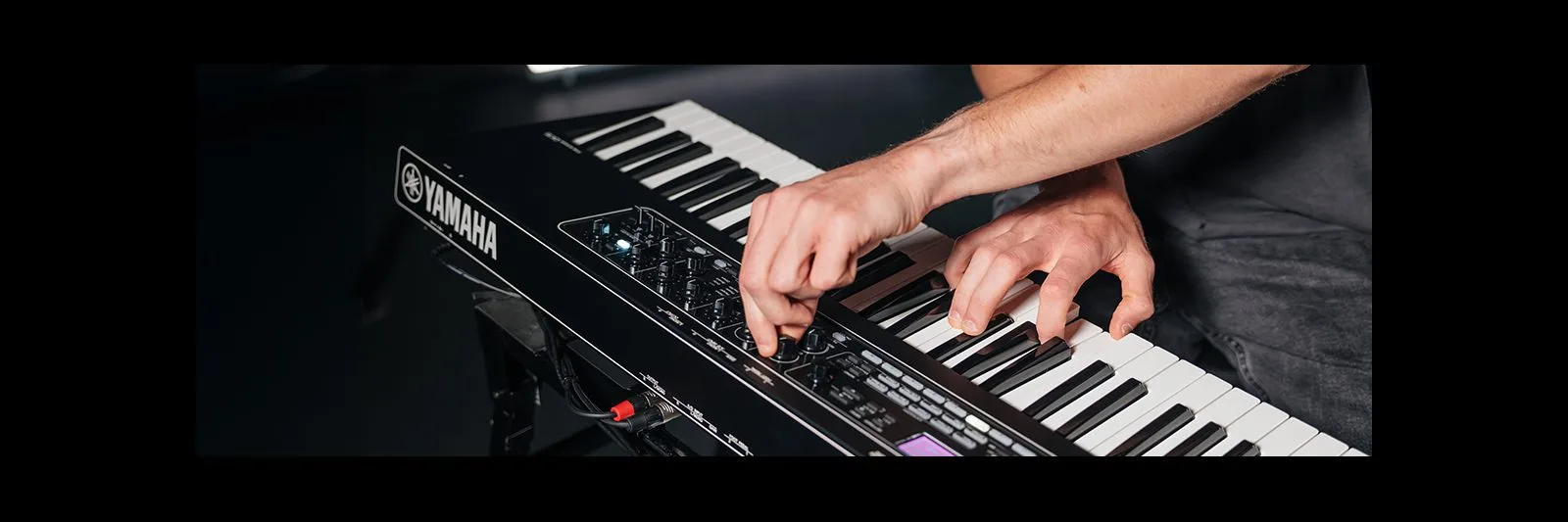
The CK76 ships with the CK OS V2.0 firmware, offered free to every owner in the series. The most useful addition is Advanced Split mode, which carves the keyboard into three zones instead of two: stack bass on the left, pad in the middle and lead on the right without reaching for a second instrument. The update also adds three new electric pianos and sixteen extra Live Sets. CK61 and CK88 units already in the field get exactly the same improvements: Yamaha moves the whole range forward at once.
Properly portable
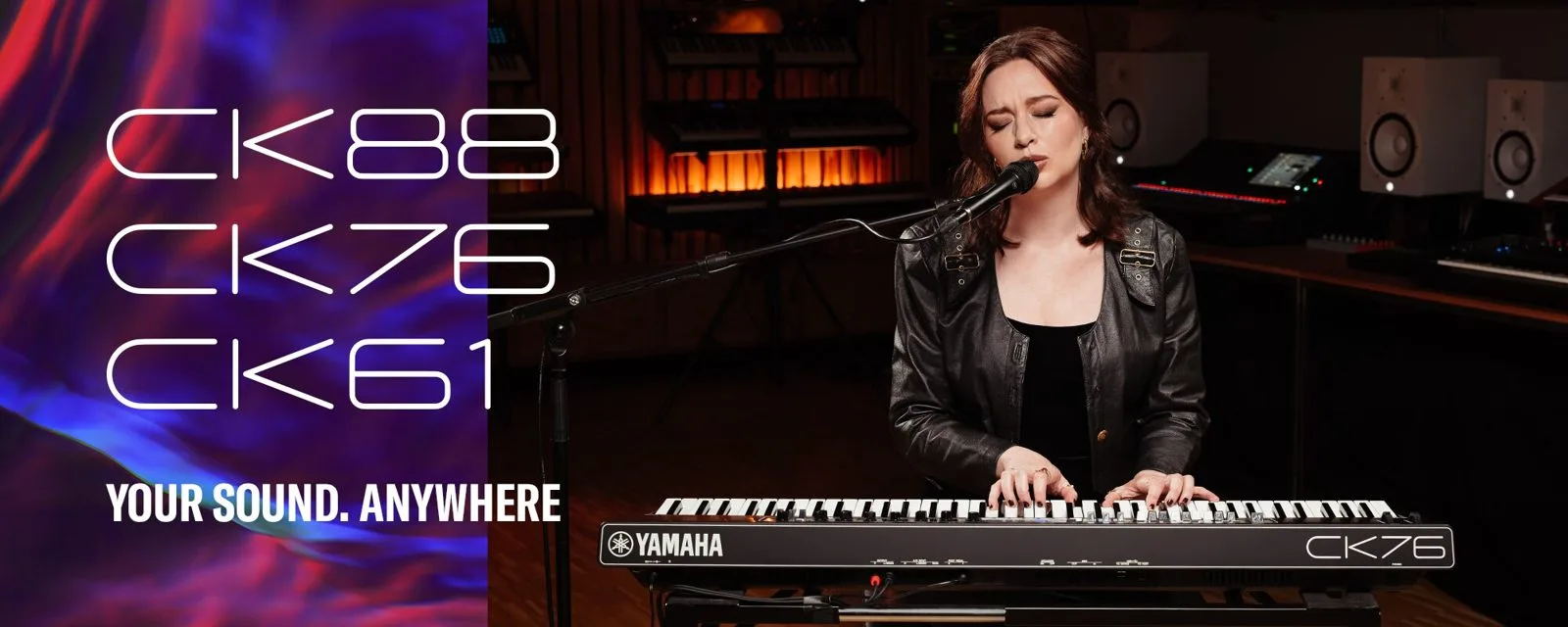
Like its siblings, the CK76 runs on eight AA batteries (up to about four and a half hours) and carries stereo speakers: you can rehearse, write or play a session with no power and no PA. The built-in stereo USB audio interface records the keyboard straight into a DAW, while the analogue input and Bluetooth audio let you play over a backing track or click. That is the core CK argument: a stage keyboard you carry on your shoulder and plug in anywhere.
Where it sits in the CK range
| Model | Keys | Keybed | Indicative price |
|---|---|---|---|
| CK61 | 61 | Semi-weighted FSB | ~$1,000 |
| CK76 | 76 | Semi-weighted FSB (reworked throw) | ~$1,250 |
| CK88 | 88 | Weighted | ~$1,500 |
Price and availability
The CK76 opened preorders on 26 October for a 30 October 2026 release. Yamaha lists it in the US at $1,249 as a launch price ($1,599 regular), and it sits in Europe at around €1,200—exactly between the CK61 and the CK88. A logical move that turns a binary choice into a genuine three-step range.
My take
The 76-key model was missing, now it is here, and that is all it needed to be. Yamaha didn’t try to reinvent the series: same engine, same hands-on controls, just the format most stage players actually want and a keybed throw better judged for piano. The smart part is shipping CK OS V2.0 to the whole range at once: three-zone splits genuinely change how you build a set, and CK61 and CK88 owners aren’t left behind. The open question is feel—semi-weighted across 76 notes is a deliberate choice that will delight organists and leave pianists weighing up the CK88. Worth trying in a shop, hands on the keys, before you decide.
Frequently asked questions
Does the CK76 have the same keybed as the CK61?
It reuses the CK61’s semi-weighted FSB action, but Yamaha says it has firmer initial resistance and a longer key travel. It is not a fully weighted keybed like the CK88’s: the CK76 aims for a middle ground between synth comfort and piano playing.
Do I need to buy the CK76 to get CK OS V2.0?
No. The V2.0 update, with its three-zone Advanced Split mode, three electric pianos and sixteen Live Sets, is free for every CK, including CK61 and CK88 units already in use. The CK76 simply arrives with that version preinstalled.
Can it run without mains power?
Yes. The CK76 takes eight AA batteries for about four and a half hours and has built-in stereo speakers, so you can play or rehearse with no mains and no PA—still one of the series’ biggest selling points.
How do I record the CK76 into a computer?
The keyboard has a built-in stereo USB audio interface: a single cable captures its output into a DAW. The analogue input and Bluetooth audio also let you play over a backing track or metronome.