DiGiCo keeps expanding its Quantum range with a new arrival codenamed "Tarpon": the Quantum638. The British manufacturer frames it as a distillation of what made its flagship desks work, the SD7 and SD5, brought together under the most recent Quantum architecture. This isn’t yet another model for its own sake : it’s a dense, fast surface in a manageable footprint that keeps the processing muscle intact.
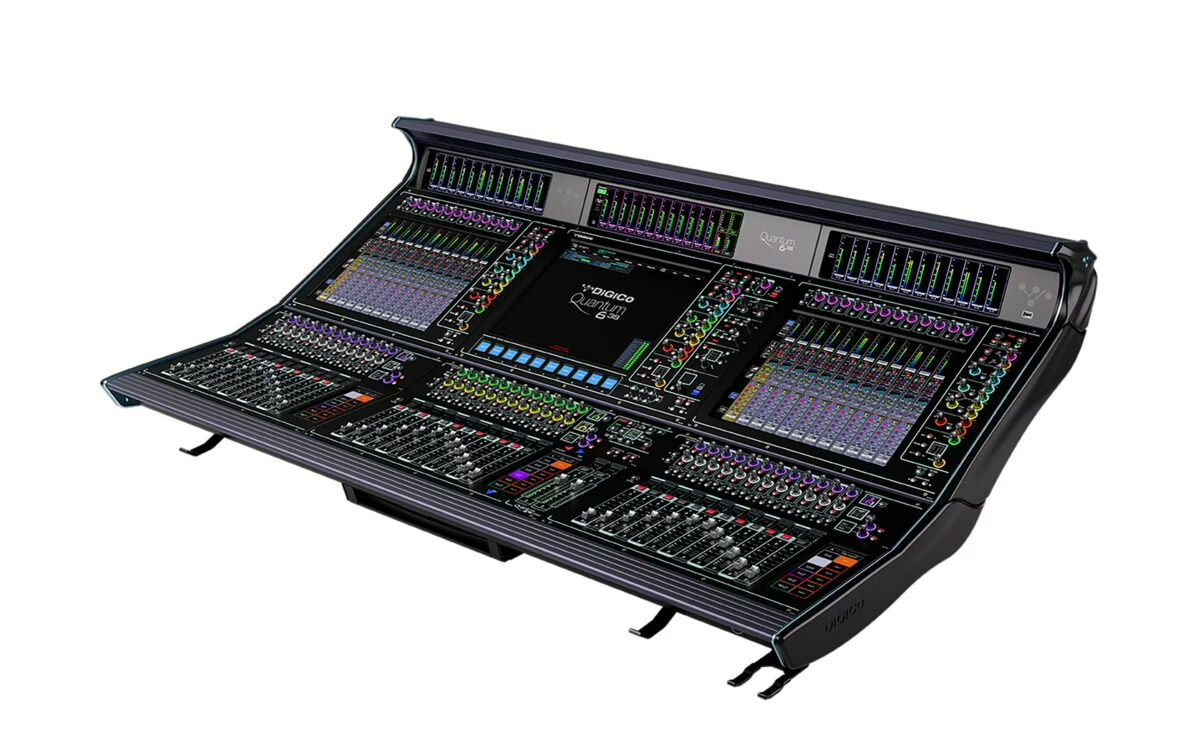
A surface built for speed
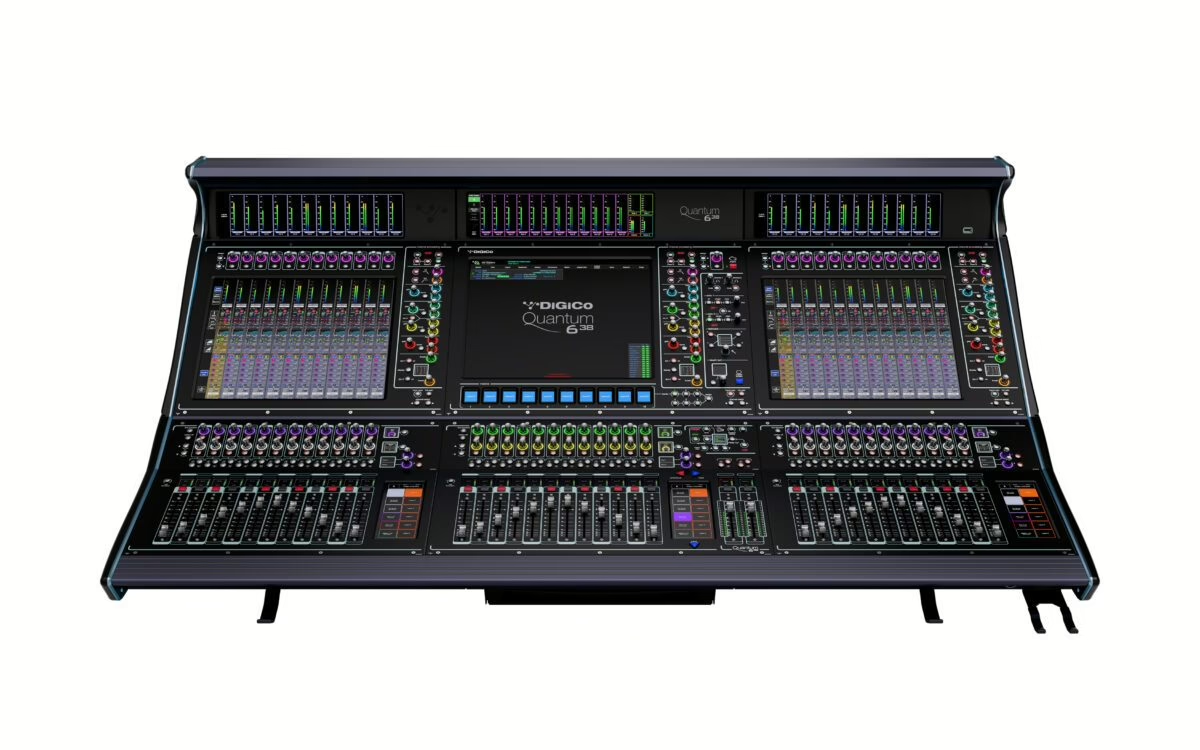
The worksurface is arranged around three 17-inch touchscreens and 38 motorised faders across three sections, plus two dedicated master faders. DiGiCo adds three 6.8-inch TFT displays and assignable rotary encoders, the house logic that keeps the essentials under your fingers without diving into menus. For anyone coming from an SD, the muscle memory carries straight over : same working vocabulary, same way of moving between banks.
Under the hood, the Quantum638 posts flagship numbers : 256 input channels, 128 aux and sub-group buses, a 48×48 processed matrix and master buses up to 5.1. Processing leans on the familiar Quantum building blocks : Nodal Processing, insertable Mustard strips and Spice Rack slots, with up to 48 stereo effects and a bank of 32-band graphic EQs on top.
The numbers that matter
| Spec | Quantum638 |
|---|---|
| Input channels | 256 |
| Aux / sub-group buses | 128 |
| Processed matrix | 48 × 48 |
| Touchscreens | 3 × 17-inch |
| Motorised faders | 38 (+ 2 master) |
| Control groups (VCA / mute) | 36 |
| Sample rate | 48 / 96 kHz |
Connectivity: the network at the centre
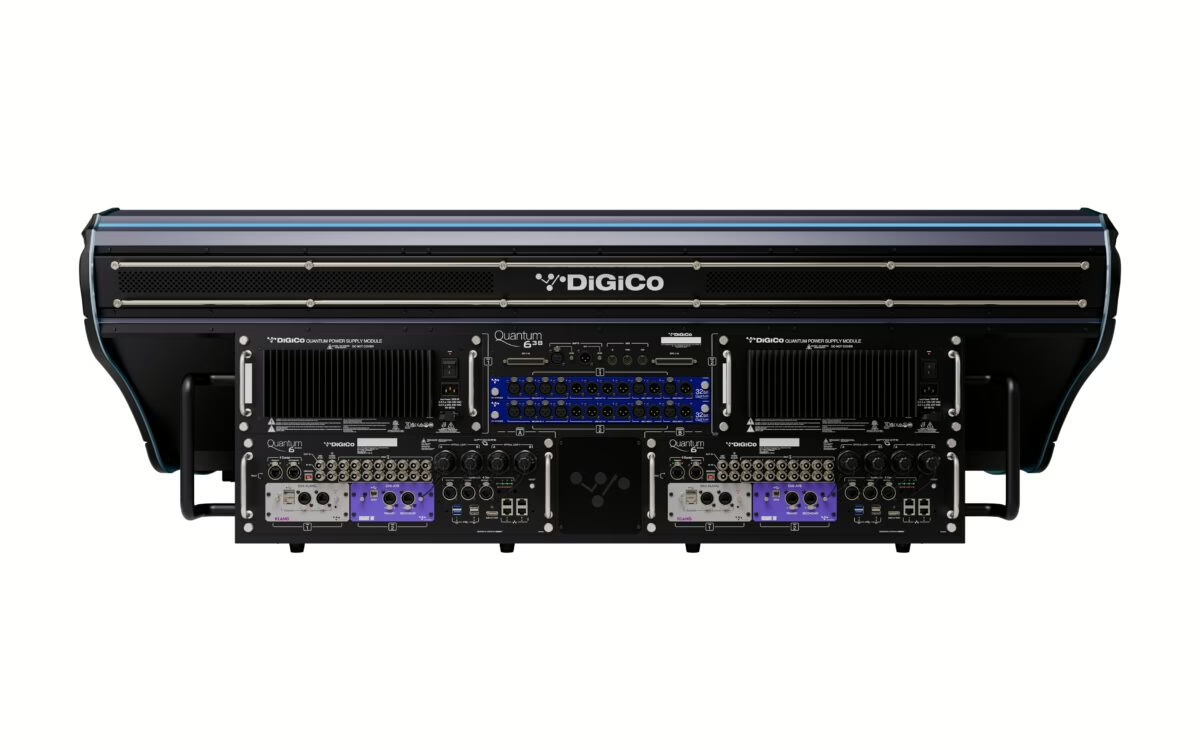
On the transport side, the console ticks every box a modern control room expects. There’s Dante, Optocore (up to 504 additional audio paths at 48/96 kHz), MADI, AES/EBU, MIDI and GPI/GPO. Each engine carries a MultiMode Optocore interface with optional expansion, enough to build redundant topologies on the big productions where a single dropout is unforgivable. That’s the crux of it : on tour, a console is only as good as the resilience and flexibility of its I/O network.
Physically the surface measures 1,555 × 957 × 535 mm and weighs 93 kg. It’s no compact sidecar, but it travels where an SD7 imposes more constraints. That’s exactly the target : flagship power in a frame that loads more easily into a truck and onto a busy stage.
A Quantum638T for the pit
DiGiCo offers a Quantum638T variant aimed at theatre and musicals. It adds the tools show operators ask for : Auto Update, Aliases, Players, advanced cue-list (CG) programming and Matrix Nodal Delays. These are the safeguards and automations that save real time when a score runs to hundreds of cues and every recall has to land perfectly. DiGiCo explicitly names Broadway, the West End, touring and large installs as the playing field.
That leaves the two usual unknowns at this stage of an announcement : DiGiCo has confirmed neither a price nor a firm availability date. To place the Quantum638 in the range, it sits between compact surfaces like the Quantum326 and the flagships descended from the SD7 and SD5.
If you rig stages, this launch lands in a busy autumn for live desks : think of the PreSonus StudioLive Series III SE moving to 32-bit float, at a completely different price point. And to get the most out of a surface like this, mastering your PA system is still half the job.
My take
The Quantum638 reinvents nothing, and that’s to its credit. DiGiCo takes what works on its flagships and condenses it into a friendlier frame : 256 inputs and a 48×48 matrix in a 93 kg surface is the kind of equation that speaks to a rental house juggling several productions a week. The theatre variant is the genuinely smart move : Players, Aliases and Nodal Delays are exactly what makes the difference in a pit. The missing price keeps one question open, as ever with DiGiCo, but the positioning is crystal clear : SD7 power for anyone without the room or the budget for an SD7.