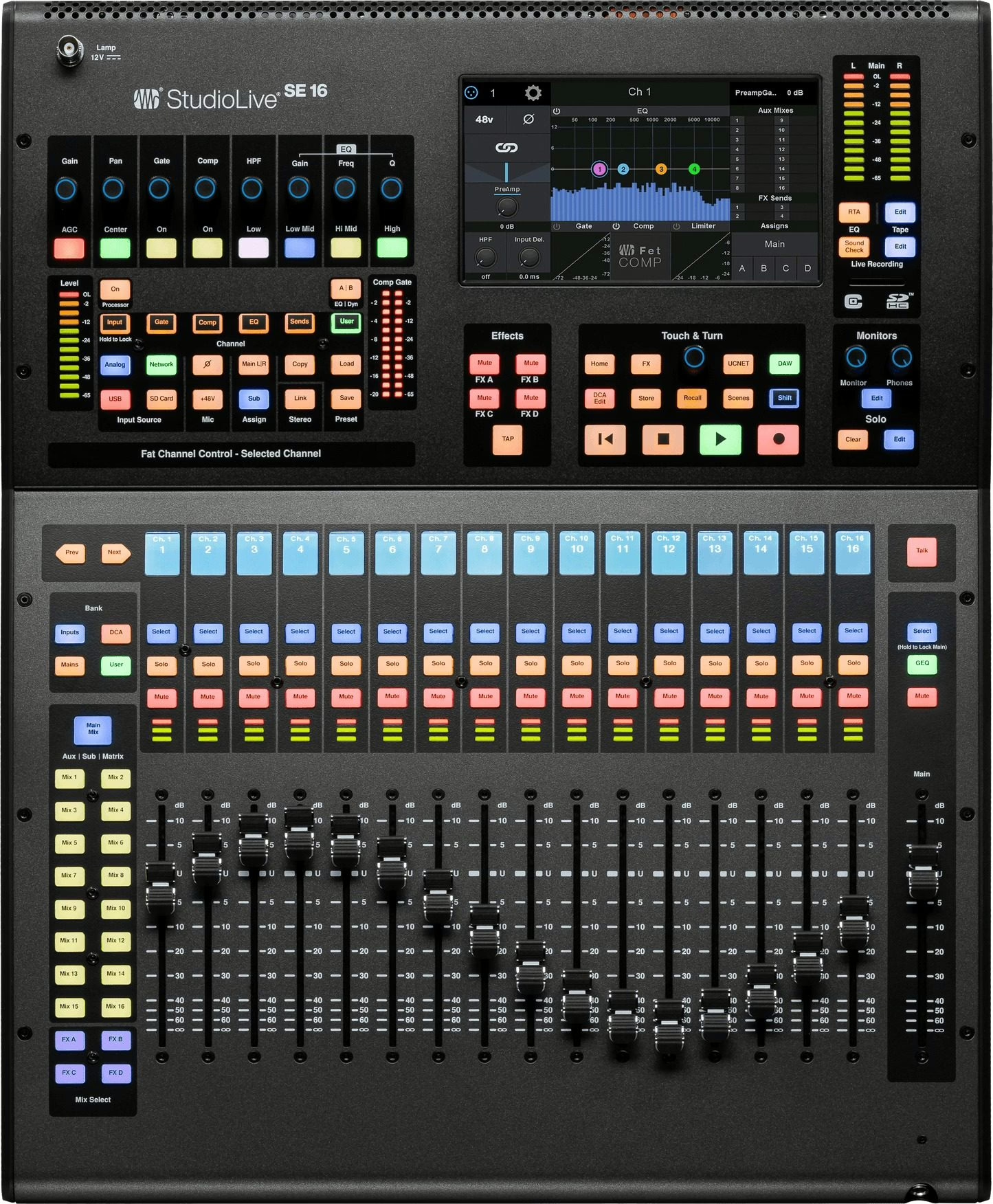
StudioLive built its name on one idea: a single surface to mix front of house, track multitrack and run monitors, with no computer required. The new Series III SE keeps that brief and pushes it a step further, with revamped electronics and, at last, Milan-certified audio networking. Three sizes cover the range: SE 16, SE 24 and SE 32.
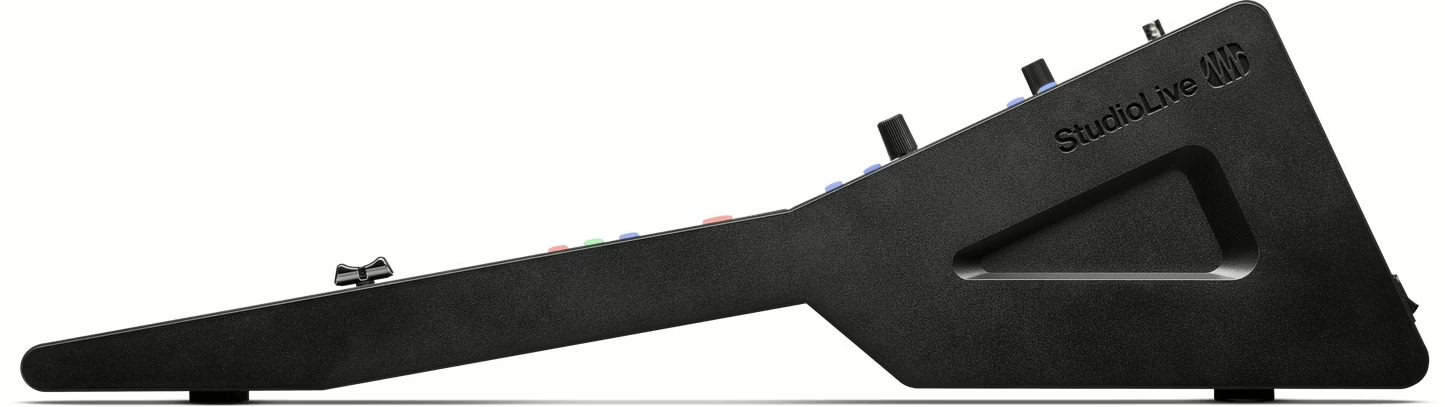
A surface built for the full production
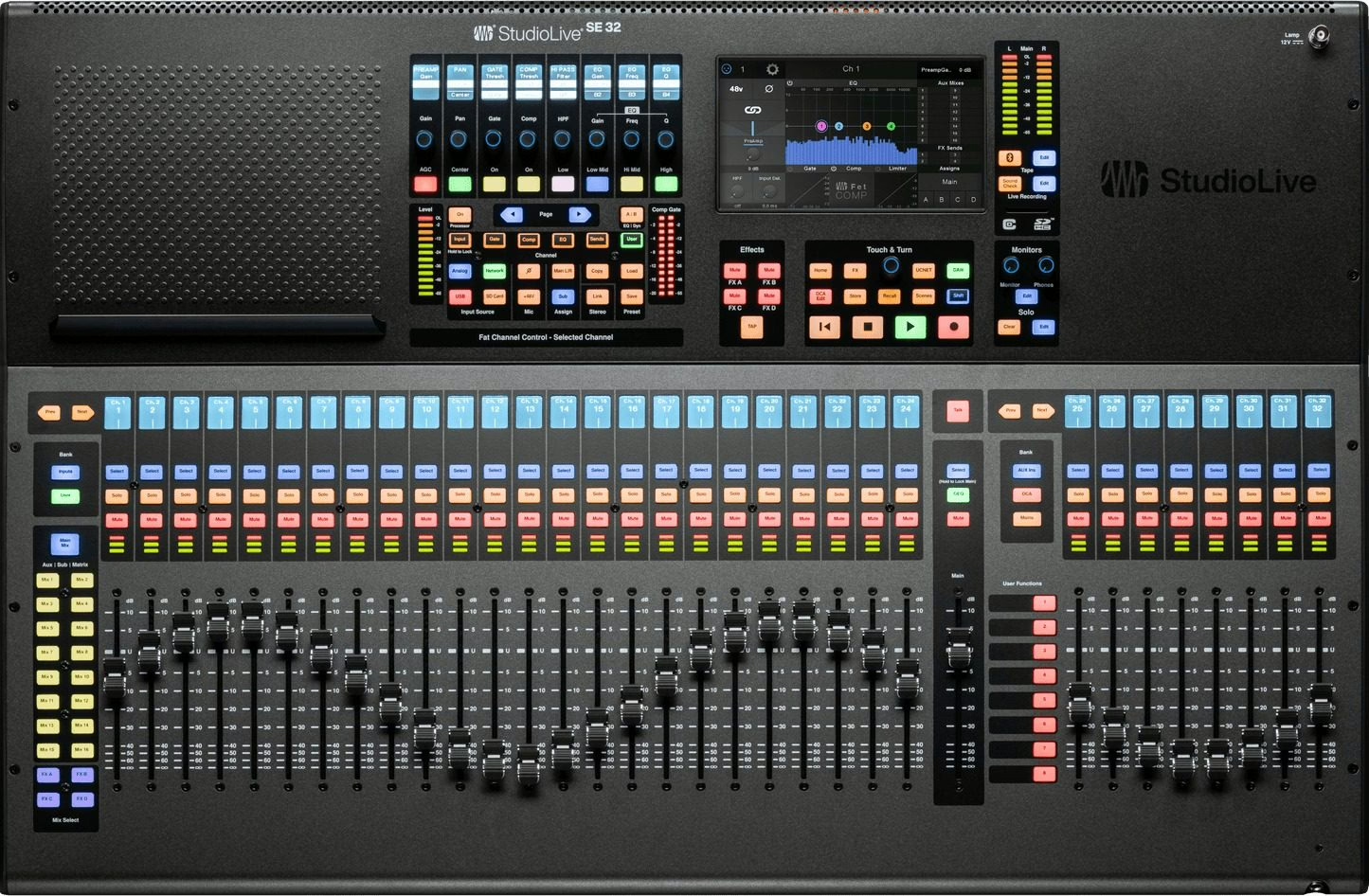
The core is still a 40-channel, 26-bus console. The SE 16 has 17 motorized touch-sensitive faders (16 channels plus main), the SE 24 has 25 and the SE 32 has 33. Every strip gets a remote-controllable XMAX-Remote preamp, which matters the moment you push the stage out to a stagebox. The touchscreen and assignable encoders handle EQ, dynamics and routing without deep menu diving.
The mix architecture offers 16 FlexMixes you can set as auxes, subgroups or matrices, four effects buses, four subgroups and 24 DCAs. That is enough to build a serious monitor plan or a multi-zone feed without feeling cramped on the compact formats.
What the SE really changes
The headline change is internal. PreSonus quotes a dual-core, 32-bit floating-point FLEX engine: in practice, digital clipping headroom stops being a worry and the processing gains margin. The Fat Channel bank carries all 8 compressor models and all 7 EQs from the Fat Channel Collection, right on every channel. It is the familiar house approach: a sound tuned to move fast on the job.
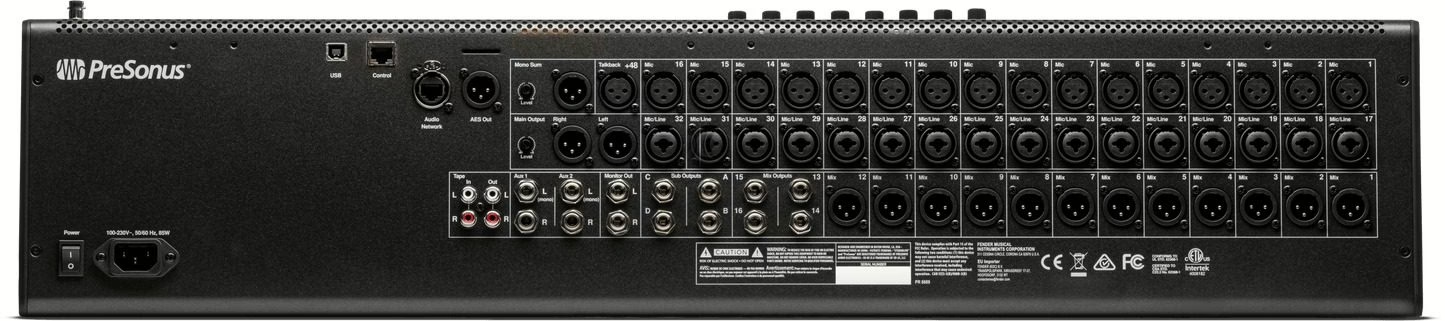
The other step forward is networking. The SE moves to Milan-certified AVB, a real interoperability guarantee for wiring stageboxes and third-party systems without surprises. The built-in interface stays generous with 64 in / 64 out over USB, ideal for full session recording or a virtual soundcheck. Onboard SD recording and remote control via the Metro software round out a package that targets the room, the studio and streaming alike.
Price, availability and positioning
PreSonus, now a Fender company, lists the SE 16 from $1,799.99 and the SE 32 at $2,999.99, with the SE 24 sitting between them. Each console ships with the in-house capture software and a production bundle, which helps you start with no extra budget. Against Allen & Heath SQ, Yamaha DM and other compact consoles, StudioLive keeps its historic pitch: a complete chain from mic to file, on a single surface.
| Model | Motorized faders | XMAX-Remote preamps | Indicative price |
|---|---|---|---|
| StudioLive Series III SE 16 | 17 | 16 | $1,799.99 |
| StudioLive Series III SE 24 | 25 | 24 | in between |
| StudioLive Series III SE 32 | 33 | 32 | $2,999.99 |
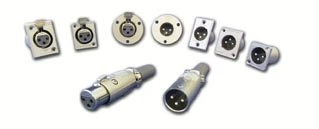
For more on stage workflows around a console like this, see our hands-on with Waves Tracks Live 2.0 for multitrack and virtual soundcheck, our guide to patch and stageboxes, from the analogue snake to audio-over-IP, and our field guide to cables and connectors for live sound.
My take
The 32-bit float engine and Milan certification are the two additions that matter: the first tames level management when things get loud and fast, the second secures the network side that was the weak spot of compact formats. StudioLive’s strength is still versatility — one surface that follows the project from soundcheck to a mixed live record. The real field question remains recall reliability and USB latency under a full session. If PreSonus holds that line, the SE is an easy call for small production companies and venues that record their own shows.