Behringer has made a habit of announcing clones, then letting them mature for years before release. The 1601 is the perfect example: shown as a prototype in late 2021, this replica of the ARP 1601 sequencer has just moved to “finished” status and now appears on the brand’s official website. Price and availability are still to be confirmed, but the product is real — and for 2600 owners, the wait may well have been worth it.
The ARP 2600’s historic companion
The 1976 ARP 1601 wasn’t just any sequencer: it was the designated partner of the legendary ARP 2600, built to drive it step by step. Behringer offers a Eurorack-format take on it, in the spirit of its B2600 already in the catalog. The idea is clear: rebuild the original synth-plus-sequencer duo at a fraction of a vintage unit’s price, while opening it up to the rest of a modern modular system.
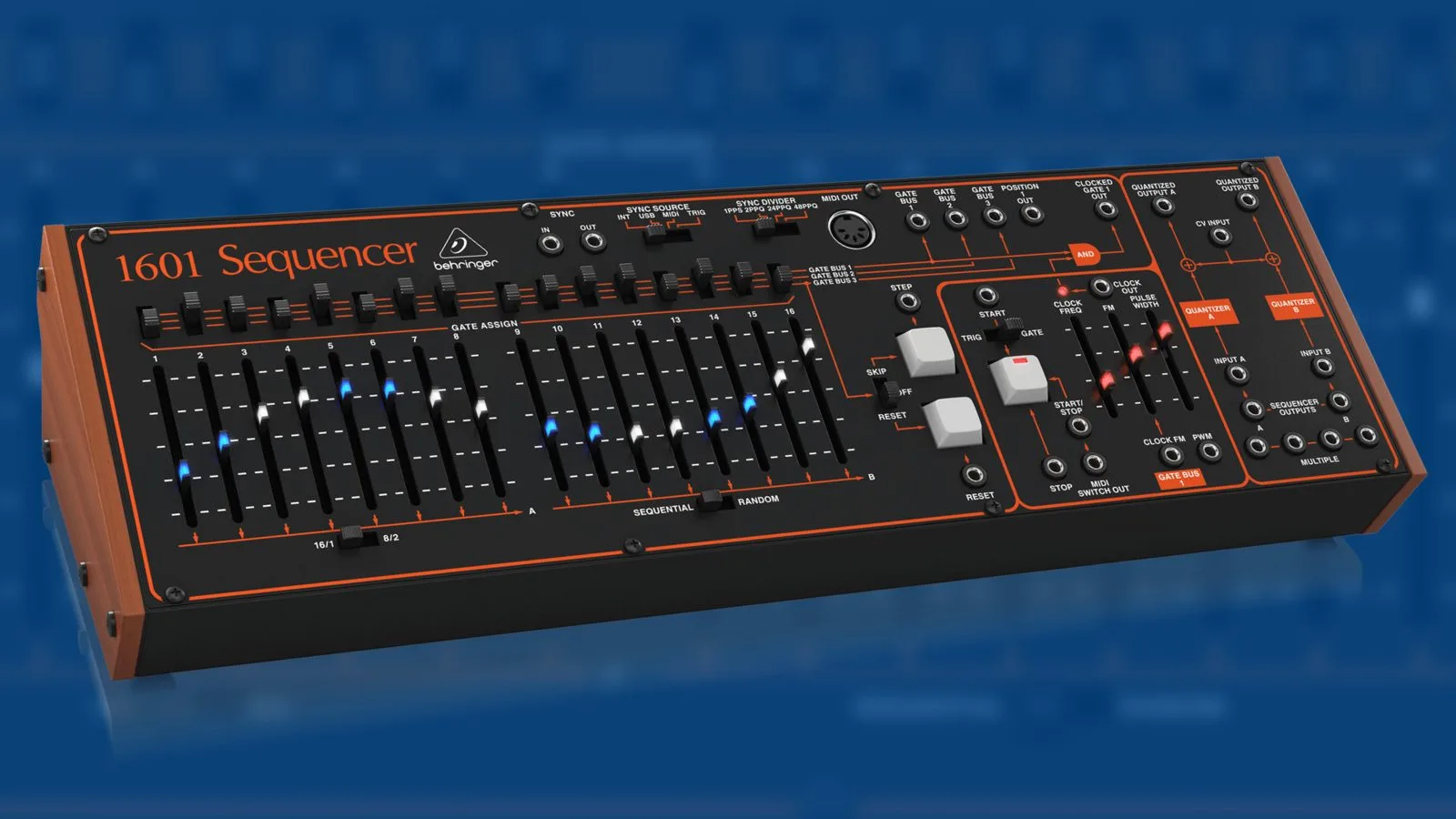
What the 1601 does
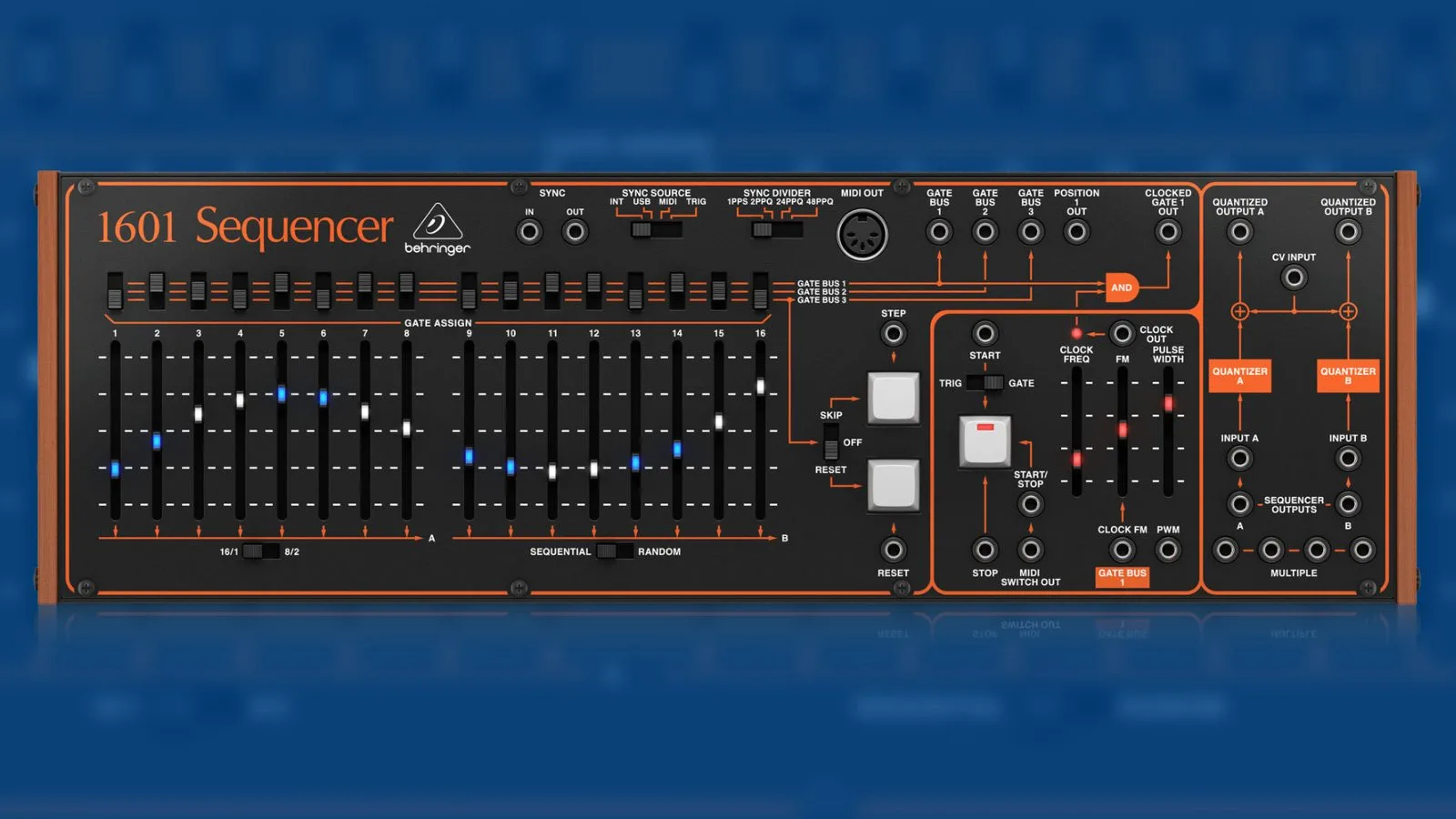
At its core is a row of sixteen steps, which can also split into two rows of eight. Pitch is set with backlit faders — the same illuminated ergonomics as the B2600 — in 1V/octave, over a CV range covering up to ten octaves. Playback runs sequentially or randomly, and the skip and reset buttons are CV-controllable, opening the door to shifting rhythmic structures.
Three gate buses (1-2-3) can act as a “smart” step-by-step envelope generator. A built-in dual quantizer, over two octaves, snaps pitches back into a scale — real comfort when you’re drawing a melody on the faders. The internal clock accepts a CV input for tempo, a pulse-width control and a CV input for gate length; a clocked gate 1 output provides accents.
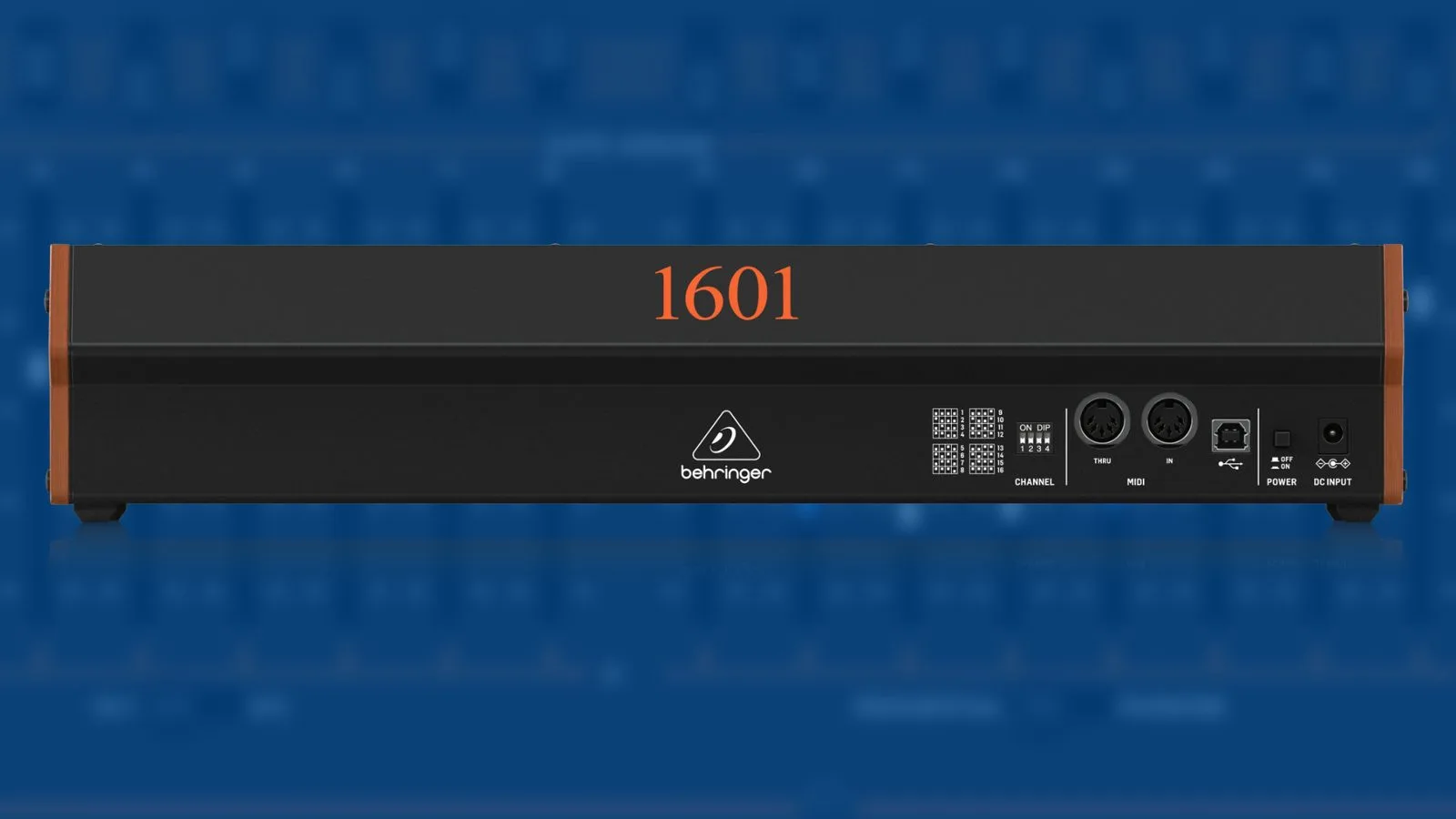
Connectivity and integration
On routing, the 1601 isn’t limited to its original synth. There’s a transpose CV input to drive the sequence from a keyboard, a position 1 CV output and four multiples to distribute signals around the patch. Above all, it talks to the outside world: USB-MIDI and 5-pin MIDI IN and THRU, with channel and transport control. Enough to lock the sequencer to a DAW or groovebox clock and slot it into a hybrid setup without hacks.
A classic Behringer bet
The positioning is plain: offer a cult but extremely rare fader-based analog sequencer at a democratizing price. Behringer keeps stacking up 1970s-inspired modular blocks, and the 1601 logically completes its B2600. The open question is price, which the brand hasn’t announced — that’s what will decide whether this 1601 becomes a reflex buy for modular users or a niche object for ARP nostalgics.
If step sequencing intrigues you, our explainer on how step sequencing works lays the groundwork, and our piece on MIDI and CV/Gate explains how this kind of machine talks to the rest. Behringer, for its part, keeps rolling out sequencers: see the Jam and Jam Play keyboards and the BCR32.
My take
The 1601 ticks a box few brands dare to fill: the tangible, fader-based analog sequencer, where you compose a melody by hand and watch it happen. The dual quantizer and CV control over skip and reset make it far more than a relic — it’s a genuine shifting-pattern machine for a current modular system. The only real suspense is price: at Behringer money, it could reignite the urge for a full 2600 duo for a lot of people. Whether the build quality follows the concept remains to be seen. On paper, at least, the 2600’s companion has found its sequencer again.