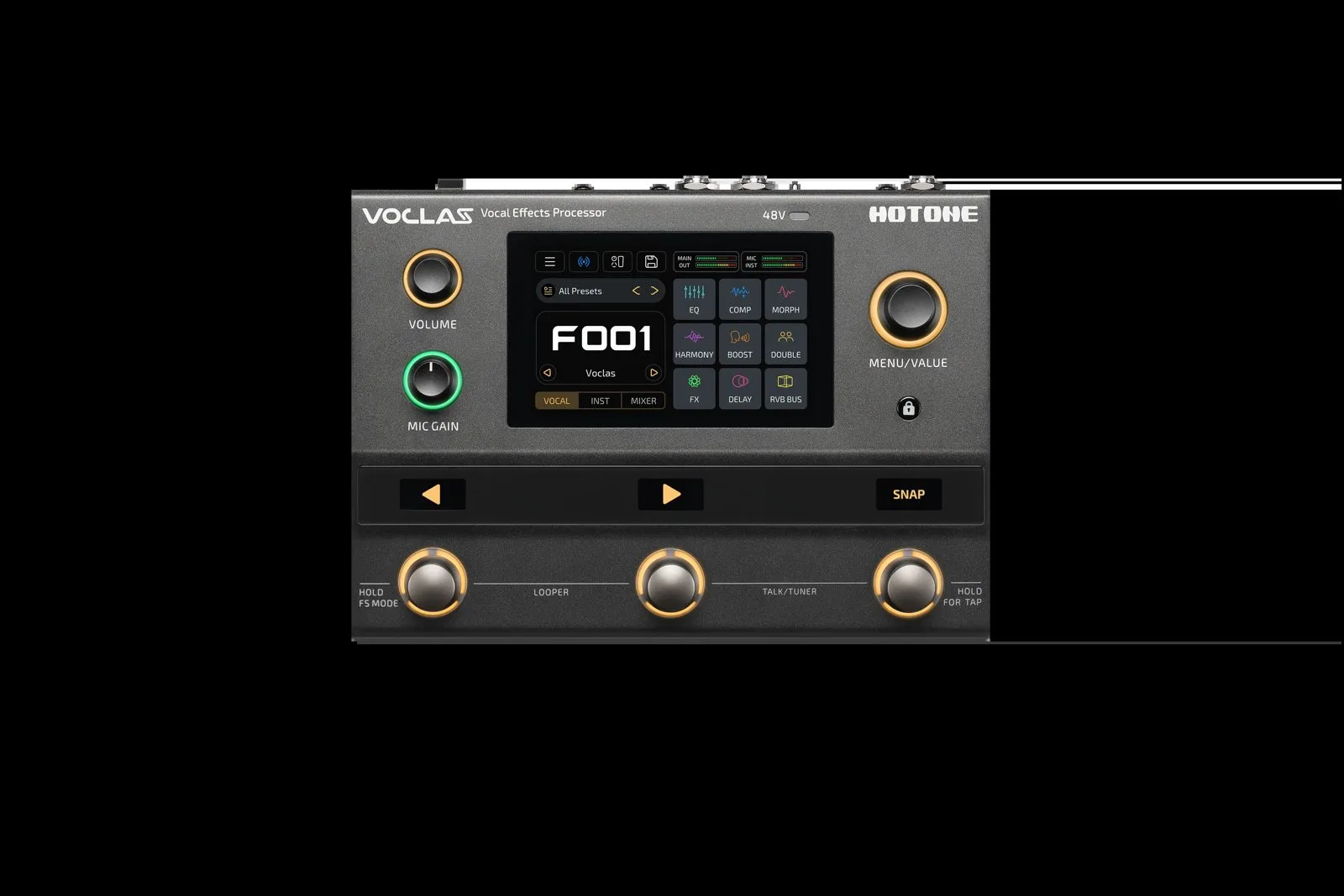
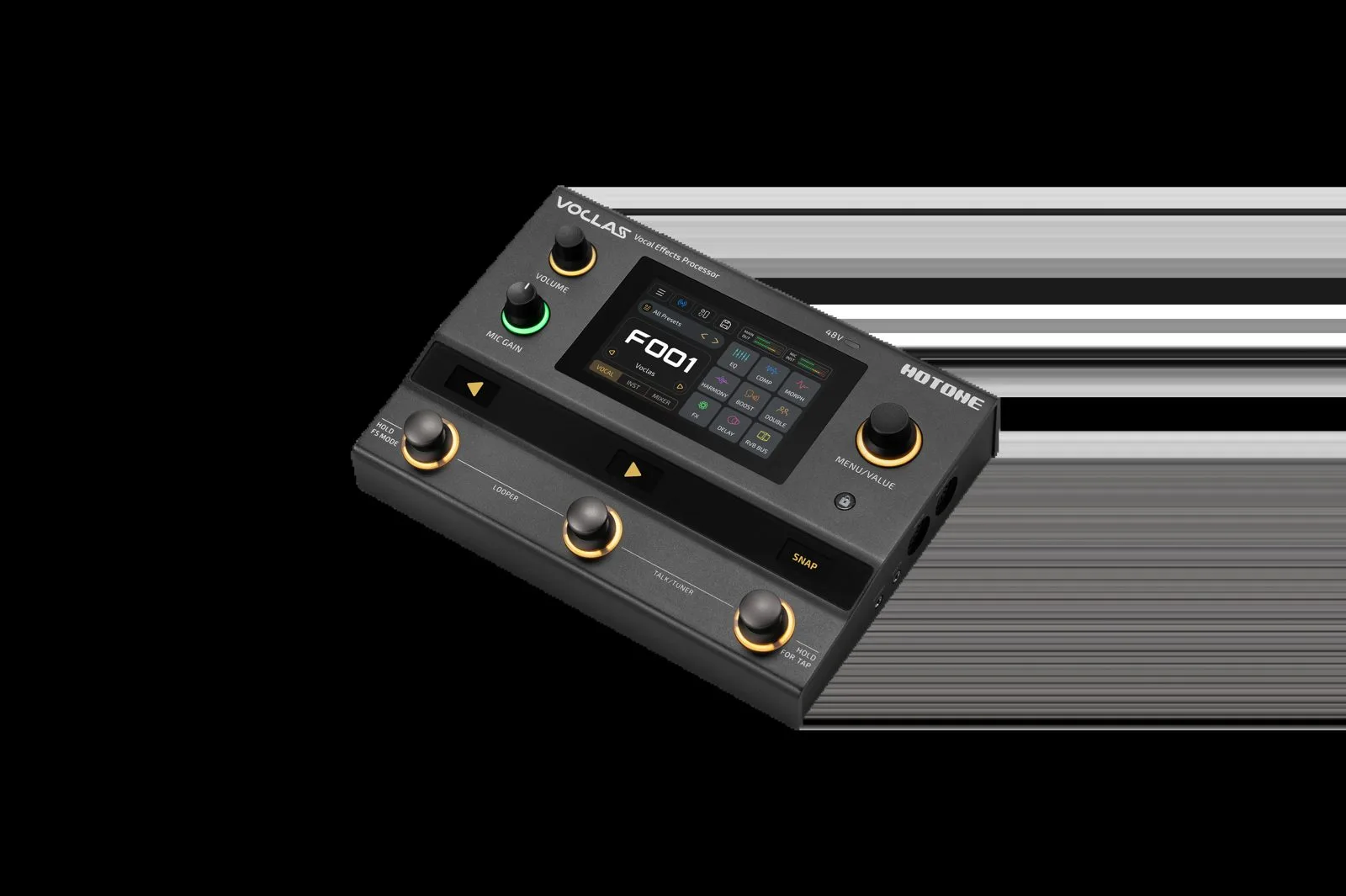
The stage vocal processor market, long dominated by a handful of players, has a serious new contender. Hotone introduces the Voclas, an all-in-one vocal pedal that bets on a colour touchscreen and neural-network processing for pitch correction and harmony generation.
A full vocal chain in a pedal
The Voclas isn’t just effects: it carries a genuine vocal processing chain, from a digitally controlled mic preamp through a de-esser, a noise gate, a five-mode compressor and an EQ. In other words, the singer plugs in a mic and gets a clean, controlled voice before adding a single effect, the kind of workstation you used to build from several separate boxes.
The engine claims a dozen low-latency processing modules, with dedicated vocal effects but also guitar amp simulations, a 90-second stereo looper, and curiosities like a talkbox, a vocoder and throat-singing emulations. A sample-based synthesizer rounds out the toolkit for more experimental textures.
AI pitch correction and harmonies
The headline is the neural processing. Pitch correction aims for low latency, from a discreet touch-up to a full-on electronic effect. More to the point, the Voclas generates up to three harmony voices, driven either by MIDI or by a generative algorithm that analyses the voice to suggest coherent harmonisations. For a singer alone on stage, that’s the promise of vocal backing without a second singer.
Real-time pitch correction remains a tricky engineering problem: the whole point is to correct fast without adding perceptible latency or artefacts on transients. That’s exactly what pitch correction in the studio handles offline; live, the bar is higher.
Connectivity and control
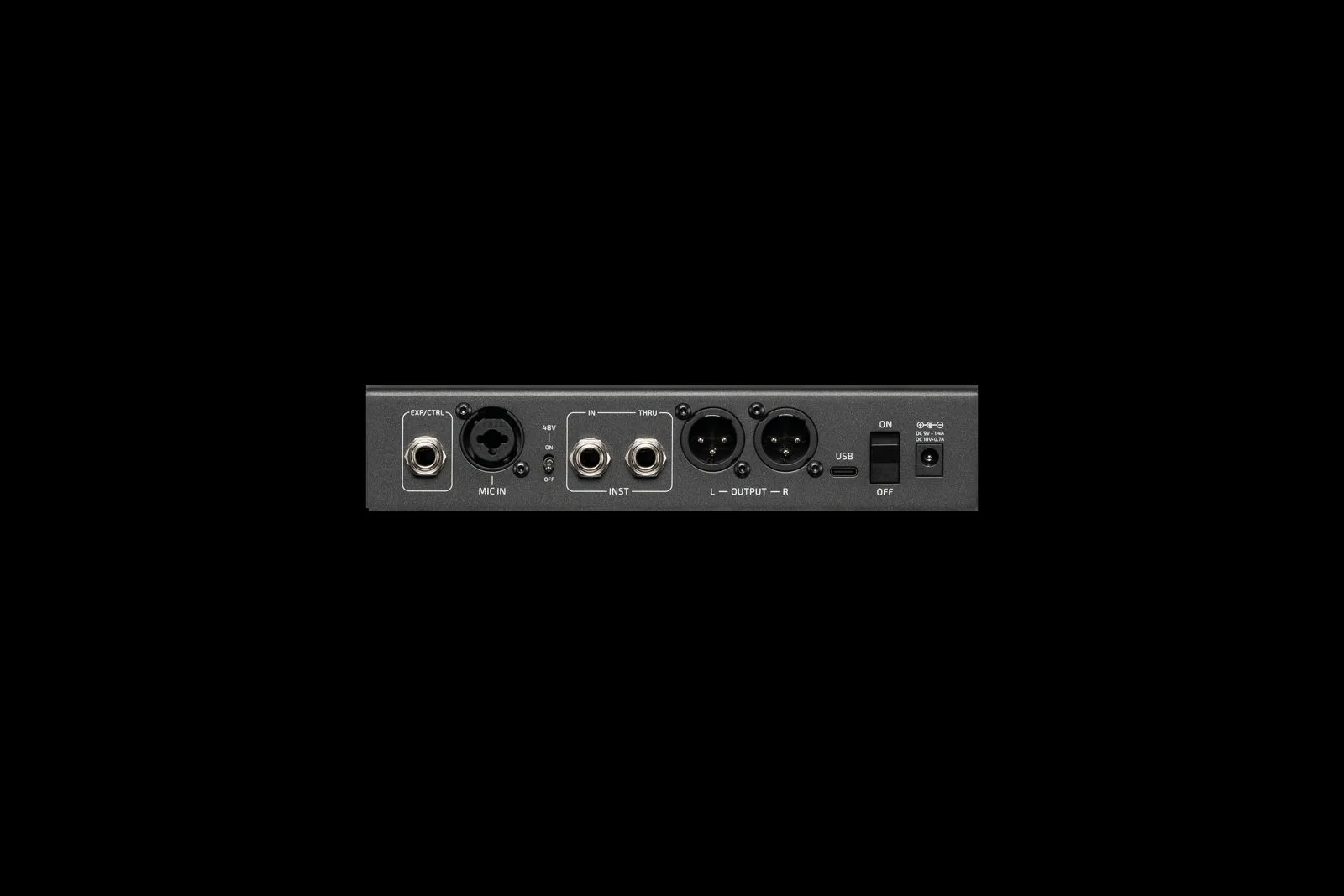
For I/O there’s an XLR mic input, a 1/4-inch instrument input, a stereo aux input and balanced XLR main outputs. Add Bluetooth audio, USB audio and MIDI control, plus compatibility with footswitches and expression pedals. A colour touchscreen and per-footswitch displays complete the ergonomics, all controllable from an iOS and Android app that lets you tweak presets in real time.
The positioning clearly targets the band singer, worship teams and the home-studio user who wants a ready-to-go vocal chain. For the musician already building their in-ear monitor mixes, the Voclas becomes the last link before the console.
My take
A vocal Swiss army knife isn’t a new idea, but the touchscreen and the neural engine change the game for ergonomics and the musicality of the harmonies. The danger with this kind of box is the kitchen-sink effect: too many modules, and you spend more time tweaking than singing. If Hotone has nailed the latency and the clarity of the interface, the Voclas could genuinely shake up a slightly sleepy segment. One thing to watch closely: the real quality of the generative harmonies, which is the whole difference between a gimmick and a true stage tool.
Frequently asked questions
Can the Voclas generate harmonies without a keyboard?
Yes. The harmony voices, up to three, can be driven by MIDI or by a generative algorithm that analyses the voice to suggest harmonisations, with no backing instrument required.
What inputs and outputs does it offer?
An XLR mic input, a 1/4-inch instrument input, a stereo aux input and balanced XLR main outputs, plus Bluetooth audio, USB audio and MIDI control.
Is it also an audio interface?
The Voclas handles USB audio and Bluetooth audio, so it can be used with a computer or phone for recording or playback, on top of its role as a stage processor.
Who is it for?
Stage singers, worship teams and home-studio users who want a complete, ready-to-go vocal chain, with effects, pitch correction and harmonies in a single pedal.