HEDD moves up a level. The Berlin maker unveils the TYPE 40, a studio monitoring system that starts from a three-way main speaker and grows, channel by channel, with stackable bass modules. The idea fits in the line the brand repeats on its page: complete at its core, built to scale.
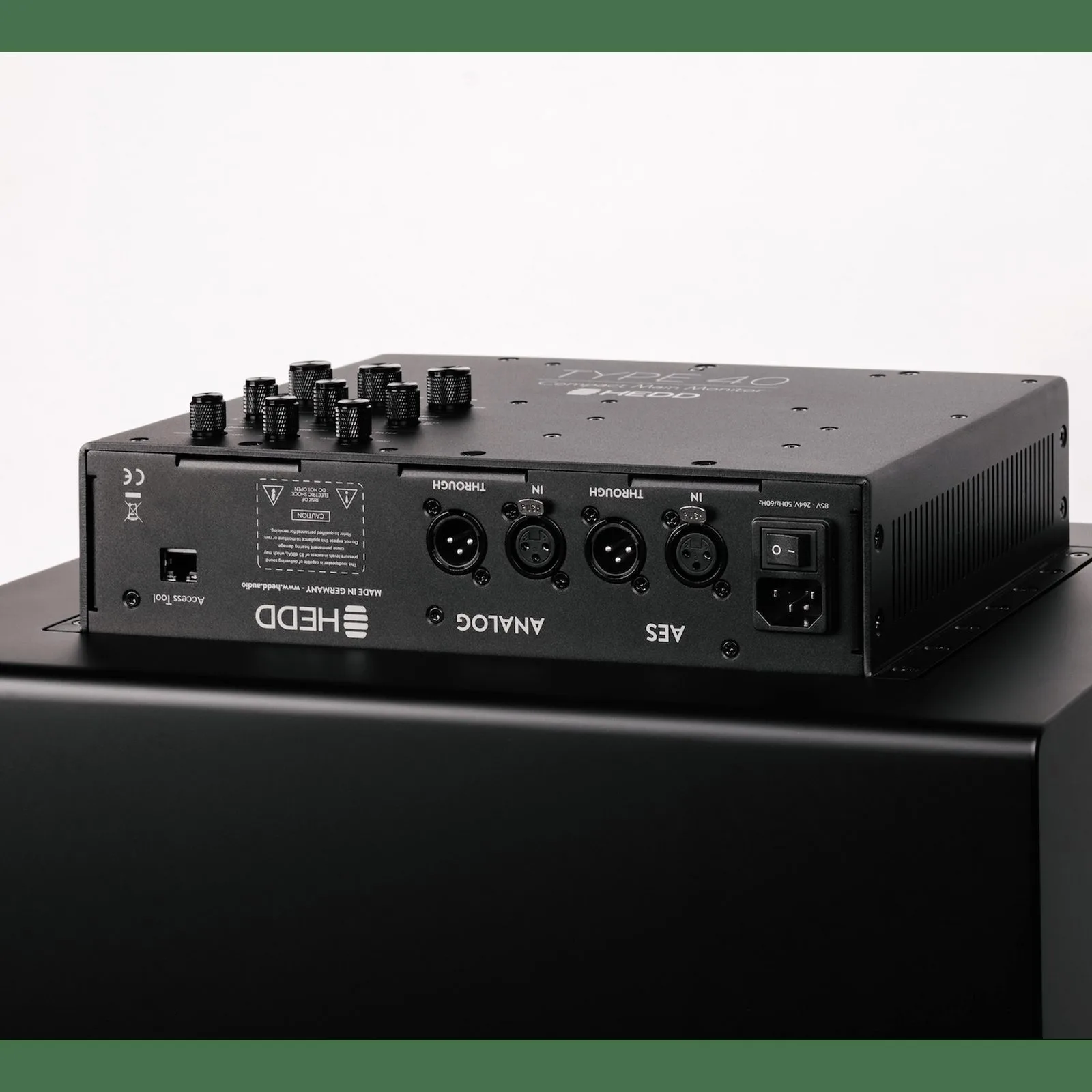
A three-way main speaker
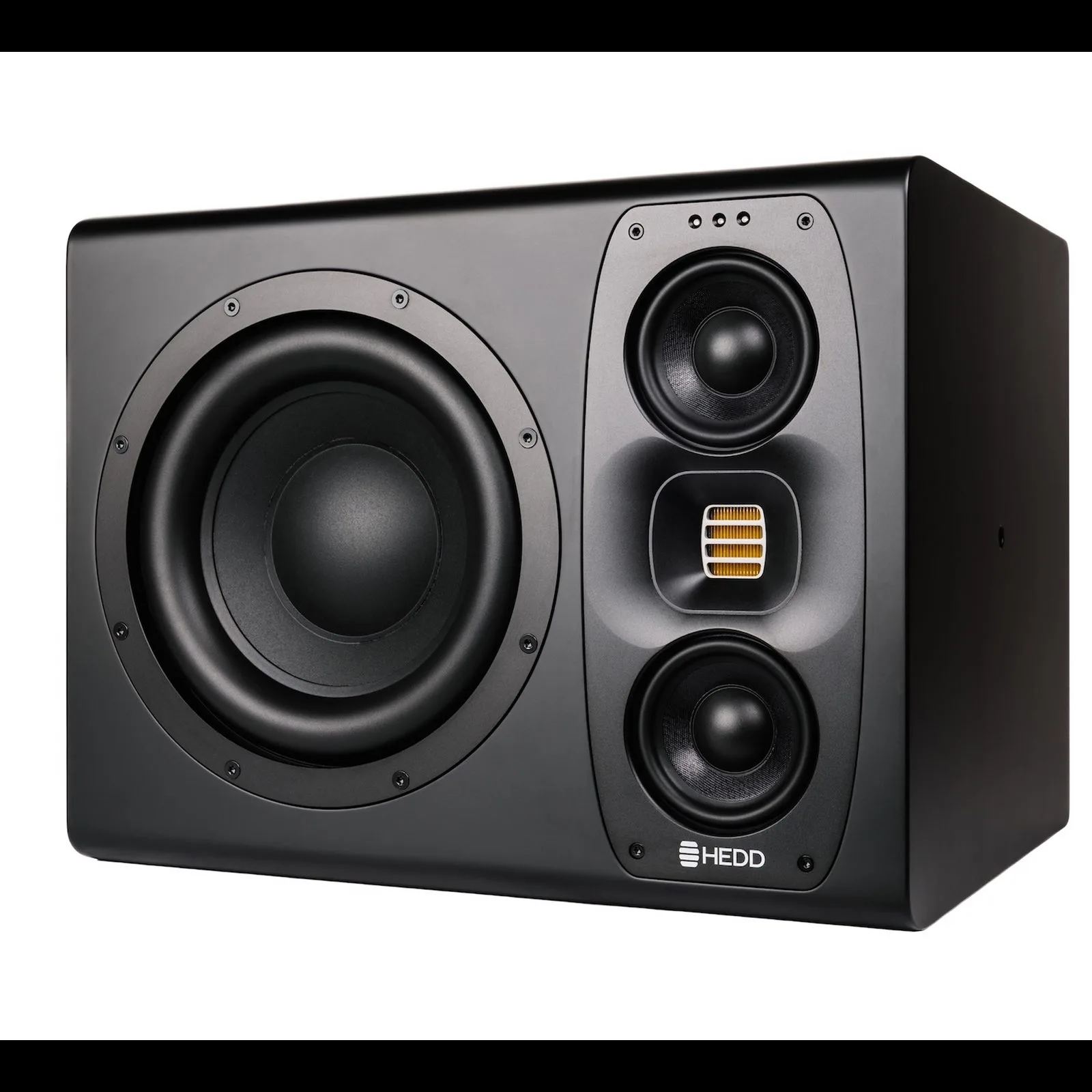
The Main module combines a hand-built Air Motion Transformer ribbon tweeter, HEDD’s signature AMT, two four-inch midrange drivers and a ten-and-three-quarter-inch long-throw woofer. Each band gets its own ICEpower Class D amplifier: seven hundred watts for the low end, three hundred for the mids, three hundred for the highs. On its own, this Main reaches twenty hertz at minus three decibels and exceeds one hundred and eight decibels SPL at one metre at fifty hertz, which the Tape Op bench test confirms. The cabinet is sealed, with no port, for tight bass.
The XTD modules, bass on demand
The real novelty is the extension. You add up to three XTD modules per channel, stacked below the Main, with matching cabinet dimensions. Each XTD carries a high-excursion ten-and-three-quarter-inch woofer and its own seven-hundred-watt Class D amp. Four operating modes are offered: frontfire ported, frontfire closed, cardioid ported and cardioid closed.
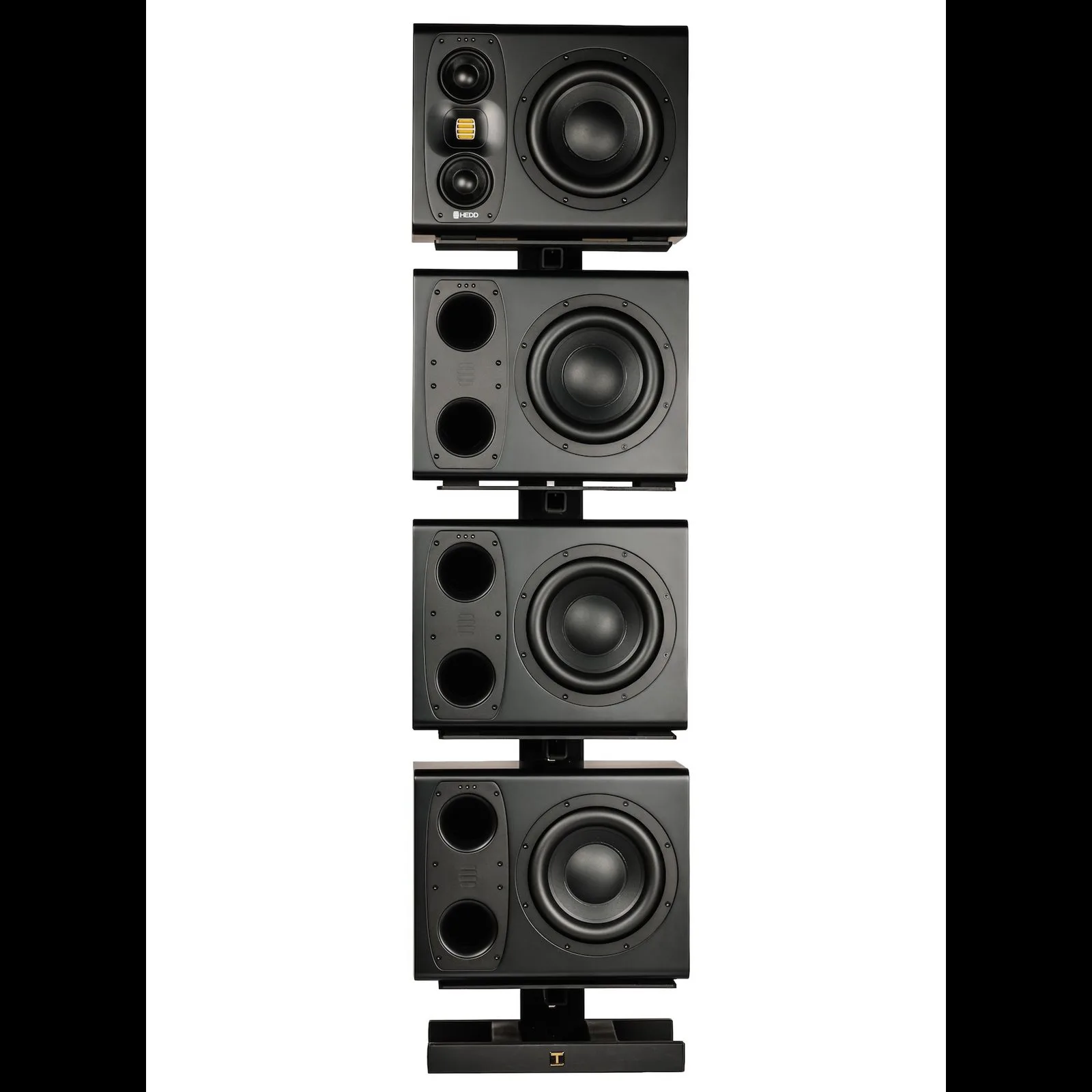
The figures speak for themselves. In frontfire ported mode, the SPL gain at fifty hertz reaches six decibels with one XTD, twelve with two, fifteen with three. In cardioid mode, the system cuts rear energy by about ten decibels, and that is where stacking pays off in a difficult room: bass that hits up front without exciting the back wall. To grasp the principle, our articles on cardioid subwoofer arrays and on Dolby Atmos monitoring lay the groundwork.
The HEDD Lineariser DSP at the core
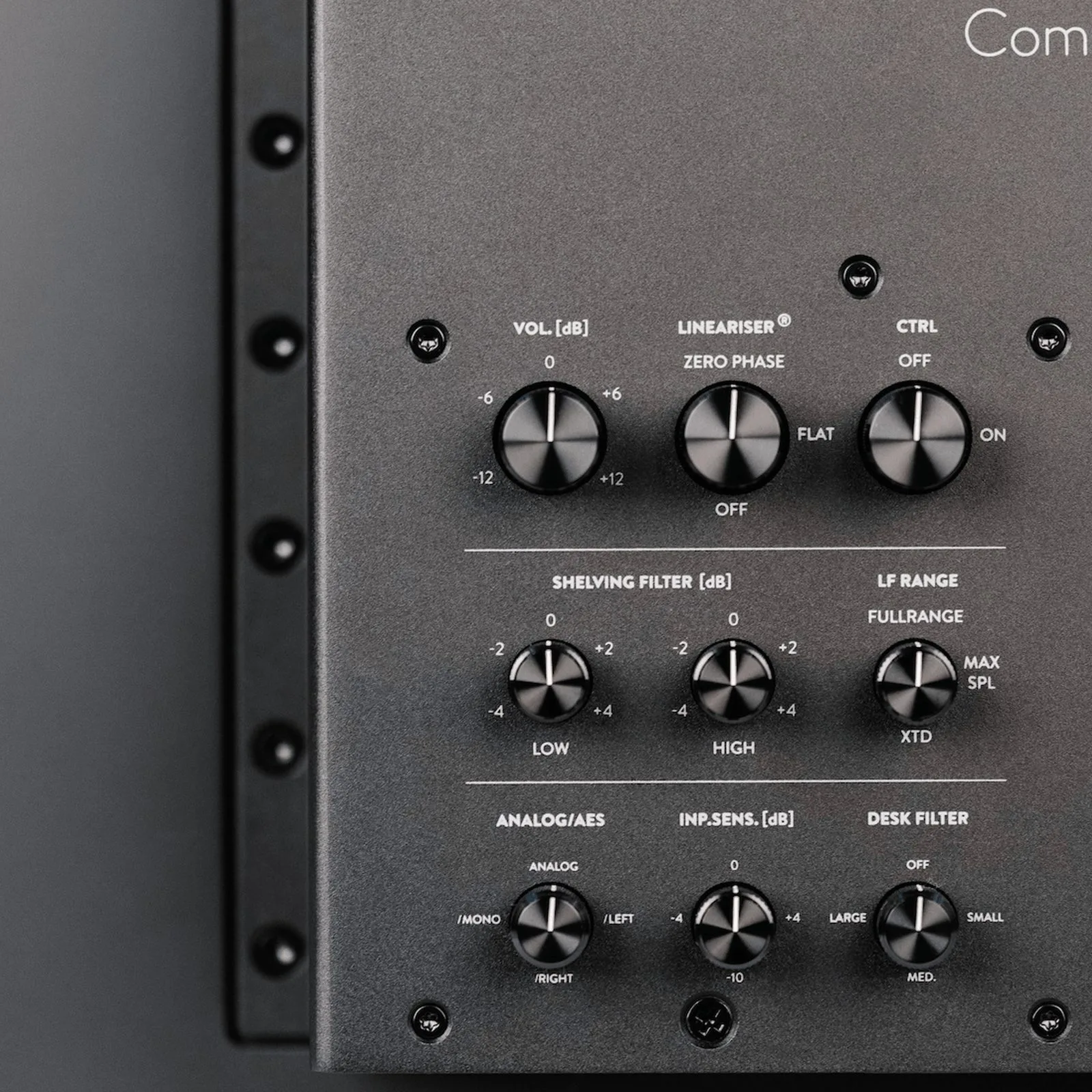
The whole system is driven by an internal DSP running at ninety-six kilohertz, carrying the HEDD Lineariser, the house phase correction. Three time-alignment modes are available: zero phase, flat with no phase linearisation, and off for the lowest latency. Add high and low shelving filters with an adjustable corner frequency, and a desk filter to tame the console reflection. HEDD CTRL software handles presets and room adjustment over Ethernet.
Connectivity and availability
For inputs, the Main offers balanced analog XLR with a through, and AES/EBU on XLR, also with a through, from 44.1 to 192 kilohertz. The build stays true to the house: MDF cabinet, satin black paint, M10 mounting points on the sides, and every unit tested before leaving Berlin. On the official store, the Main module lists at 6,999 euros as a promotional price, against 13,998 euros full price, and the complete system climbs with the number of XTDs and the stereo pair you choose. To place the TYPE 40 in context, see our guide on the Neumann KH 310 II and KH 350 and our explainer on audio latency and direct monitoring.
My take
The modular approach is the smart idea. Instead of picking a cabinet size and living with it, you tune the low end to your room and your needs, from tight mastering to a room that moves air. The cardioid mode genuinely changes life in a control room where the back wall throws everything back. The entry ticket stays that of a high-end system, and the maths works at the full pair, not the single module. For a studio mixing in immersive or wanting a reference that can grow, it is an investment that holds up.