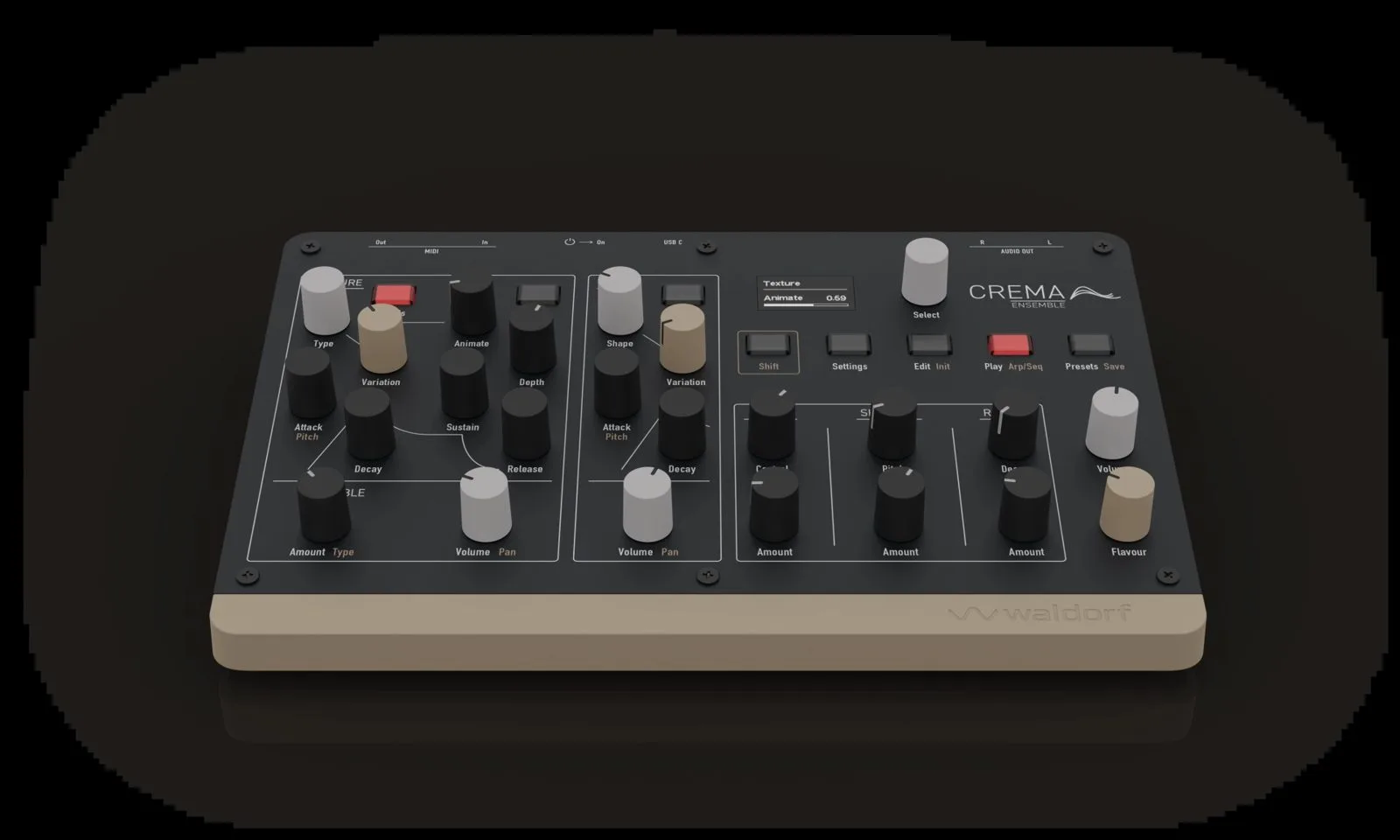
Waldorf puts strings back at the centre. The Crema takes the spirit of the Streichfett, the brand’s little string module, and adds two things that widen its horizon: wavetables and FM. The result is a compact, fully polyphonic synth built for pads, string ensembles and evolving textures.
Two engines under the hood
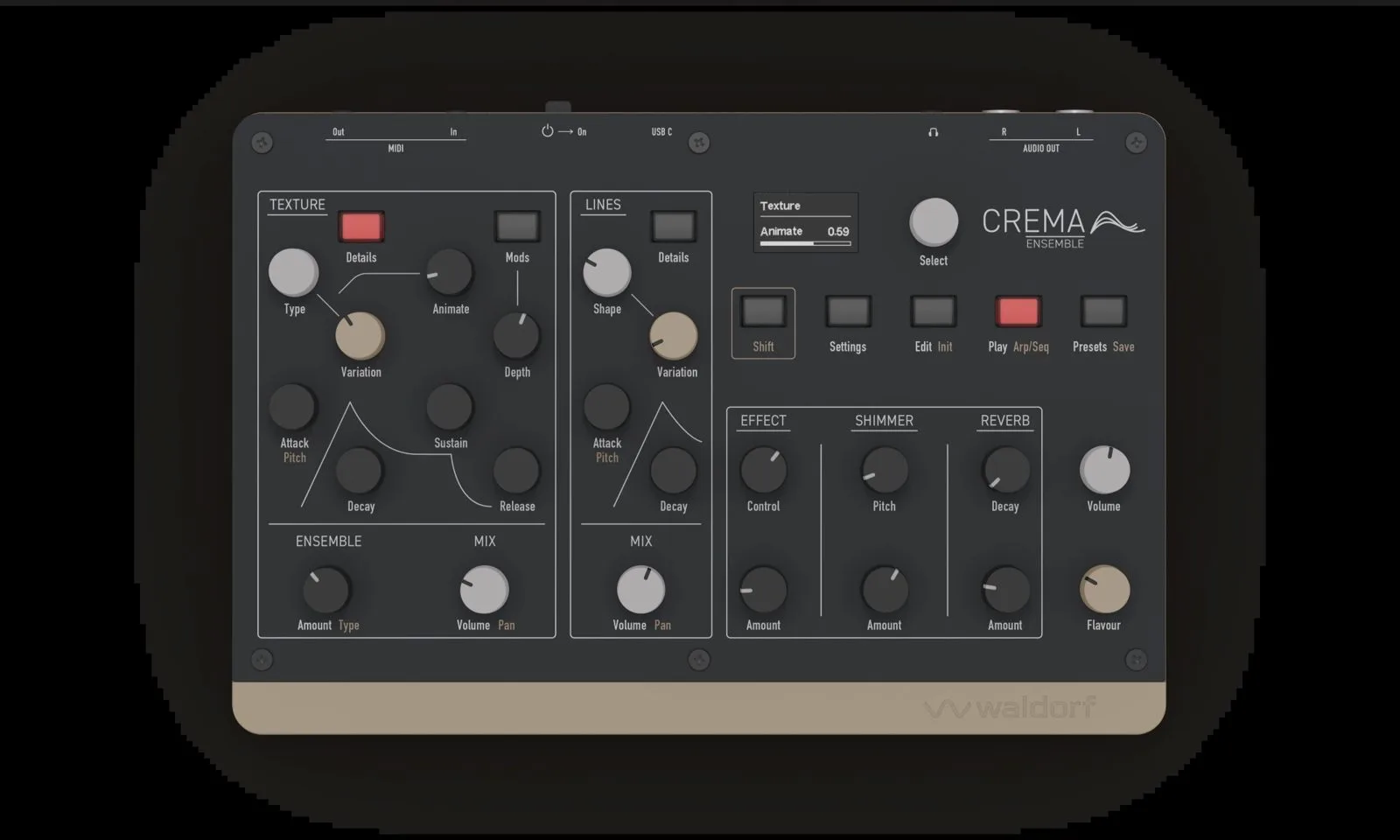
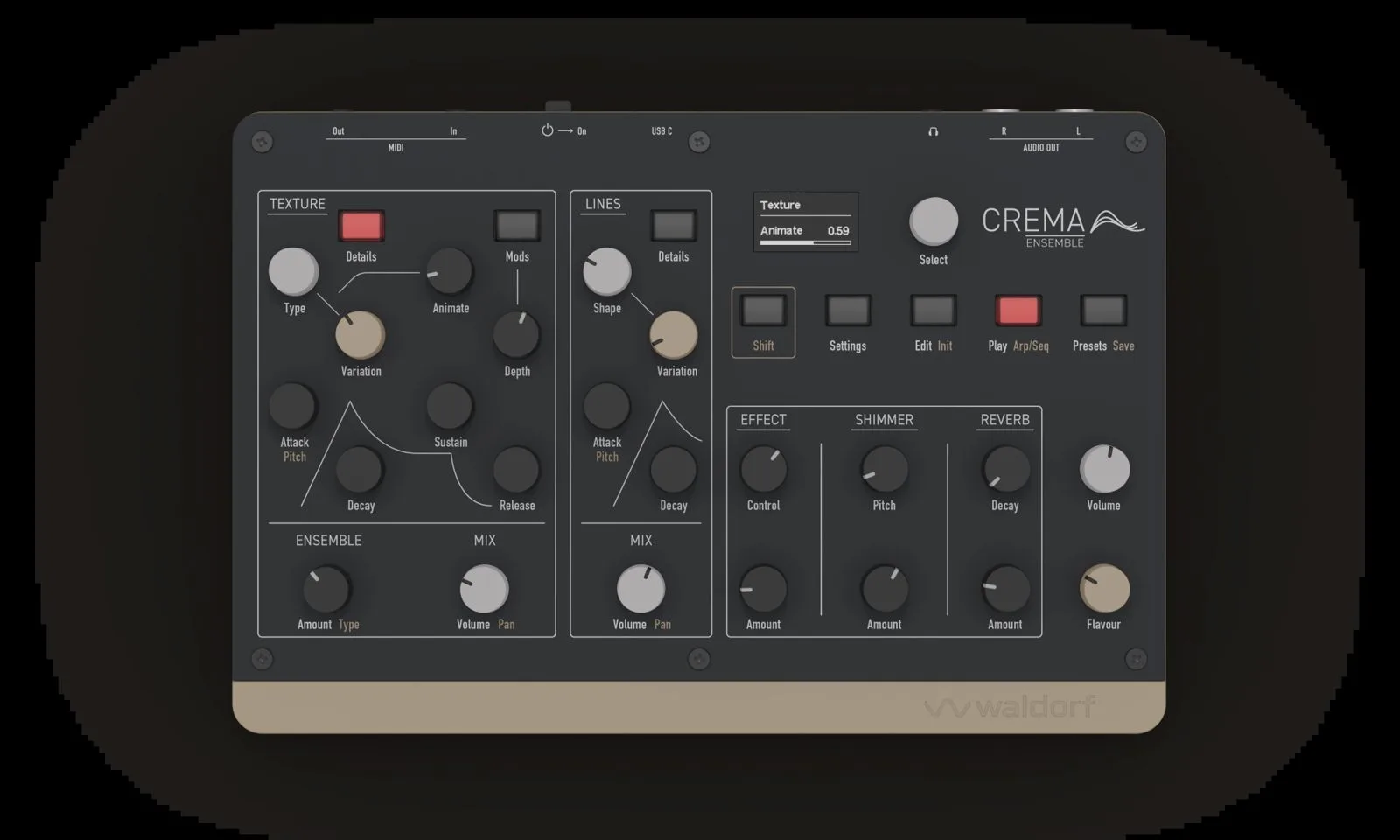
The Crema is built around two complementary sound engines. The first, Texture, gathers twenty-four sound types across three synthesis approaches: the Streichfett-derived string section, seventeen wavetables and an FM engine. You move between them and morph across timbres, and that is where the instrument’s shifting signature comes from. The wavetable and FM modes offer twelve-voice polyphony, while the string section stays fully playable.
The second engine, Lines, is an eight-voice virtual analog with two detunable oscillators in saw or pulse, plus tremolo, vibrato and pulse-width modulation. It handles punchy basses and expressive leads while Texture holds the pads. Each engine takes its own MIDI channel, and the whole instrument supports MPE for note-by-note expression.
Effects, sequencer and performance
Two effects processors run in series or parallel depending on your routing. The first covers chorus, flanger, phaser, tremolo, drive and delay; the second is a reverb with a shimmer mode. A Flavour knob adds subtle pitch and wave-position variation, handy for breaking up a static pad.
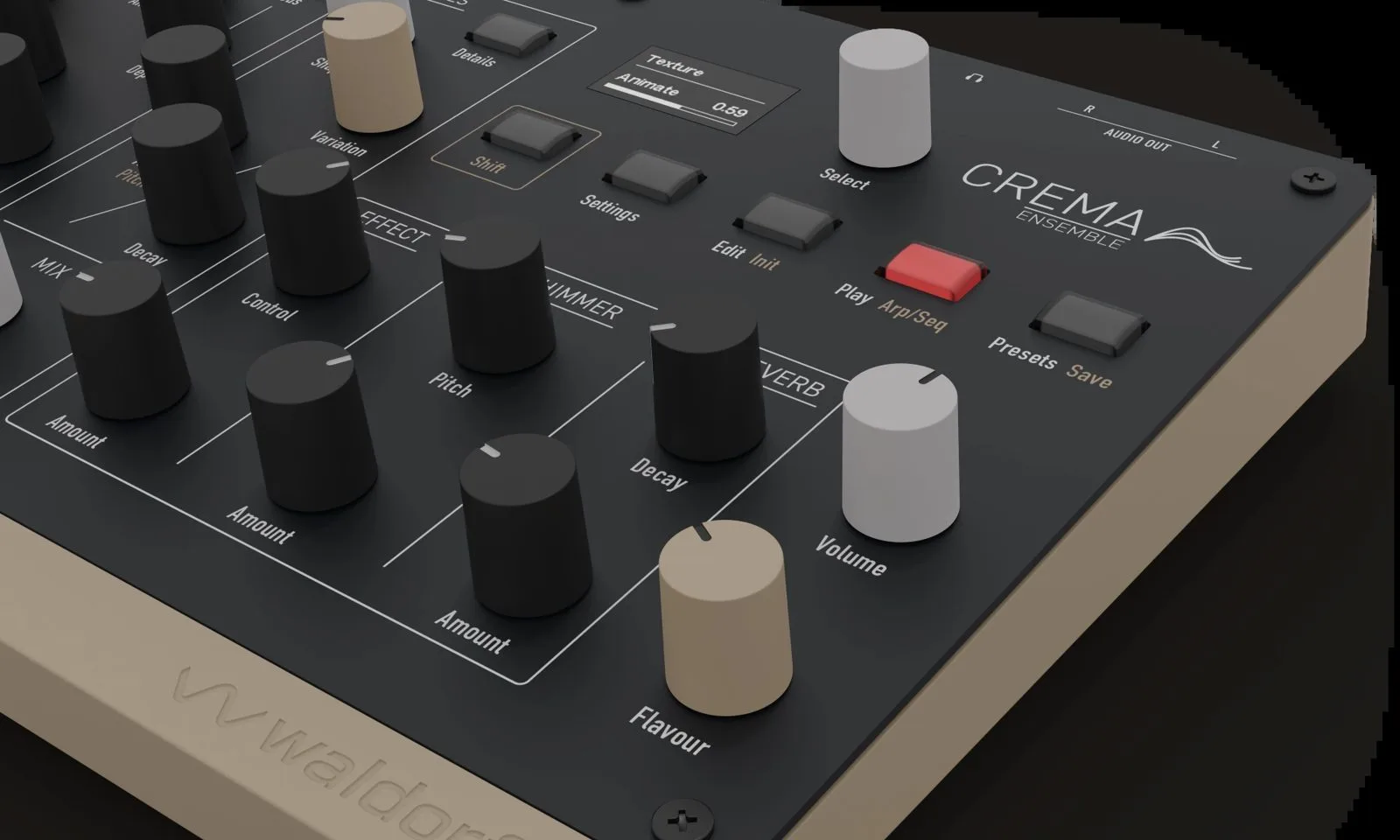
For performance, the Crema carries an arpeggiator and a thirty-two-step sequencer, both syncable to an external clock. It ships with more than one hundred and thirty factory sounds and offers three hundred and sixty memory slots, managed from the Chutney app. At this stage, editing from a computer is not yet available: Waldorf has announced an editor, with no firm timeline.
Form factor and connectivity
The Crema shares its shell with the Protein, a compact desktop box measuring 252 by 170 by 48 millimetres and weighing nine hundred grams. Power comes over USB-C, MIDI travels over USB and through two mini TRS jacks for input and output. The rear offers a stereo output and a headphone socket. Nothing superfluous, everything in a format that slips into a bag.
A logical place in the range
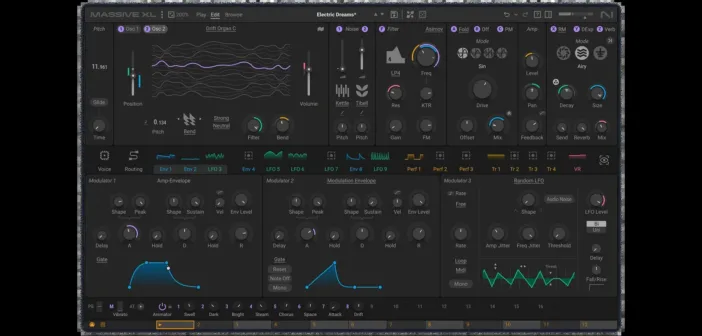
By stacking the house’s reference wavetable synthesis and an FM engine on a string foundation, the Crema targets players who want a texture instrument rather than a do-it-all synth. If wavetables intrigue you, our explainer on wavetable synthesis lays the groundwork, and MPE makes real sense here on pads. For a bigger, software-only wavetable, see the recent Native Instruments Massive XL.
My take
It is a smart bet. The Streichfett was charming but limited; grafting wavetables and FM onto it makes a real pad instrument without betraying the grain people liked. The desktop format and USB-C power make it easy to fit onto an already crowded setup. The one reservation right now is the software editor missing at launch: on an instrument this texture-focused, saving and organising sounds from a computer will matter quickly. For anyone who loves stacking moving layers, the Crema could become a lasting companion.