For the first time, Moog is stepping off the synth-and-pedal path and onto the amplification side. The Asheville brand has launched two instrument amplifiers, the Model 112 and Model 210, available since 27 October 2026 through authorised dealers. The intent is plain: add no character of their own, and reproduce a sound that was already shaped upstream.
Flat-response amps, not coloured combos
Both models are specified as full-range, flat-response, the approach the industry shortens to FRFR. The logic differs from a classic keyboard combo, which imposes its own signature. For a synth, a virtual organ or a drum machine whose tone is already dialled in, a neutral reproduction makes sense: you hear your patch, not the cabinet. The amplification path is fully analogue, and each amp is bi-amplified, an architecture close to the one covered in our guide to amplifier classes for live sound.
Model 112 and Model 210: the differences
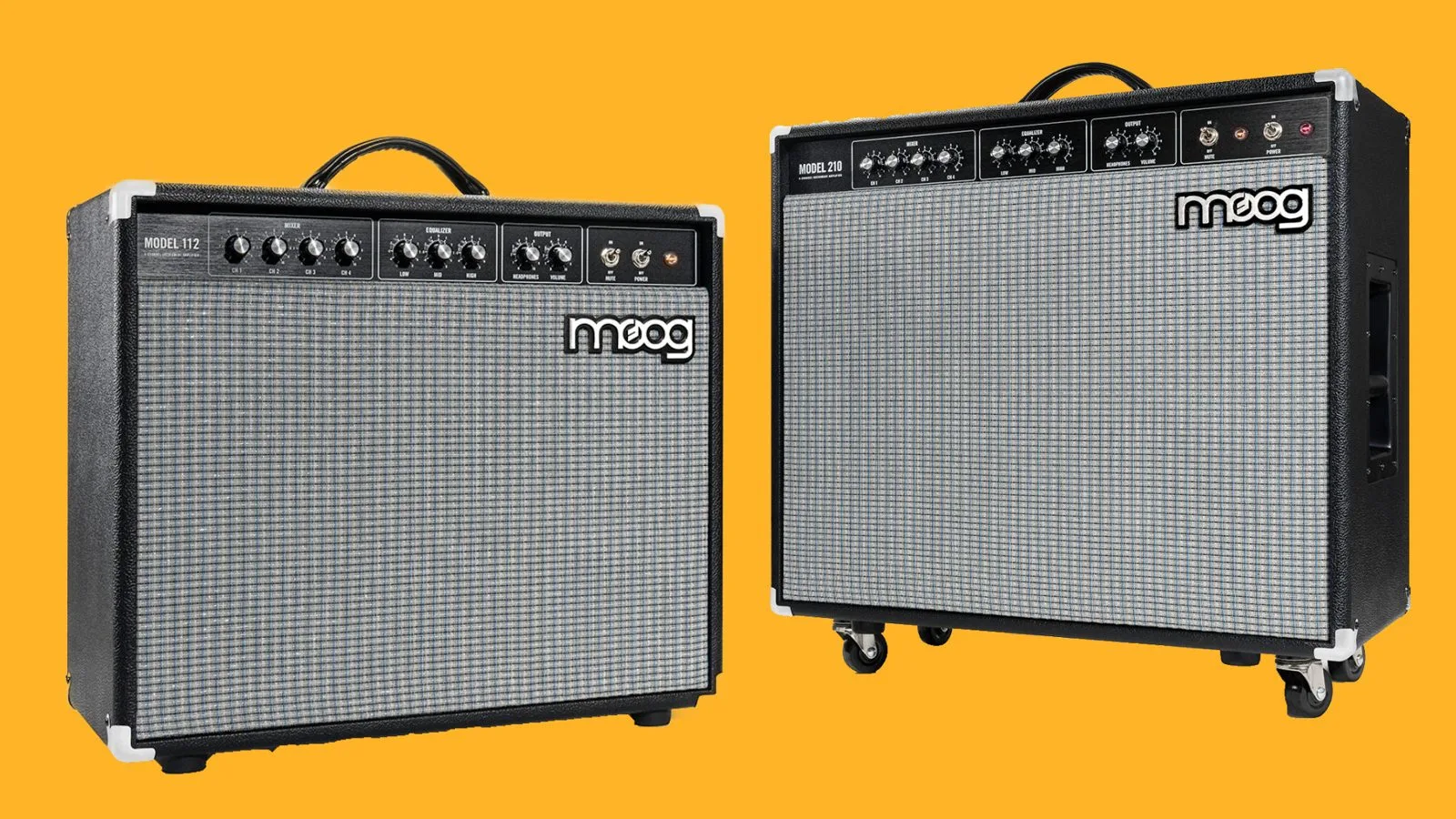
The Model 112 is the portable format: a 12-inch woofer, a one-inch compression driver, 440W RMS and a top carry handle. The Model 210 aims at the more demanding stage with a 2.5-way design, two 10-inch woofers (one reaching down to 35Hz), a one-inch compression driver, 550W RMS, side handles and removable casters. It alone offers Stereo Link, which ties two Model 210 units into a true stereo pair.
| Spec | Model 112 | Model 210 |
|---|---|---|
| Power | 440W RMS, bi-amplified | 550W RMS, 2.5-way bi-amplified |
| Drivers | 12-inch + 1-inch driver | dual 10-inch + 1-inch driver |
| Low end | 40Hz to 20kHz | down to 35Hz |
| Transport | top handle | side handles, removable casters |
| Stereo Link | no | yes (two units) |
| Price | $799 | $999 |
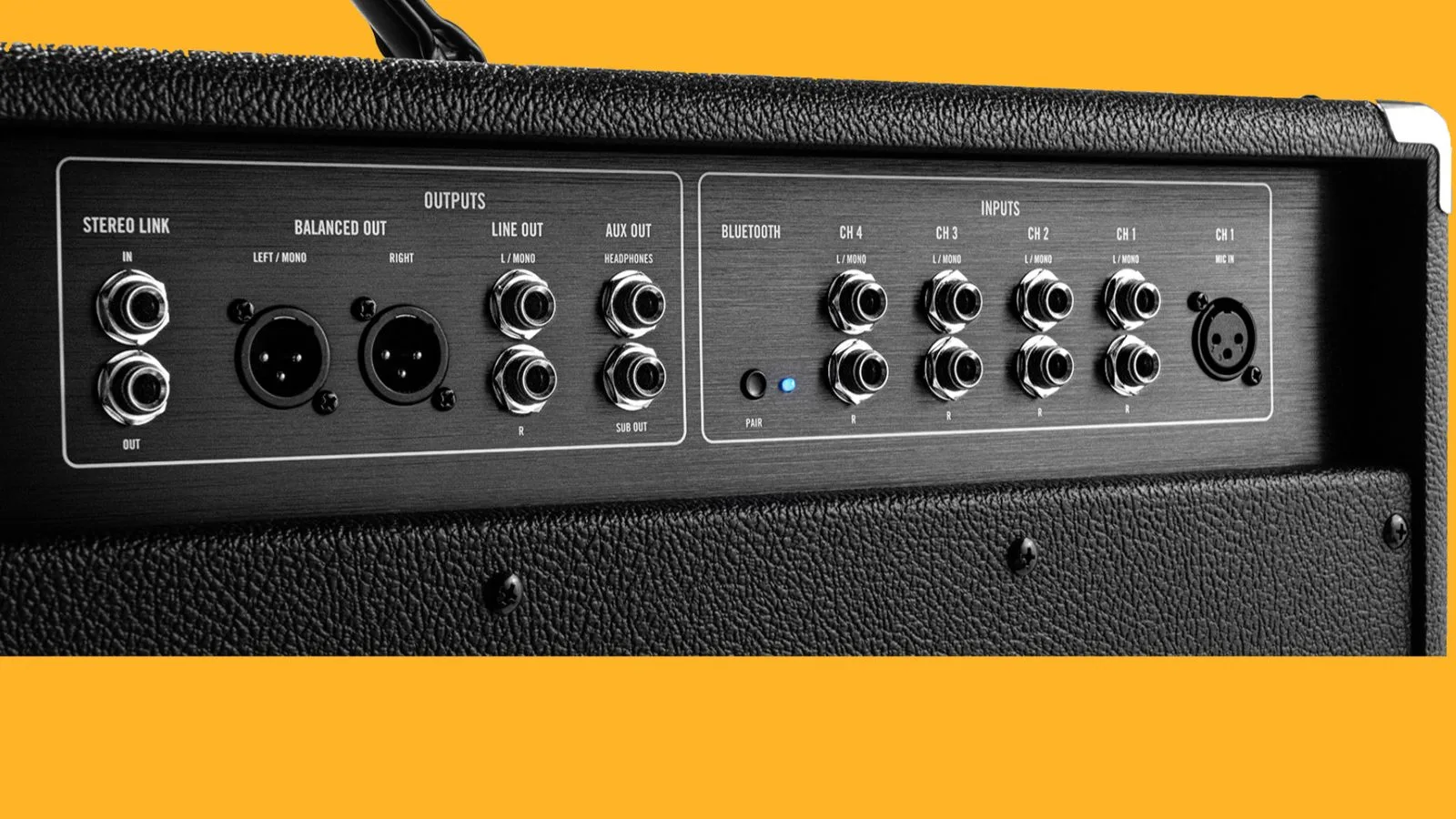
A four-channel mixer inside the amp
Both cabinets share the same mixing section: four stereo inputs, a built-in four-channel mixer, and a mic preamp on channel 1 with an XLR input. Master tone runs through a smooth three-band Baxandall EQ. On the output side, Moog fitted balanced stereo XLR and TRS sends to feed front of house, plus a dedicated stage monitor feed and headphone listening. Bluetooth 6.0 streams a backing source without a cable. In short, a keyboard player can fit several instruments and a backing track into one box, with no external console, which echoes the portable all-in-one idea we saw with the Teenage Engineering EP-35 K.O. Amp.
What it changes on the market
Full-range keyboard amplification is not new ground, but few electronic-instrument makers cover it themselves. By putting its name on two well-built boxes, with a proper mixer and clean balanced outputs, Moog is talking to stage keyboard players and electronic rigs that want to hear themselves without rolling out a small PA. The prices, $799 and $999 (799.99 and 999.99 euros, 679.99 and 849.99 pounds), place them alongside serious powered speakers rather than a spare combo. More on the Moog site.
My take
The idea lands. A synth goes through a hundred sound-design decisions before it reaches the amp, and the last link has no business repainting the lot. The onboard mixer and mic preamp turn these boxes into real stage multitools for a solo keyboard player. The Model 210 and its Stereo Link stand out for anyone actually playing in stereo. The open question is weight and real-world footprint on small stages, and only a room test settles that.