On paper, a delay does one thing: it repeats the signal after a set time. Nothing more. That very simplicity is what makes it dangerous, in both senses — easy to reach for, easy to bury a mix under pointless repeats. Taking the time to understand its parameters and uses changes how you work with it entirely. This guide is for people who already mix and want to structure their use of delay, not for those meeting the word for the first time.
Delay or reverb: don’t confuse them
The mix-up is common because both effects create a sense of space. But their mechanics differ. Reverb simulates the diffuse field of a room: thousands of reflections that blend into a continuous tail. Delay produces discrete repeats, each identifiable, at least while feedback stays moderate. In practice, delay creates rhythm, depth and movement; reverb sets ambience and context. The two combine beautifully — often you’ll even feed a delay into a reverb to soften its repeats.
The settings that actually matter
A handful of controls describe any delay:
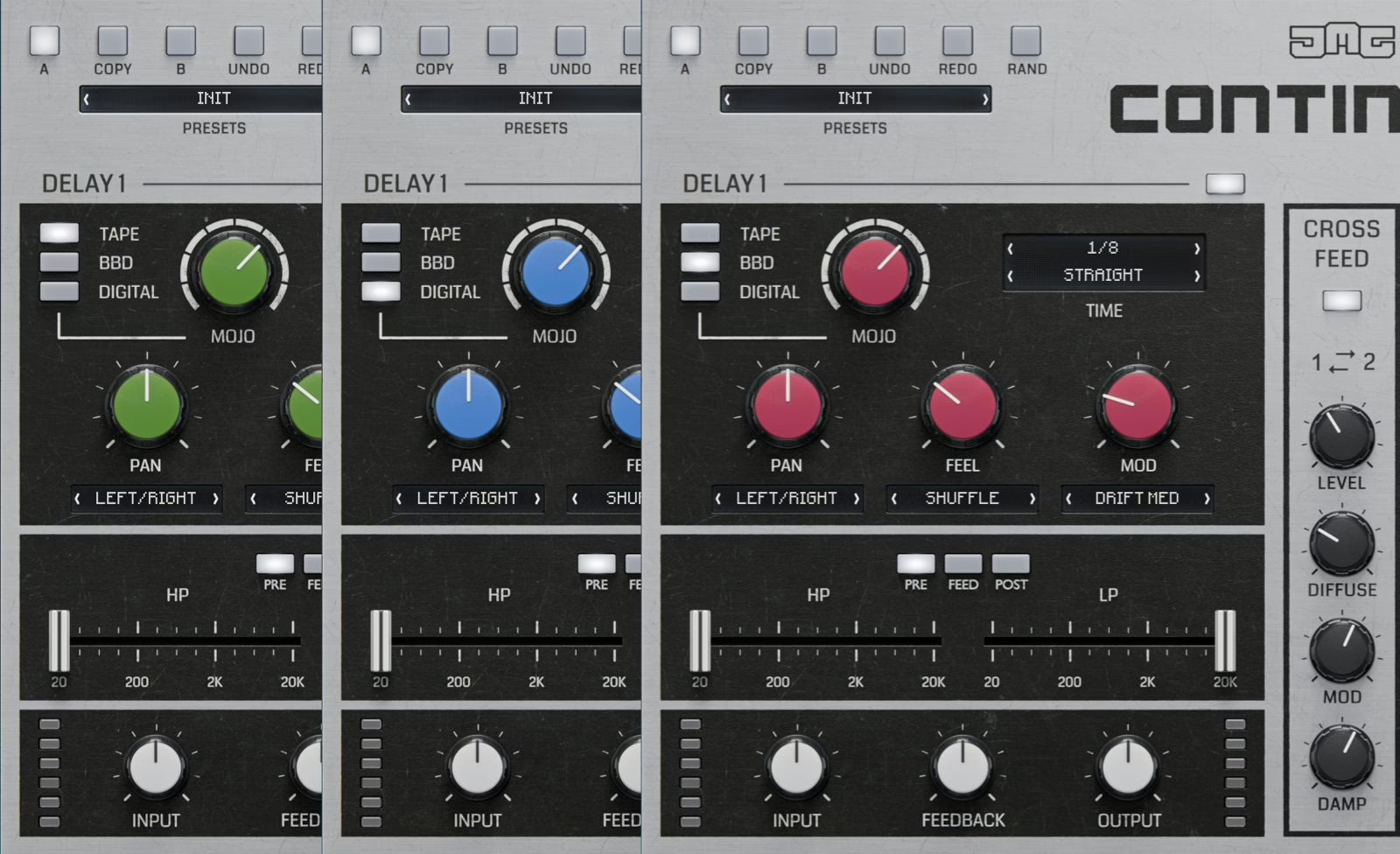
- Time: how long before the first repeat. The central parameter, set in milliseconds or rhythmic values.
- Feedback: how much of the delayed signal is fed back to the input. At zero, a single repeat; raise it and echoes follow and fade; too high and they self-sustain into oscillation.
- Mix (Dry/Wet): the balance between direct and delayed sound. On an insert you usually stay moderate; on an aux send you run the return fully wet.
- Filtering: a high-pass and low-pass in the feedback loop let repeats darken with each pass, like a tape echo.
- Modulation: a little vibrato on the repeats widens the sound and avoids overly clinical stacking.
A rule of thumb: the higher the feedback, the more you need to filter and tame the level, or the repeats end up masking the useful signal.
Tempo-synced delay
Most modern delays lock to the project tempo. The rhythmic division you pick changes the entire character of the effect:
- A quarter note (1/4) gives a wide, marked, very present echo — perfect for a dramatic throw at the end of a phrase.
- A dotted eighth (3/16) creates that syncopated pattern typical of pop and rock productions: the echo lands slightly offset and weaves an extra pulse.
- An eighth-note triplet brings a ternary sway that fills space without weighing it down.
One caveat: syncing to tempo isn’t always the right call. A slightly off-grid delay in free milliseconds can sound more natural on a voice, precisely because it doesn’t lock mechanically to the rhythmic grid.
The classic uses
Slapback — a single very short repeat, 60 to 130 ms, with no feedback — is woven into the history of rock’n’roll and rockabilly. On a voice or guitar it thickens without a perceptible echo. The delay throw sends the echo onto a single word or syllable, by automating the send: it punctuates without cluttering the rest of the phrase. A stereo delay, finally, or a ping-pong bouncing repeats left to right, opens the stereo field and adds scale to a mono source.
For depth, a subtle delay set far behind a source pushes it back in the mix, where cranking reverb might drown it. It’s often the cleanest way to move an element away without blurring it.
Analog, tape or digital?
Digital delay repeats the signal identically, precise and clean — ideal when you want clarity. Tape-echo and analog (BBD) emulations instead add color: repeats darken, distort slightly, take on a prized organic character. Neither is better in the absolute; it all depends on the role you assign it. On a modern voice, a clean filtered digital works wonders; on a psychedelic guitar, a modulated tape echo tells a different story.
Where to place delay in the chain
Placement is decisive. As an insert on a track, the delay processes the signal directly; simple but inflexible. On an aux send (send/return), you route several tracks to one delay and keep control of the return level independently of the dry sound: this is the most common mixing approach, because it lets you dial the effect finely and treat it (EQ, reverb) separately.
Order relative to the rest of the chain matters too. Placing delay before a reverb gives repeats that then melt into the ambience; the reverse creates a more defined space. There’s no absolute rule — only intentions.
The pitfalls to avoid
The first is clutter: too many repeats, too loud, and the mix smears. The fix is three moves — filter the repeats, lower their level, reserve delay for a few elements rather than everything. The second pitfall is phase and mono compatibility: an aggressive ping-pong or stereo delay can collapse, even vanish, once the mix folds to mono. Check systematically. The third, subtler one is masking: an echo landing right on the next syllable muddies a vocal’s intelligibility. Nudging the time, or automating the send, solves it.
In short
Delay is a tool of rhythm, depth and color before it’s a simple echo effect. Set well — controlled feedback, filtered repeats, considered placement — it gives a mix air; misused, it saturates it. The good habit is to decide first what you want from it (thicken, spatialize, punctuate, push back) before touching a single knob.
To go further: our piece on the United Plugins Continuum dual delay, on the Strymon TimeLine MX, our roundup of tape-echo plugins, and our deep dives into the legendary EMT reverbs and Mid/Side processing.