WesAudio built its name reconciling two worlds we too often oppose : the character of analog processing and the comfort of total recall, thanks to a plugin that drives the hardware and stores every setting with the session. The ngOmniBox takes the idea to its conclusion : instead of a single processor, it stacks a whole bus chain into one chassis. EQ, dynamics, colour and image : it aims to cover the mix bus and mastering without a rack full of boxes.
A complete chain, in the order you want
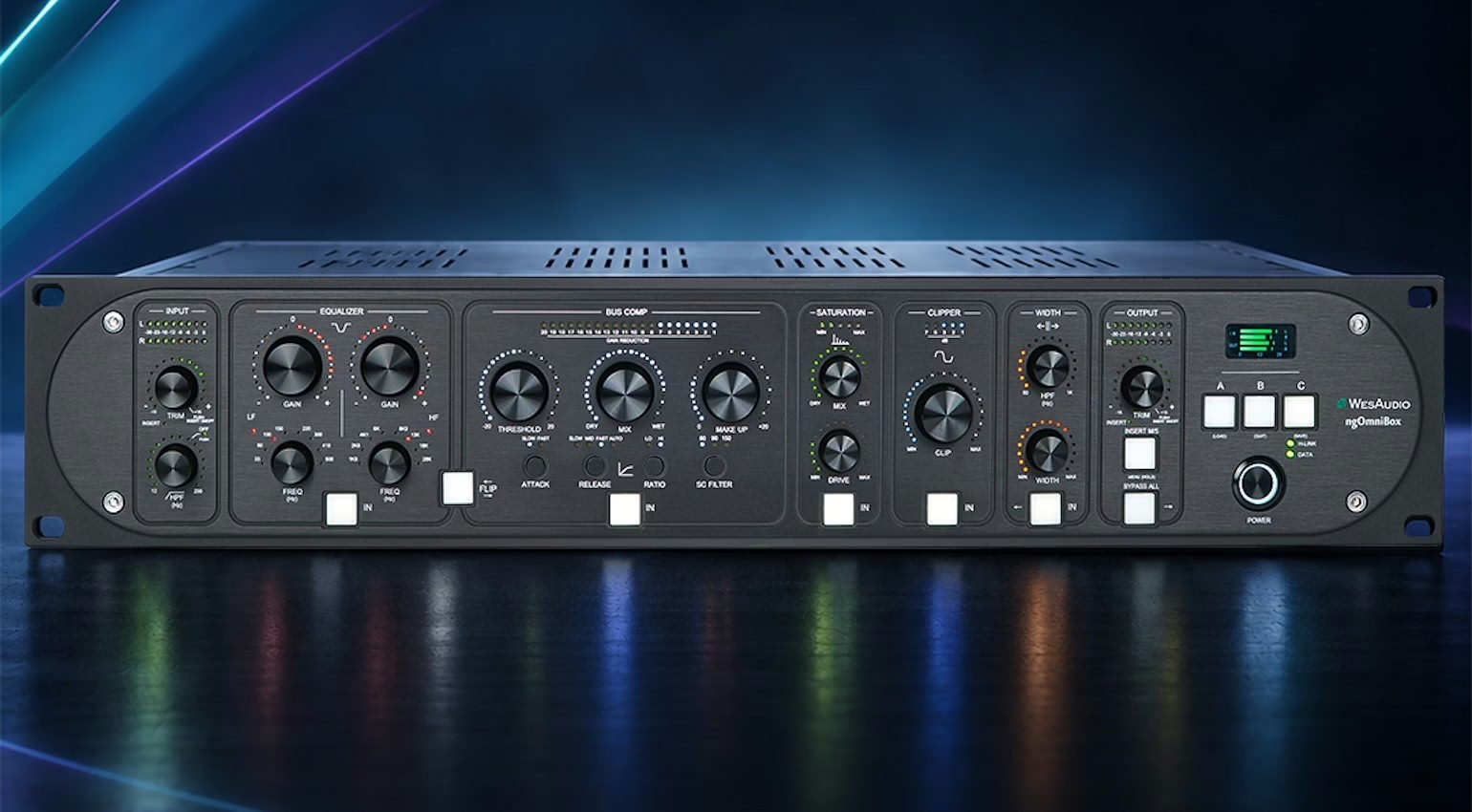
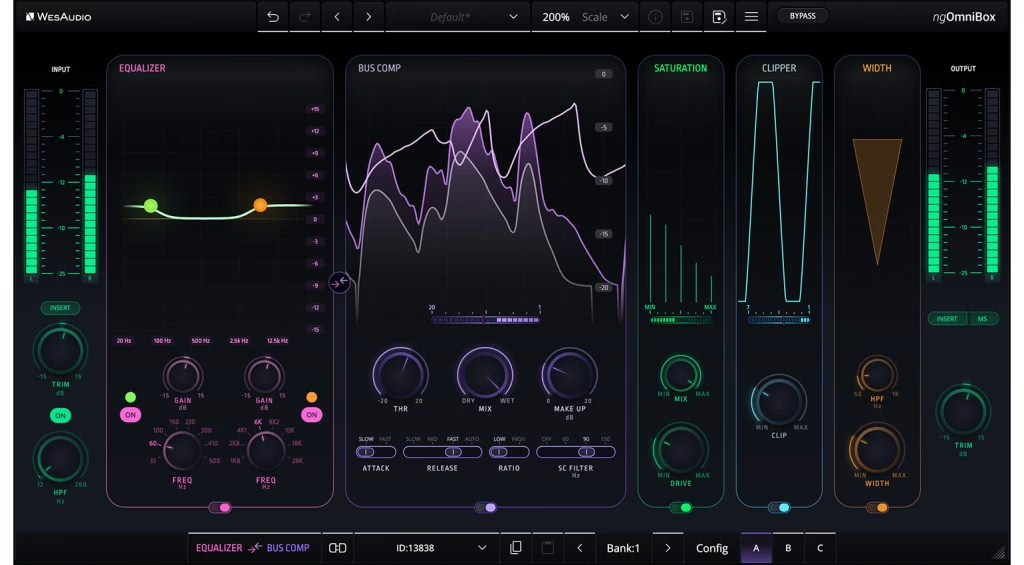
Signal runs through a series of sections designed like a real summing bus. At the input : gain, an insert point for external gear and a variable high-pass filter. Then the heart of it : a 2-band passive EQ and a VCA bus compressor with a wet/dry control for parallel compression and an internal sidechain high-pass filter. A detail that matters : the EQ/compression order can be flipped, depending on whether you prefer to EQ before or after the dynamics.
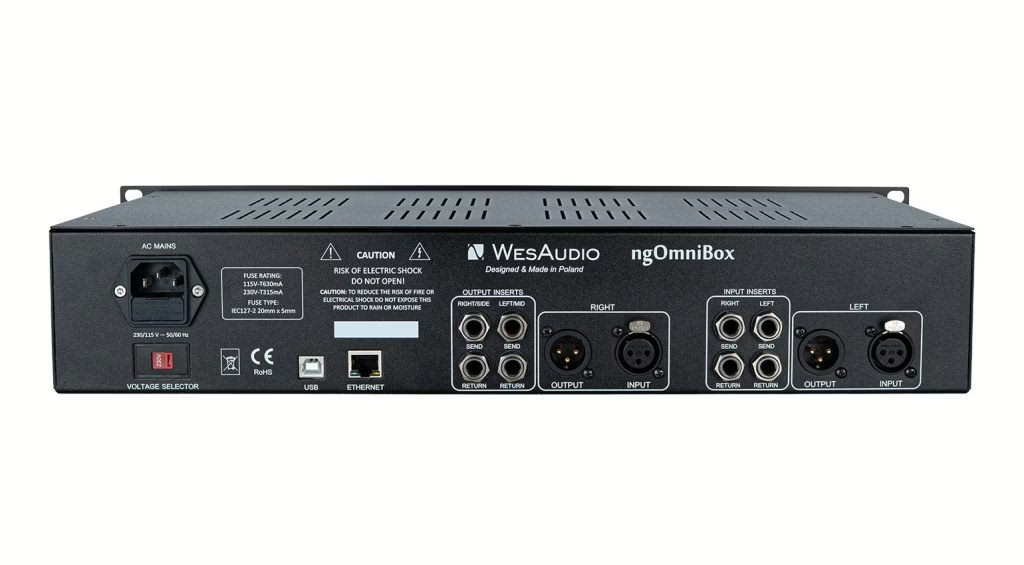
Colour comes next, in two stages : analog saturation with drive amount and wet/dry mix, followed by analog clipping on a single knob to round off or shave peaks before the converter. Finally, a stereo width processor with a high-pass filter widens the image selectively by frequency, without destabilising the low end. The output stage adds trim and an insert point, usable in stereo or mid/side.
- Input: gain, external insert, variable high-pass
- 2-band passive EQ + VCA bus compressor (wet/dry, sidechain HPF), flippable order
- Saturation (drive + mix) then one-knob analog clipping
- Stereo width with high-pass, stereo or mid/side output
Analog, recalled like a plugin
The whole point of the ngOmniBox is its dual nature : the processing stays fully analog, yet every parameter is driven and stored by a companion plugin. Reopen a session six months later and the hardware snaps back to your values. WesAudio says it designed an interface that looks like a familiar plugin from your library rather than a skeuomorphic copy of the front panel : you work on screen as with any software processor, except the audio runs through real components.
That’s exactly what many hybrid chains lack : keeping the colour of an analog bus while retaining the full recallability of mixing in the box. On a mastering or mix bus, the challenge isn’t stacking processors but sequencing them cleanly : precisely the question raised by mastering chain order, and the ngOmniBox answers it by locking a coherent sequence into one unit.
Price and availability
The ngOmniBox is up for pre-order, around $3,799 at Thomann and $3,999 at Sweetwater. This is clearly a studio investment, best weighed against what it replaces : several separate units plus the wiring and patching that come with them. For anyone already working with an analog stereo bus, the promise is to consolidate all of it without giving up recall.
The rest is down to listening : the value of a tool like this rests as much on its passive EQ and VCA compressor as on the finesse of its saturation. On the width side, a useful reminder : widening is never free, and it pays to know what mid/side processing actually does before pushing the knob. In the same spirit, software like Panoramic shows how far stereo width has become a mastering discipline in its own right.
My take
Folding a whole bus chain into one total-recall unit is the kind of idea that genuinely simplifies mastering and mix-bus work. You gain coherence : one saturation, one clipper, one EQ, in an order designed to work together, and above all recallable identically from session to session. The price keeps it in serious-studio territory, but weigh it against the combined cost of the units it replaces, cabling included. The real arbiter will be the sound : if the VCA compressor and passive EQ have character, the ngOmniBox could become the box many leave patched in permanently.