Widening a stereo image is easy; widening it without it collapsing in mono is far harder. That is the whole point of Panoramic, the first plugin from Panorama Audio Labs, released on 18 August 2026. Behind the studio is Nicholas Di Lorenzo, a two-time Grammy-nominated mastering engineer who turned the processing chains from his own sessions into software. The plugin is available on macOS (VST3, AU, AAX) for $99, with a $69 launch price until 18 September.
Widening without cheating: the Side-signal bet
Most stereo wideners lean on delay or phase tricks, the classic Haas effect. It impresses on headphones, then deflates the moment a system sums both channels: clubs, broadcast, mono playback. Panoramic goes the other way by acting on the Side signal, the difference between the channels, with no time offset. It stays firmly in Mid/Side territory, the approach we lay out in our guide to Mid/Side processing in mixing and mastering: you shape width without wrecking mono compatibility.
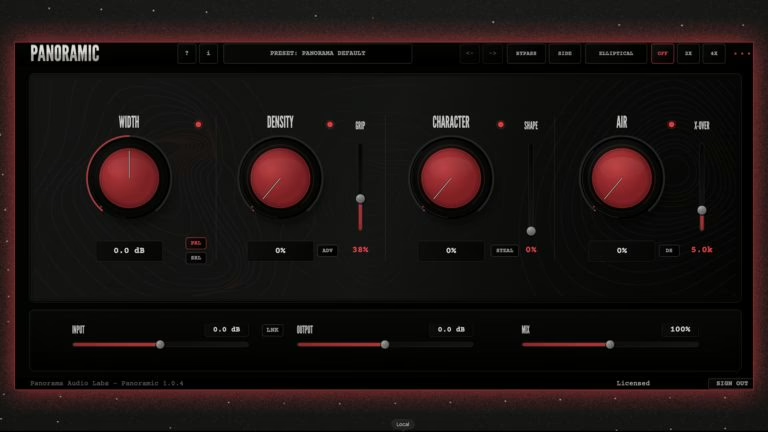
Four parallel sections
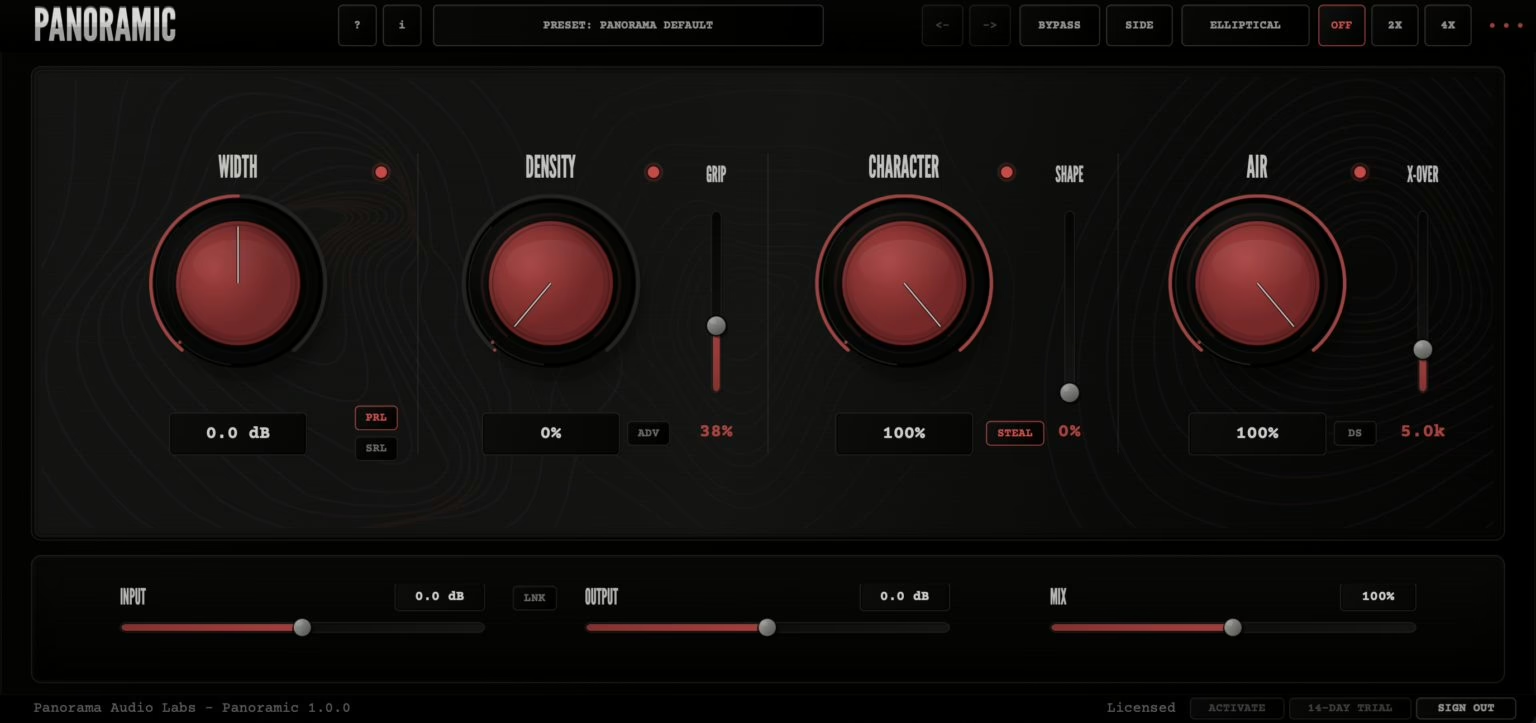
The interface is built around four modules working in parallel on the stereo field:
- Width: sets how far the image opens, in parallel (PRL) or serial (SRL) mode across the full stereo signal.
- Density: applies parallel compression to the Side channel only, thickening the sides without crushing the centre.
- Character: adds odd-order harmonic saturation to the sides, with a Steal function that borrows harmonics from the Mid and feeds them into the image.
- Air: excites the top end for presence, paired with a high-frequency dynamic EQ (DS) that tames harsh cymbals and sibilance.
This sliced, parallel approach mirrors the philosophy of a well-designed mastering chain: you add colours rather than stack corrections. It sits naturally alongside tools like the Parish Audio Parametric Compressor or the ONRI Audio REISEI mastering processor, each aiming to sculpt material without freezing it.
| Specification | Panoramic |
|---|---|
| Sections | Width, Density, Character (+ Steal), Air (+ dynamic EQ) |
| Mono safety | Elliptical section (low-end mono fold-down, pre or post) |
| Utility | 2x / 4x oversampling, parallel mix up to 200%, 75-125% GUI scaling |
| Formats | VST3, AU, AAX (macOS; Windows version to come) |
| Requirements | macOS 11+, Apple Silicon / Intel, 8 GB RAM, 350 MB |
| Price | $99 ($69 until 18 September) |
Elliptical and mono safety
An Elliptical section pulls the low frequencies back to the centre, before or after the chain, a habit inherited from vinyl, where over-wide bass makes the cut skip, but just as useful for a club or a broadcast feed. Add 2x/4x oversampling, a parallel mix adjustable up to 200% and a resizable interface, and you have a tool that thinks first about how solid the result stays once it leaves the studio.
My take
Stereo width is the most tempting trap in mixing: you push a knob, everything sounds huge, and you forget that half the audience is listening on a Bluetooth speaker or a PA that sums the channels. I have spent enough time in live control rooms and broadcast to distrust delay-based wideners, which make the signal vanish the moment you fold the mix to mono. A plugin that starts from the Side and builds in a low-end mono fold-down from the outset is the mark of a tool designed by someone who has lived the problem from the other side of the glass. It remains to be heard whether the Side saturation stays clean, but the approach is the right one.
Panoramic is available now on macOS for $99 ($69 until 18 September). The official walkthrough is below.