AIR Music Technology rounds out its processing line with two plug-ins built for the same goal: adding width, warmth and cohesion to a mix or a master. The Stereophonic EQP reworks the Pultec-style equalizer; the Stereophonic Enhancer tackles stereo width and the low end. Both are sold separately or as a bundle, and run in a DAW (VST, AU, AAX) as well as across the MPC ecosystem.
Stereophonic EQP: the Pultec, brought up to date
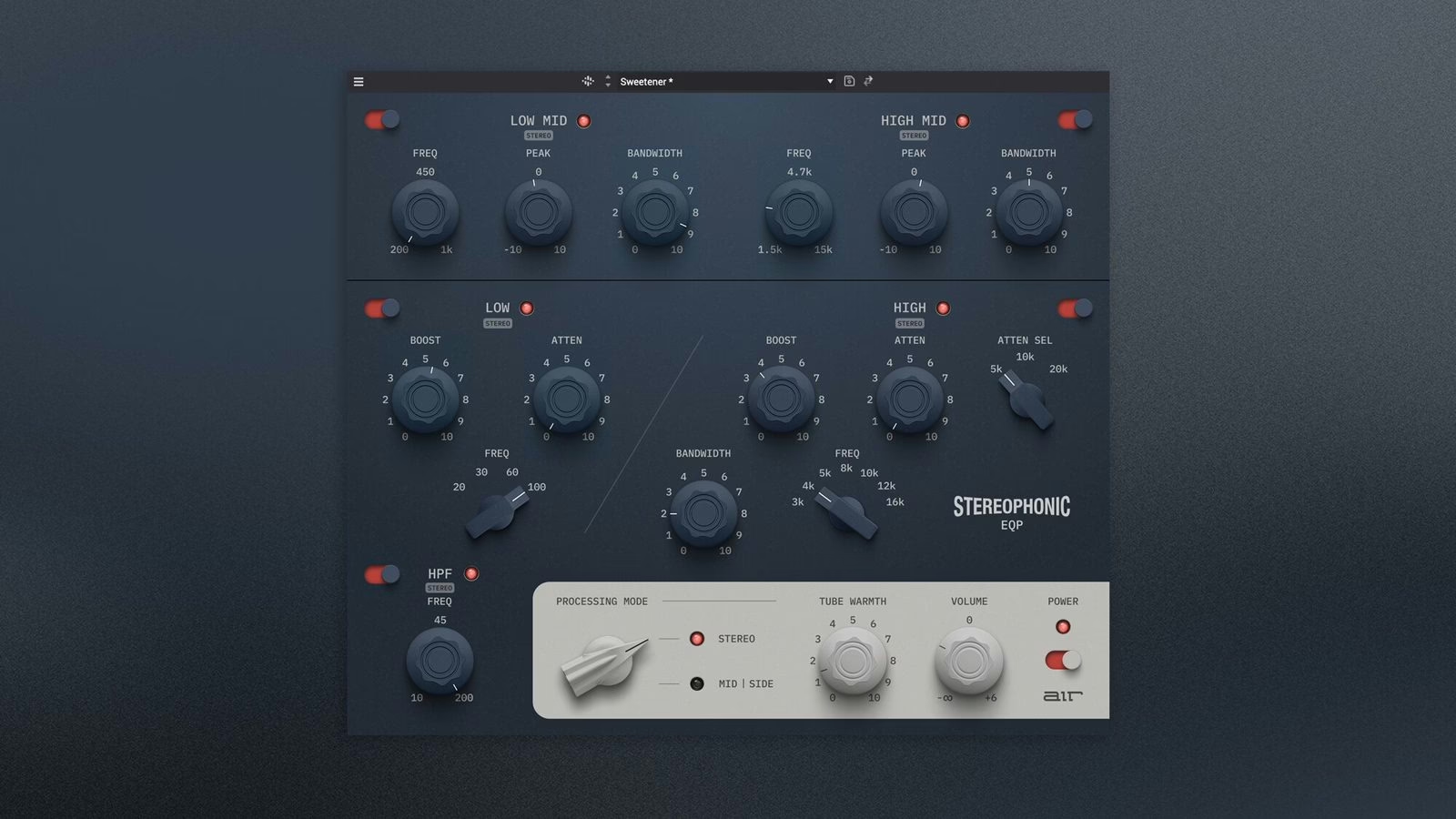
The EQP is openly modeled on the EQP-1A and MEQ-5, the passive tube equalizers whose broad, musical curves shaped decades of records. You get four bands — low, low-mid, high-mid, high — plus a high-pass filter, with the famous simultaneous boost/attenuation that gives the original its charm. AIR adds what analog never allowed: a switchable Stereo or Mid/Side processing mode, a “Tube Warmth” saturation control to dial in color, per-band bypass and an output level control. Twenty-eight presets provide starting points.
Stereophonic Enhancer: width, low end and air
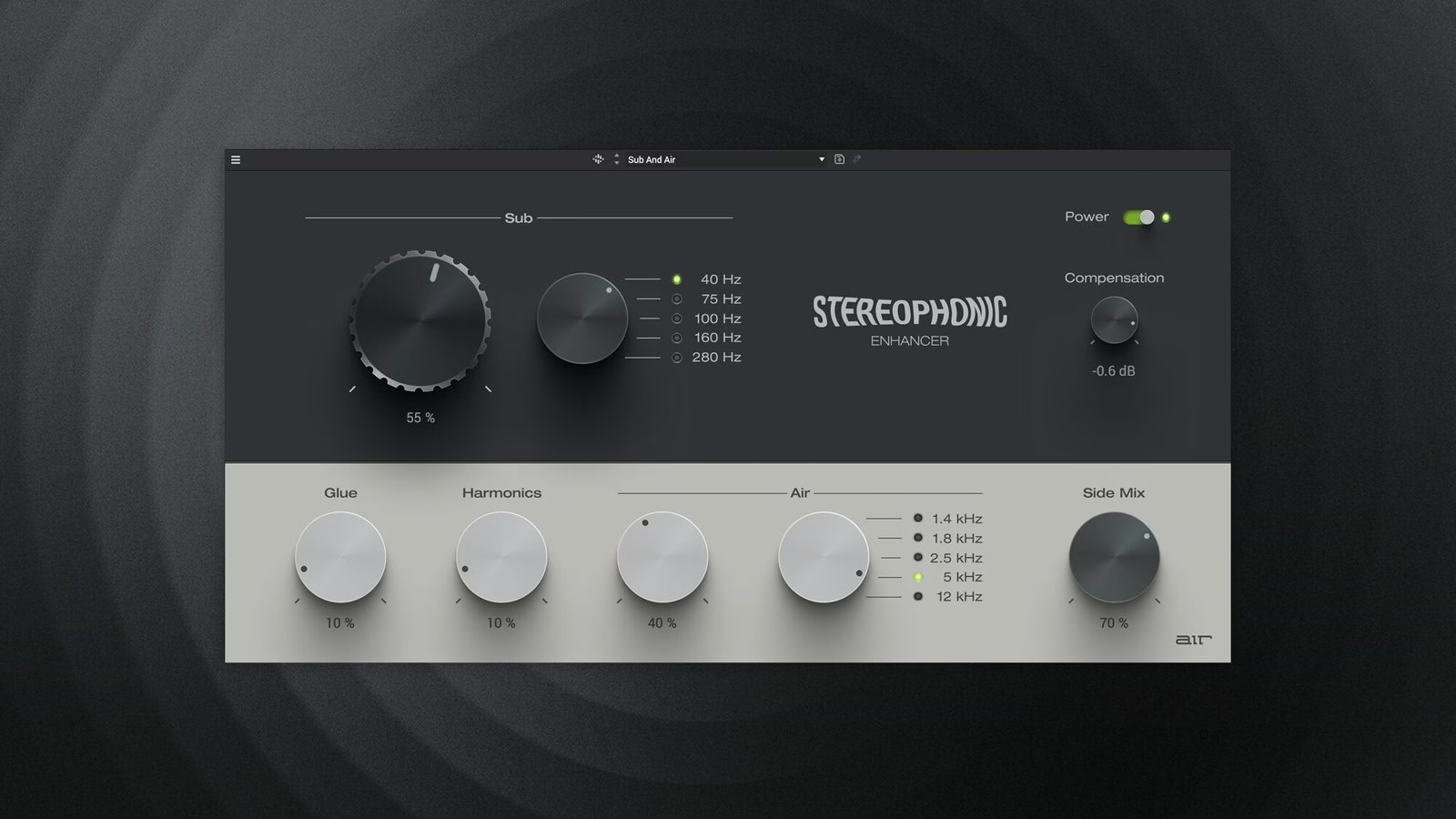
The Enhancer plays a different game. A Sub module adds weight at the bottom, with a selectable corner frequency, while the Glue, Harmonics and Air controls work on stereo cohesion, harmonic richness and top-end presence respectively. A Side Mix control sets the amount of widening, a compensation trim adjusts gain, and the whole thing claims a minimal phase-shift architecture — the sensitive point of these tools, where sloppy widening often costs you mono compatibility. This one is squarely mastering and mix-bus territory.
Why it matters
The pair targets a useful niche: simple, readable color tools that don’t need a degree to sound good. The EQP for a broad, warm curve on a vocal or a bus; the Enhancer to open up a mix that feels narrow. Budget around €40 each, less as a bundle — pricing that sets them against far pricier Pultec ports. If Mid/Side intrigues you, our feature on stereo-width processing for mastering is a good companion read. And to place the EQP among plugin mastering EQs, see the port of the Dangerous Music BAX EQ. The product page is on the AIR Music Tech site.
My take
Two color plug-ins for a few dozen euros is the kind of purchase you don’t deliberate over: the fun-to-price ratio is hard to beat for anyone starting out or padding a palette without wrecking a budget. The EQP delivers on the modern-Pultec promise, and the Mid/Side mode gives it an angle the original never had. The Enhancer is trickier — every stereo widener needs a mono check — but the minimal-phase-shift argument is the right one. These aren’t ultimate mastering tools, and they don’t pretend to be; they’re well-honed knives for everyday mixing.
Frequently asked questions
Should you buy the bundle or the plug-ins individually?
Both options exist. The bundle pairs the EQP and Enhancer at a reduced price; each is also available on its own if you only need one.
Which software do they run in?
VST, AU and AAX across all major DAWs, plus MPC Standalone and MPC Desktop. The MPC integration makes them especially appealing to Akai hardware users.
What’s the difference between the two?
The EQP is a Pultec-style color equalizer, for shaping tone. The Enhancer is a width and low-end processor, for space and weight. They’re complementary rather than redundant.
What does the EQP’s “Tube Warmth” do?
It dials in a tube-inspired saturation that adds harmonics and density. In small amounts it warms; pushed, it clearly colors the signal.