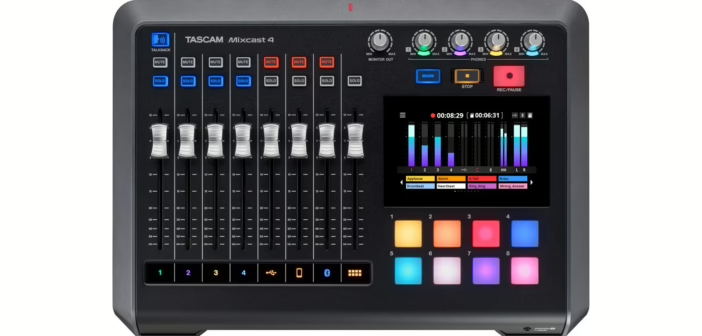
An all-in-one podcast console promises one thing: never opening a computer to record an episode again. Mic preamps, a multitrack recorder on a memory card, pads to fire jingles and stingers, a phone input for the remote guest — all in a box that sits on the corner of a desk. The Tascam Mixcast 4 is the poster child for the category: four combo inputs, a 14-track SD-card recorder, eight color pads, a 5-inch touchscreen and bundled editing software, with no machine required.
But the Mixcast 4 has company, and not every so-called podcast console does the same job. Some genuinely record standalone to a card; others simply mix and process the sound before sending it back to a computer. Here are seven units that play in this space, honestly sorted by what they can actually do — from true standalone studios to streaming-leaning cousins. Prices are indicative and vary by retailer.
The true standalone studios (onboard recording, no computer needed)
These do exactly what the Mixcast 4 does: they record several mics in multitrack to a memory card, handle the pads and the call-in guest, and run on their own. This is the family to aim for if you want to put the computer away and forget it exists.
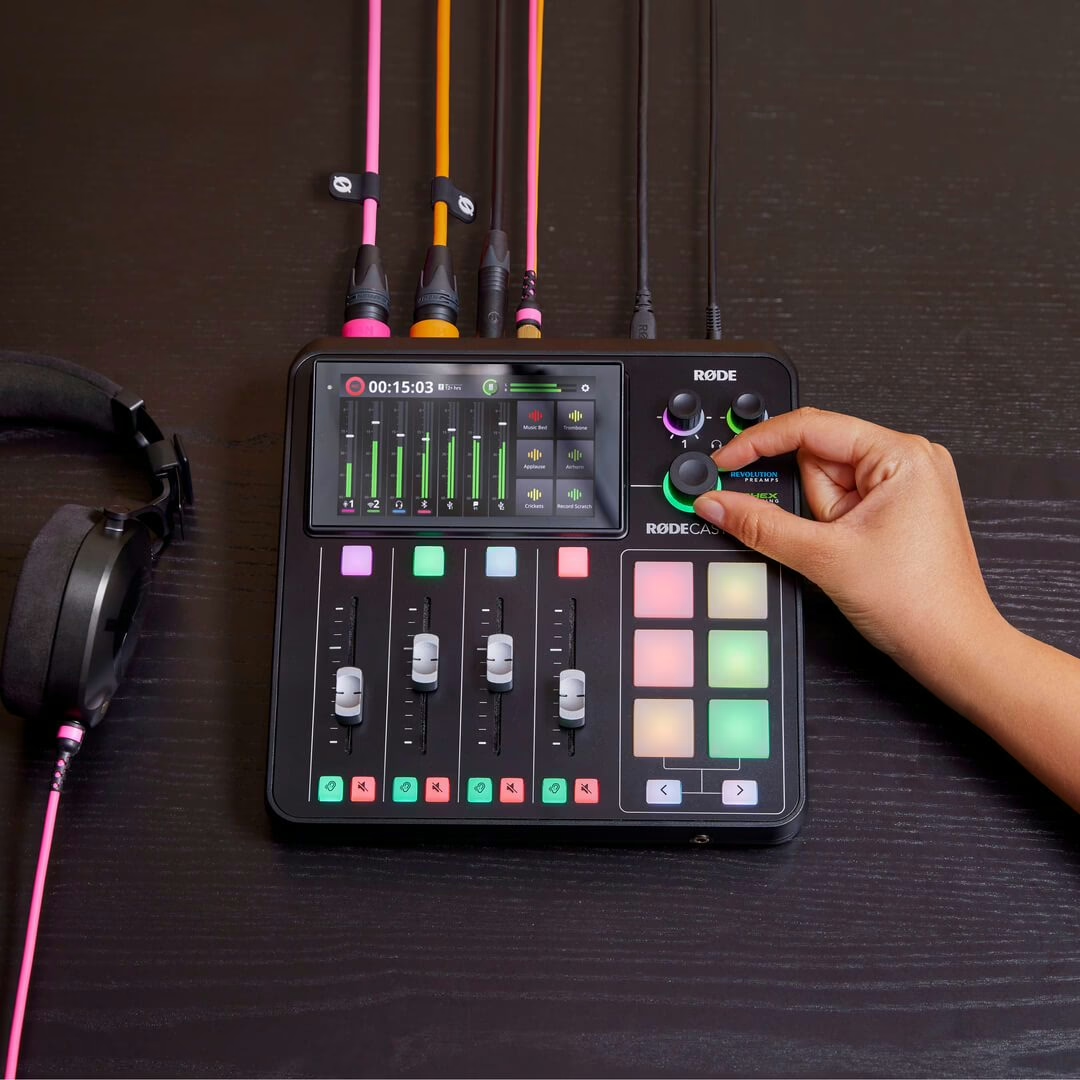
RØDE RØDECaster Pro II
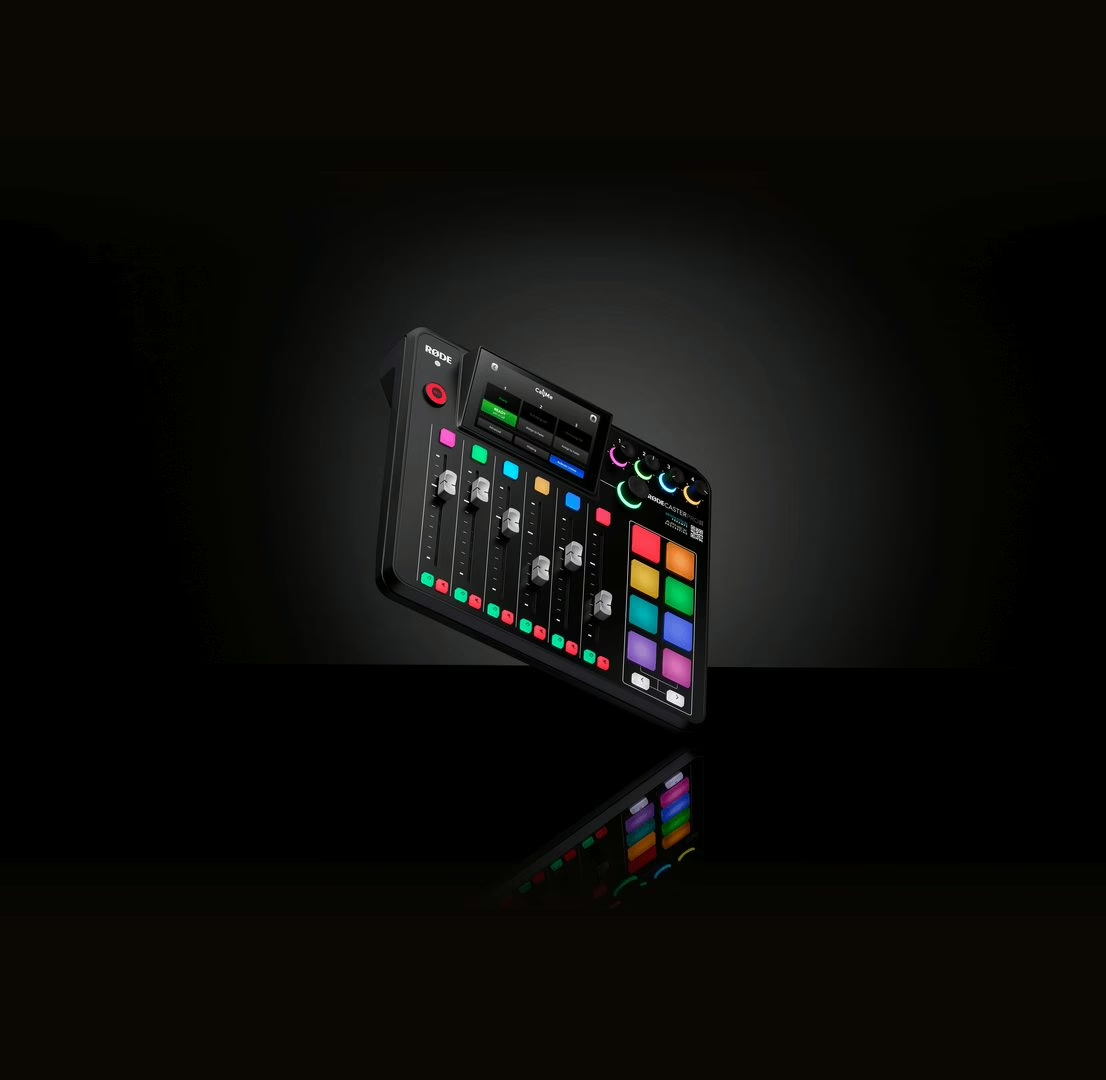
This is the category benchmark, and on paper it even outguns the Mixcast 4. Four ultra-low-noise Revolution preamps, nine assignable channels, multitrack recording to microSD, USB storage or computer, and a bank of eight SMART pads spread across eight pages — 64 programmable actions in all. Add dual USB-C (two computers or phones at once), Wi-Fi, Ethernet and onboard APHEX processing, and you get the most complete station of the bunch.
Against the Mixcast 4, the Pro II matches it for standalone recording but pushes connectivity and routing further. For an ambitious round table or a hybrid podcast-plus-streaming studio, it is the most future-proof buy.
In brief: RØDE · around $699 · 4 preamps, microSD, dual USB-C, Bluetooth, 5.5″ touchscreen
See the RØDECaster Pro II on RØDE
RØDE RØDECaster Duo
The Duo carries the Pro II DNA in a more compact body: two Neutrik combo inputs, the same Revolution preamps, a 5.5-inch touchscreen, six pads and multitrack card recording. Its signature trick is a built-in wireless receiver that pairs with up to two RØDE Series IV transmitters — handy for a mobile setup or a cable-free capture.
It does the Mixcast 4 job for one or two voices on mic. Beyond that, the two-input ceiling starts to bite — that is the price of the smaller footprint.
In brief: RØDE · around $499 · 2 combo inputs, microSD, Series IV wireless receiver, 5.5″ touchscreen
See the RØDECaster Duo on RØDE
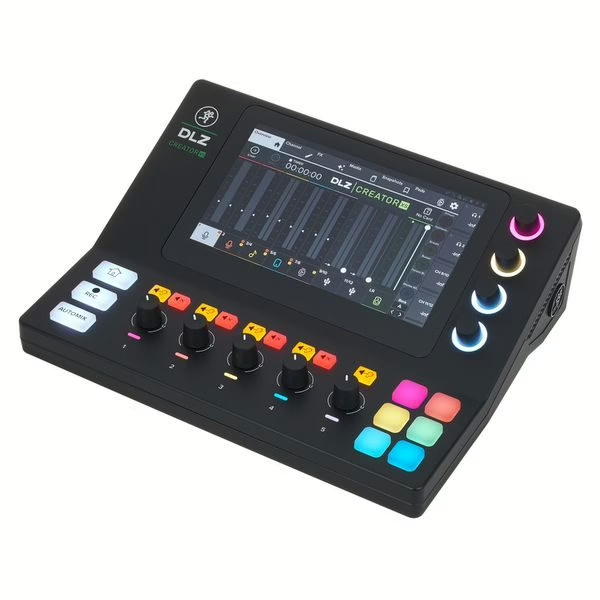
Mackie DLZ Creator XS
The DLZ Creator XS bets on approachability. Two XLR/TRS combo inputs with Onyx80 preamps (up to 80 dB of gain), a color touchscreen, a 14-in / 4-out USB-C interface, Bluetooth and, above all, Mix Agent technology: guided modes that adapt the display and settings to the user’s level, from easy mode to pro mode. It records multitrack to SD card, up to twelve channels plus the main mix.
It is a genuine standalone studio, built for the solo host or duo who wants clean results without diving into a manual. The onboard processing (3-band EQ, gate, de-esser, compressor, reverb, delay) covers the essentials.
In brief: Mackie · around $499.99 · 2 Onyx80 combo inputs, multitrack SD card, 14×4 USB-C, Bluetooth, Mix Agent
See the DLZ Creator XS on Mackie
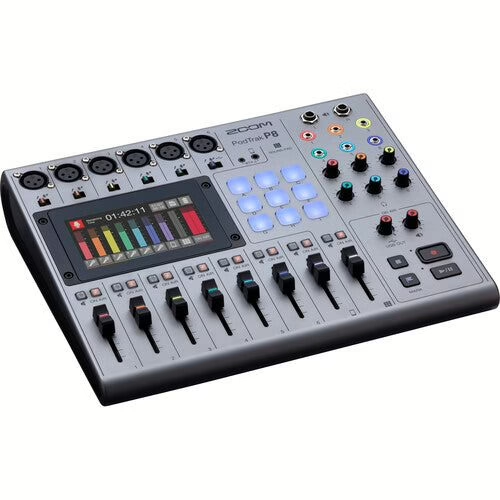
Zoom PodTrak P8
If your show looks like a round table, the PodTrak P8 has an unbeatable argument: six XLR inputs with Zoom preamps (up to 70 dB), six headphone outputs with independent volume, and recording of thirteen tracks at once to an SD card. A 4.3-inch color touchscreen runs the show, nine pads trigger effects and music, and a dedicated channel handles the remote call echo-free thanks to mix-minus.
It does the Mixcast 4 job and then some on mic and headphone count. The USB side, though, is limited to two in / two out: perfect for sending the mix, less so for a multitrack feed to the computer.
In brief: Zoom · around $549.99 · 6 XLR inputs, SD card (13 tracks), 6 headphone outs, mix-minus, 4.3″ touchscreen
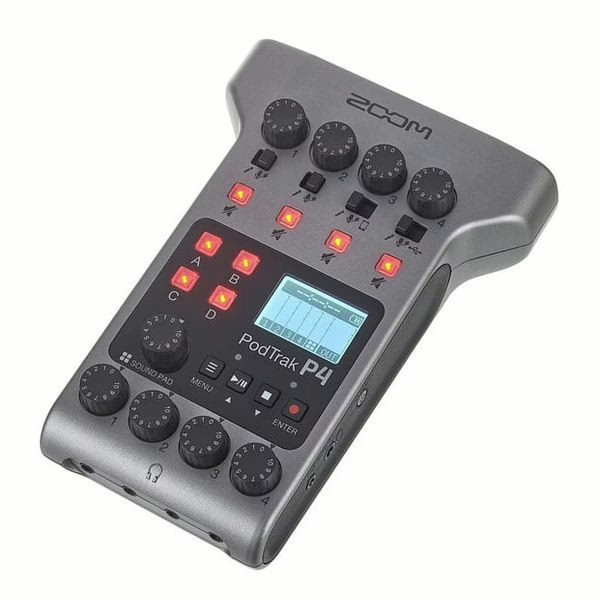
Zoom PodTrak P4
The P4 is the standalone entry point to podcasting: four XLR inputs, four headphone outputs, mix-minus for call-ins, trigger pads and SD-card recording, all in a tiny box that runs on two AA batteries. Zoom has recently reissued it as the P4next, with identical features.
For a four-mic interview recorded anywhere, with no computer and on a budget, it does the bulk of the Mixcast 4 job. You lose the touchscreen, the comfort of the controls and the finesse of the processing — but not the essentials.
In brief: Zoom · around $199 · 4 XLR inputs, SD card, mix-minus, pads, AA battery or USB power
The streaming and budget cousins (the computer stays essential)
These two mix several sources, offer pads and voice processing, and connect over USB like the others. The honest difference: they do not record multitrack standalone to a card. To keep your tracks separate you need a computer or a phone on the other end of the USB cable. So they do part of the Mixcast 4 job, not all of it.
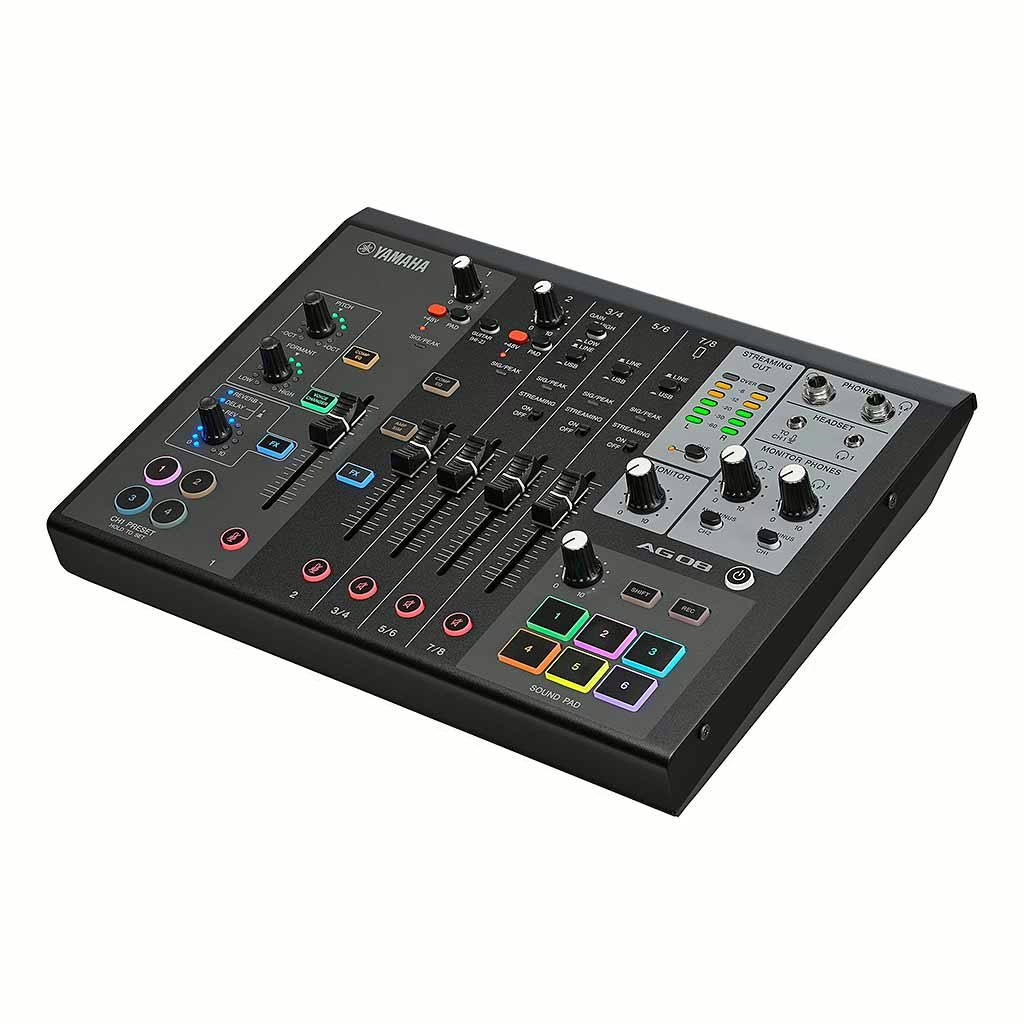
Yamaha AG08
The AG08 is the flagship of Yamaha’s streaming mixers: eight channels, two mic/line inputs with phantom power, a Hi-Z input for guitar, effects on channel 1, six sample pads and a 24-bit / 48 kHz multichannel USB interface. Its routing logic is built for live streaming and music as much as for speech.
It is an excellent desk for anyone who streams or plays with a computer always on. But with no onboard card recorder, it does not replace a standalone station: it is a cousin, not a Mixcast 4 clone.
In brief: Yamaha · around $499.99 · 8 channels, 2 mic inputs + Hi-Z, 6 pads, 24/48 USB interface (no standalone recording)
Maono MaonoCaster AME2
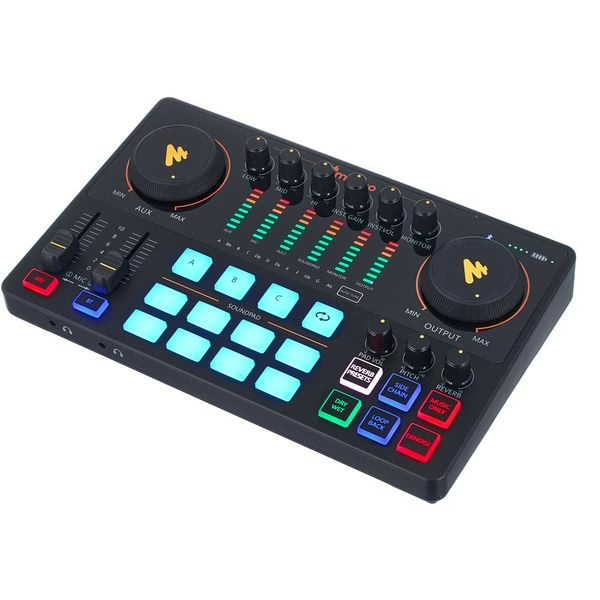
The MaonoCaster AME2 (also sold as the E2) is the most affordable pick in this round-up. You get one XLR combo input with phantom power and an onboard preamp, eleven programmable pads, six reverb modes, a 3-band tone control, a voice changer and a claimed eight-hour battery. It connects over USB-C to a computer, tablet or smartphone.
To start a podcast or a stream on a small budget, it does real work. Its entry-level position shows in the mic-input count and the lack of standalone multitrack recording — and the exact price swings a lot depending on configuration and retailer.
In brief: Maono · from about $150 (varies) · 1 XLR combo input, 11 pads, USB-C interface, built-in battery
See the MaonoCaster AME2 on Maono
The quick recap
| Product | Maker | Street price | The job in a word |
|---|---|---|---|
| RØDECaster Pro II | RØDE | $699 | Benchmark |
| RØDECaster Duo | RØDE | $499 | Compact |
| DLZ Creator XS | Mackie | $499.99 | Guided |
| PodTrak P8 | Zoom | $549.99 | Round table |
| PodTrak P4 | Zoom | $199 | Budget standalone |
| AG08 | Yamaha | $499.99 | Streaming |
| MaonoCaster AME2 | Maono | ~$150 | Getting started |
Which one should you pick?
The real dividing line is neither the number of pads nor the size of the screen, but two questions: how many mics, and do you need a computer to record? For a round table of four guests or more, the Zoom PodTrak P8 and the RØDECaster Pro II stand out, the latter for anyone who also wants a full streaming studio. Solo or duo, the RØDECaster Duo offers the best sound-to-size ratio, while the DLZ Creator XS will appeal to those who prefer to be guided. Tight budget but standalone recording required: the PodTrak P4 ticks the boxes for a fraction of the price.
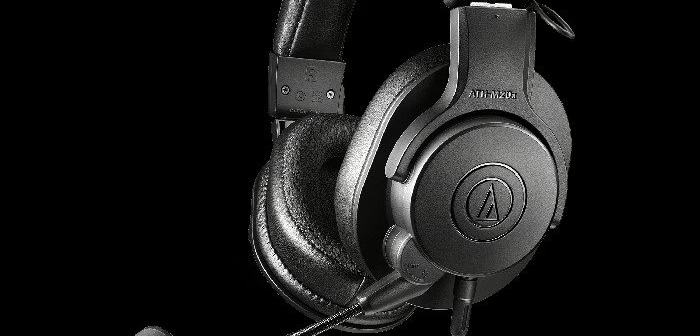
If the computer stays on anyway and streaming or music matter as much as speech, the Yamaha AG08 is a highly recommendable cousin; and to try the podcast format without spending much, the Maono MaonoCaster AME2 is enough to get going. As for the Tascam Mixcast 4 that anchors this selection, it remains a very coherent choice whenever you want four mics, an onboard recorder and editing software in the box. To round out the rig, consider the Shure MV6 Gen 2 USB dynamic mic or, for tracking headphones, the Audio-Technica ATH-M20xSTS.