Reverb is one of the few effects still judged far too often in solo, headphones on, when the only question that matters lies elsewhere: does it hold up in the mix? That’s the stated bet from Waves with Atlas Reverb, pitched as an algorithmic reverb designed to build a space that stays musical once the track is running.
Waves is hardly new to reverb. So Atlas’s appeal isn’t the existence of yet another plug-in, but the claimed approach: an engine rebuilt from scratch and programs shaped by listening rather than by numbers.
An all-new algorithmic engine
Atlas Reverb runs on a purpose-built, fully algorithmic engine that produces more than a hundred programs. Each was designed from a blank page and then tuned by ear — for tone, density, reflection behavior, modulation, depth and feel. Where many recent reverbs lean on convolution and captured real spaces, Waves openly claims kinship here with the hardware algorithmic reverbs that shaped the sound of 1980s records.
From real spaces to imagined worlds
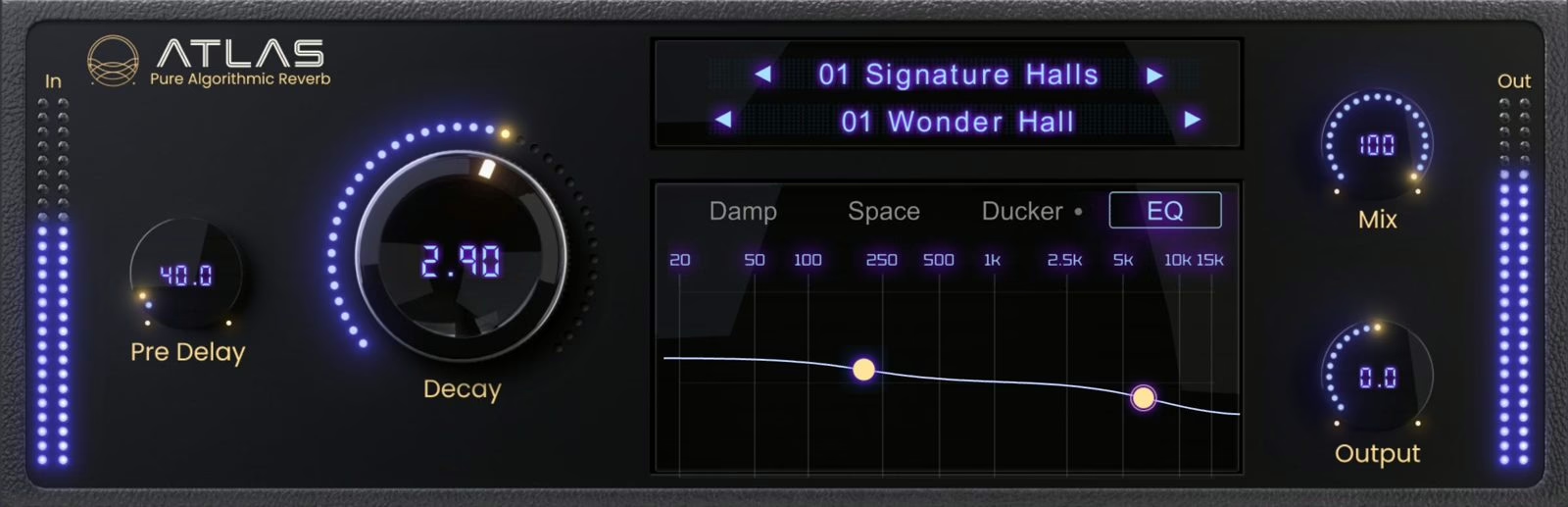
The program bank casts a wide net. You’ll find the expected classics — rooms, chambers, plates and springs — but also two more personal families: Signature Halls, large rooms with real character, and Dreamscapes, more experimental ‘imagined’ spaces that exist in no real room. That range is what separates a versatile toolbox from a single-purpose reverb: from a realistic room on a vocal to an evanescent halo on a synth, it all comes from the same plug-in.
Six controls, a ducker, an output EQ
On the ergonomics side, Waves tightened the interface around six main controls, backed by two tools that often make the difference in use. The ducker dynamically pulls the reverb down while the source plays and lets it bloom in the gaps — essential for keeping a vocal intelligible without sacrificing depth. The Post EQ section shapes the reverb tail so it sits in its place in the spectrum. Waves also stresses a modest CPU load, allowing several instances without bogging down the session.
Our take
I’m a committed convert to going fully in the box, and reverb is precisely a field where software has caught up with — then overtaken — hardware, for one simple reason: total recall and multiple instancing. What feels right about Atlas’s approach is that it claims ear-tuning over a race for measurements. A reverb isn’t judged by its spec sheet but by how its tail melts into a mix. What’s left is to confirm in context that these programs deliver outside of solo — that’s the whole point.
Formats and price
Atlas Reverb is available in VST3, AU and AAX, for macOS and Windows, with NKS and SoundGrid support. The launch price sits around $99.99, versus a regular $149.99, and the plug-in is included in the Waves Ultimate subscription as well as several house bundles. It widens a processing arsenal where mix assistance and voice-processing tools take up ever more room.
Frequently asked questions
What kinds of spaces does Atlas Reverb offer?
More than a hundred programs: classic rooms, chambers, plates and springs, but also Signature Halls with strong character and Dreamscapes, more experimental imagined spaces.
What are the ducker and output EQ for?
The ducker pulls the reverb down while the source plays and lets it return in the gaps, to preserve intelligibility. The output EQ shapes the reverb tail so it sits cleanly in the mix spectrum.
Which formats and platforms is it offered in?
VST3, AU and AAX, for macOS and Windows, with NKS and SoundGrid support.
Is it included in a subscription or bundles?
Yes: it’s part of the Waves Ultimate subscription as well as several of the brand’s bundles, on top of the standalone purchase.
What’s its CPU load?
Waves quotes a modest footprint, designed to allow several instances within one session without notable strain.