Ever since smart:EQ, sonible has built a reputation for plugins that listen to the signal before suggesting a setting. With smart:chain, the Austrian company goes a step further: instead of one isolated processor, it stacks eight of them into a single channel strip, all wired to the same analysis of the sound. Better still, the instances open across your tracks talk to one another, so the tool no longer thinks track by track but across the whole mix. It is out at an intro price of 99 USD/EUR, rising to 179 afterwards.
Eight processors, one listening pass
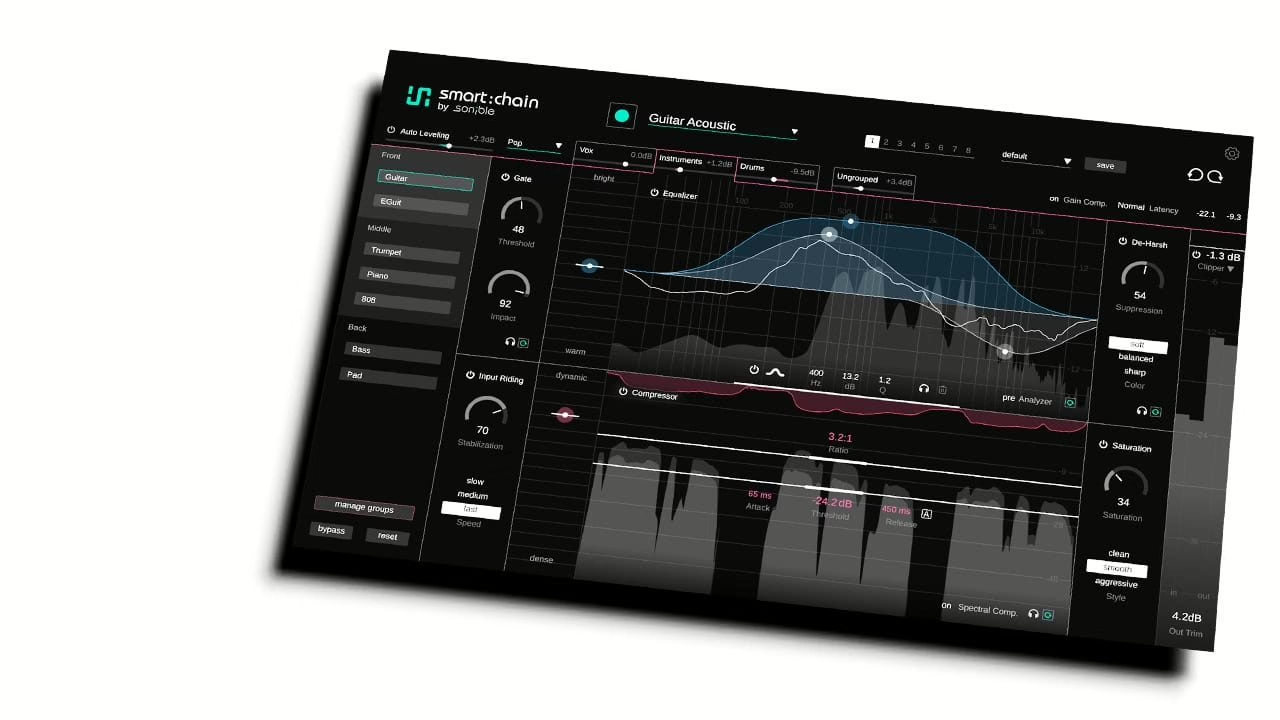
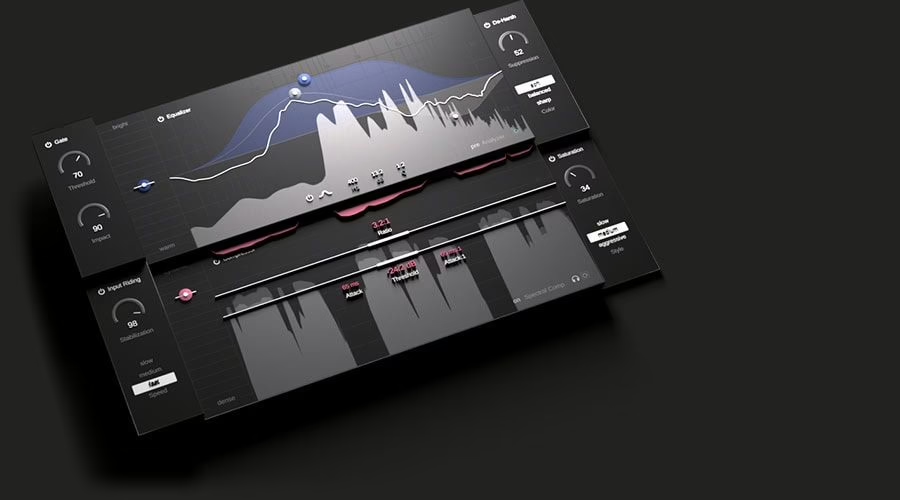
Under the hood, smart:chain lines up, in order, a gate, an EQ, a de-ess/de-harsh stage, an input rider (which smooths the input level before compression), a compressor, a saturator and a clipper. Nothing groundbreaking on its own: that is the ABC of a mixing channel. The novelty is elsewhere. These modules do not work blind to each other; they share a common understanding of the signal. You pick a source profile (vocal, guitar, drums…), let a representative passage play, run the analysis once, and the plugin derives coherent starting points for each stage.
It is the same logic you find in all-in-one vocal strips like the Black Rooster Audio PS-VC1, except that smart:chain swaps the fixed preset for a live analysis of your own material.
Learn: a starting point, not autopilot
The word that grates, whenever assisted mixing comes up, is “automatic.” sonible has the good sense not to confuse analysis with automation. The Learn process offers a baseline; everything then stays fully editable, module by module, parameter by parameter. You do not inherit a black box but a fast rough pass you keep control of. For anyone who has spent ten minutes reseating a compressor and an EQ before even hearing the track, the time saved is real — as long as you do not mistake the suggestion for a verdict.
Intelligence at session scale
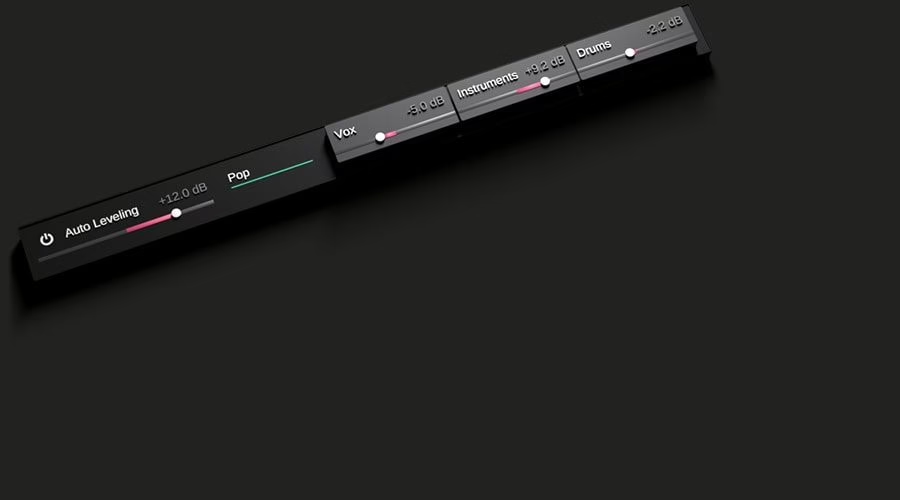
This is smart:chain’s real pitch, the thing that sets it apart from yet another channel strip. Instances across your tracks communicate. In practice that means three things. First, a centralized session view: navigate tracks, groups and every instance from a single window. Second, depth staging that places each element in the front, middle or back of the mix and adapts processing to support separation and depth. Third, project-wide auto leveling that analyzes how tracks relate and proposes a genre-aware starting balance, with dedicated trims to refine without breaking the level relationships.

smart:chain at a glance
- Eight processors in series: gate, EQ, de-ess/de-harsh, input rider, compressor, saturation, clipper, leveling.
- A shared analysis proposing starting settings per source profile.
- Instances that communicate: depth staging, auto leveling and centralized session control.
- VST, VST3, AU and AAX, up to 192 kHz, machine or iLok authorization.
The right use, and the wrong one
I will say it plainly: in-the-box mixing has been a perfectly credible approach for years, and a tool like smart:chain confirms it. The danger is not the tool, it is the laziness it can invite. A well-designed input rider and auto leveling save precious time on the thankless jobs — taming a vocal that jumps in level, roughing out a session balance. But a mixing decision is still a decision: depth staging suggests a depth, it does not replace the ear that decides where the vocal really belongs against the snare. Used as an accelerator, it is excellent. Used as autopilot, it turns out clean, interchangeable mixes.
To get the most out of a chain like this, the real foundation is still gain staging and a solid grasp of Mid/Side processing: no intelligent plugin ever fixes a shaky level structure at the input.
Price and availability
smart:chain sells for 99 USD/EUR at launch until 28 September 2026, then 179. It runs on Windows and macOS in VST, VST3, AU and AAX, with update and crossgrade pricing for existing sonible customers. Full details are on the sonible product page. At that price, for anyone mixing a lot of tracks and looking to save on the rough pass without giving up control, it makes sense — the open question is whether the cross-instance communication holds up on heavy sessions.