CEDAR Audio is not a name you run into every day in a stage rack. The British company made its reputation in audio restoration: denoising archives, cleaning up film dialogue, forensic work. All fields where you take your time on a file, offline. With Voxis, CEDAR changes ground and aims at live work: a voice isolator designed to run in real time, at front of house, on live capture and in event broadcast.
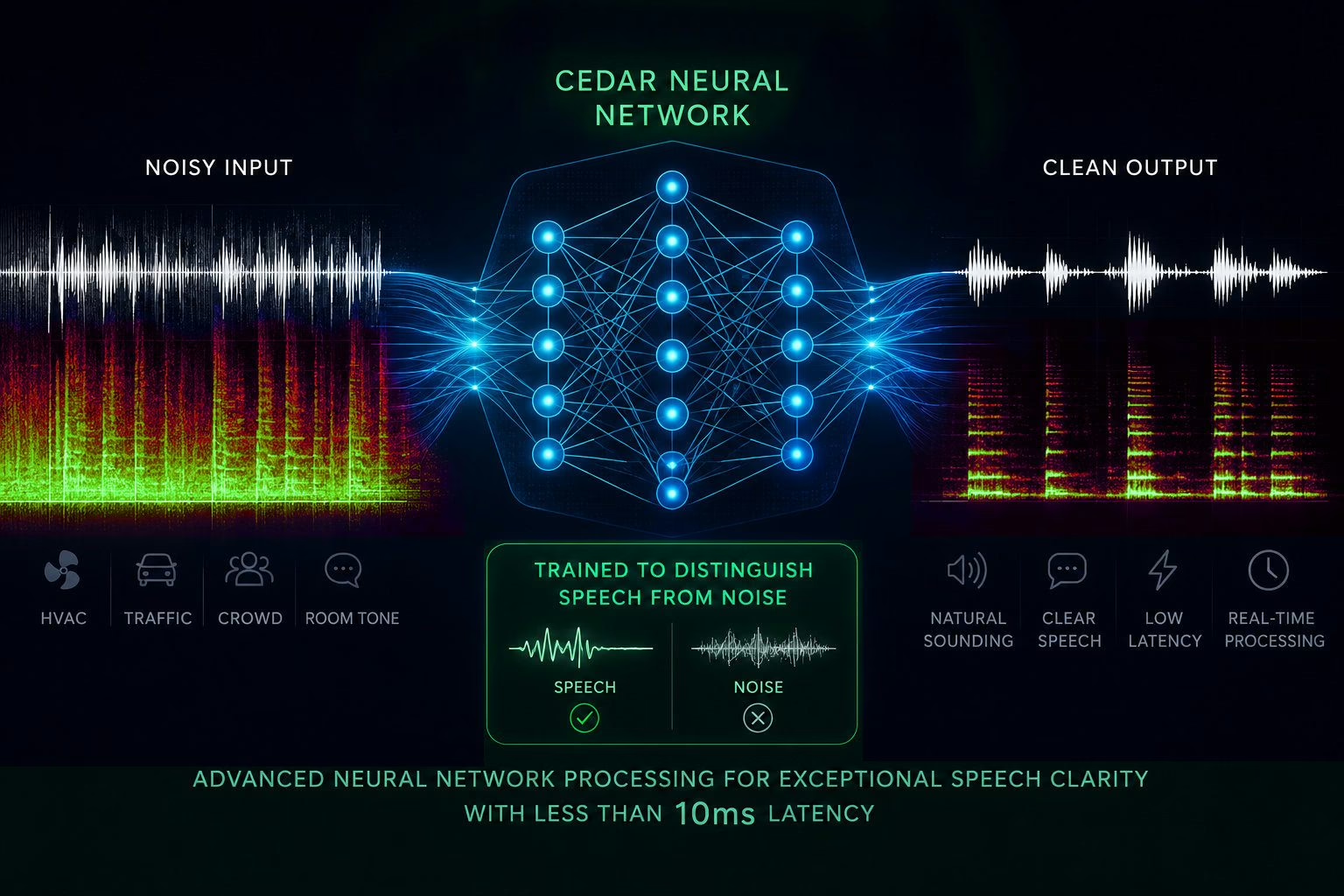
Voxis joins the company’s ICONS plug-in range and is built around a deep neural network, trained to recognise speech and singing and then separate them from background noise and excess reverb. So it is neither a conventional expander nor a fixed-print denoiser: the processing decides, frame by frame, what is voice and what is everything else.
Under 10 ms of latency: the real argument
The number that matters here is latency, quoted at under 10 ms. In restoration, latency is irrelevant: you process a file. Live, it is the opposite. As soon as voice processing runs past a few milliseconds, the front-of-house engineer hears a gap between the direct sound in the room and the reinforced signal, and the singer monitoring themselves loses the thread. A voice isolator that stays under 10 ms is exactly what makes it usable on a live spoken word as well as on a sung vocal.
It is also what sets Voxis apart from neural denoisers designed for podcasting or post, often excellent but far too slow for the stage. CEDAR explicitly points it at front of house, concert capture, sports and live event broadcast, and conference AV.
Three bands, a Link button and a Voice control
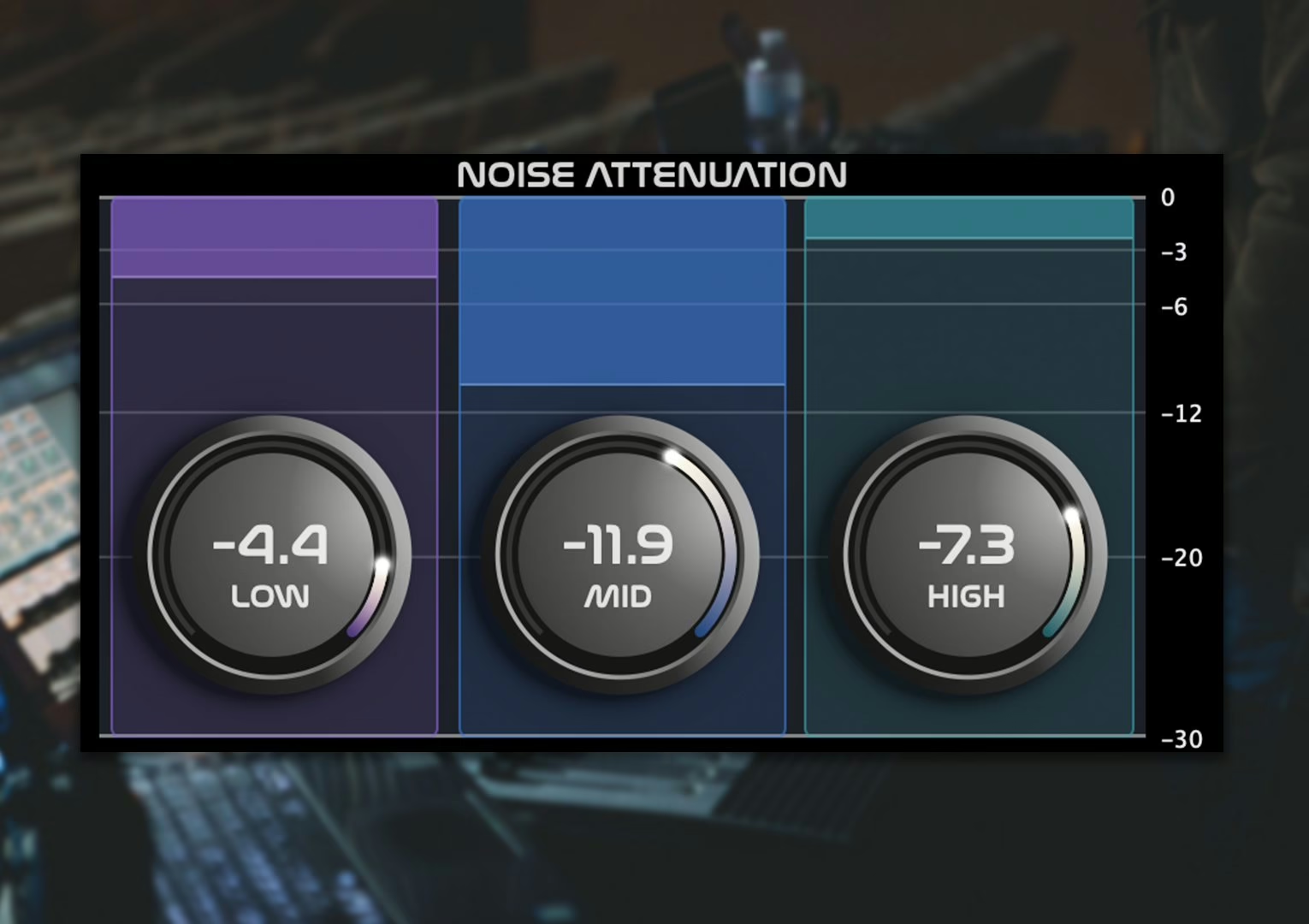
The interface gets straight to the point. Noise reduction is applied across three independent bands, Low, Mid and High, each set by its own knob. You can calm an air-conditioning rumble in the low end without touching the clarity up top, or conversely tame an audience murmur in the mids. A Link button ties the three bands together to keep the tonal balance when you simply want to raise or lower the overall action.
Next to it, a Voice control lifts the level of the isolated voice for more presence once the noise is out of the way. The typical targets are clearly named: ventilation rumble, traffic, audience chatter, room ambience and reverb. Nothing more, but nothing wasted either: on a live show you do not want to be digging through a fifteen-parameter menu while the artist walks on.
| Specification | Voxis |
|---|---|
| Type | Neural-network voice isolator, ICONS range |
| Latency | Under 10 ms (live spoken and sung voice) |
| Controls | 3 bands Low / Mid / High, Link button, Voice control |
| Targets | Air conditioning, traffic, audience, room ambience and reverb |
| Use cases | FOH, live capture, event and sports broadcast, conference AV |
| Formats | VST, AU, AAX (Windows 10+, macOS 10.13+) |
| Price | $269 (£199 / 229 euros) + tax, 14-day trial |

What it changes at the desk
Having spent years on live sound, I know how much background noise is the silent enemy of a speech or a capture. A room that hisses, an air-con unit you cannot switch off, an audience rumbling between songs, a conference in a reverberant hall: all situations where you dream of a button that keeps the voice and nothing else. Until now the answer went through mic placement, gating, subtractive EQ and a lot of care, with limits you hit fast.
A neural network able to tell voice from noise in real time, with no latency tail, promises another level of intervention. The field questions remain: robustness when the noise resembles the voice, behaviour on an operatic vocal or a speaker with heavy dynamics, and freedom from artefacts at the ends of phrases. CEDAR has the pedigree to convince, but Voxis will prove itself in use, headphones on. A free fourteen-day trial lets you throw it at your own shows before you decide.
Voxis rounds out a chain where every link is about vocal clarity. For artist monitoring, see our pick of the best in-ear monitors for the stage in 2026; on getting a PA aligned, our guide to how line arrays really work; and for feeding remote guests in radio and podcast, our explainer on mix-minus.