Two compressors set identically can sound worlds apart. The reason is rarely the settings; it is the gain cell, the part that actually turns the level down. It decides how fast the unit reacts, how soft the knee is, and where that famous “colour” comes from. Learn the four classic families and you stop grabbing a compressor at random and start matching it to the source.
Why topology changes everything
Compression narrows the gap between loud and quiet passages. Threshold, ratio, attack and release are the same concepts across every unit; if those basics are hazy, start with our guide to audio compression explained. What truly separates machines is how the gain element applies that reduction. Some topologies are surgically fast, others breathe slowly; some stay transparent, others print a harmonic signature from the first decibel.
VCA: the precise all-rounder
The VCA (voltage-controlled amplifier) is the studio’s Swiss army knife. A dedicated circuit sets gain from a control voltage, which allows very short attacks, high ratios and total control. The result is precision, repeatability and a range that runs from gentle levelling to hard clamping. It is the topology of mix buses and drum smashers because it holds transients without flinching. 500-series units like the Drawmer FC1 show off that controlled snap.
FET: speed and bite
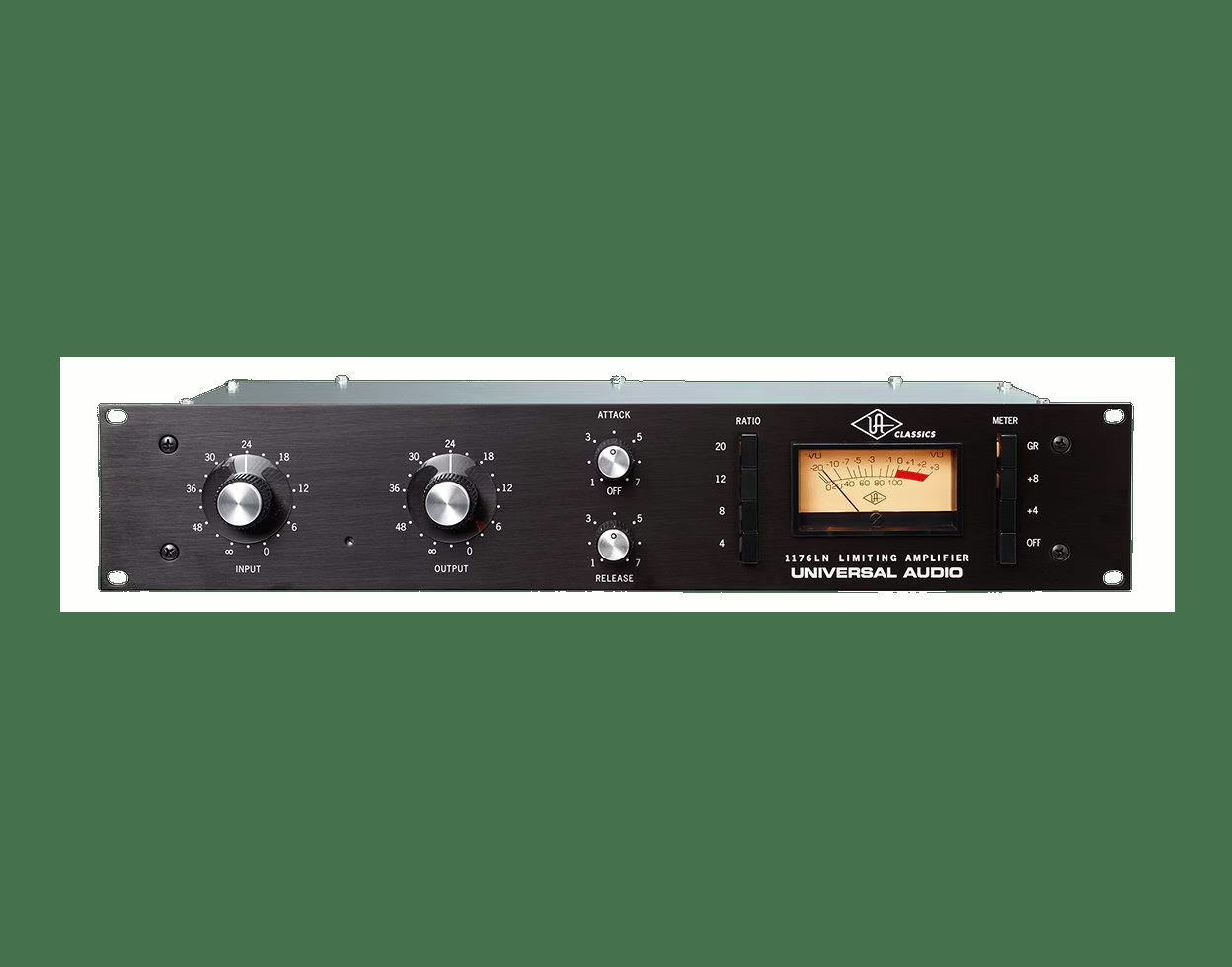
FET designs mimic tube behaviour with a field-effect transistor, and the signature is unmistakable: extremely fast attack, flattering saturation when pushed, a character that brings the source forward. This is the DNA of the classic 1176 and its countless descendants, such as the Lindell LiN76 mkII. On a rock vocal, a snare or a fingered bass, FET adds density and grit. Its “all-buttons” mode, engaging every ratio at once, is still a go-to for thickening drums.
Opto: the smooth breather
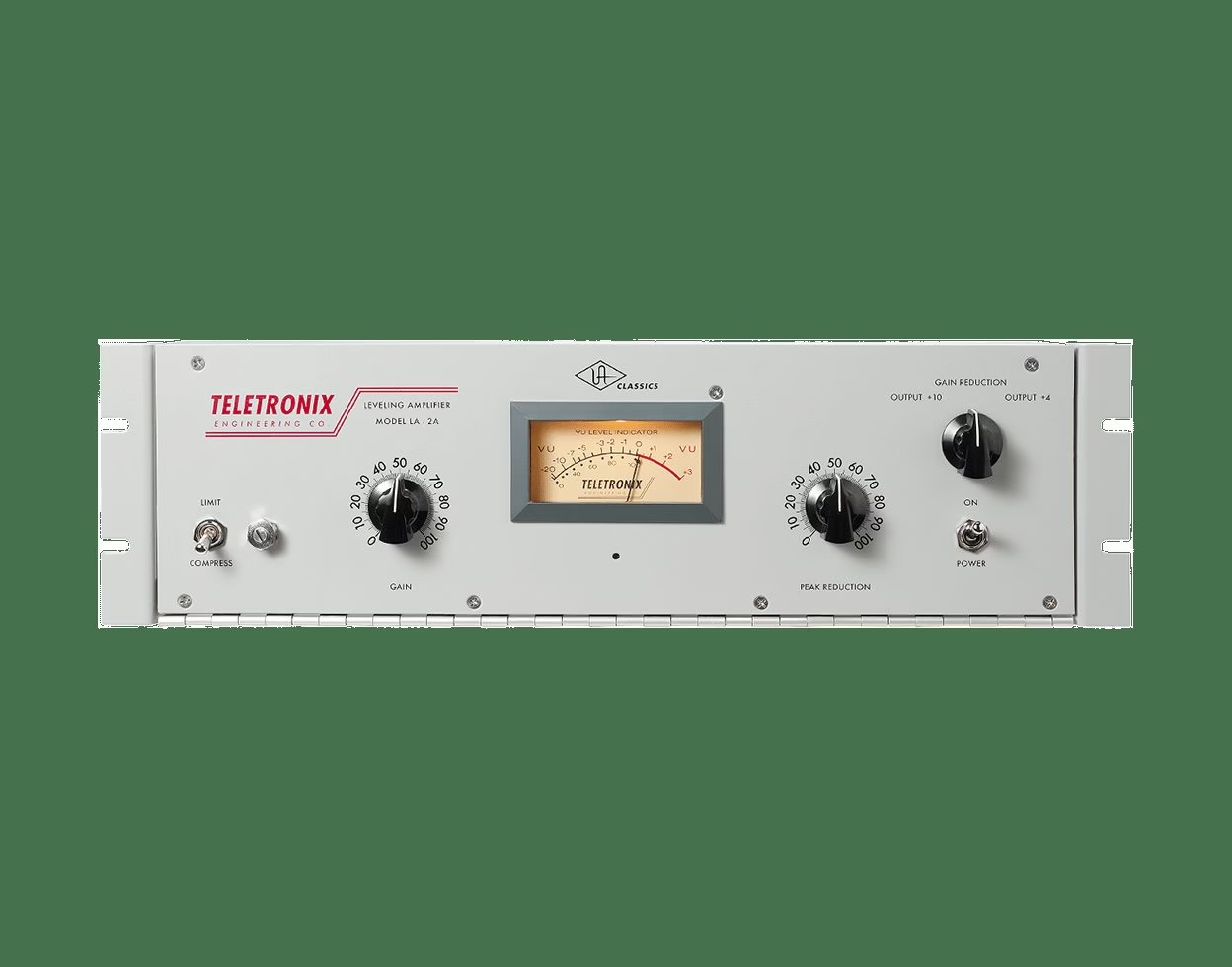
The optical compressor relies on a photocell: a light source brightens with level, a light-sensitive resistor reacts and attenuates the signal. That mechanism forces a naturally gradual response, with a two-stage release that “breathes”. You often set a single reduction knob, and that is the point: opto excels on vocals, bass and anything that benefits from being smoothed without you hearing it work. The LA-2A froze that gentle, musical identity, imitated ever since.
Vari-mu: tube glue
Vari-mu uses a tube’s gain variation with bias voltage. Its quirk: the louder the signal, the more compression it applies, with a very soft knee and classic valve harmonics. This is not the topology of precision, it is the topology of glue: put it on a stereo bus or a full mix to bind elements together and add warmth. Slow by nature, it needs carefully chosen attack and release so it does not dull transients.
What about digital?
Software emulations now reproduce all four behaviours convincingly, and add what hardware cannot: total recall, oversampling, sidechain listening, built-in parallel compression. They do not cancel the value of hardware when it brings audible colour, but they put these topologies within everyone’s reach. To dig into control-signal listening, see our piece on sidechaining.
Quick comparison
| Topology | Attack speed | Colour | Best on |
|---|---|---|---|
| VCA | Very fast, adjustable | Neutral to incisive | Buses, drums, precise control |
| FET | Extremely fast | Grit, saturation | Vocals, snare, bass, colour |
| Opto | Gradual, gentle | Smooth, musical | Vocals, bass, gentle levelling |
| Vari-mu | Slow | Tube warmth | Stereo bus, mix glue |
How to choose by source
The field rule is simple: ask what you want to hear first. Need to hold transients or shape a hit with no colour? VCA. Want density and presence on a vocal or bass? FET. A discreet levelling that lets the source breathe? Opto. Warm glue on a bus or a full mix? Vari-mu. Many engineers chain two topologies: opto levelling into a touch of FET bite on a vocal, for instance. Mind where the compressor sits in your processing chain, and remember colour starts upstream, at the mic preamp.
My take
Topology is not a spec-sheet footnote, it is your first musical decision. A FET on an intimate vocal has you chasing smoothness all session; an opto on a punchy kit leaves you wanting. The real luxury today is that digital puts all four families a click away without breaking the bank, so learn to spot them by ear rather than by label. One tip that saves years: pick the colour first, dial the numbers second. The gear should follow the sound, never the other way round.