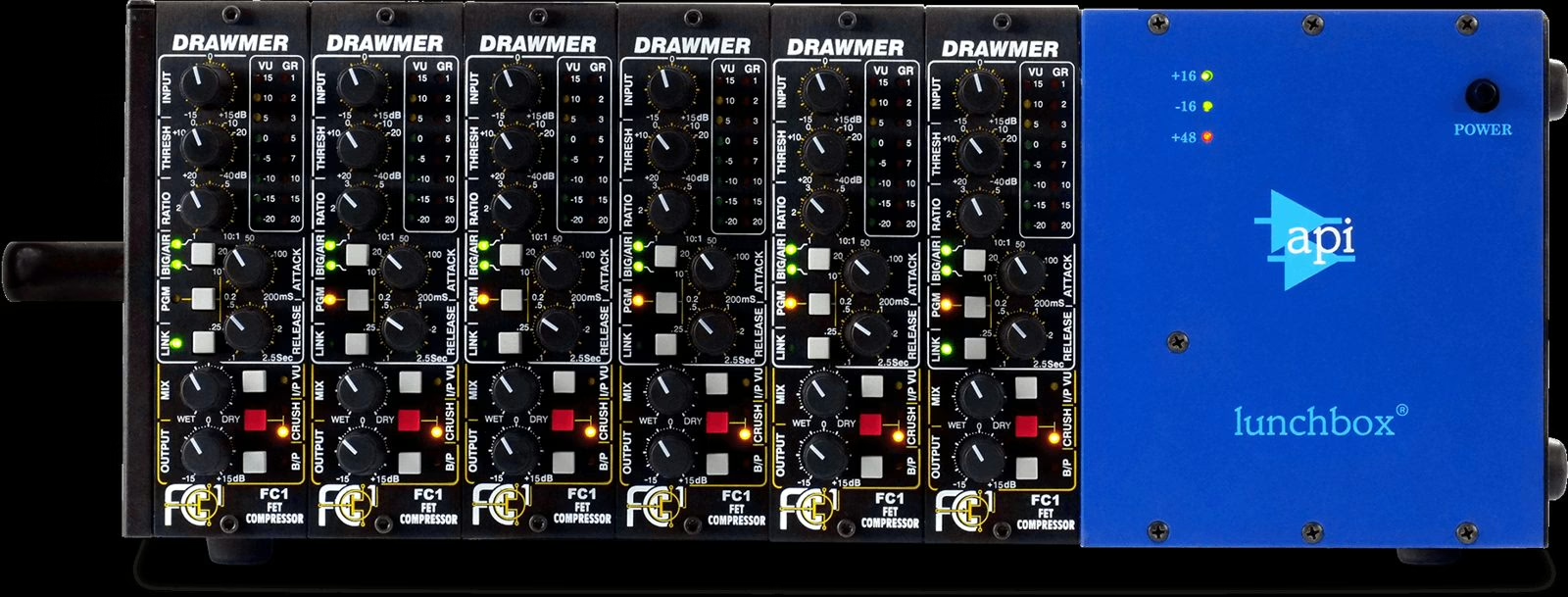
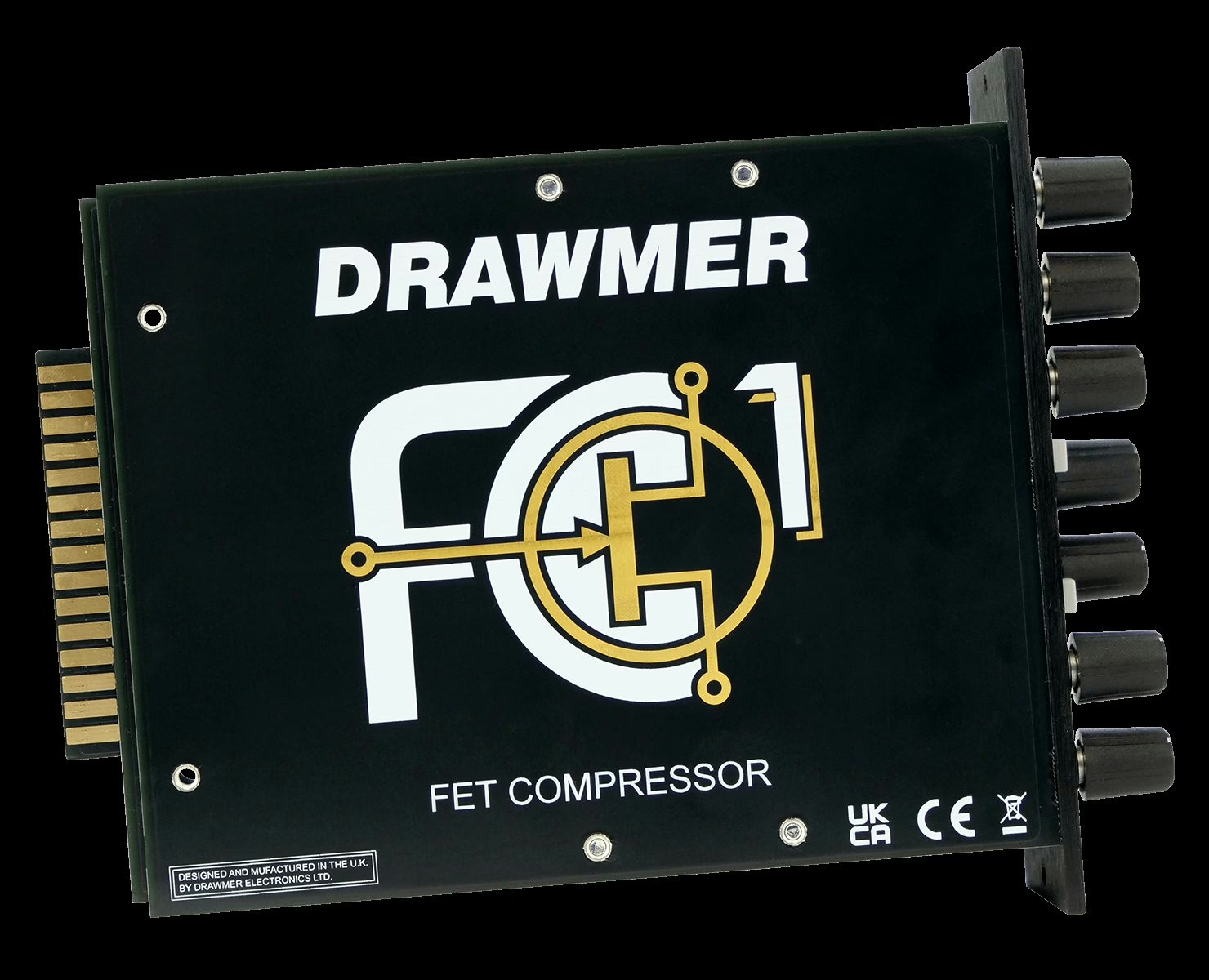
The 500 Series may be everywhere, but it’s still rare to find a compressor there that offers a full control set rather than a stripped-down take on a rack unit. That’s exactly where Drawmer aims its two new modules: the FC1 and OC1, two 500 Series compressors that share the same layout but sit on two different detection technologies.
The British brand, long known for its dynamics processors, made a clear editorial choice: not a generic compressor, but two distinct characters you pick by source. On one side the fast, incisive grain of FET; on the other the program-dependent roundness of opto.
FET versus opto: two characters
The FC1 is built on a FET design derived from Drawmer’s 1970s Series. Its soft-knee, feedback-detection compression reacts fast: it’s a transient tool, the one that adds punch, attitude and a controlled kind of aggression. Drums, electric guitars, energetic vocals — it excels where impact and presence come first.
The OC1 takes the opposite tack. It’s Drawmer’s first opto compressor in the 500 range, with a slower, program-dependent response that tightens the sound without ever drawing attention to itself. Its calling: warm transparency on vocals, acoustic instruments, bass and mix buses, where you want cohesion without hearing the compressor work.
A control set that’s rare on 500 Series
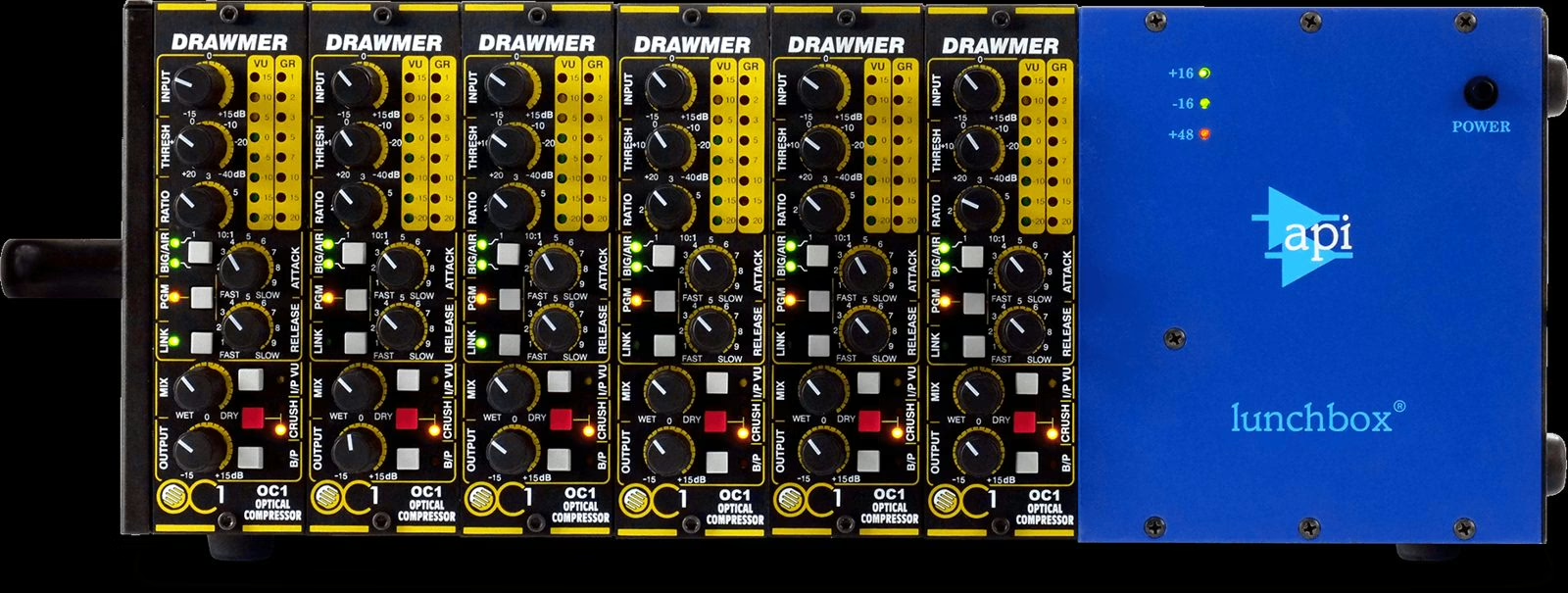
Both modules share a feature set that, on a 500 Series compressor, is out of the ordinary. You get 21-position detented controls for precise, repeatable settings, input and output gain, plus the usual threshold, ratio, attack and release. On top of that: a Wet/Dry control for parallel compression right in the module, a PGM mode that adds a second, slower release adapting to program material above the threshold — cutting pumping under heavy compression — and full metering, with gain reduction and switchable input or output level on the VU meter. The hard-wire bypass connects input straight to output for a genuinely transparent bypass.
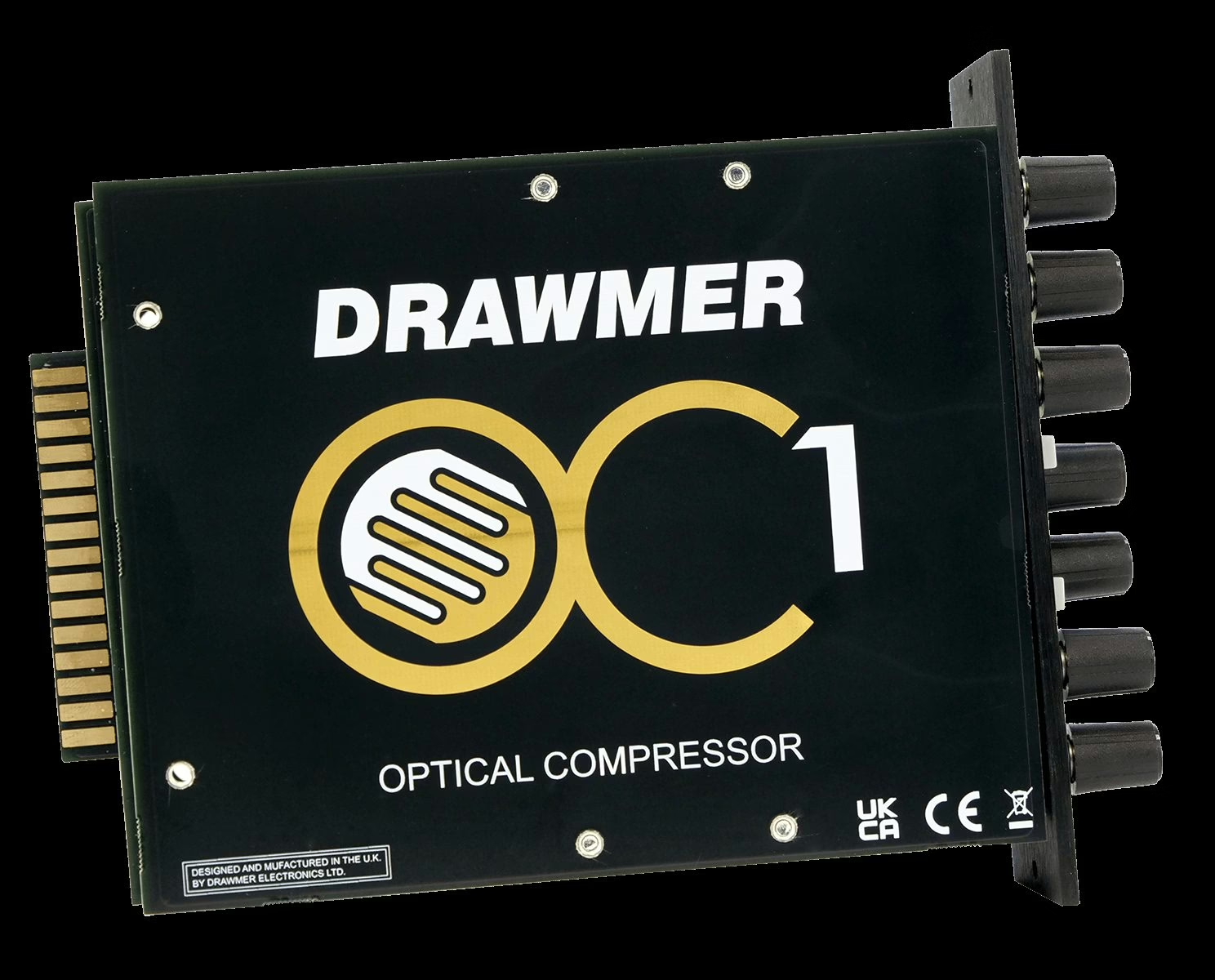
The difference between the two, then, isn’t in their functions but in their behavior. The table below sums up how each one targets distinct jobs.
| FC1 | OC1 | |
|---|---|---|
| Detection | FET (transistor) | Optical (cell) |
| Character | Fast, incisive, punchy | Smooth, natural, program-dependent |
| Best on | Drums, electric guitar, energetic vocals | Vocals, acoustic, bass, mix bus |
| Heritage | Drawmer’s 1970s Series | Brand’s first 500 Series opto |
BIG, AIR and CRUSH: the house color
Both compressors inherit functions borrowed from the Drawmer 1973 three-band compressor. The fully selectable BIG and AIR modes shape the detector’s frequency response. BIG reduces the sidechain’s sensitivity to low frequencies: bass energy passes through the compressor more naturally, curbing the pumping caused by dominant lows. AIR preserves high-frequency detail often lost in compression, for an open, articulate top end without harshness.
Finally, the CRUSH harmonic saturation circuit — a house staple — adds harmonic richness whose intensity varies with input level: the lows gain weight, the mids more presence, and the whole picture a touch of analog warmth.
Our take
I’ve never been dogmatic about all-analog: a well-designed plug-in often does the job. But there are cases where a hardware stage adds something audible, and color compression is one of them. What makes these two Drawmers interesting isn’t 500 Series nostalgia, it’s the features-to-price ratio: built-in parallel compression, dial-able saturation and two complementary characters in one rack make real sense in a modern hybrid studio — provided, as always, you listen before you buy.
Price and availability
The FC1 and OC1 are handmade in the UK and land at around $400 each, a placement that puts them among the more affordable 500 Series modules given their feature set. They round out a studio ecosystem where the rethought channel strip and hybrid consoles each keep moving forward.
Frequently asked questions
What’s the practical difference between the FC1 and OC1?
The FC1 is a fast, incisive FET compressor, ideal for transients (drums, guitar, energetic vocals). The OC1 is opto, slower and more natural, suited to vocals, acoustic sources, bass and mix buses. Same layout, opposite behaviors.
What are the BIG and AIR modes for?
They change the detector’s frequency response. BIG lets low-end energy pass more naturally to avoid pumping on dominant bass; AIR preserves the high-frequency detail often lost in compression.
What does PGM mode do?
It adds a second, slower release that adapts to program material above the threshold. The result is less pumping and fewer artifacts under heavy compression.
Can you do parallel compression without external routing?
Yes. Each module has a Wet/Dry control that blends compressed and dry signal within the module itself, with no extra wiring.
How much are they and where are they made?
They’re hand-assembled in the UK and sit at around $400 per unit.