The studio has carried the same dilemma for decades: the sound of a big analog console on one side, the total flexibility of working in the DAW on the other. SSL has been pushing a concept, Future Analogue, that claims to reconcile the two. The O-Series V2.0 update for its Oracle console just laid down an important stone, and it aims straight at the historic fault line: recall and automation.
Future Analogue: an analog path, digital management
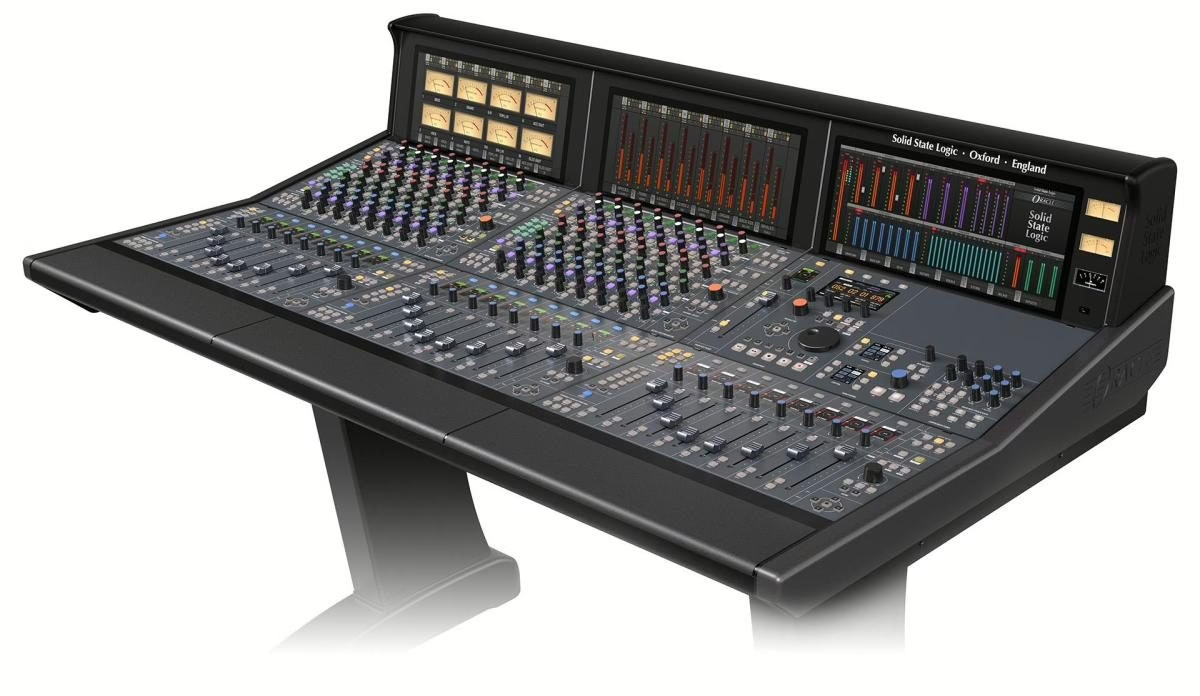
The Oracle is an analog in-line console, old-school in its signal path, but built on ActiveAnalogue technology that allows complete recall of processing, routing, gains and pans. In other words: the sound of an analog path with the memory of a digital session. The industry has been circling this holy grail since the first recall-assisted desks; the point of V2.0 is to make it genuinely practical day to day, removing the compromises that still separated analog from a fully in-the-box workflow.
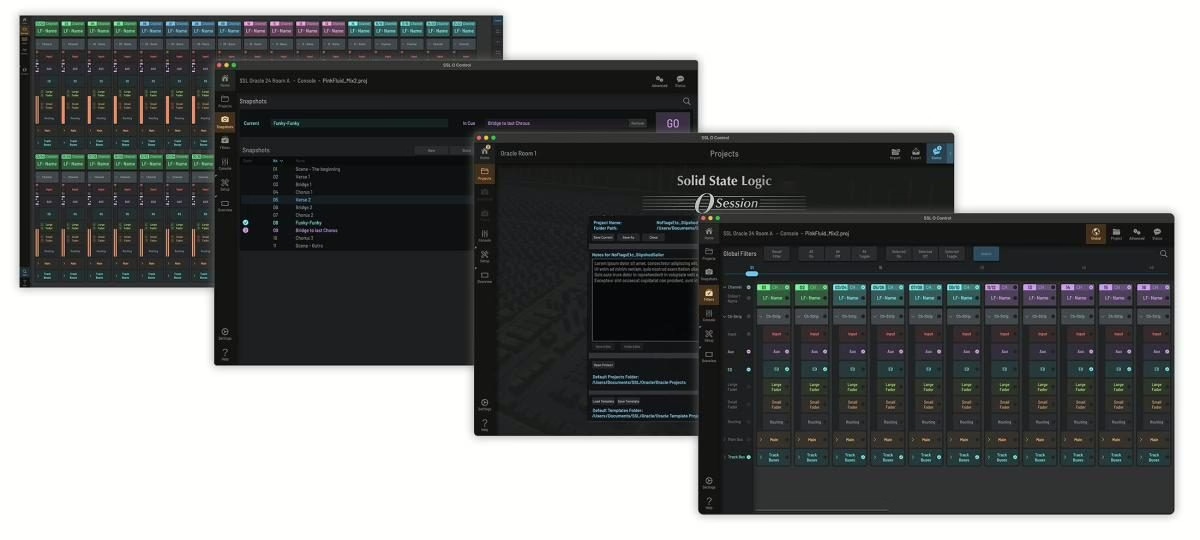
O-Motion: mix automation runs back through Pro Tools and Logic
The headline feature is O-Motion, an automation system built around a plugin that lives in the DAW — Pro Tools and Logic Pro to start. In practice, console moves (faders, pans, cuts, inserts, EQ sections, filters, dynamics, bus controls) are recorded, edited and played back from the sequencer, exactly the way you automate a virtual track. The automation data lives in the DAW’s playlists and lanes, not on the console.
That shift matters. On a big analog desk, automation was long a world apart, with its own logic and limits. Here it joins the playground every engineer already knows cold inside a DAW. You nudge a fader move to the sample, copy an EQ automation from one chorus to the next, without leaving your working environment. For anyone mixing hybrid — one foot in analog, one in the computer — this is exactly the bridge that was missing.
Channel presets and snapshot filters
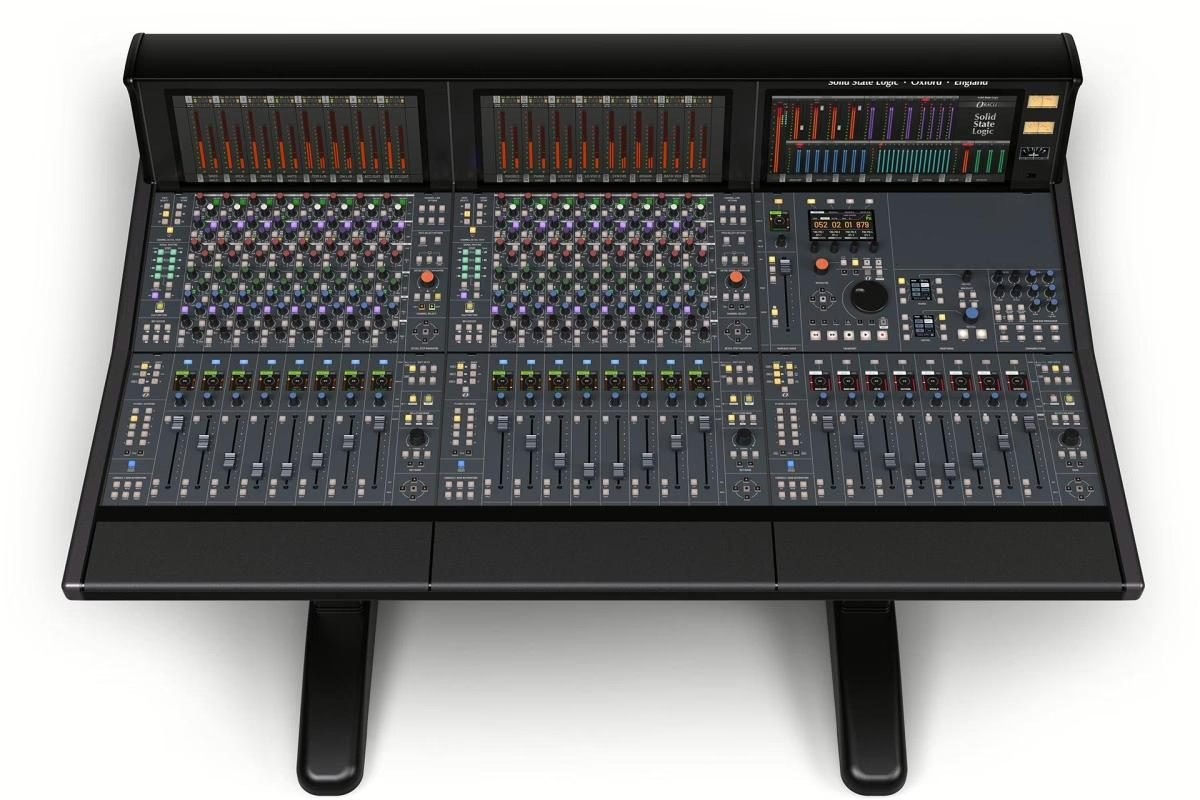
V2.0 also adds Channel Presets. You save your favorite settings — EQ, dynamics, input, filter, bus send, fader, processing order — from the O-Control software, and crucially those presets are stored independently of the project. So they travel from one console to another, from one studio to the next. Recalling a vocal chain you love, carried from one room to another in seconds, stops being a fantasy.
Snapshot Filters round out the recall side: you choose precisely which channels, processing sections or parameter groups are included or excluded when saving a snapshot. Handy for comparing two balances, preserving a specific EQ across song sections, or cleanly managing mix revisions.
Oracle and Odyssey finally speak the same language
The last major addition is cross-console compatibility. A session created on the Odyssey, the range’s new flagship, opens, edits and resaves on any Oracle, whatever the channel count. Odyssey-specific parameters — dynamics processing, that model’s own low-pass filters — are preserved even on a console that can’t physically host them. For a networked studio, or a project moving between rooms, that’s a valuable guarantee of continuity.
What the Oracle actually is
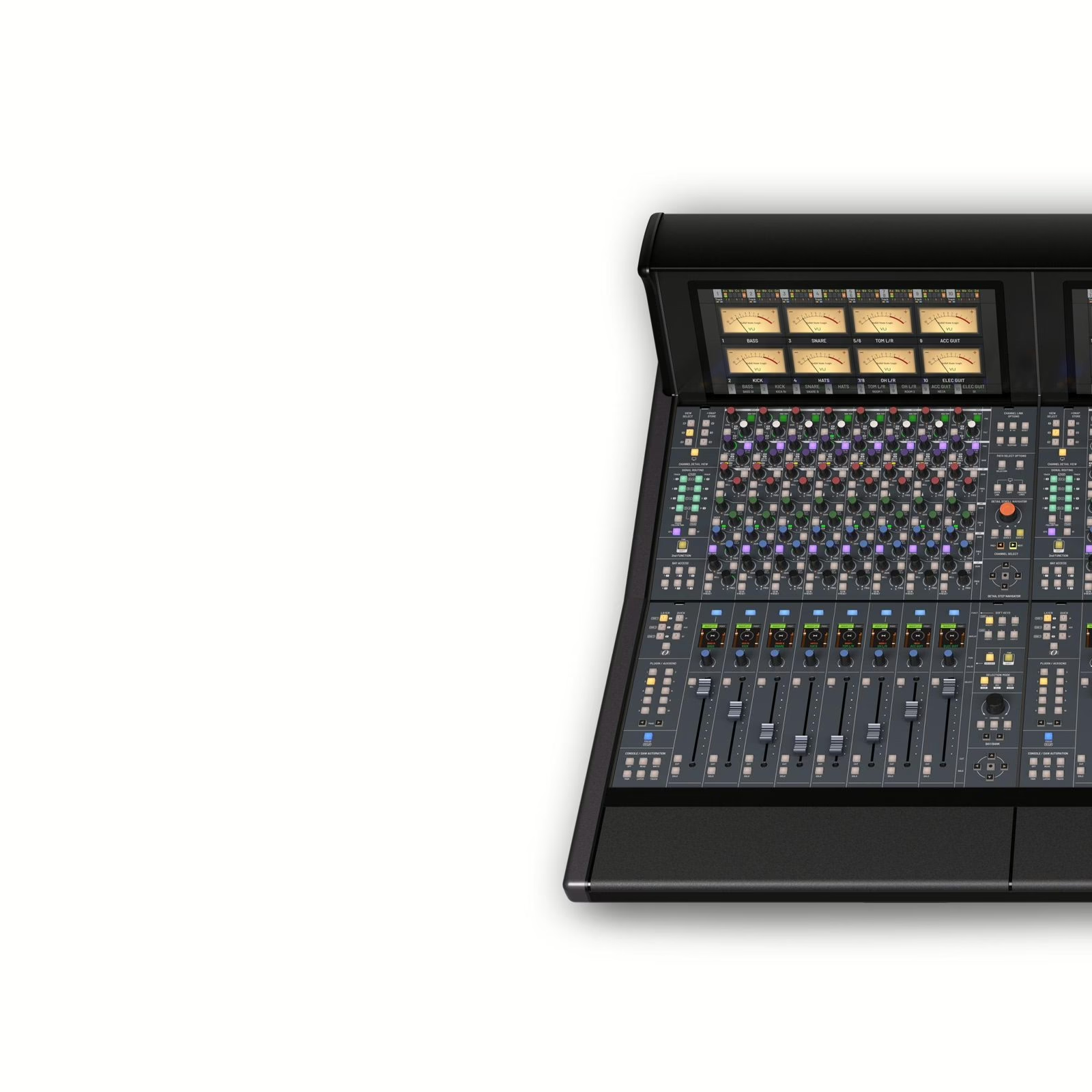
For context, the Oracle packs big-console functionality into an AWS-size footprint, in 24 or 48 mono in-line channels, up to 112 inputs at mixdown. You get PureDrive mic preamps, the SSL 4-band EQ with its switchable E/G curves, THE BUS+ bus processor and dynamic automation — all served by the instant recall that makes the whole approach worthwhile. It’s a desk aimed at tracking as much as mixing, with no downtime between the two.
My take
I’ve run a studio built around a large-format console, and I know first-hand what the lack of recall really costs: sessions you can’t reopen with peace of mind, recall sheets, hours lost hunting for a setting. I’ve long argued that going fully in the box is perfectly viable; but when an analog link brings something audible, it keeps its place. The problem was never the sound of analog — it was its rigidity. A console that offers the analog path and total recall and automation inside the DAW removes the last argument against hardware. The cost of entry to such an ecosystem remains to be seen, but the direction is right. In the same spirit of bridging surfaces and software, we already noted Neyrinck reviving D-Control surfaces; and on the intelligent-processing side, sonible’s adaptive channel strip tells, in its own way, the same convergence story.
The O-Series V2.0 update is due in early September 2026.