The Kush Audio Omega 2 just put a simple idea back in the spotlight: harmonic saturation driven by a single gesture. One knob, one colour, and a track that goes from “clean but flat” to “present and alive.” It is the kind of tool you think you can skip — until the day you mix without it.
Having lived through the shift from analogue to in-the-box production, in both live and studio work, I can say that if there is one area where ITB has caught up with and overtaken hardware, it is harmonic colour: a good saturation plugin now delivers a fully audible result, without the cost or upkeep of a rack. The trick is picking the right one. This roundup gathers eight plugins that each do the Omega 2’s job in their own way — adding musical harmonics. We are talking colour and mix saturation here, not guitar-amp distortion or tape delays, which belong to another article. And we make no claim that they are interchangeable: three honest families, from true equivalent to distant cousin.
The true equivalents: harmonic colour in one move
These five share the Omega 2’s philosophy: push the drive, and the track thickens and gains harmonics without you juggling ten parameters. Two paid references, three free tools that hold their own against high-end options on plenty of sources.
Soundtoys Decapitator
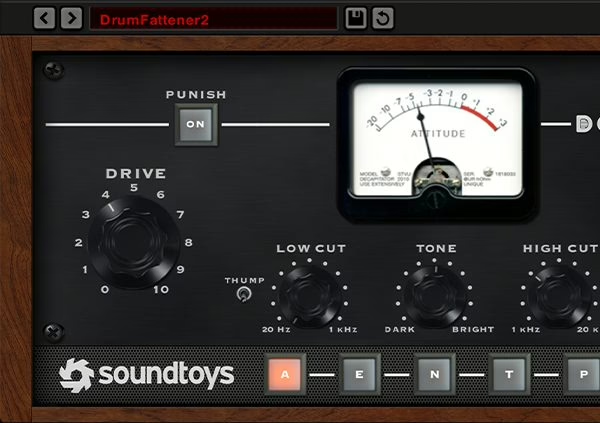
This is the category benchmark, and for good reason. Decapitator models five distinct analogue circuits — inspired by Ampex, EMI, Neve, API and Chandler preamp and tape stages — that you select with a click. Each has its own grain, from subtle warmth to outright breakup. The famous “Punish” button pushes the beast into the red for sources that call for bold character: drums, synths, aggressive vocals.
Next to the Omega 2 it plays exactly the same role — colour in one gesture — with the bonus of circuit choice. It is the Swiss army knife you keep for ten years.
In short — Soundtoys · paid, $199 (often on sale around $30–$50) · VST/VST3/AU/AAX, macOS and Windows, iLok required.
Official page: Soundtoys Decapitator
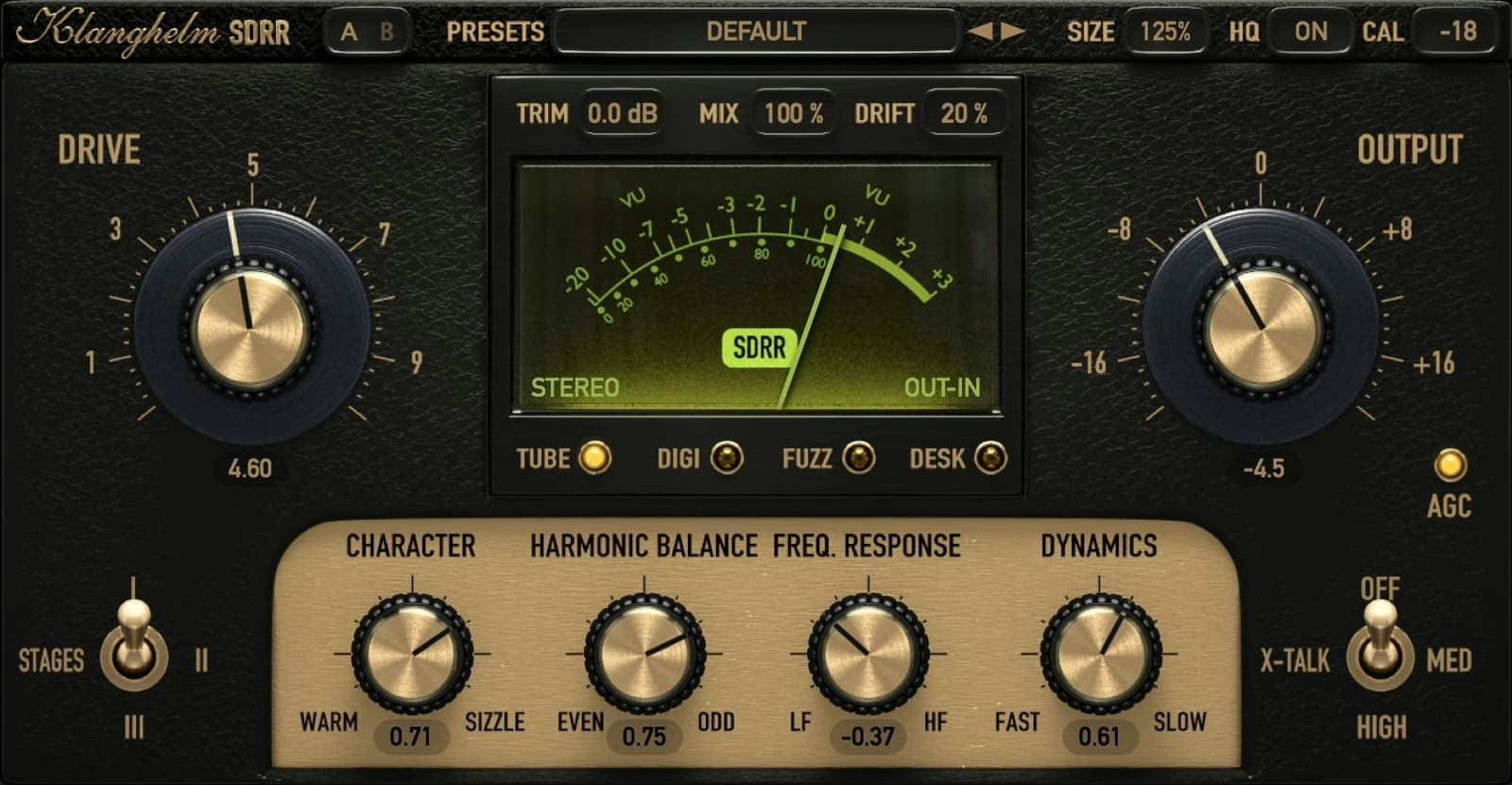
Klanghelm SDRR2
The best bang for the buck here, no contest. Nicknamed the “saturation chameleon,” SDRR2 offers four modes — TUBE, DIGI, FUZZ and DESK — and responds dynamically to the signal, like a real analogue stage. DESK mode even turns it into a full console channel (two-band EQ, transient control), while TUBE stays the most musical option on buses and vocals.
For €23 you get a palette that runs from a gentle caress to genuine distortion. Tempted by the Omega 2 but tight on budget? Start here: same job, a tenth of the price.
In short — Klanghelm · paid, €23 (about $27) · VST/VST3/AU/AAX, macOS and Windows.
Softube Saturation Knob (free)
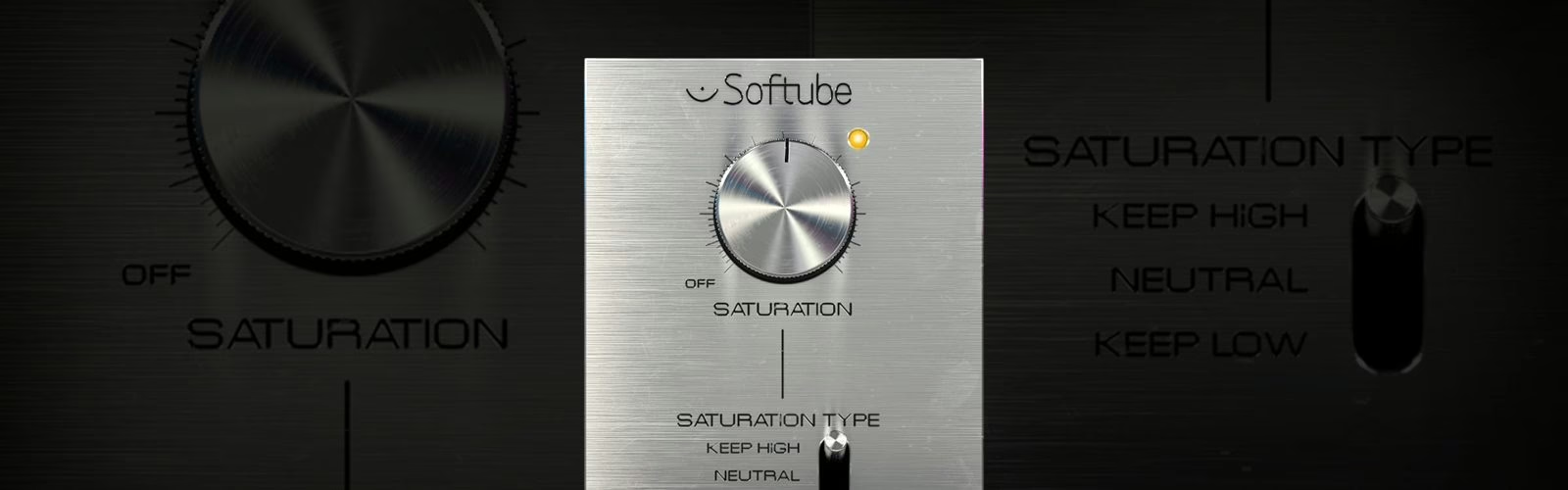
If any plugin deserves the title “free cousin of the Omega 2,” it is this one: a single saturation knob and a three-way switch (Keep High, Neutral, Keep Low) that decides where the distortion bites. Keep Low crushes a drum loop while sparing the low end; Keep High does the opposite. Dead simple and ruthlessly effective.
Since its update it even ships with meters, an adjustable high-pass and gain matching. The first saturation plugin to install when you start out — and one the pros keep around for sheer convenience.
In short — Softube · free · VST/VST3/AU/AAX, macOS and Windows.
Download Softube Saturation Knob
Klanghelm IVGI (free)
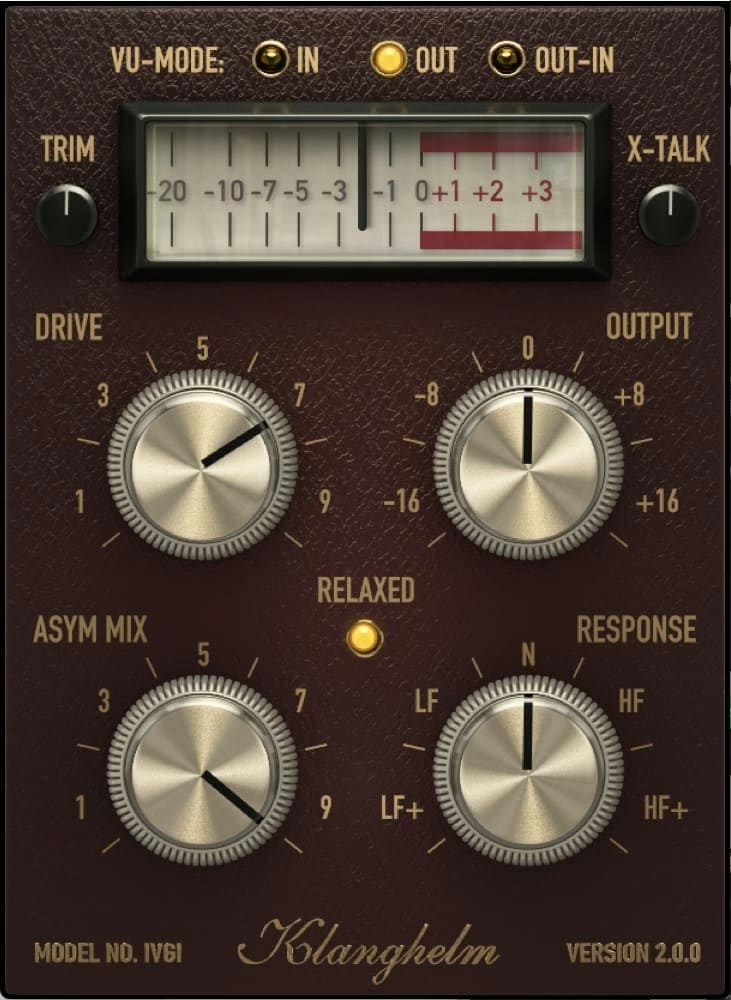
IVGI is the free little brother of SDRR: same saturation algorithms, simplified controls. Trim, drive, output, plus the two knobs that make it special — “asym” and “response” — and a modelled crosstalk that brings stereo tracks to life. Its “controlled randomness” adds a micro-instability that mimics the behaviour of a real circuit.
Discreet on a master bus, dirty and dense on a lone track: it is the do-anything freebie that has been quietly turning up in pro sessions for years, with zero marketing.
In short — Klanghelm · free · VST/VST3/AU/AAX, macOS and Windows.
Airwindows Density (free)
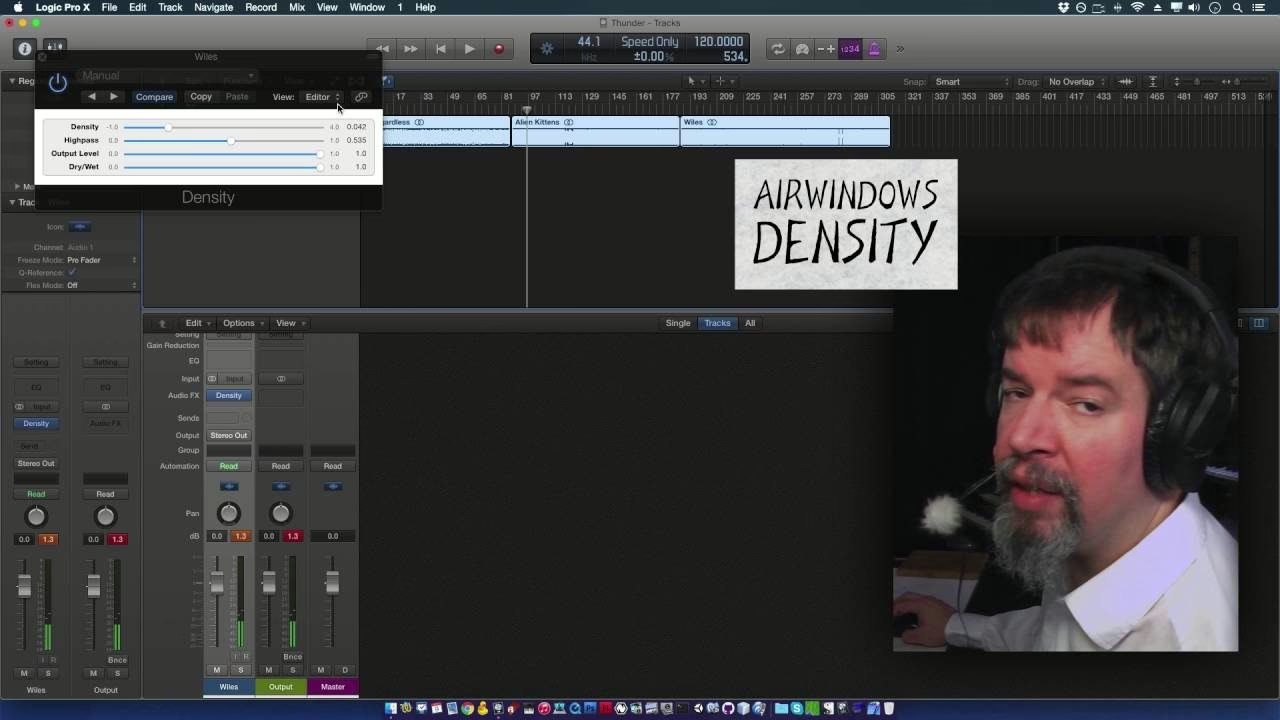
Airwindows is Chris Johnson’s donation-funded open-source project — the antithesis of the $300 tape plugin. Density rests on one idea: a sine transfer function, “the smoothest saturation you can have,” which you can stack across several stages for extreme thickening. You can high-pass just the saturated part, blend it with the dry signal, or even “unsaturate” to thin a sound out.
Spartan interface, open code, a demanding tinkerer’s ethos: it is the freebie we recommend to anyone who wants to understand what saturation really does. Very digital-mixing, in other words.
In short — Airwindows · free (donationware) · VST/AU, macOS, Windows and Linux.
Official page: Airwindows Density
The analytical variant: saturating band by band
A special case that does the Omega 2’s job “only in part”: it colours, yes, but with a surgical approach the others lack.
FabFilter Saturn 2
Where the Omega 2 and Decapitator colour the whole signal, Saturn 2 splits the spectrum into up to six bands and saturates each independently. Want grit on a vocal’s highs without dirtying the low end? One band, dialled to the decibel. Add 28 distortion styles, a full modulation section and a decidedly modern feel, and you have the most versatile tool on the list.
Let us be honest: this is not a “one knob, one colour.” Saturn 2 does more — and asks more of you. But when colour needs to be precise and localised, nothing else comes close.
In short — FabFilter · paid, around $149 · VST/VST3/AU/CLAP/AAX, macOS and Windows.
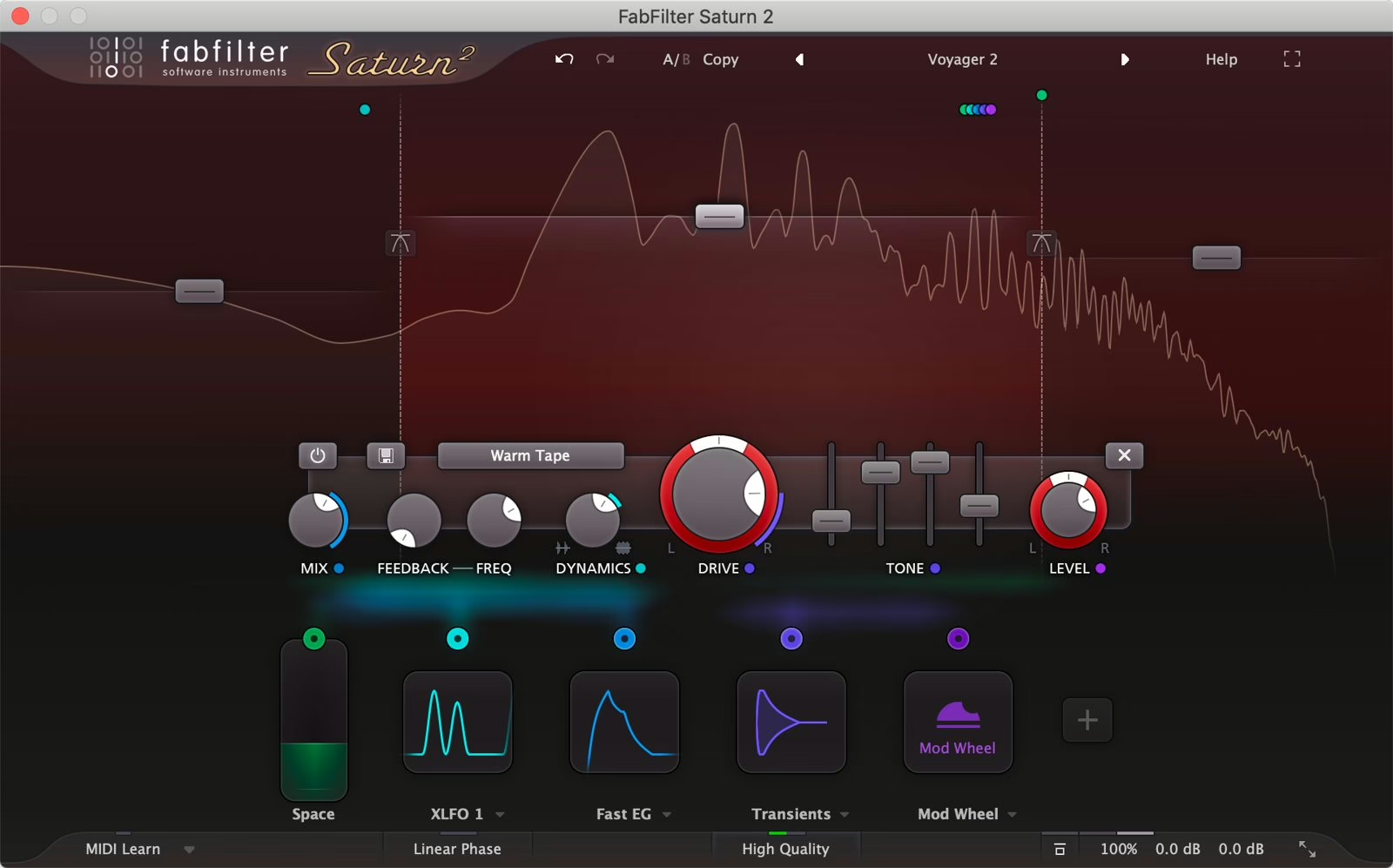
Official page: FabFilter Saturn 2
The cousins: the colour of magnetic tape
These two do not saturate like a tube or transformer stage: they emulate magnetic tape. The grain is softer, more “glued,” and comes with wow, flutter and natural compression. Cousins, then — the same colour family, but a different dialect.
u-he Satin
Satin is less an effect than a workshop: tape speed, bias, azimuth, playback heads, wow and flutter… you build your own tape machine with a precision few rivals offer. It also does tape delay and flanging, 1970s-studio style. Saturation here is one ingredient among many, serving overall cohesion.
To “analogue-ise” a bus or a whole mix, it is gorgeous. To add just a touch of grain to one track, it is almost too much tool — hence cousin rather than equivalent.
In short — u-he · paid, €129 (about $129) · VST3/AU/AAX/CLAP, macOS, Windows and Linux (beta).
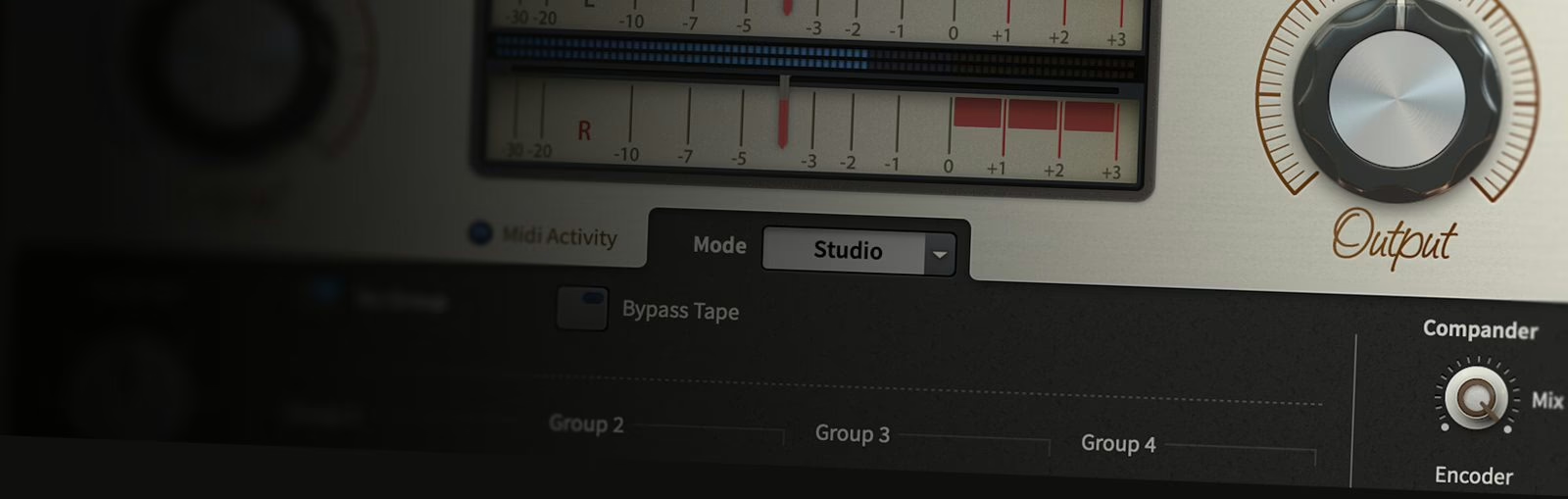
Softube Tape
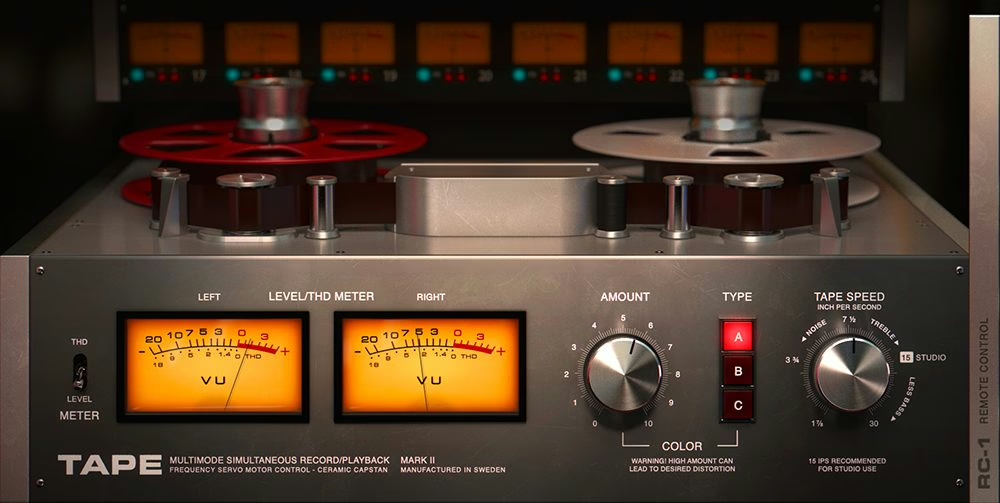
Three tape machines in one (Type A, B and C, inspired respectively by a Swiss unit, a transformer-based circuit and a British machine), for immediate results. Softube Tape gently smooths transients and brings that “glued” cohesion you want on a bus or master, without aggression. Minimal latency, reasonable CPU.
Less deep than Satin when it comes to editing, more direct in use: pick a machine, push it, it sounds good. The “plug and play” cousin of the tape family.
In short — Softube · paid, €99 (about $99) · VST/VST3/AU/AAX, macOS and Windows.
| Product | Maker | Price | The job in one word |
|---|---|---|---|
| Soundtoys Decapitator | Soundtoys | $199 | Character |
| Klanghelm SDRR2 | Klanghelm | €23 | Chameleon |
| Softube Saturation Knob | Softube | Free | Simplicity |
| Klanghelm IVGI | Klanghelm | Free | Do-anything |
| Airwindows Density | Airwindows | Free | Tinkering |
| FabFilter Saturn 2 | FabFilter | ~$149 | Precision |
| u-he Satin | u-he | €129 | Workshop |
| Softube Tape | Softube | €99 | Cohesion |
Which one should you pick?
If you are new to saturation, start free: Softube Saturation Knob for simplicity, Klanghelm IVGI for a bit more control, Airwindows Density if you like to see under the hood. You will cover 80% of your needs without spending a cent.
For a single buy that will still be a reference years from now: Soundtoys Decapitator, or Klanghelm SDRR2 if money is tight (the value is unbeatable). Need surgical, band-by-band colour? FabFilter Saturn 2. Want to wrap a whole mix in the softness of tape? u-he Satin for editing depth, Softube Tape for immediacy.
And the Omega 2 in all this? It remains the most direct gesture — one knob, one colour built for the master bus — and that is exactly its appeal. These eight plugins do not all replace it: they map the territory of harmonic saturation, from free to high-end. Pick your entry point. To go further on taming peaks right before your limiters, take a look at our piece on Peak Tamer; and if you like this roundup format, we ran the same exercise with plugins that turn any sound into a drum kit.