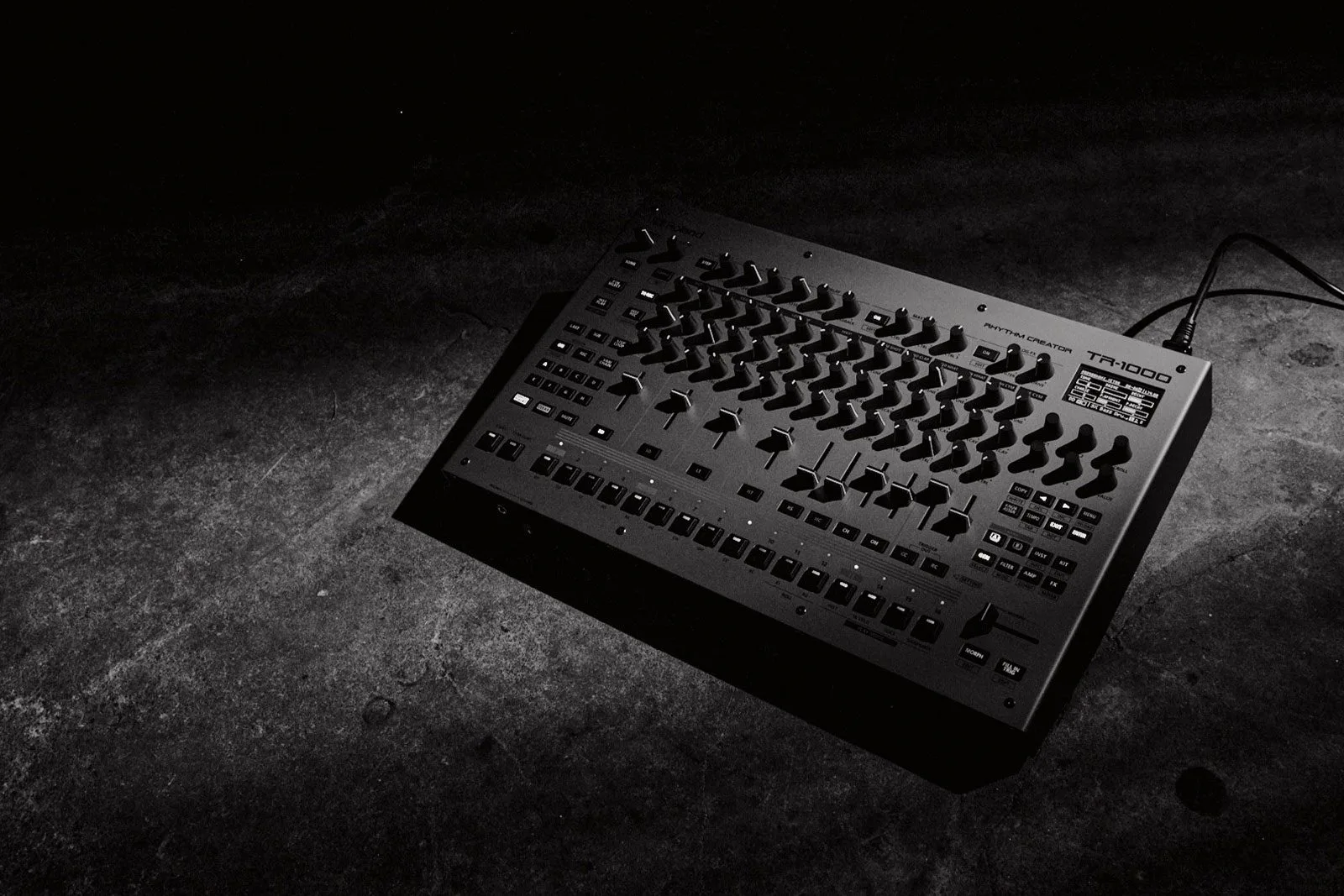
A month after launch, the TR-1000 is already a different machine. Roland has released firmware 1.50, a free update that adds a playable keyboard mode, per-step note sequencing and fifty FM instruments borrowed from the TR-8S. On paper it reads like a point release; in practice it turns the drum machine into a small melodic instrument too.
A keyboard mode to play notes, not just hits
The change that affects your workflow most is called KEYBOARD. The sixteen step buttons on the front panel become a playable keyboard, with two layouts to choose from and built-in scales so you stay in key without thinking about it. That shifts the machine from pure rhythm to pitch: you can hold a bassline, a pad or a melody straight on the step keys, on compatible generators.
The logical companion is the new NOTE parameter, set per step in semitones. Every step in a pattern can now carry its own pitch, so the TR-1000 can finally write a melodic sequence rather than only chain drum hits. For a Roland groovebox that is a genuine change of purpose. One honest caveat: Keyboard Mode offers no aftertouch and no on-screen note map, so you will need to keep the scale in your head.
Fifty FM sounds from the TR-8S
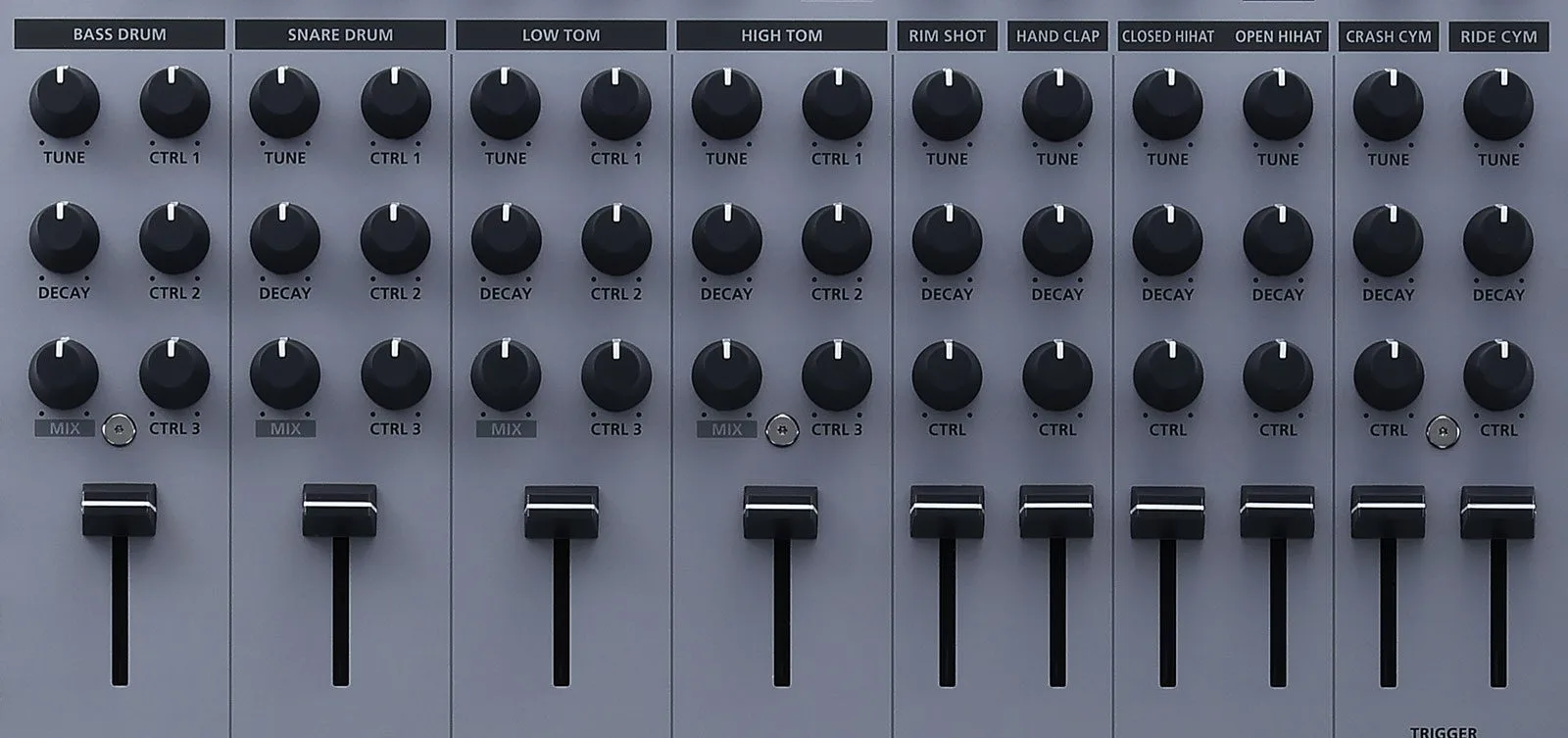
For raw material, 1.50 grafts in fifty FM instruments from the TR-8S library. The TR-1000 already added true analog and sampling to its 808/909 heritage; it now gains an FM percussion palette — bells, metallic toms, synthetic percussion — that widens its range considerably. A COARSE pitch parameter also appears on every FM generator, which makes the new melodic sequencing immediately usable on those voices.
The update doesn’t forget effects either: four new multi-effects arrive (Roll, Roll 2, Rev Pan Delay and SBF-325). Nothing revolutionary, but enough to vary transitions and fills without leaving the machine.
Routing worthy of four analog outputs at last
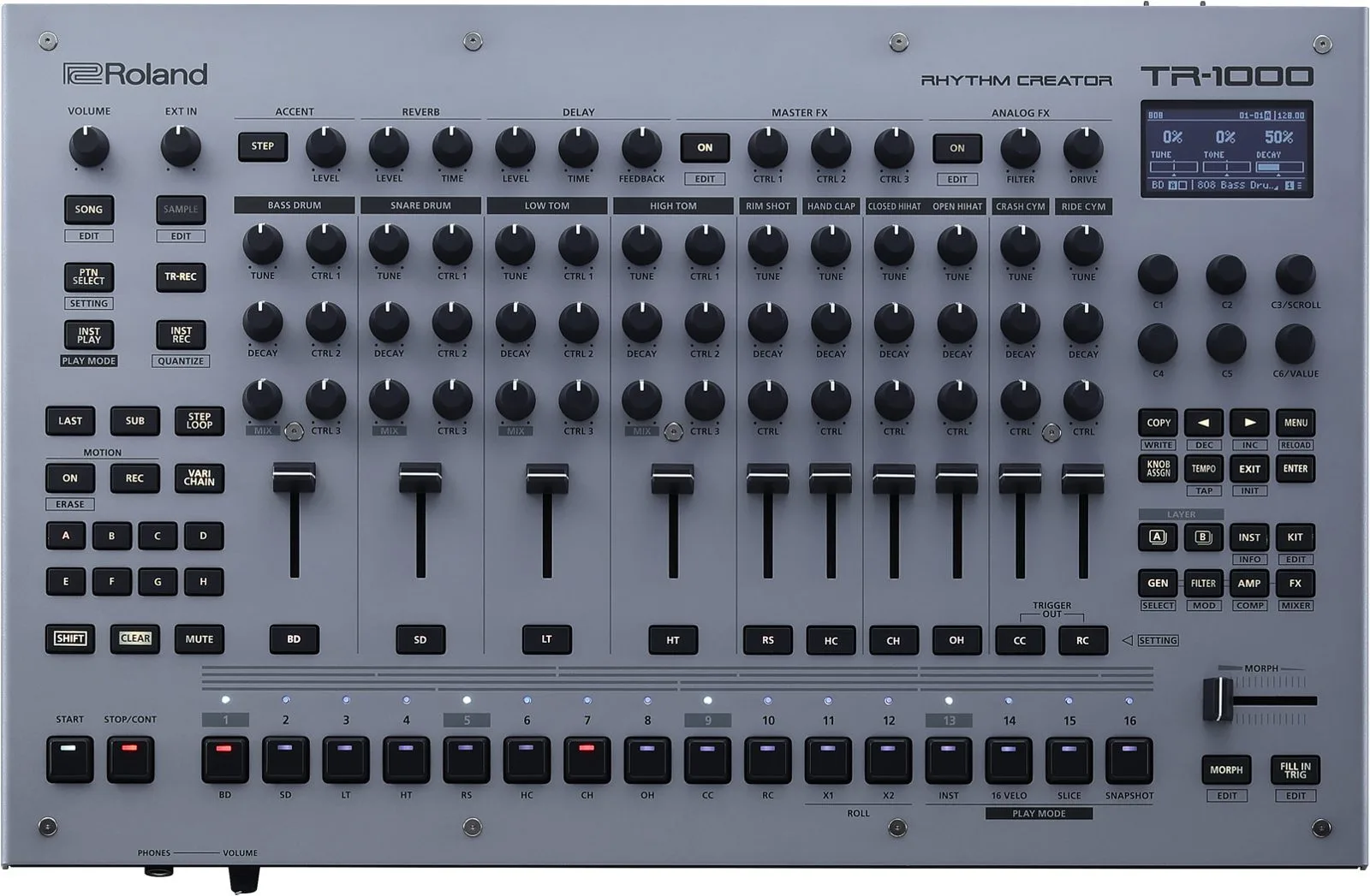
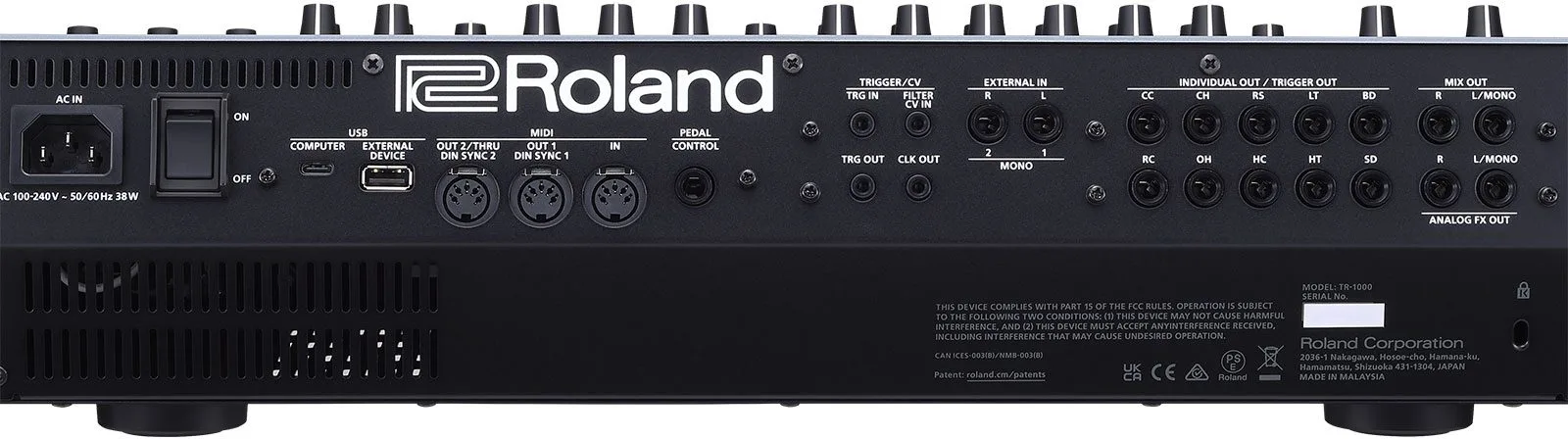
The TR-1000 has four individual analog outputs, and until now assigning voices to them lacked flexibility. Version 1.50 adds a dedicated routing page to freely map voices to those four outputs. If you mix in the analog domain or track to a multitrack, that detail saves real time: send the kick to its own compressor, the FM percussion to another channel, and keep control at front of house or in the studio.
Before you run the update
One practical note worth heeding: installing 1.50 wipes the machine’s undo history. Back up your projects before you start. The update is free and installs straight on the instrument; it delivers on the evolving-platform promise Roland made at launch, and that promise finally makes sense here.
What it changes for you
If you had filed the TR-1000 under “high-end drum machine”, 1.50 is an invitation to reopen that case. Per-step notes and keyboard mode move it closer to a full groovebox, able to carry rhythm and a melodic part in the same pattern — exactly where groove and feel are won. Anyone who likes bending Roland gear will recognise the spirit of hardware mods like the Tubbutec TR-8oh8, but with no soldering iron.
My take
This is an update that delivers the launch promise instead of merely repeating it. Adding a keyboard mode and per-step notes to an analog drum machine reshapes its audience: the TR-1000 no longer speaks only to rhythm purists, it now appeals to anyone who wants to keep everything on one box. The fifty FM sounds are the right complement, because they give the new melodic sequencing something to say. Which leaves the slightly awkward question: at this pace of change, treat the TR-1000 as a platform rather than a finished product — and that is probably the best news for whoever just bought one.