Recording a podcast is only half the job. The other half, the one that separates an amateur recording from a professional episode, happens in post: editing, mixing and mastering. This article assumes your voices are already cleanly recorded, ideally in multitrack; if you are still on mic choice and room treatment, start with our guides to radio and podcast voice microphones and the all-in-one podcast consoles. Here we go from raw tracks to the final file.
Before mixing: clean up and edit
Editing always comes before mixing. You cut false starts, long silences, awkward breaths and verbal tics, then tighten the pace of the conversation. It is also the moment to reduce constant background noise (ventilation, hiss) with a denoiser, light hand: too much reduction gives an underwater voice. A well-edited episode is already half mixed, because every problem fixed upstream is one less to chase in processing.
The chain on the voice
On each voice, a simple, always-identical chain gives the best results. A high-pass filter first, to remove subsonics and desk thumps. Then EQ, mostly subtractive: take out what bothers (mud in the low mids, nasal in the high mids) before adding anything. A compressor to hold the level, with a moderate ratio and a few decibels of reduction, so the whisper and the burst of laughter sit in the same range. Finally, a de-esser if the sibilance stings. Set once, this chain duplicates onto every speaker.
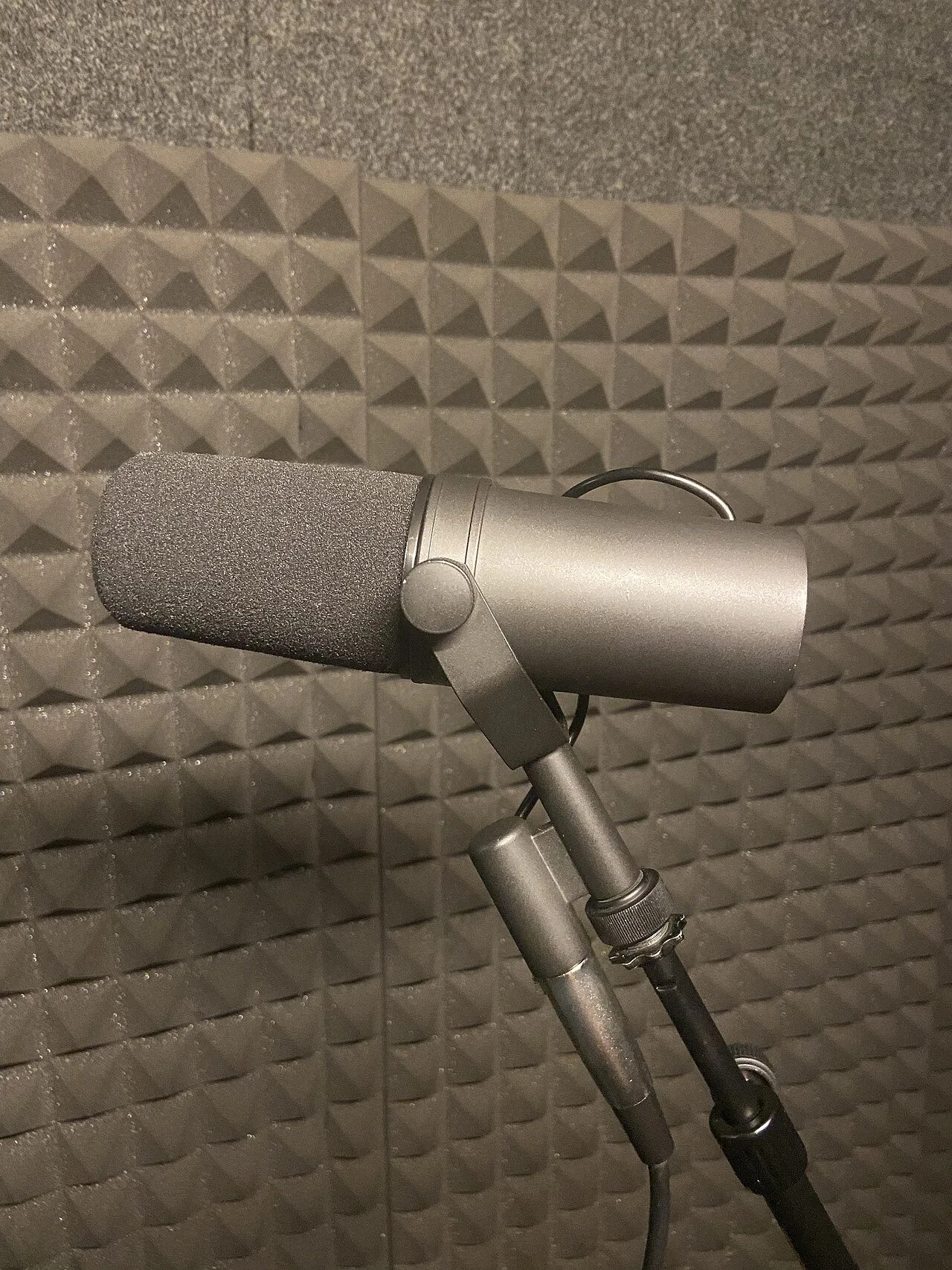
Balancing several speakers
This is the heart of mixing a podcast: making the host and the guests sit at the same perceived level, however each was recorded. You match the average levels first, then fine-tune by ear on the passages where everyone talks. A remote guest often comes in with a different sound: if you worked in mix-minus or as a double-ender, you have a clean track to treat separately and bring closer to the rest. Consistency between voices matters more than the perfection of any one taken alone.
Music: themes, beds and ducking
The intro and outro themes, the stingers and the music beds give the episode its identity. The golden rule: music must never cover the voice. Under a voice, a music bed sits well below speech level, and ducking (manual or automatic) lowers the music the moment someone speaks, then lets it breathe in the silences. Ducking that is too abrupt is audible; set with a gentle return time, it becomes invisible.
Mastering: loudness target and export
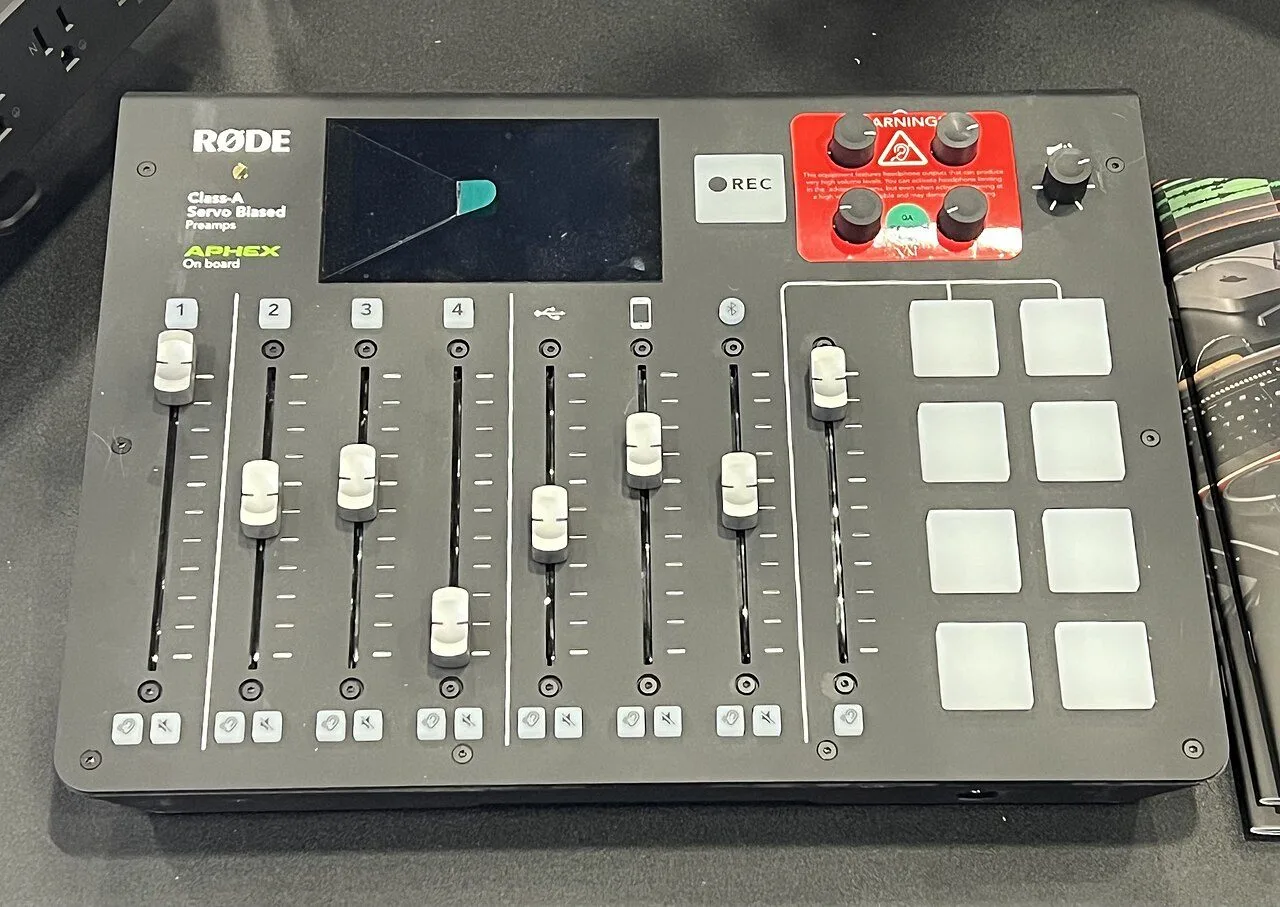
The last step aligns the episode with listening standards. Platforms target an integrated loudness in LUFS and a true-peak ceiling not to be exceeded; our dedicated guide covers LUFS targets for Spotify, Apple and YouTube. For speech, a mono export is often better than stereo: it guarantees identical playback on any device and keeps the file light. Choose a reasonable bitrate, enough for a voice without bloating the download. If you produce on an all-in-one console, much of the mix can happen at the recording stage: see our RODECaster Pro II guide.
My take
A well-mixed podcast is one you do not notice: you forget the processing and follow the conversation. The trap is not too few effects, it is too many. Heavy compression on already-clean voices wears the ear out after ten minutes. Get the balance between speakers and the loudness target right first, and the rest follows. One habit worth keeping: listen to your episode on earbuds on a noisy commute, not in your treated room. That is where your audience will be, and that is where the flaws show.