When you first meet a synthesizer, you look at the number of oscillators, the filter type, the badge. What often gets forgotten is the question that shapes everything else: how many notes can the instrument play at once, and above all, how? Because counting notes is not enough. Two synths that each hold four notes can sound and play in radically different ways, depending on how those notes share, or do not share, the path of the sound. That is the whole difference between monophony, paraphony and polyphony.
This vocabulary is not technical vanity. It describes an architecture, and that architecture is audible. Understanding it will save you two classic mistakes: buying an instrument that cannot play the chords you had in mind, or paying for a full polyphony you will never use.
Monophonic: one note, all the attention
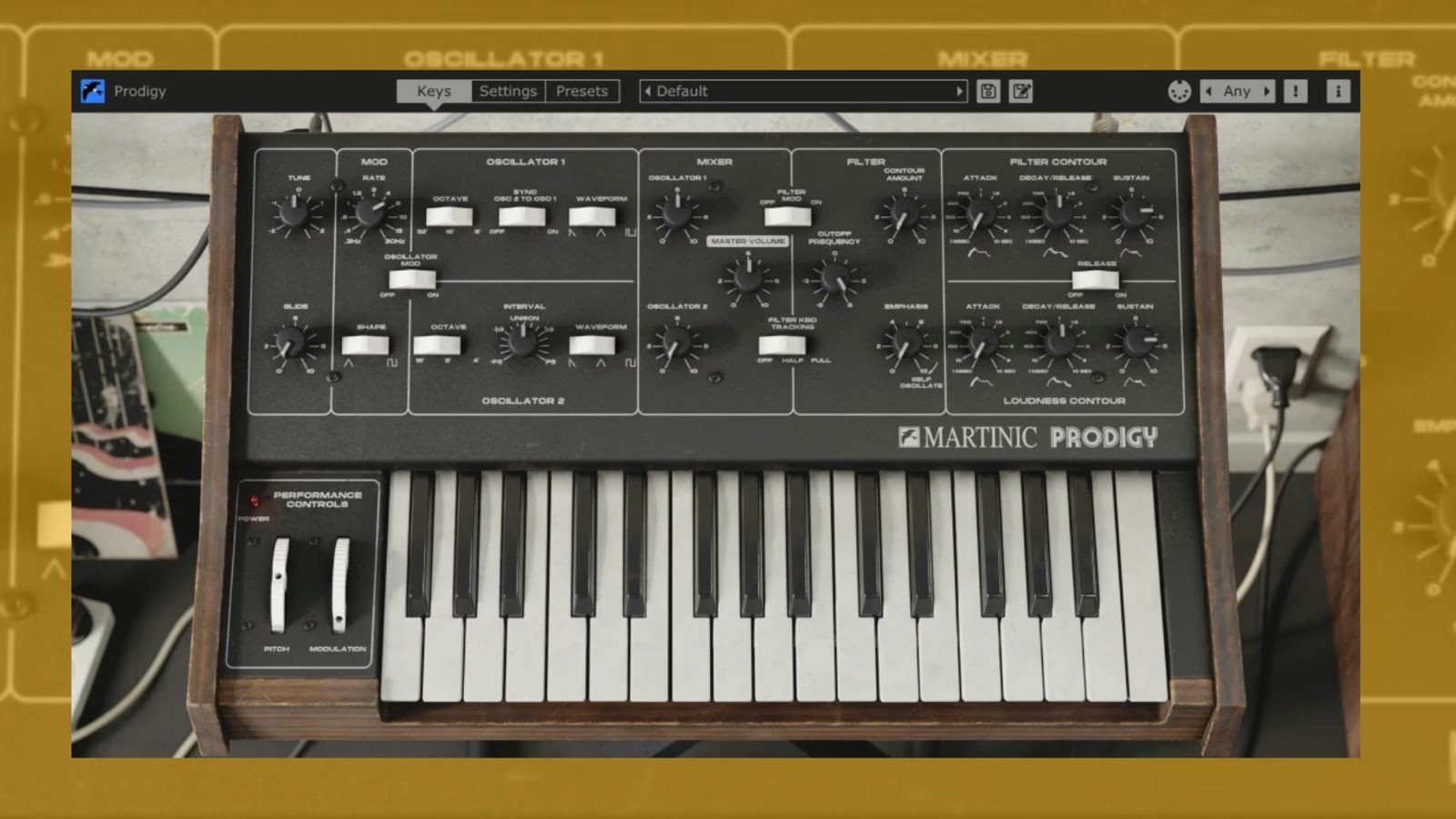
A monophonic synth plays only one note at a time. Press two keys and only one sounds. Far from a limitation you suffer, it is a choice of character: the whole circuit, oscillators, filter, envelopes, is devoted to that single voice. Historically, the great leads and basses that made electronic music come from there, from the Minimoog to modern monosynths.
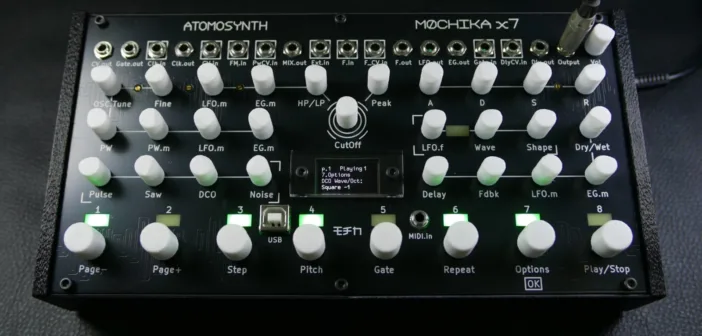
Monophony brings a notion that often goes unnoticed: note priority. When several keys are held, the instrument must decide which one sounds. The last played, the lowest, the highest? That setting, combined with glide (the portamento that slides pitch from one note to the next) and legato envelope triggering, defines much of a monosynth’s feel. An instrument like the character-driven monosynths we cover regularly shows this expressive-mono philosophy, built for the solo and the bassline.
Paraphonic: several notes, one destiny
Paraphony is the most misunderstood of the three, because people take it for a budget polyphony. It is not: it is something else. A paraphonic synth can trigger several notes, but they share part of the processing path, typically a single filter and a single volume envelope for everyone.
In practice you can hold a chord, each note with its own oscillator, but they all pass through the same funnel afterwards. The direct consequence: you cannot let one note die while another starts, since they obey the same envelope. Play a pad, then add a note: the attack re-triggers for the whole thing. That constraint is not a flaw, it is a signature. It gives that particular grain, a little alive, a little unstable, that single-filter 1970s synths etched into our ears.
Polyphonic: every note, a full voice
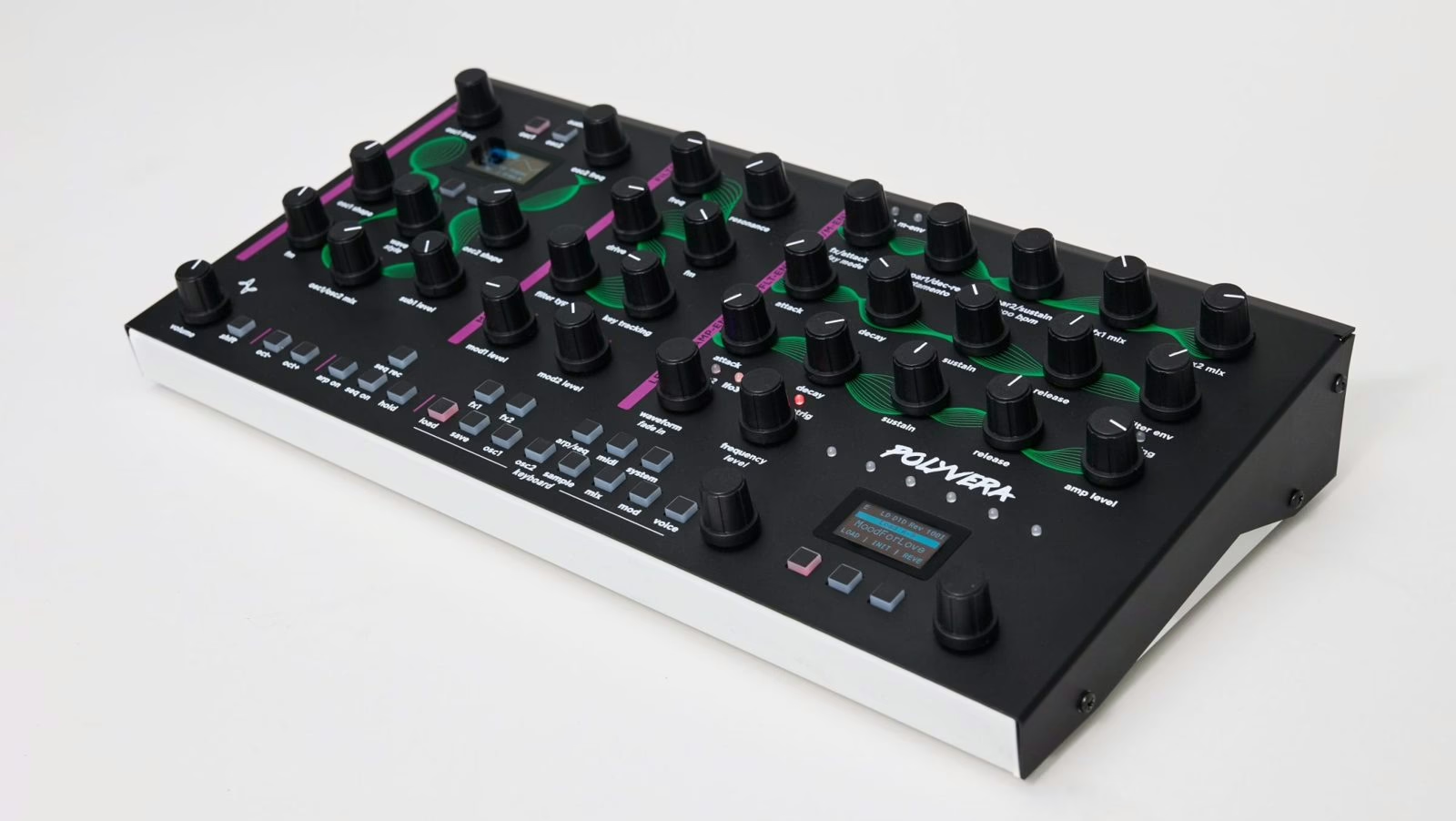
A polyphonic synth assigns each note a complete, independent voice: its own oscillators, its own filter, its own envelopes. Eight voices means eight little monophonic synths running in parallel, driven by one keyboard. That is what lets you hold a chord where each note lives its own life, with an attack, a sustain and a release of its own.
That independence has a cost, literally: each voice needs circuitry (or, in software, processing power). That is why polyphony is counted, and why it was long a price marker. It also introduces an invisible but essential mechanism: voice stealing. When you play more notes than the instrument has voices, it must sacrifice one, usually the oldest or quietest, to free a voice for the new note. A well-designed synth handles that theft gracefully; a limited one lets you hear it.
| Monophonic | Paraphonic | Polyphonic | |
|---|---|---|---|
| Simultaneous notes | 1 | several | several |
| Filter / envelopes | one dedicated chain | shared across notes | a full chain per voice |
| Per-note articulation | n/a | no (shared destiny) | yes (each note independent) |
| Home turf | bass, leads, sequences | character chords, textures | pads, chords, rich keys |
Unison, allocation and false ideas
Two notions blur the count. Unison stacks several voices onto a single note to thicken it: an eight-voice synth then becomes one huge note, but effectively monophonic. It is common for massive basses and leads, at the expense of polyphony. Conversely, some instruments offer split modes that dedicate part of the voices to one layer and the rest to another: the advertised polyphony gets shared.
Remember this above all: the polyphony figure does not tell the whole story. A synth that loads each voice with several oscillators and a generous unison will run out of voices far faster than a lean instrument quoting the same number. The useful question is not “how many voices?” but “how many voices, in the patch I am actually going to play?”.
How to choose, in practice
The right choice flows from your music, not the spec sheet. If you make basslines, leads, sequenced parts, an excellent monosynth will serve you better than a lukewarm polyphony: all the sonic material goes into one voice, and it shows. If you play chords, pads, keyboard parts, polyphony becomes essential, and the voice count is chosen by the density of your playing, unison included.
Paraphony speaks to those chasing a character rather than a function. It allows chords, but with that shared articulation that makes it musically distinctive. Do not buy it expecting a cheap polysynth: buy it for what it is, an instrument with a strong personality. Software has blurred the lines anyway: a wavetable synth offers polyphony that only costs CPU, while a hybrid digital-and-analogue instrument rediscovers the limits, and the charm, of counted-voice hardware.
My take
After years spent alongside machines of every generation, I have come to distrust the voice-count race. You think you are buying comfort; often you are buying a number. The instruments that marked me were not the ones holding the most notes, but the ones whose architecture had a point of view: a monosynth that pours everything into one voice, a paraphonic that owns its shared envelope. Polyphony is a wonderful tool the moment you play keys; but it has never made a musical idea better. Choose the architecture that serves your gesture, not the one that fills the spec sheet. To dig into what happens inside a single voice, our explainer on subtractive synthesis retraces the sound’s path, from oscillator to envelope.