Some releases rise above the usual stream of clones and point updates. Airteq, unveiled on 15 September 2026 by France’s Modartt, is one of them. The company known for Pianoteq and Organteq offers neither a sample library nor yet another subtractive synth: its new instrument builds sound by simulating, note after note, how air behaves inside a pipe. The result sits somewhere between a synthesizer and an organ, with a sonic material few plugins can produce.
Modeling that starts from the breath, not the waveform
Airteq is built on an in-house technology called Dynamic Aerophone Modeling (DAM). Where a classic synth starts from an oscillator, Airteq starts from the real source of a wind instrument: the airflow. The engine simulates the whole path, from the air supply to the pipe’s resonance, and above all how each pipe reacts as you vary that supply. That continuous variation becomes the instrument’s expressive material, rather than a filter tacked on at the end of the chain.
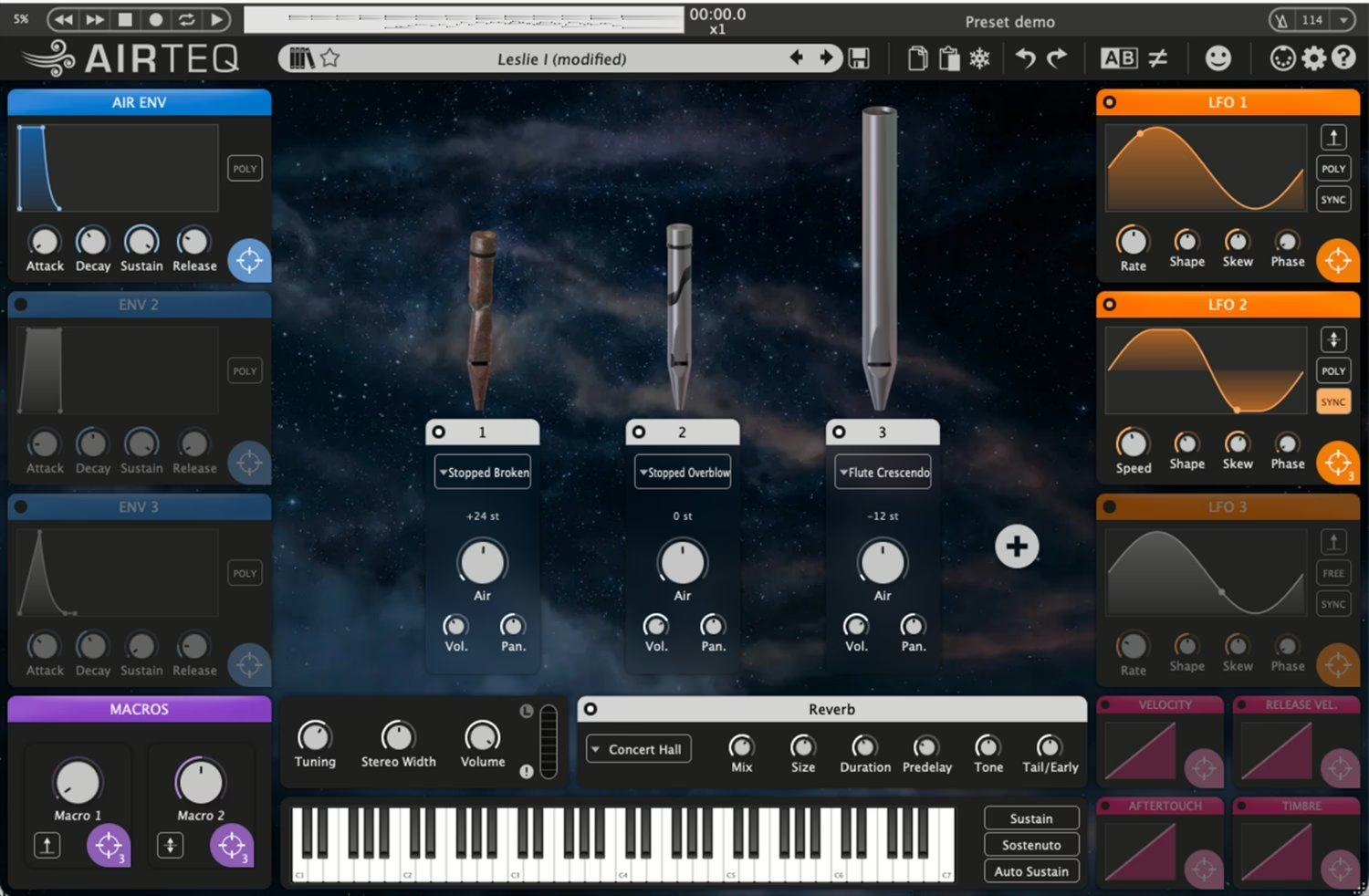
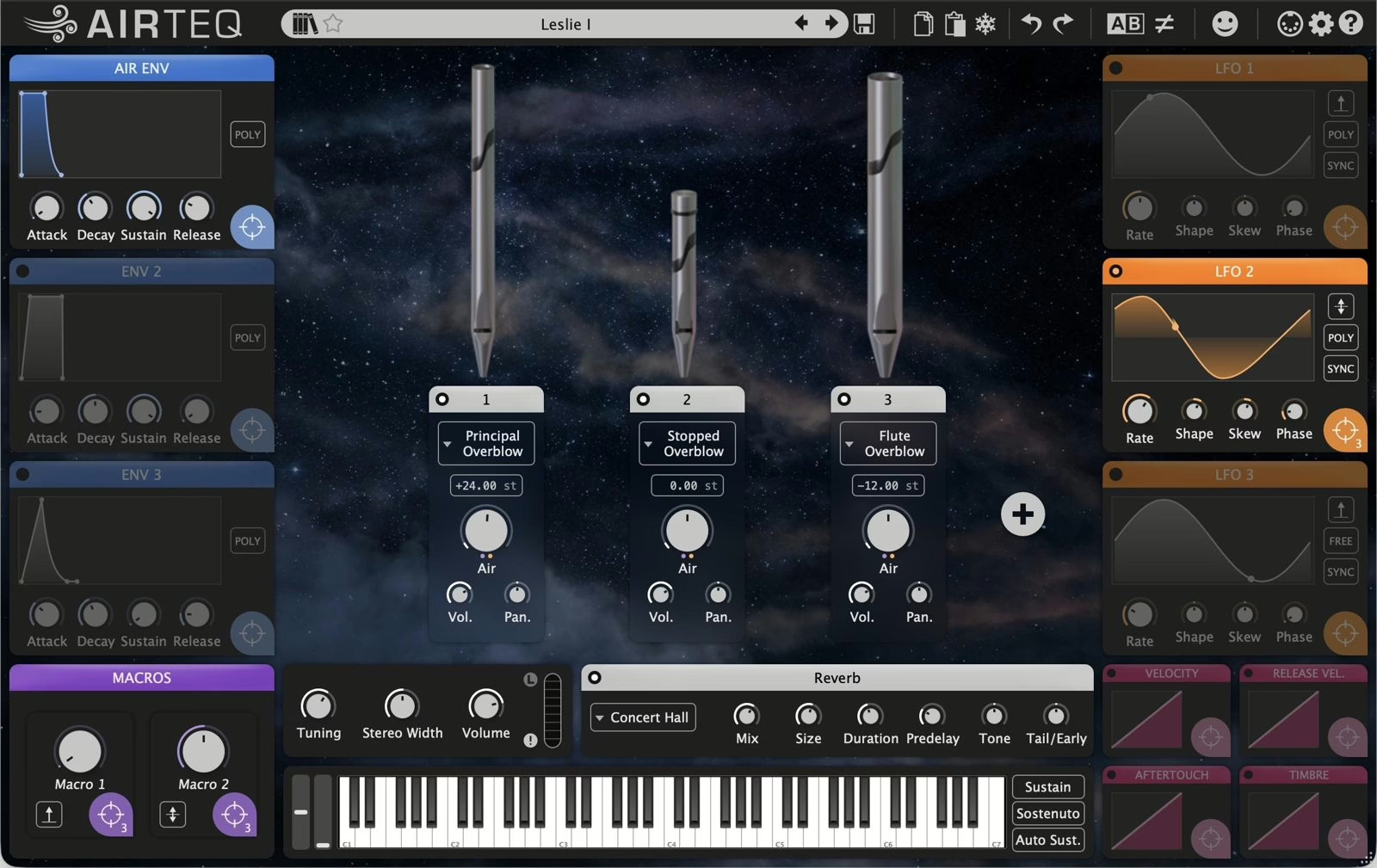
In practice, you pick pipe families — flutes, reeds, mixtures — with clearly distinct timbres, then decide how they respond to air through three models: flute overblow, glissando, or steady pitch. Each pipe is then shaped with four simple parameters: tune, air, volume and pan. Stack a few, detune them slightly, open the air, and the pad breathes.
An instrument built for modulation
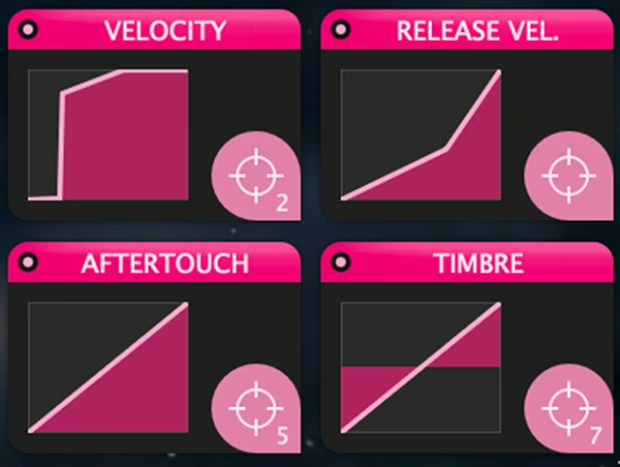
Airteq is no static curiosity. It carries enough to set sound in deep motion: three ADSR envelopes, three LFOs, two macros and gesture controls. Support for velocity, pitch bend, aftertouch and MPE rounds it out, making it a serious match for expressive controllers and MPE keyboards. A convolution reverb, with several impulse responses, drops the whole thing into a believable space.
To get going, the instrument ships with more than 170 presets leaning toward evolving pads, cinematic textures, airy tones and rhythmic pulses. That is a coherent choice: Airteq’s promise lies less in imitating a pipe organ than in exploring a hybrid territory between sound design and instrumental playing.
Formats, platforms and price
| Spec | Detail |
|---|---|
| Engine | Physical modeling — Dynamic Aerophone Modeling |
| Pipe families | Flutes, reeds, mixtures — 3 air-response models |
| Modulation | 3 ADSR envelopes, 3 LFOs, 2 macros, MPE, aftertouch |
| Presets | More than 170 |
| Formats | Standalone, VST3, AU, LV2, AAX |
| Platforms | macOS (Apple Silicon + Intel), Linux, Windows |
| Price | $99 / €99 (free trial available) |
Where Airteq fits
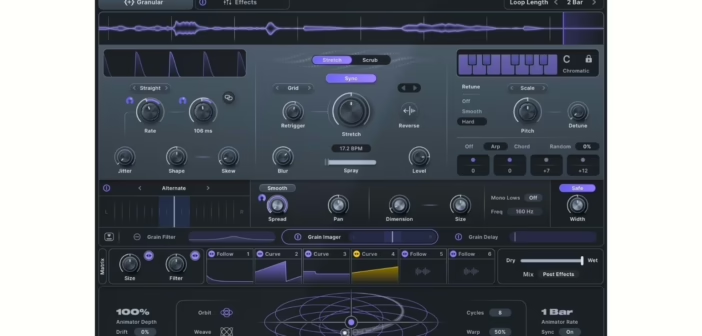
Modartt is playing on home turf: physical modeling, which rebuilds an instrument from its physics rather than from a recording. It is the approach that made Pianoteq’s name. Airteq shifts that logic toward aerophones and, in doing so, moves away from the classic families of subtractive synthesis and FM synthesis. It does share an obvious kinship with granular synthesis in its taste for textures that evolve continuously.
For a composer-to-picture or a sound designer, the appeal is immediate: organic pads and atmospheres that never sound like a replayed sample, without stacking ten layers. For the studio musician, it is one more palette, a singular one, at $99 — a price that needs no long budget debate. The trial version lets you form an opinion before buying.
My take
Airteq nails what physical modeling often misses: it makes you want to play rather than admire the engineering. Treating breath as a living parameter genuinely changes how you approach a pad, and MPE opens an expressive range sample libraries will never offer. You might wish the “pipe organ” promise were louder: this is above all a superb texture generator. At $99, with a free trial, the question is not whether it is worth it, but what place it will earn in your sessions. Modartt confirms, once again, that it thinks about instruments differently.
Official Airteq page (Modartt)