Choosing a console rarely starts with the right question. People compare models, read reviews, agonise between two brands — when the only thing that matters at that stage is knowing what you need to get in and out. A properly sized console on a modest stage does more for you than a high-end machine that was never calculated. This guide gives the counting method, in the order it actually gets done.
- Size the console from the rider of the stage you serve, never from the catalogue.
- Count inputs with a third in reserve: stages grow, they never shrink.
- The number that really caps a console is not its inputs but its buses: that is what limits how many monitor mixes you can build.
- Physical format — rack, compact, large-format — gets decided after the counting, not before.
- Budget returns more when spent on microphones and PA than on a console one tier up.
Counting inputs, and getting the margin right
Take the heaviest rider you have to host and count line by line, without rounding down. A seriously miked drum kit eats six to eight inputs on its own; a stereo keyboard takes two; effect returns, if they come back on channels, take more again. The real total almost always exceeds the first estimate.
The margin is justified by experience: a stage never gets simpler. Someone adds a guest, a second guitar, an ambience mic, a playback source. Allowing a third in reserve costs one tier at purchase and saves you buying again eighteen months later.
Watch one subtlety in how spec sheets are written: a console advertised as “sixteen channel” often means twelve mic inputs plus two stereo line pairs. If your stage needs sixteen microphones, it does not fit. The figure you care about is the number of mic inputs with a preamp, not the marketing total.
Counting buses: the number everyone forgets
This is the most frequent and most expensive sizing mistake. You choose a console on its input count, it arrives, and you discover it only builds four monitor mixes for six musicians. Unlike inputs, that ceiling cannot be worked around.
Count it this way: one bus per wedge, two per musician on in-ears if the mix is stereo, one or two for effects, one per secondary zone, one for recording. A five-piece band with two players on in-ears therefore needs nine or ten buses — more than many mid-range consoles offer. The logic of these buses is covered in our guide to auxiliaries on an audio mixing console, and their use in our guide to mixing stage monitors for a band.
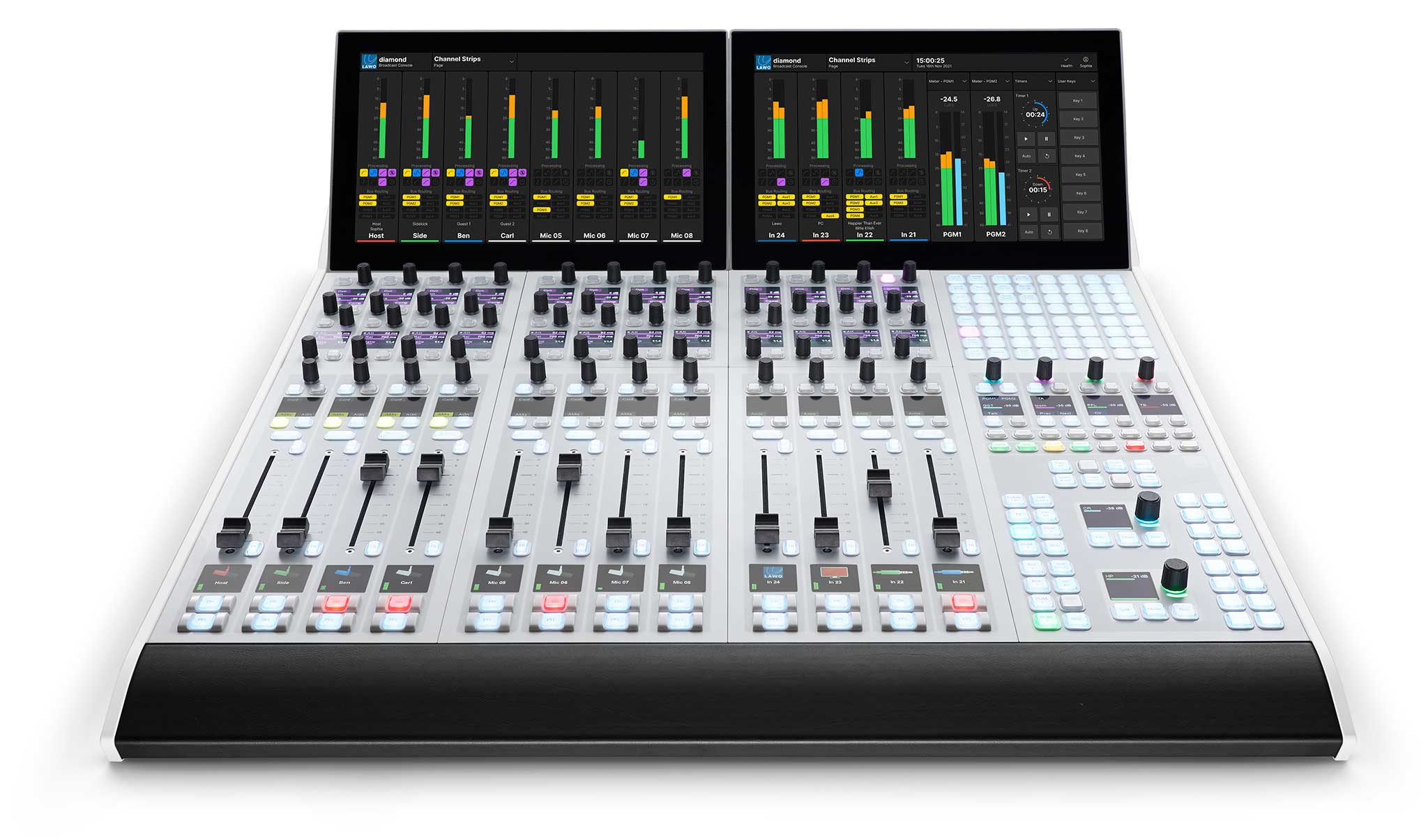
Plenty of consoles advertise “sixteen mixes” without specifying that the total includes subgroups, matrices and sometimes internal effect returns. A model showing sixteen buses may leave only eight genuinely available as auxiliaries once effects and matrixing are deducted. The only reliable figure is the number of independent mixes you can physically output — always cross-check it against the analogue output count.
Outputs, and how the stage connects
After inputs and buses comes a question often handled last although it determines all the logistics: how signal travels between stage and mix position. A console that stays on stage does not raise the problem; the moment it goes out into the room you need either a multicore or a network link with a stage box.
Whichever you choose, remember while sizing that the number of physical outputs has to cover your buses: a console with eight mixes and four analogue outputs will never give you eight monitor feeds without an expansion card. Our guide to routing and buses on a digital console covers how the two relate.
Physical format, once the counting is done
| Format | Suits | Limit |
|---|---|---|
| Rack unit, no faders, tablet-driven | Fixed install, small stage, streaming | No physical control if the tablet fails |
| Compact, 16 to 24 faders | Club, self-contained band, multi-purpose room | Bus count runs out quickly |
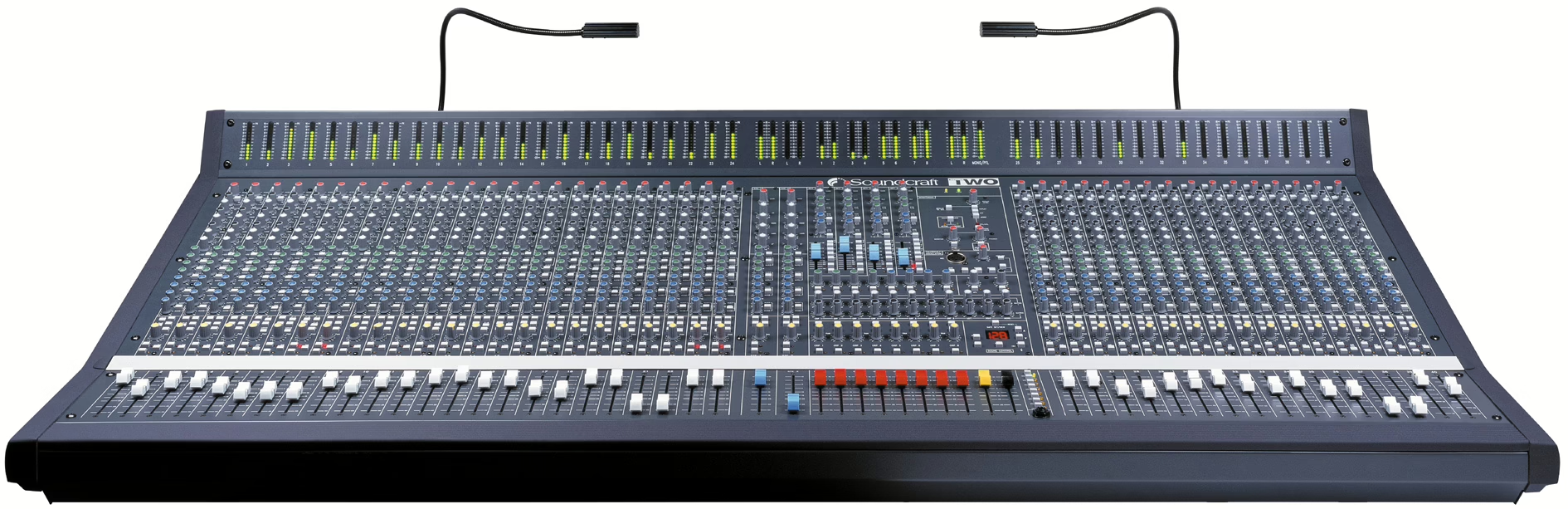
| Large format, 32 faders and up | Equipped venue, touring, busy stage | Weight, footprint, price |
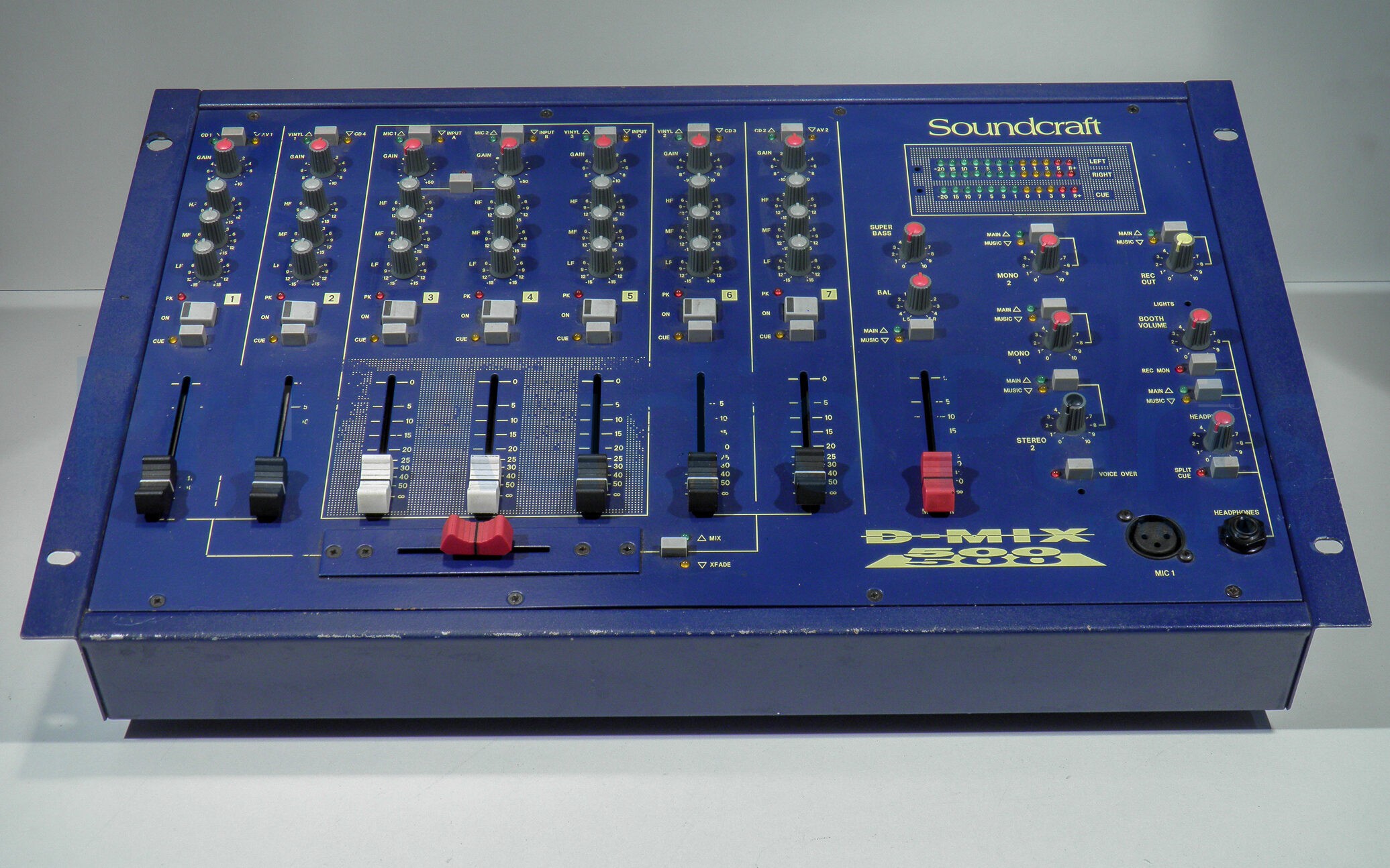
| Compact analogue | Venue with rotating operators, tight budget | No recall of any kind |
The fader-less tablet-driven format deserves a note: it appeals on footprint and price, and it shifts a dependency. The day the tablet dies, discharges or loses the network, you have no console at all. On a low-stakes gig that is acceptable; on a date that matters, carry a second device.
Features that matter, and features that do not
Three characteristics genuinely change daily life. Full processing per channel — filter, parametric EQ, gate, compressor on every input — replaces a rack of outboard and saves considerable time. Scene recall transforms life in a venue hosting recurring productions. Remote control lets you set a monitor standing next to the musician, which is worth every method in the world.
Conversely, two spec-sheet arguments deserve deflating. The number of internal effects means nothing: two good reverbs beat sixteen mediocre processors, and you will never use more than three at once. A 96 kHz sample rate is a selling point with no audible consequence in live sound, while it often halves the available processing resources.
Money spent on a console one tier up almost always produces less than the same money spent on capture and PA. A microphone suited to the source, a system sized for the room and properly aligned change what the audience perceives; a more expensive console only makes your job more comfortable. On a constrained budget the order of priority is always the same: the PA, then the microphones, then the console. It feels counter-intuitive when you are buying and obvious when you are listening.
Three situations, three sizings
For a multi-purpose venue with occasional operators, aim for readability before features: sixteen to twenty-four inputs, four to six buses, and a surface where everything is visible. A digital console left badly configured by the previous user is a permanent trap for the next one.
For a self-contained touring band, count your inputs with the margin, then check the buses against how many players use in-ears — that is what will decide. A compact digital format with a stage box covers the overwhelming majority of cases.
For an equipped venue hosting visiting productions, the question becomes one of standards: a widespread console that visiting engineers already know beats a technically superior but exotic model. Compatibility with the riders you will be sent matters more than any single specification.
Frequently asked questions
How many inputs does a five-piece band need?
Twenty to twenty-four in a typical configuration, once the drum kit, instruments, vocals and effect returns are counted. A sixteen-input format runs out on the first slightly busy setup.
Which mixing console should a beginner choose?
The one that covers your real stage with a third in reserve, and whose surface stays readable. For a first purchase, a compact digital format of sixteen to twenty-four inputs with tablet control gives the best ratio of capability to price — provided you check the available bus count.
Inputs or buses: which matters more?
Buses, as soon as you have monitors to build. Inputs can be worked around by summing two sources or dropping a microphone; a missing bus means a musician with no monitor, and there is no way around that.
Does a 96 kHz console sound better?
Not audibly, in live sound. It does often halve the available processing resources, and therefore the number of usable channels and effects. It is a commercial argument, rarely a practical advantage.
Second-hand high-end or new entry-level?
Second-hand high-end, provided the model is still supported by its manufacturer and updates remain available. A professional console abandoned by its maker becomes a liability: no fixes, no parts, and a difficult resale.