


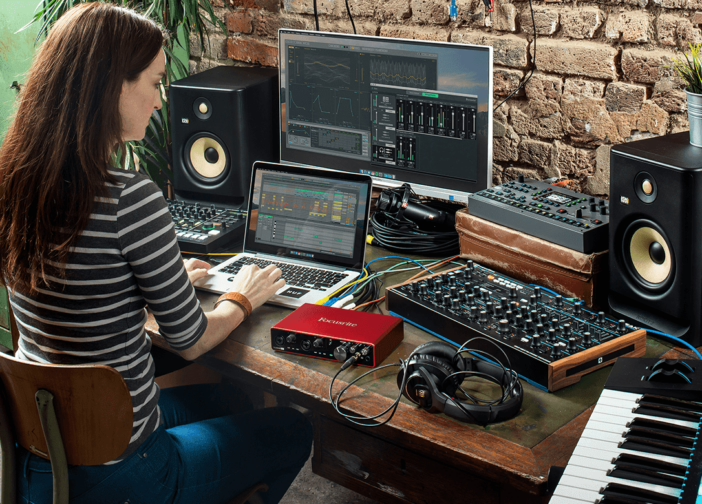
A digital mixer with a built-in USB audio interface replaces both the console and the interface: one cable, and every channel lands on its own track in your DAW. These are the ones I recommend in 2026, from podcasting to multitrack concert recording, with their public prices and the real channel count they send to the computer.
- Best overall: the Allen & Heath CQ-18T, 16 preamps at 96 kHz and a 24 × 22 USB interface for USD 1,199.99.
- Most tracks for the money: the Behringer WING and its 48 × 48 USB.
- To record a band with real faders: the Zoom LiveTrak L-20, which also records on its own to SD card.
- For podcasting and content creation: the Mackie DLZ Creator.
- On a tight budget: the Allen & Heath CQ-12T at USD 899.99.
The comparison at a glance
The number that matters here is the USB format: the first figure is the channel count sent to the computer, the second the count coming back. Public prices in USD before tax unless stated otherwise, checked on 12/11/2026.
| Mixer | Preamps / inputs | Faders | USB interface | Max. sample rate | Price | Year |
|---|---|---|---|---|---|---|
| Allen & Heath CQ-18T | 16 / 18 | none (touchscreen) | 24 × 22 | 96 kHz | 1,199.99 USD | 2023 |
| Allen & Heath CQ-12T | 10 / 13 | none (touchscreen) | 16 × 16 | 96 kHz | 899.99 USD | 2024 |
| Behringer WING | 8 local, 48 stereo channels | 24 | 48 × 48 | 48 kHz | 3,499 USD | 2019 |
| Zoom LiveTrak L-20 | 16 / 20 | 21 | 22 × 4 | 96 kHz | 999 EUR | 2018 |
| Zoom LiveTrak L-12 | 8 / 12 | 13 | 14 × 4 | 96 kHz | 549.99 USD | 2017 |
| PreSonus StudioLive 32 Series III | 32 / 40 | 33 | 34 × 34 (plus AVB) | 48 kHz | 2,699 USD at launch | 2017 |
| Tascam Sonicview 24 | 24 / 44 | 25 | 32 × 32 | 96 kHz | 5,555 GBP at launch | 2022 |
| Mackie DLZ Creator | 4 mics | 9 | multitrack | 48 kHz | 799 USD | 2023 |
| Allen & Heath SQ5+ | 16 / 48 channels | 17 | 32 × 32 | 96 kHz | 4,999 USD | 2026 |
| Yamaha DM3 | 16 / 22 channels | 9 | 18 × 18 | 96 kHz | 1,699 USD at launch | 2023 |
The mixers in detail
Allen & Heath CQ-18T: best overall
1,199.99 USD · 2023
16 preamps, 18 inputs, a 7-inch touchscreen, built-in Wi-Fi and a 24 × 22 USB interface at 96 kHz: the CQ-18T records every channel separately in your DAW and sends playback tracks back to the desk. SD card recording takes over when no computer is around. Barely 3 kg. Who it’s for: bands that rehearse and record with the same tool, small venues, home studios that want a real console. Limits: no physical faders, everything goes through the screen or a tablet; six mix outputs; no network expansion.
Allen & Heath CQ-12T: tight budget
899.99 USD · 2024
The CQ-18T’s little sister keeps the touchscreen, the processing and 96 kHz, with 10 preamps, 13 inputs and a 16 × 16 USB interface, at 2.4 kg. Who it’s for: duos, trios, multi-voice podcasts, rehearsal recording. Limits: ten mics fill up fast with a full drum kit; six mix outputs; no faders, like the 18T.
Behringer WING: most tracks for the money
3,499 USD · 2019
The WING’s 48 × 48 USB interface records a whole gig track by track, and the desk then doubles as a mixing surface in the studio. Routing is flexible enough to send any source, pre or post processing, to any USB channel. Who it’s for: live recording, project studios that want one machine for stage and tracking. Limits: 48 kHz only; 8 local preamps, so a stagebox is close to mandatory; 24 kg.
Zoom LiveTrak L-20 and L-12: record a band with real faders
999 EUR (L-20) · 549.99 USD (L-12) · 2018 and 2017
The LiveTraks look like analog mixers, with one fader per channel and knobs everywhere, but they record every input to SD card and also work as a USB interface. The L-20 packs 16 preamps, 21 faders, six monitor mixes and a 22 × 4 interface; the L-12 drops to 8 preamps, 13 faders and 14 × 4. Who it’s for: bands that want to record rehearsals and gigs without a computer, musicians who hate menus. Limits: only four return channels from the computer; basic effects; no full scene memory like a true digital console.
PreSonus StudioLive 32 Series III: the stage and studio hybrid
2,699 USD at launch · 2017
32 preamps, 33 faders, 16 flex mixes and a 34 × 34 USB interface alongside an AVB port: the StudioLive 32 was designed from day one to move between stage and studio, with deep Studio One integration. Who it’s for: churches and venues that record every service or show, studios that want a physical surface. Limits: 48 kHz; a small screen for a desk this size; an ecosystem tightly tied to the in-house software. The more compact StudioLive 32S Series III keeps 40 channels and 26 buses, with 34 × 34 SD card recording and 64 × 64 AVB.
Tascam Sonicview 24: large format at 96 kHz
5,555 GBP at launch · 2022
24 preamps, 44 inputs, 25 faders, 22 buses, a 32 × 32 USB interface and Dante compatibility: the Sonicview 24 targets venues and studios that want lots of channels at 96 kHz without buying a touring console. 18 kg. Who it’s for: venues that record a lot, theatre control rooms, studios with a large live room. Limits: limited distribution, so few engineers know it; a price close to more established desks; a smaller expansion ecosystem.
Mackie DLZ Creator: for podcasting and content creation
799 USD · 2023
Four mic preamps, a touchscreen, effect and jingle pads, SD card recording and a multitrack USB interface: the DLZ Creator is built for multi-voice shows, with assistants that set gain and processing for non-engineers. Who it’s for: podcasters, streamers, community radio. Limits: four mics only; 48 kHz; no use for recording a band.
Allen & Heath SQ5+ and Yamaha DM3: live consoles that record too
4,999 USD (SQ5+) · 1,699 USD at launch (DM3)
Two consoles designed for the stage, with a serious USB interface: 32 × 32 at 96 kHz on the SQ5+, 18 × 18 at 96 kHz on the DM3, which also works as a control surface for Cubase and Nuendo. Who it’s for: engineers who want to record every show without extra hardware. Limits: the SQ5+ is expensive for pure studio use; the DM3 tops out at 16 preamps and six mix buses.
How to choose: the criteria that really matter
- USB format, both ways. A 22 × 4 interface records 22 tracks but only returns four: perfect for capture, limiting if you want to mix from the computer through the desk. A symmetrical interface (32 × 32, 48 × 48) enables virtual soundcheck: replaying a recorded show through the console to set up front of house without the band.
- The driver. On Mac, most of these mixers are class compliant; on Windows you need the maker’s ASIO driver, and its stability matters more than the spec sheet.
- Standalone recording. SD card (CQ, LiveTrak, DLZ, StudioLive 32S) or USB stick: useful when a computer has no place on stage.
- Sample rate. 96 kHz (Allen & Heath, Yamaha DM3, Zoom, Tascam) versus 48 kHz (WING, StudioLive, Mackie): 48 kHz is plenty for live recording; 96 kHz mostly pays off for latency and some processing.
- Faders or screen. The CQs are driven by touch, the LiveTraks by faders: recording a band live goes faster with faders under your hands.
If you are still torn between a mixer and a plain audio interface, our mixer or audio interface comparison explains when one replaces the other, and how to choose a mixing desk covers the general method.
My take
The CQ-18T is the best compromise right now: a real 96 kHz console, a near-symmetrical interface and the price of a high-end audio interface. For a band that records every rehearsal, the L-20 is still faster thanks to its faders, even with only four USB returns. And when it comes to capturing full concerts, nothing touches the WING at this price: 48 channels each way, no expansion card needed.
Frequently asked questions
Can a digital mixer replace an audio interface?
Yes, every mixer in this guide shows up on the computer as a multichannel audio interface. The difference with a dedicated interface lies in the number of return channels, driver latency and form factor, not in preamp quality.
How many tracks can an Allen & Heath CQ-18T record?
Up to 24 channels to the computer over USB, and 22 coming back. On SD card, the desk records on its own without a computer.
Zoom L-20 or Allen & Heath CQ-18T?
The L-20 offers 21 faders and multitrack SD card recording; the CQ-18T brings real digital processing, scene memories and a more symmetrical USB interface. To record without thinking, the L-20; to mix and record at once, the CQ-18T.
What is virtual soundcheck?
It means playing back, through the console, the tracks of a show recorded over USB, as if the band were playing. It requires an interface that returns as many channels as it records, such as the WING or the SQ5+.
Which mixer should I choose for a podcast?
The Mackie DLZ Creator is built for that job, with four mics, jingle pads and setup assistants. For more voices or music recording, the CQ-12T offers ten preamps for a similar price.
Changelog
- 12/11/2026: first version of the guide. Ten mixers compared, prices checked the same day, PreSonus StudioLive 32S Series III added to The Base.