


Description
Technical
Specifications
Inputs / Outputs
| Total inputs | 10 |
|---|---|
| Mic inputs | 3 |
| Inputs / outputs | Analogue inputs on 3-pin XLR; digital inputs AES/EBU on XLR and S/PDIF on Cinch/RCA and optical (TOSlink) |
Processing
| Max sample rate | 48 kHz |
|---|---|
| Channels | 10 inputs directly on the 10 faders, including 3 mic inputs. Two versions: 5 stereo line + 2 digital (analogue environment) or 5 digital + 2 stereo line (digital environment) |
| Sample rate | 48 kHz ±100 ppm (internally synced); sample-rate converter on all digital inputs (accepts 32–54 kHz) |
| Architecture | Comprehensive monitoring section, 2 analogue inserts, serial interface, GPIO; integration with broadcast automation (CAB / Studer DigiMedia) |
Surface
| Physical faders | 10 |
|---|---|
| Motorized faders | No |
| Touchscreen | Yes |
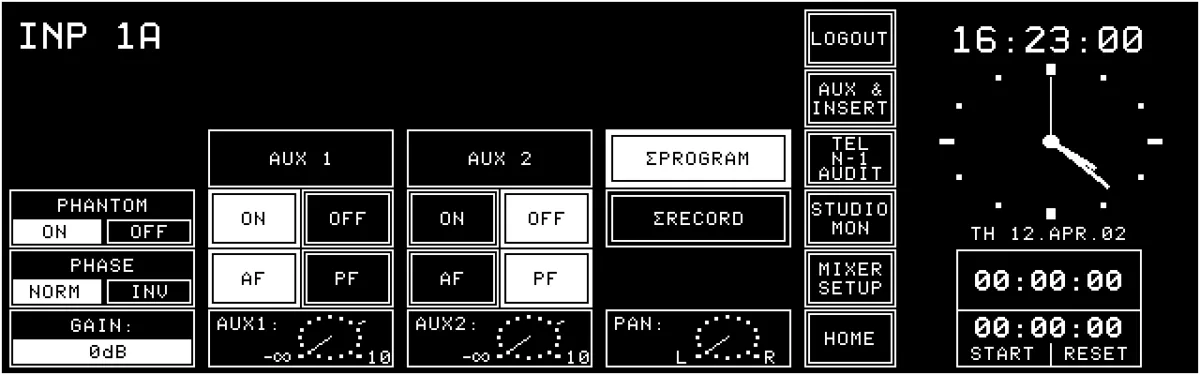
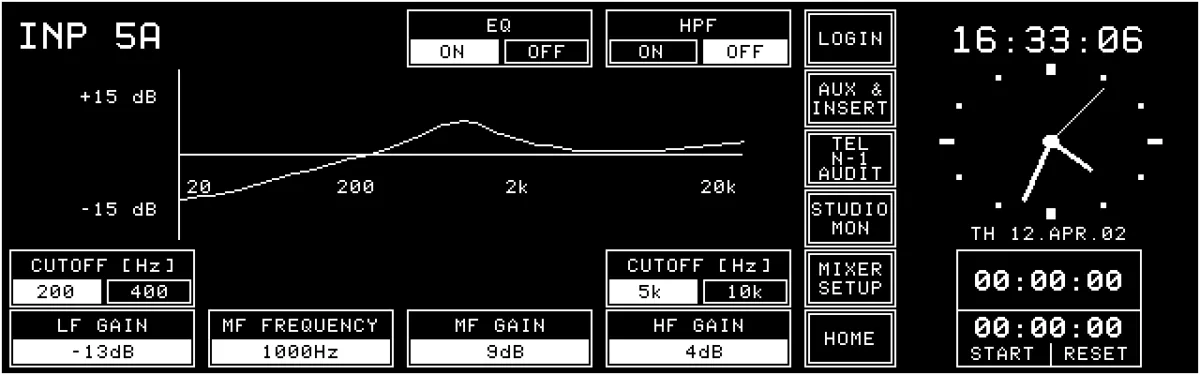
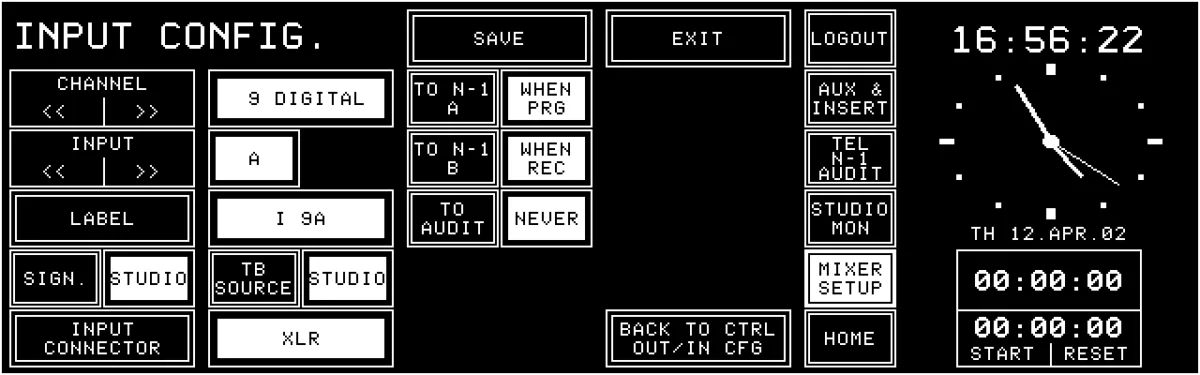
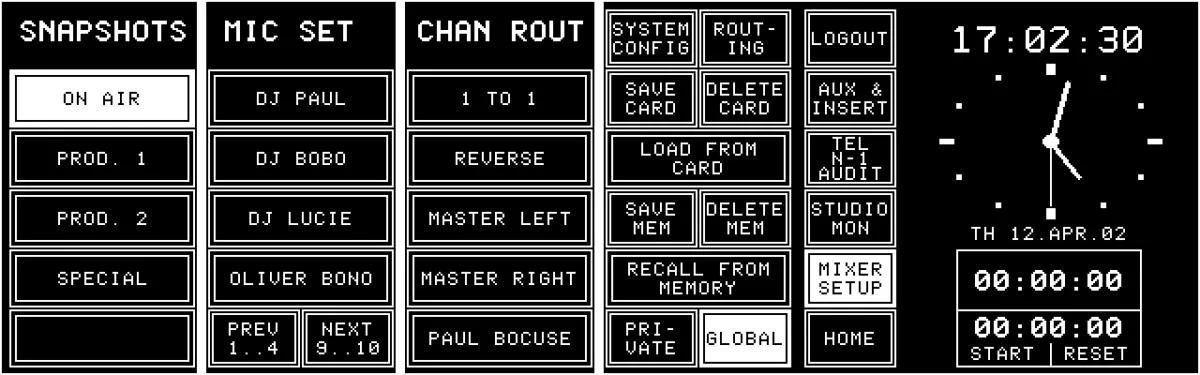
| Faders | 10 channel faders + 2 master faders; central touch-screen interface, only the essential functions having hardware controls |
Recording
| Onboard recording | No |
|---|
Networking
| Networking & protocols | AES/EBU |
|---|---|
| Redundant PSU | No |
| Redundant networking | No |
Power
| Power supply | Power consumption ≈ 125 VA; mains 100–240 V |
|---|
Strip & details
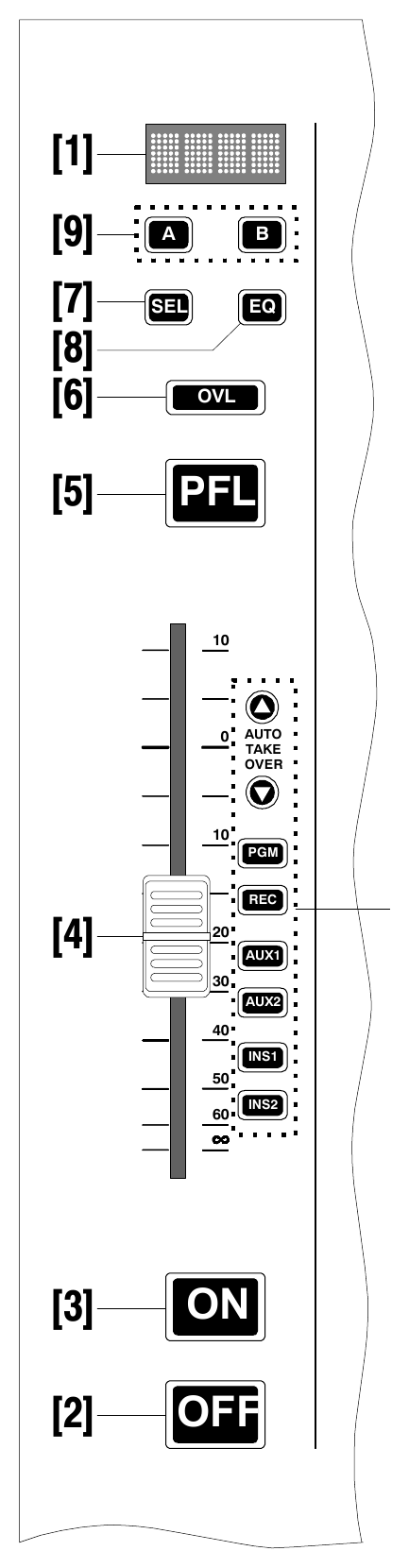
Rotate your phone to landscape for a better view of the strip.
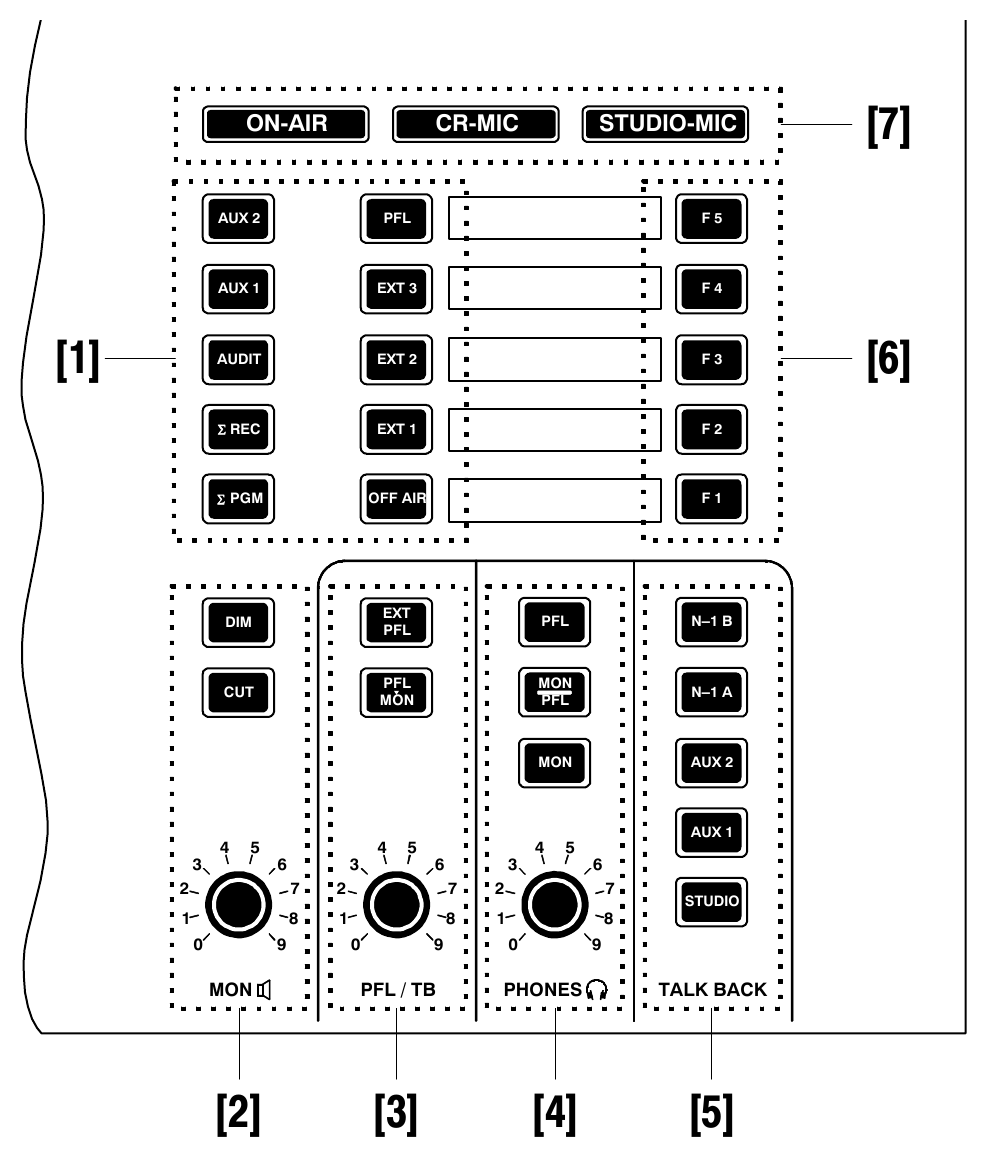
Rotate your phone to landscape for a better view of the strip.
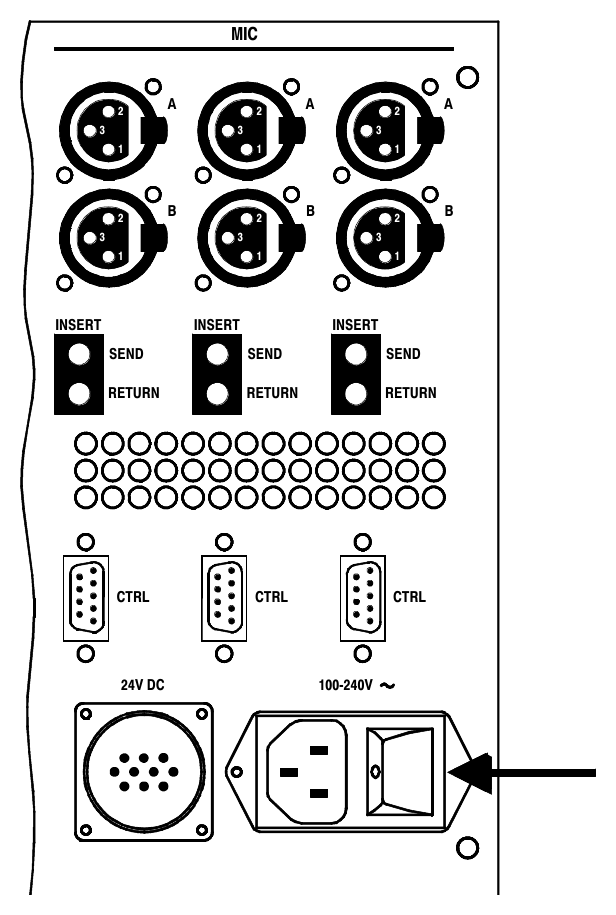
Rotate your phone to landscape for a better view of the strip.
Diagrams
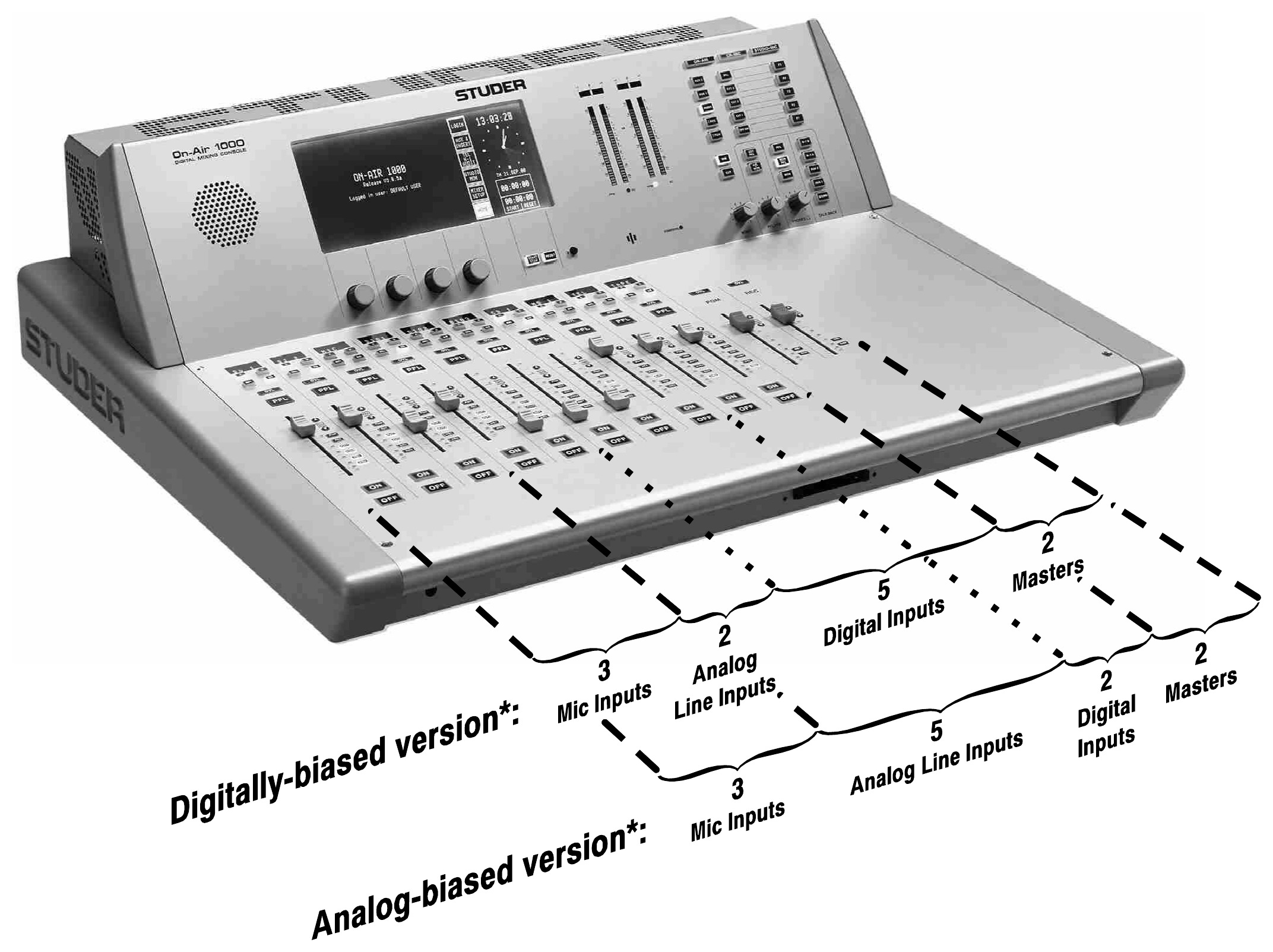
Rotate your phone to landscape for a better view of the diagram.
Software
Other screenshots
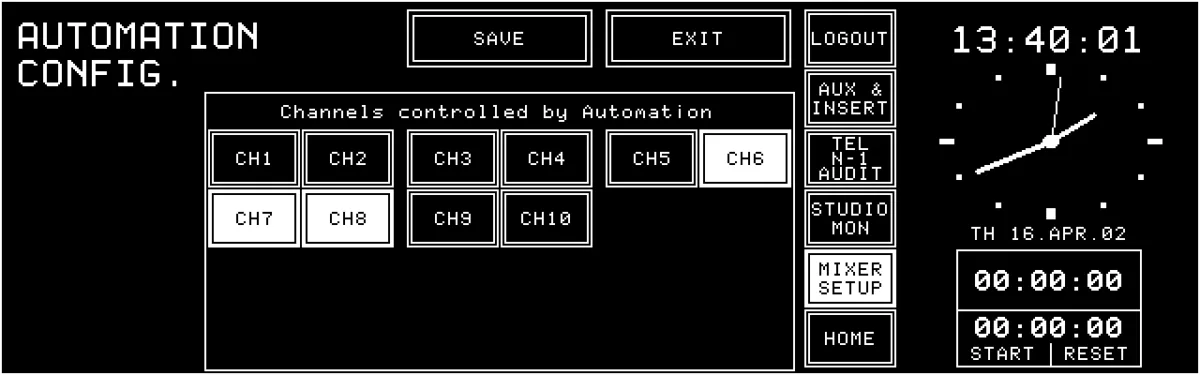
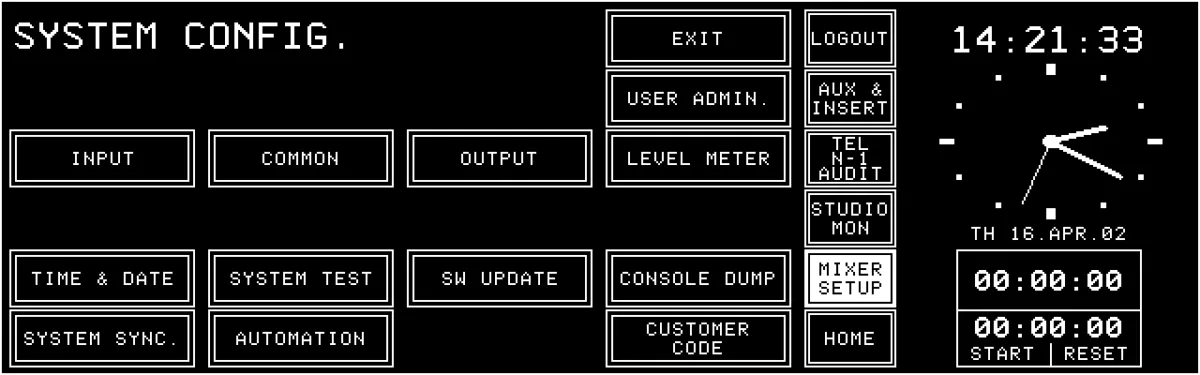
Accessories
I/O card
- Input units (mic / analog line / digital line)
Console input modules: mic (transformer-balanced XLR, +48 V), analogue stereo line, or digital line (AES/EBU + S/PDIF), each with GPIO.
Documents
Editorial & artists
Our take
History & design
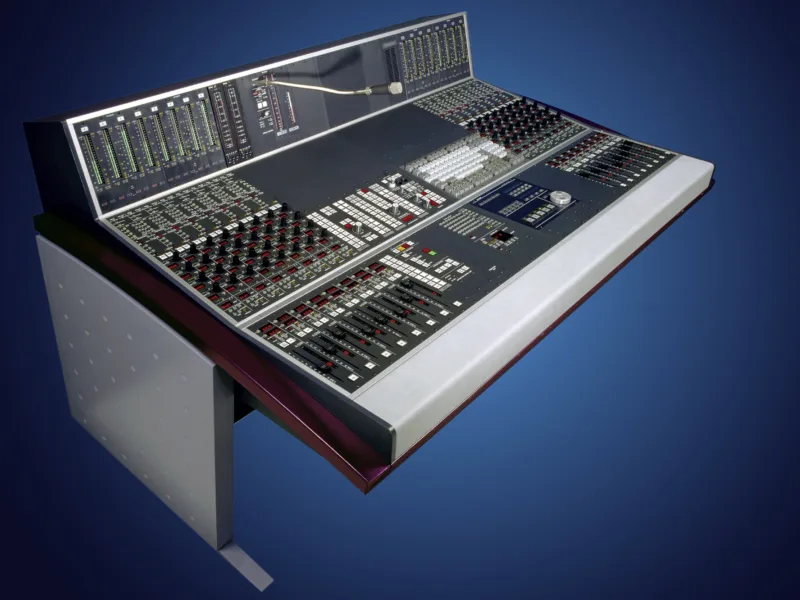
The Studer OnAir 1000 (launched late 2000) is a digital mixing console for radio broadcasting, built around a central touch-screen: only the most important functions keep hardware controls. It lines up 10 channel faders and 2 master faders, for 10 inputs available directly on the faders, including 3 mic inputs.
Two versions suit analogue or digital environments (5 stereo line + 2 digital, or the reverse). Analogue inputs are on 3-pin XLR, digital ones on AES/EBU (XLR) and S/PDIF (Cinch/RCA, optical TOSlink), with a sample-rate converter on every digital input (32 to 54 kHz). Processing is at 48 kHz. Each input unit offers two switchable mono/stereo inputs (A/B) and GPIO for fader-start, mute and signalling. The console has a comprehensive monitoring section, two analogue inserts, a serial interface and integrates with broadcast automation (CAB / Studer DigiMedia).
Links
Related consoles
Some merchant links are affiliate links. Purchases may support Digital Mixing at no extra cost.
Documents are archived locally for preservation. Source credited. Takedown requests: [email protected]