


Description
Technical
Specifications
Inputs / Outputs
| Inputs / outputs | PE boards: 8 inputs + 8 outputs AES/EBU dual-channel |
|---|
Processing
| Max sample rate | 48 kHz |
|---|---|
| Bit depth | 24 bits |
| Processing resolution | 40 bits |
| Channel processing | 40-bit floating point over a 32-bit bus |
| Conversion | 24-bit |
| Channels | Configurable: from a dozen to well over 100 channels depending on installed DSP |
| Surround and immersive | VirtualSurround Panning (VSP) on the D950S version |
Surface
| Motorized faders | Yes |
|---|---|
| Touchscreen | No |
| Control surface | Four-channel fader modules; frames of 4 to 64 strips |
| Layers | 10 layers per strip (5 banks of 2) |
| Screens | Colour TFT display (15″ on D950 M2) |
Recording
| Onboard recording | No |
|---|
Networking
| Networking & protocols | AES/EBU |
|---|---|
| Redundant PSU | Yes |
| Redundant networking | No |
| Redundancy | Redundant PSUs, hot-pluggable DSP cards, self-healing DSP |
Strip & details
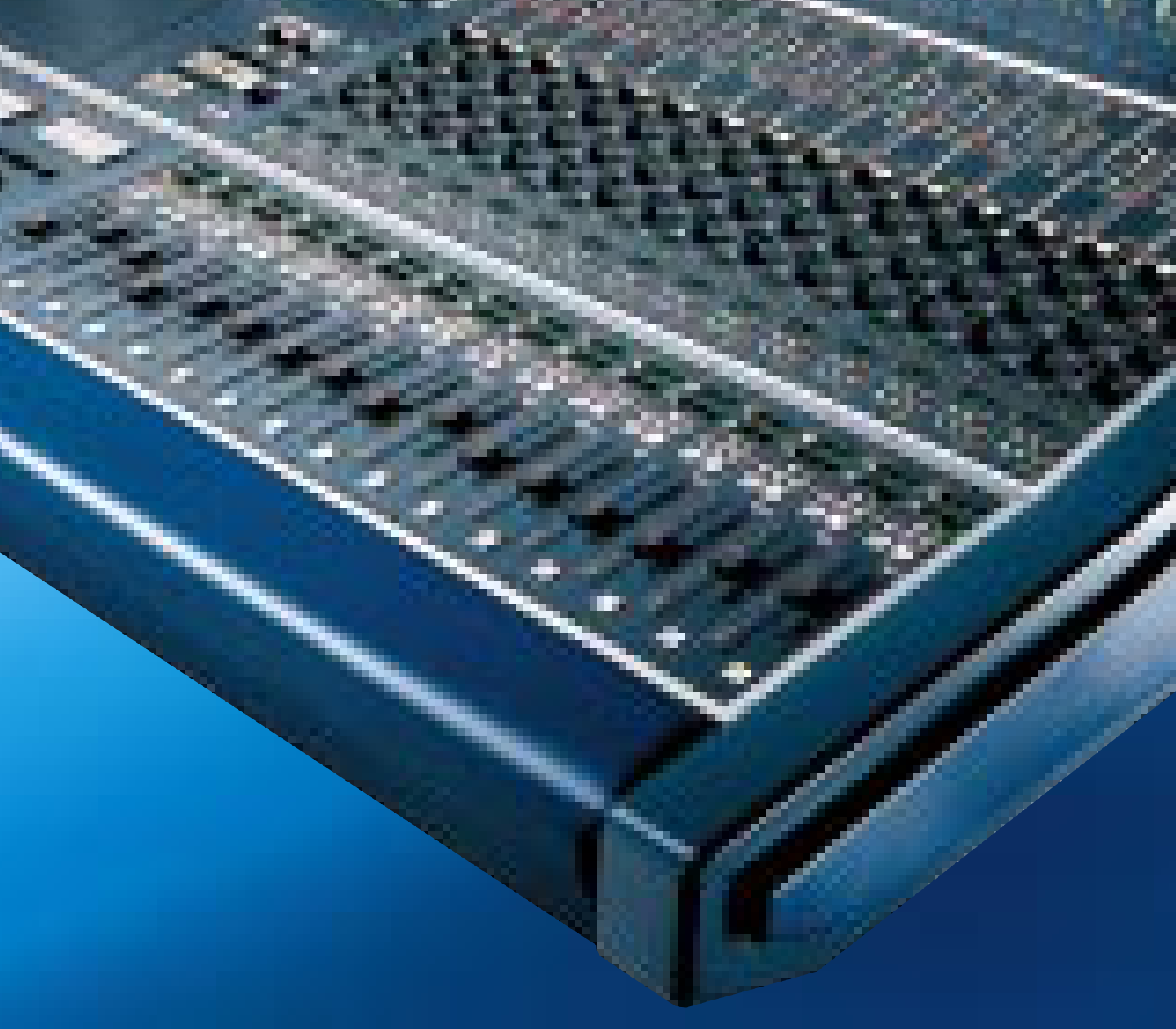
Rotate your phone to landscape for a better view of the strip.
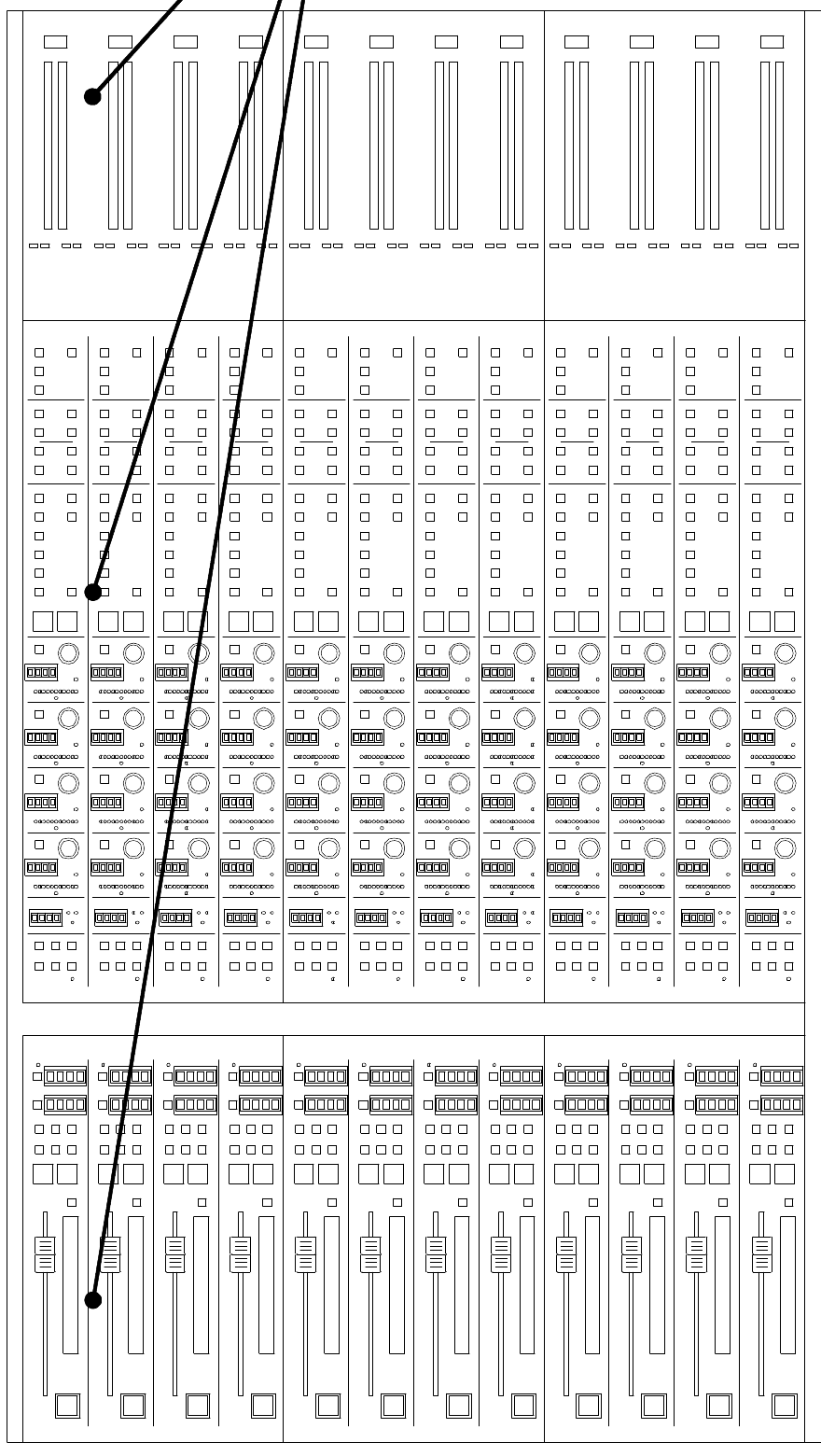
Rotate your phone to landscape for a better view of the strip.
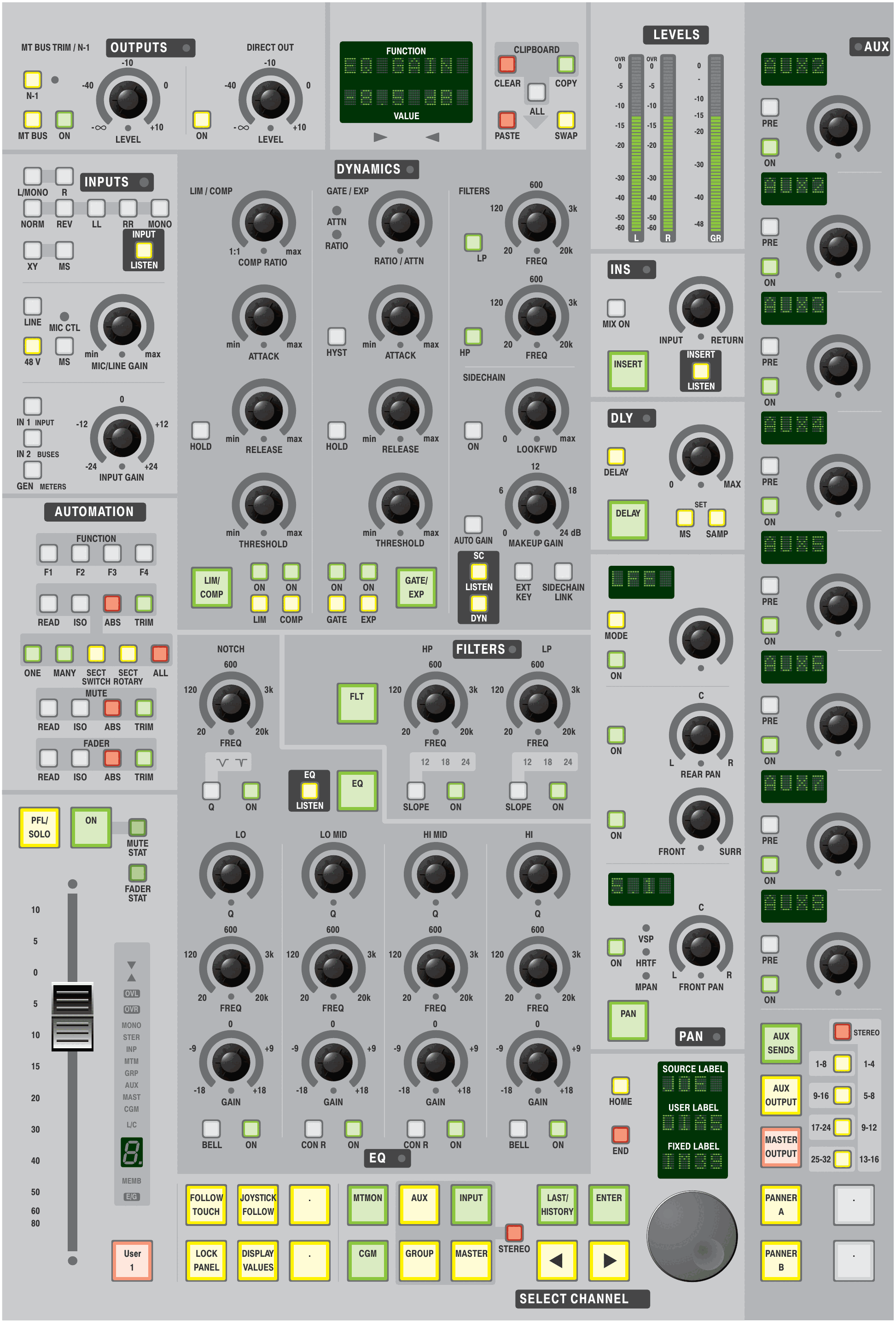
Rotate your phone to landscape for a better view of the strip.
Diagrams
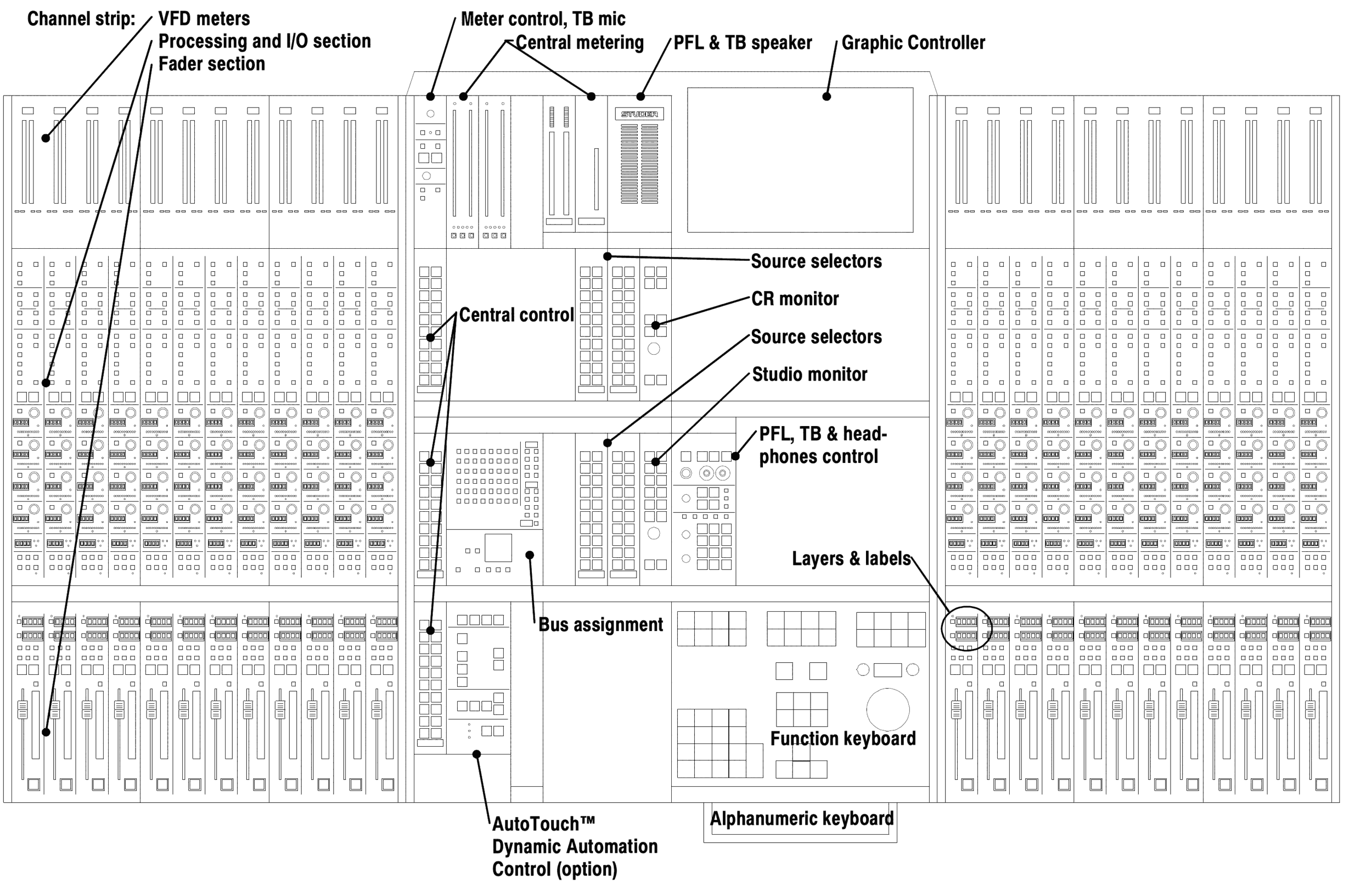
Rotate your phone to landscape for a better view of the diagram.
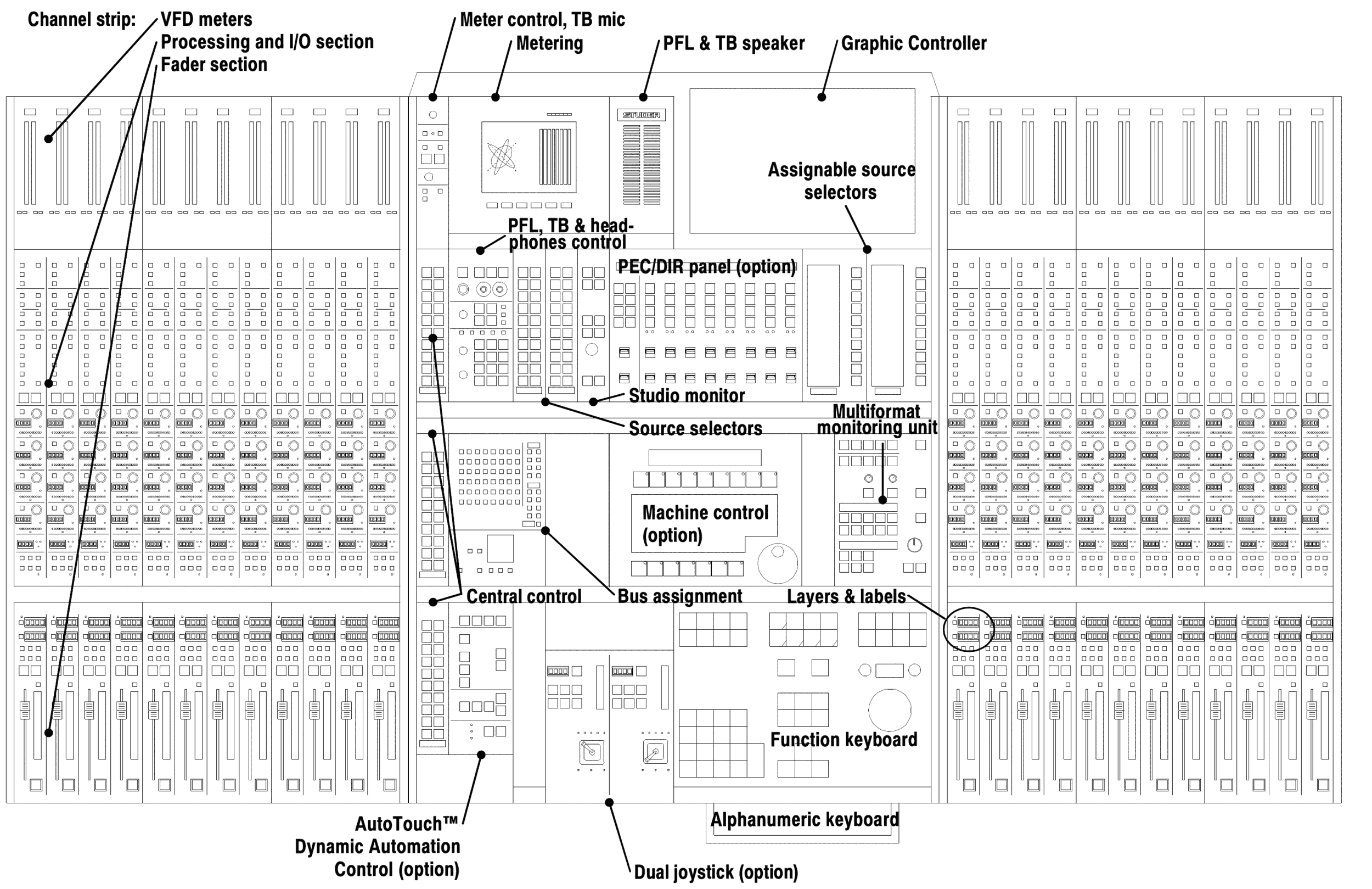
Rotate your phone to landscape for a better view of the diagram.
Software
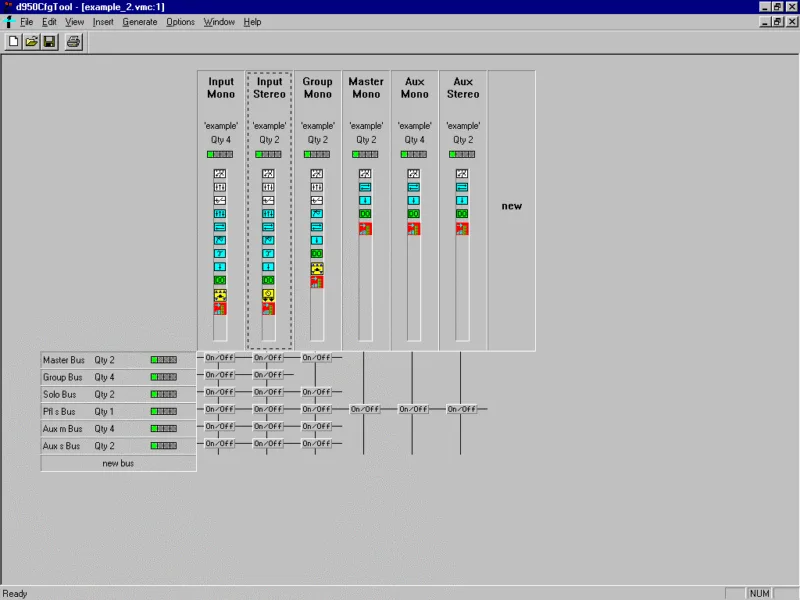
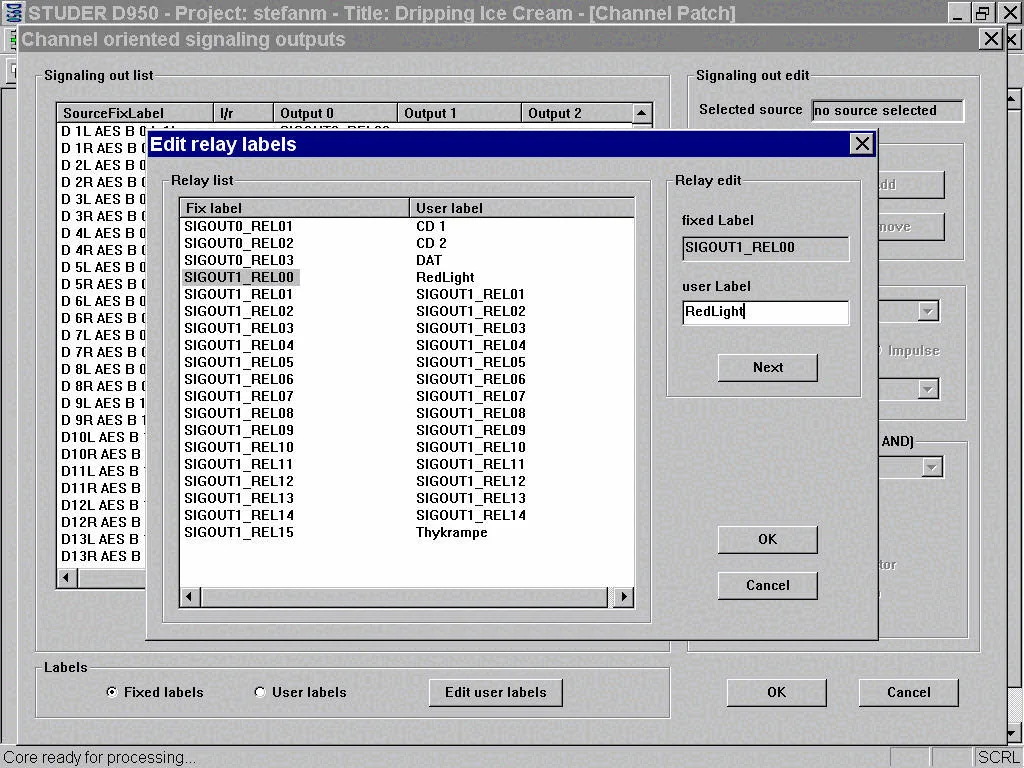
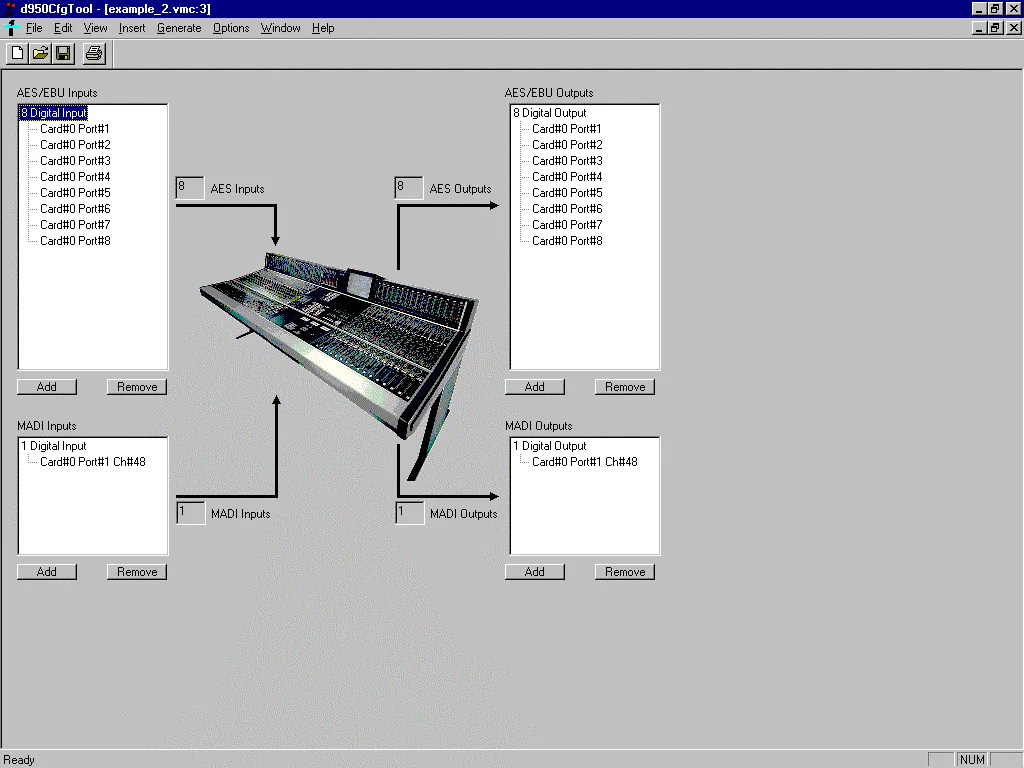
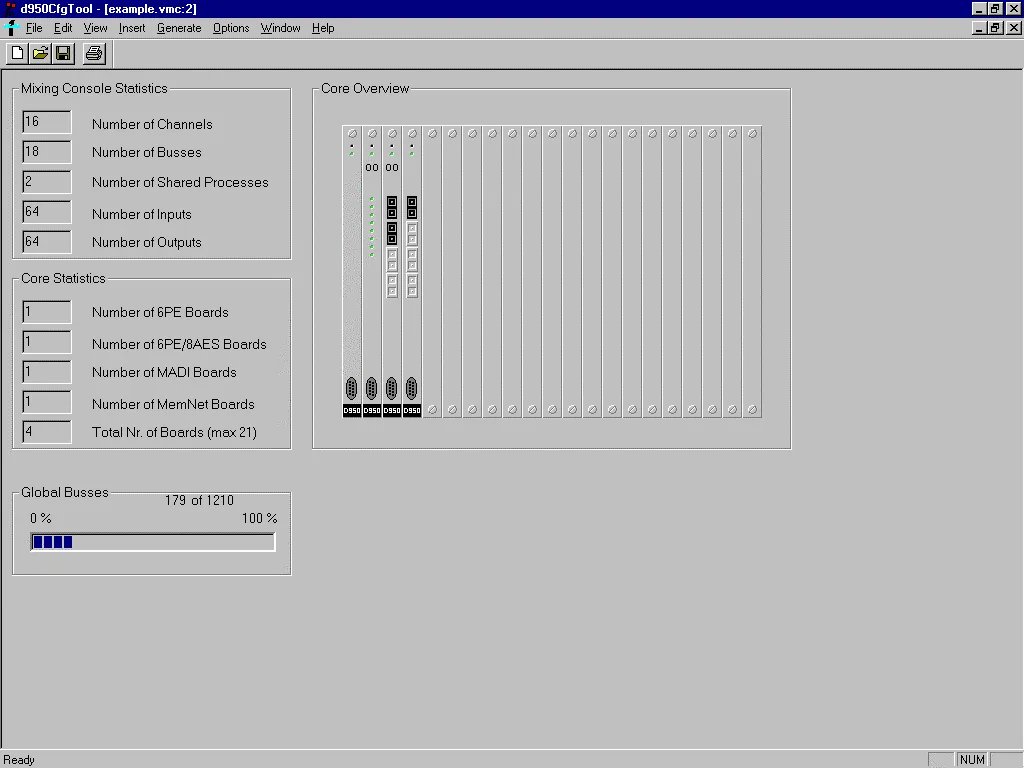
 D950 Configuration Tool v1.0Offline configuration software for the D950 console (channel, bus and routing definition).
Other screenshots
Documents
Editorial & artists
Our take
History & design
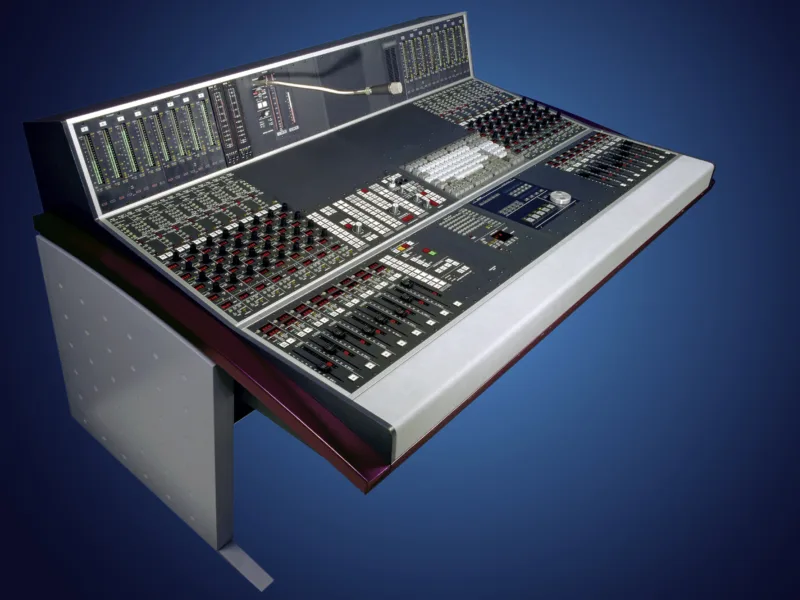
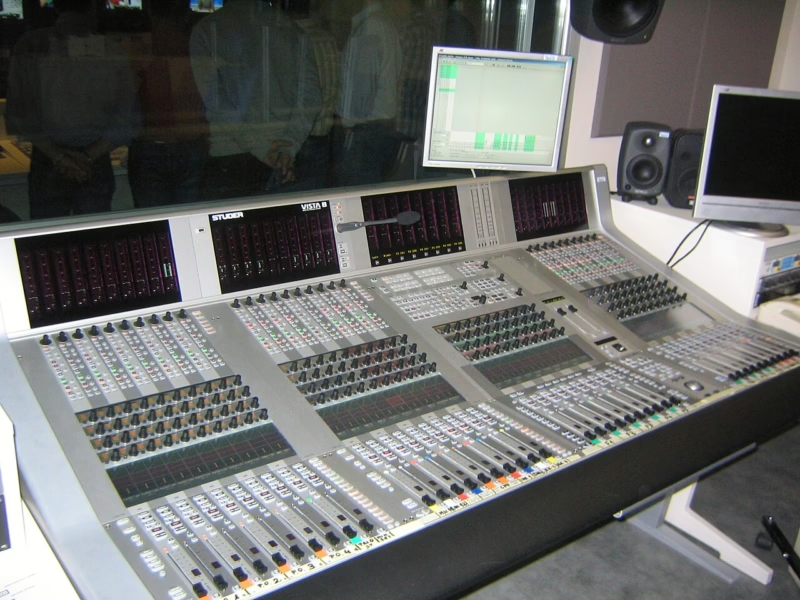
The Studer D950 is a modular digital mixing system introduced in the mid-1990s by the Swiss manufacturer Studer. It is built around a configurable DSP core: the channel and bus counts are not fixed but depend on the installed DSP power, the console being equipped with anywhere from a few dozen to well over a hundred channels depending on the cards fitted.
Internal processing runs in 40-bit floating point over a 32-bit bus, with 24-bit converters and 24-bit AES/EBU digital I/O. The architecture distributes processing across several DSP boards sharing a common backplane; the processing (PE) boards each provide eight AES/EBU dual-channel inputs and eight outputs.
The surface is built from four-channel fader modules (input frames of 4 to 64 strips), each strip accessing ten layers arranged in five banks of two. Reliability in critical operation relies on redundant power supplies, hot-pluggable DSP cards and a “self-healing” DSP mechanism that automatically switches a process to a spare card in case of failure.
Two notable variants shaped the line: the D950B base digital mixing system and the D950S surround version introduced at the 1997 AES, featuring VirtualSurround Panning (VSP) software for 5.1 production. Over 80 systems had been sold worldwide by autumn 2000. The D950 was replaced in the mid-2000s by Studer's Vista series.
Notable users
Links
Related consoles
Some merchant links are affiliate links. Purchases may support Digital Mixing at no extra cost.
Documents are archived locally for preservation. Source credited. Takedown requests: [email protected]