


Studer Vista 5
Compact digital broadcast/live console, pioneer of the Vistonics interface and FaderGlow
Description
Technical
Specifications
Processing
| DSP engine | Vista DSP core with redundancy; capacity extended by later core generations (up to ~1000 mono-equivalent channels / MEQ) |
|---|---|
| Max sample rate | 48 kHz |
| Bit depth | 24 bits |
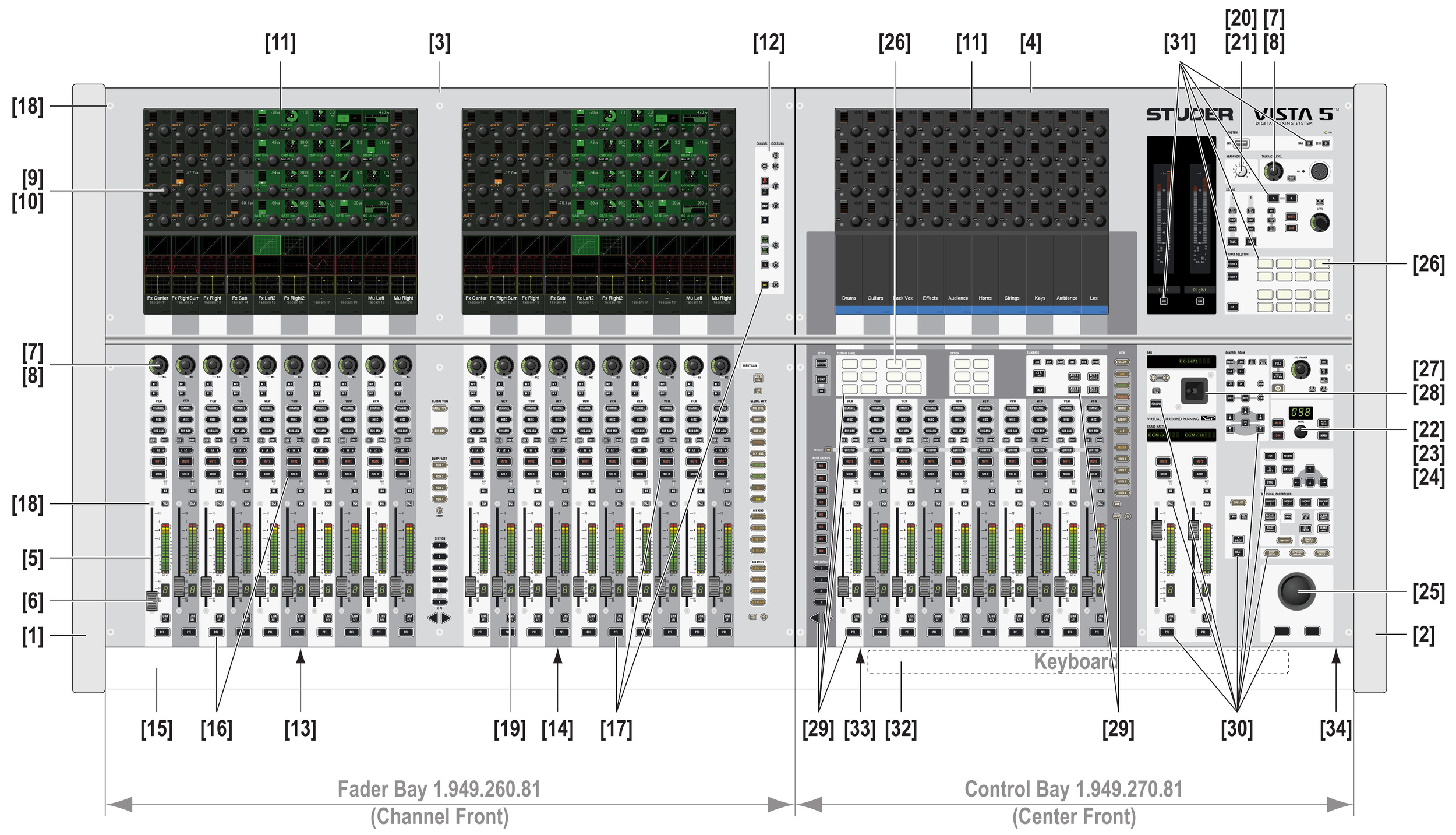
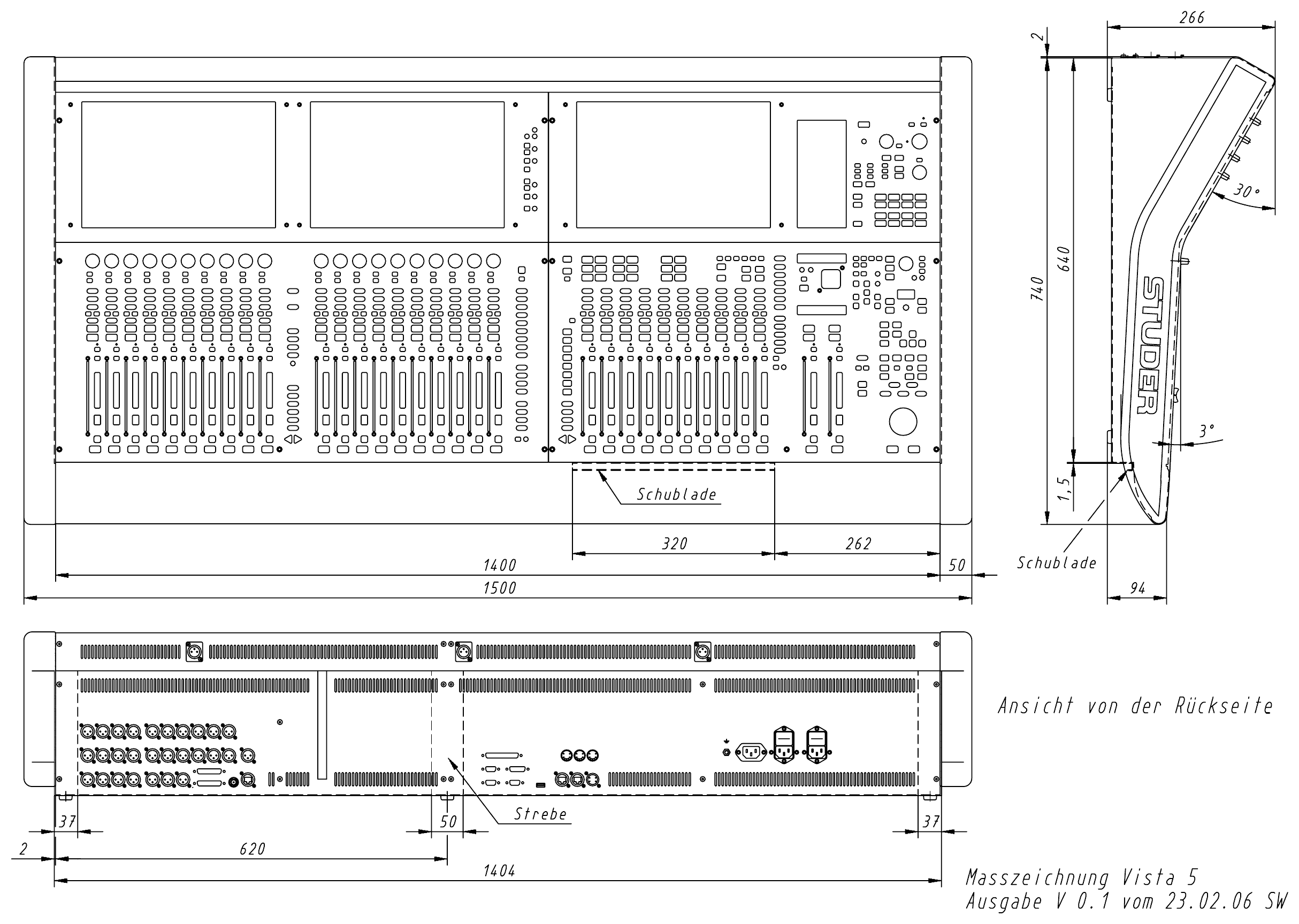
| Architecture | Compact console offered in several fader counts; control bay of 12 faders + Vistonics screen |
| Channels | Up to ~240 channels accessible from the surface (exact capacity depends on core generation — to be verified for the original version) |
Surface
| Motorized faders | Yes |
|---|---|
| Touchscreen | No |
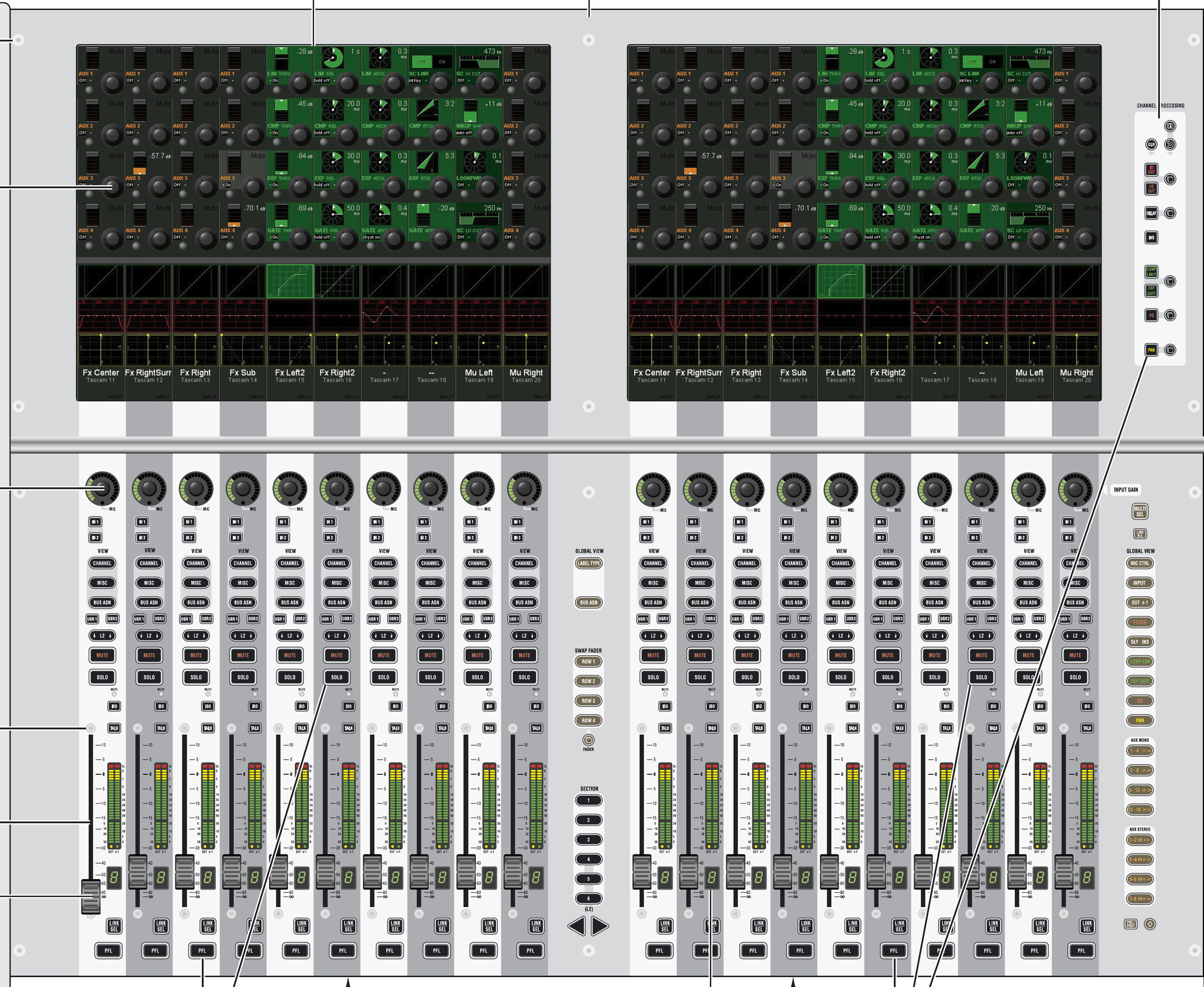
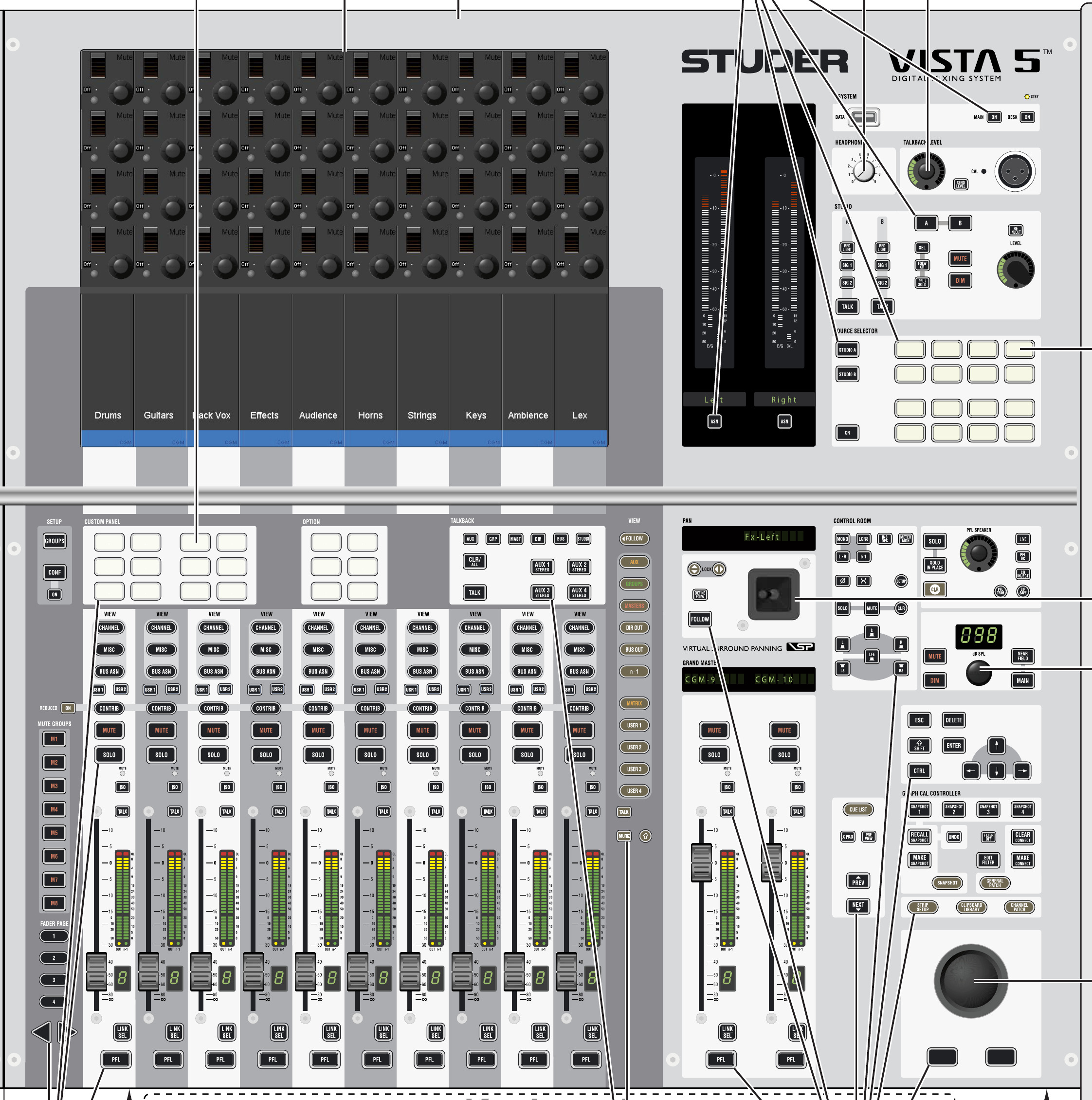
| Screens | Vistonics interface: touch-sensitive rotary encoders and buttons embedded around the TFT screen, direct control of the on-screen channel parameters (approx. 40 encoders + 40 buttons per bay) |
| Faders | FaderGlow: coloured illumination under each fader indicating its current function (aux, group, etc.) |
Recording
| Onboard recording | No |
|---|
Networking
| Networking & protocols | MADI |
|---|---|
| Redundant PSU | No |
| Redundant networking | No |
| Redundancy | DSP core redundancy |
Other
| Applications | Compact digital console for broadcast, OB trucks and live/production |
|---|
Strip & details
Rotate your phone to landscape for a better view of the strip.

Rotate your phone to landscape for a better view of the strip.
Rotate your phone to landscape for a better view of the strip.

Rotate your phone to landscape for a better view of the strip.
Diagrams
Rotate your phone to landscape for a better view of the diagram.
Rotate your phone to landscape for a better view of the diagram.
Software
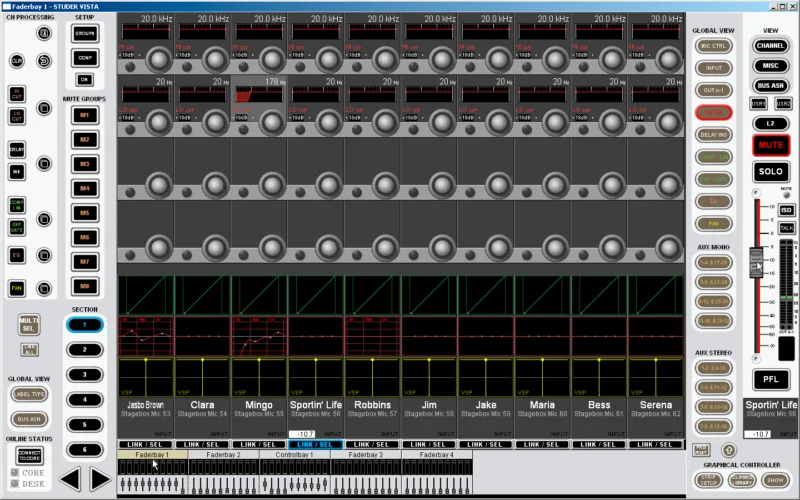
 Virtual Vista
- Configuration Editor
Other screenshots
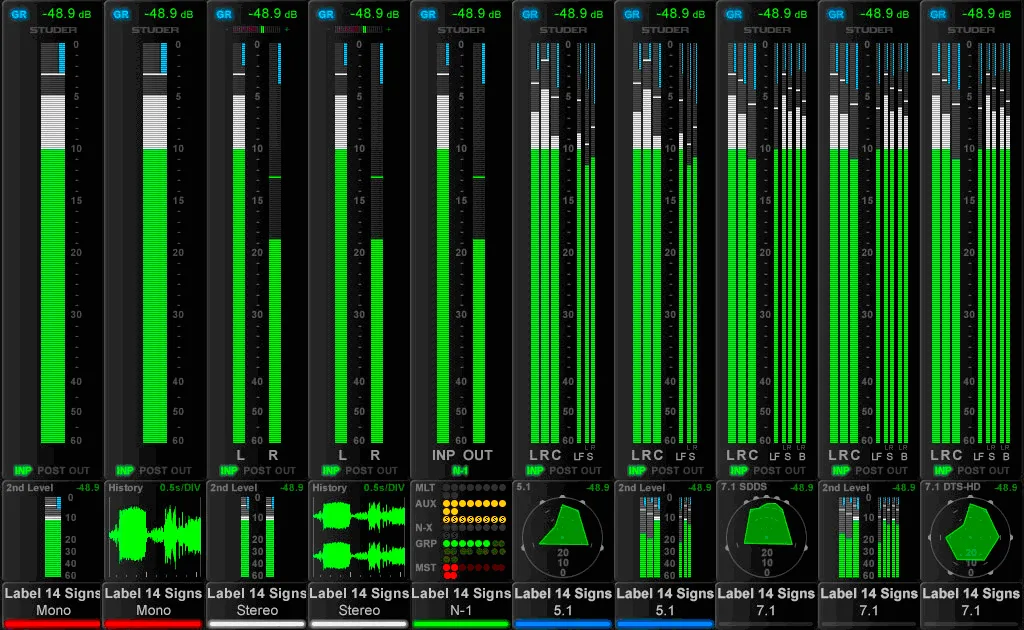
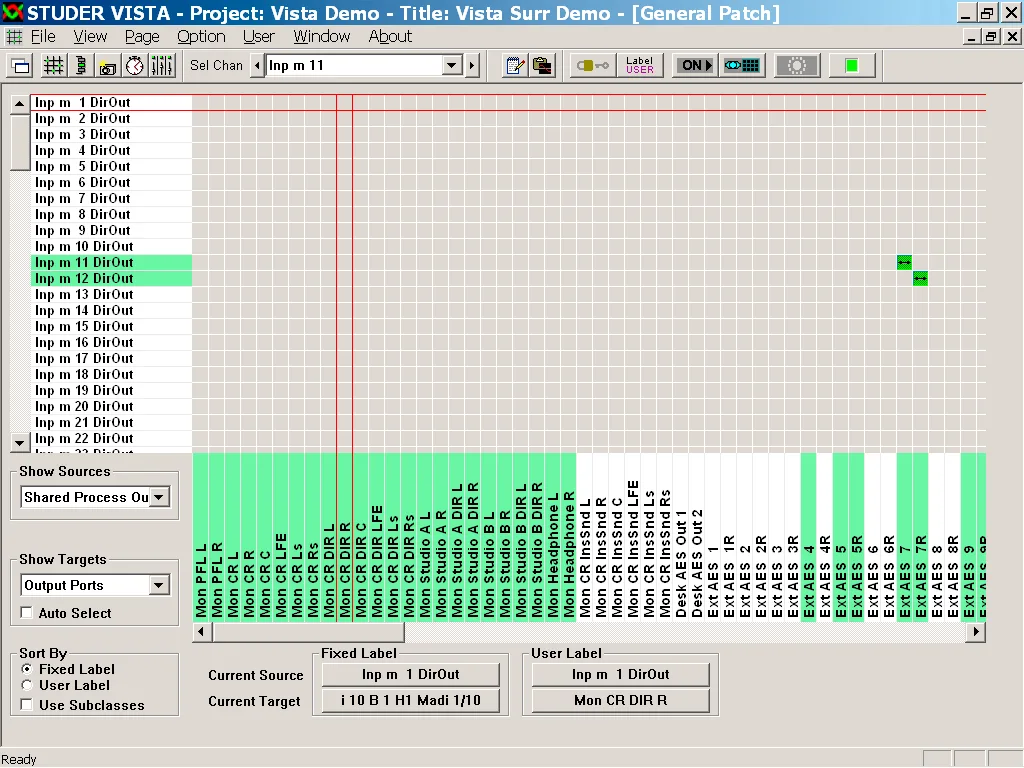
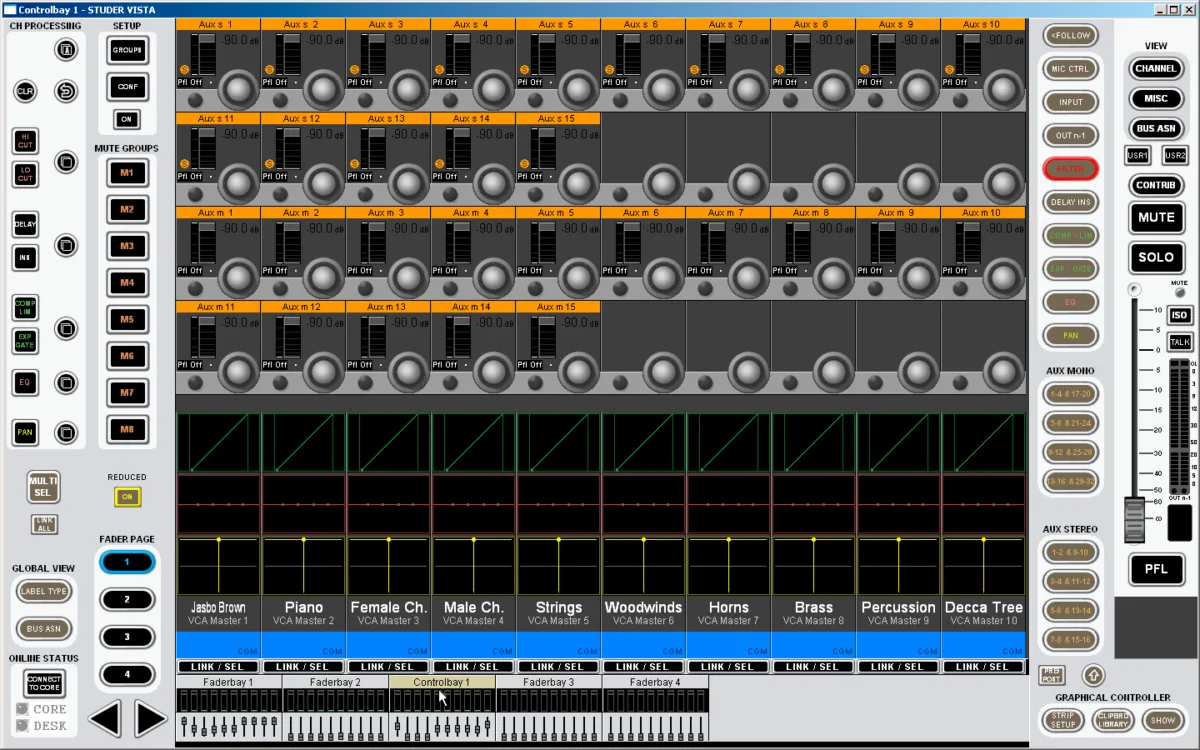
Documents
Editorial & artists
Our take
History & design
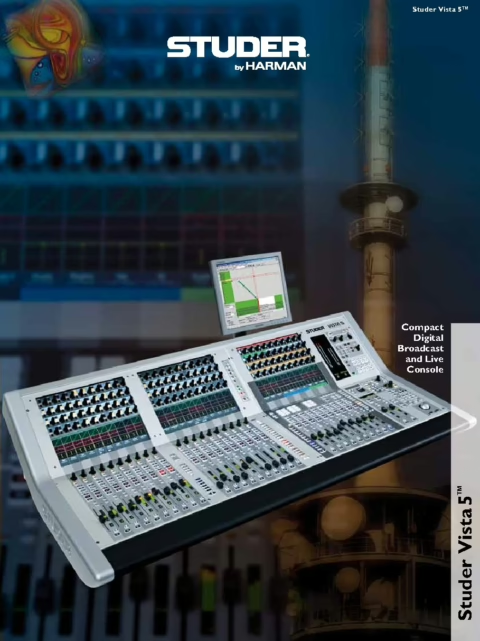
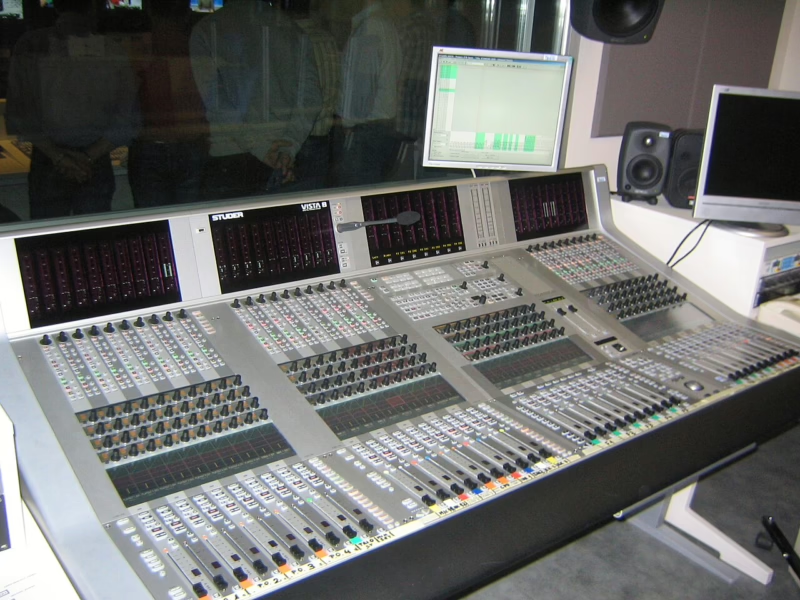
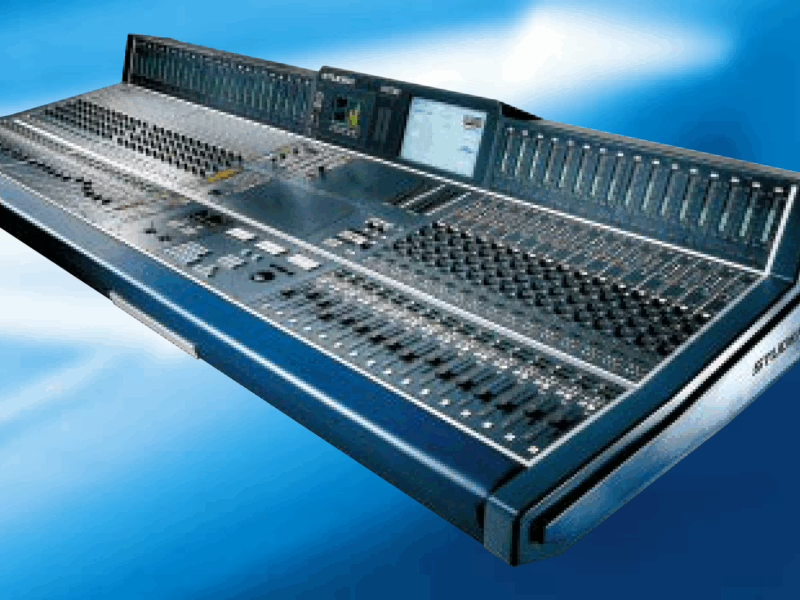
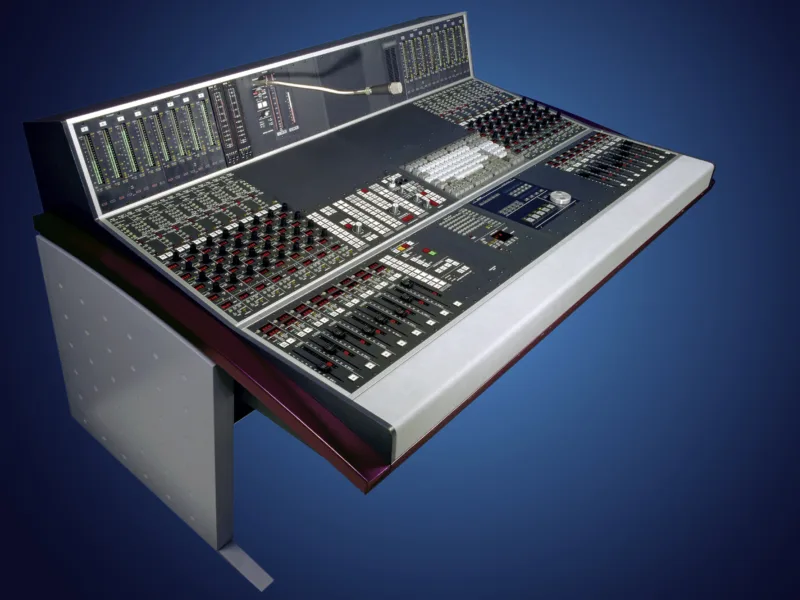
The Studer Vista 5 is a compact digital console for broadcast, OB trucks and live production. It is best known for bringing Studer's Vistonics interface to scale: rotary encoders and touch-sensitive buttons are physically embedded around the TFT screen, so you control the on-screen channel parameter directly, by hand — an approach Studer sums up as 'the return of the human interface'.
The console also uses FaderGlow technology, coloured illumination under each fader that instantly indicates its current function (auxiliary, group, etc.). It comes in several fader counts; a typical control bay combines 12 faders and a Vistonics screen, with roughly 40 encoders and 40 buttons per bay.
Built for broadcast operation, the Vista 5 relies on MADI connectivity, core redundancy and fast hands-on control in live conditions. Its processing capacity grew across core generations (later versions — M2, M3, SR, Black Edition — reaching up to around 1000 mono-equivalent channels). The Vista 5 founded a family (Vista 8, Vista 9, Vista 1, Vista X, Vista V) that made Studer a reference in TV and radio control rooms.
Links
Related consoles
Some merchant links are affiliate links. Purchases may support Digital Mixing at no extra cost.
Documents are archived locally for preservation. Source credited. Takedown requests: [email protected]