


Studer Vista 8
The live-production and broadcast console that established the Vistonics interface
Description
Technical
Specifications
Inputs / Outputs
| Inputs / outputs | D21m modular I/O: TDIF, ADAT, AES/EBU, MADI, analogue mic and line cards |
|---|
Processing
| DSP engine | Studer DSP Core (up to 20 DSP cards, parallel floating-point processing) |
|---|---|
| Max sample rate | 48 kHz |
| DSP engine — details | Rackmount DSP Core housing up to 20 DSP cards, parallel architecture with floating-point circuitry; automatic spare-card switchover |
Surface
| Physical faders | 52 |
|---|---|
| Motorized faders | Yes |
| Fader layers | 1 |
| Screens | 6 |
| Touchscreen | Yes |
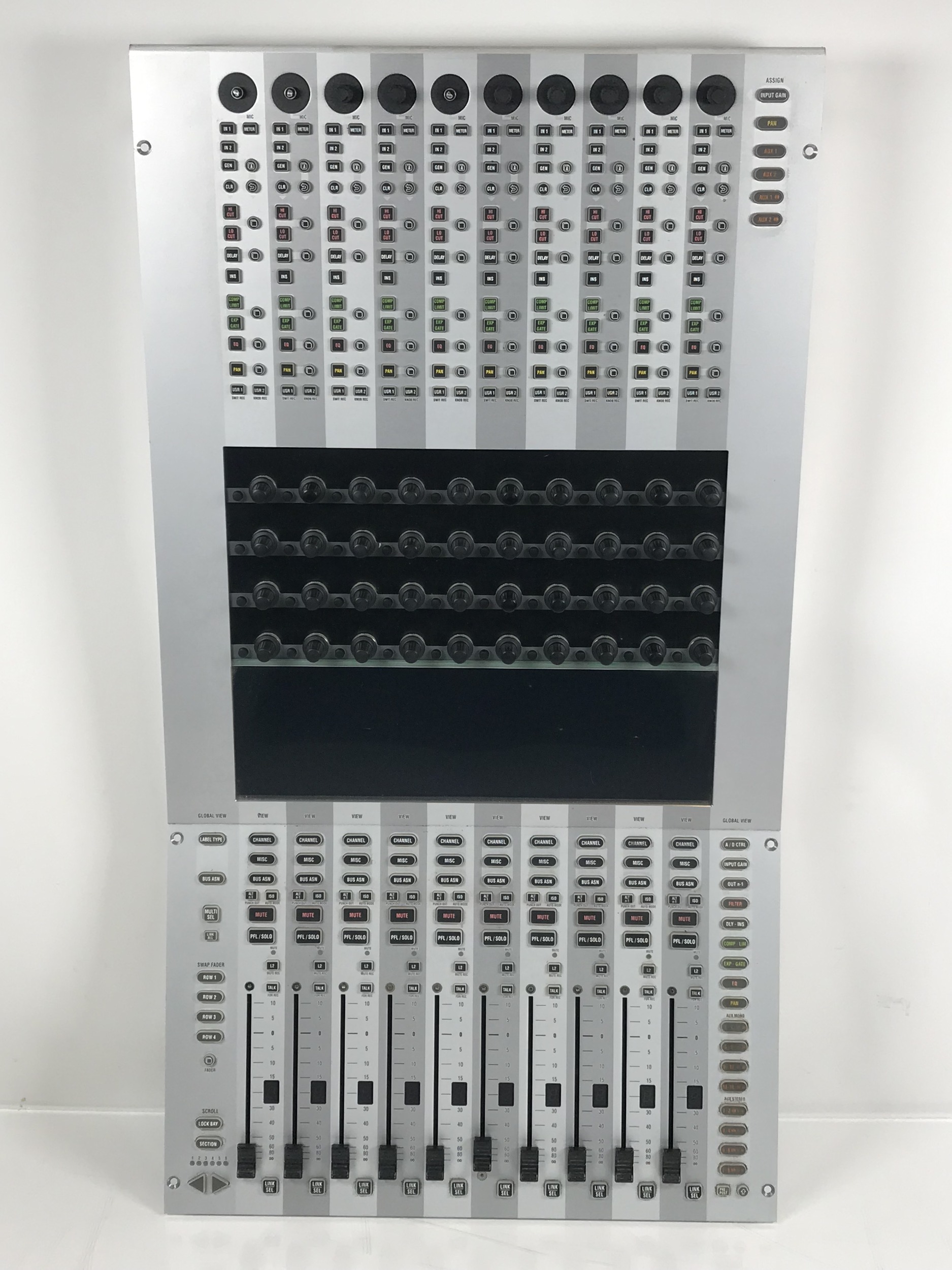
| Screens — details | Vistonics interface: TFT touchscreens embedding 40 rotary encoders/switches directly in the panel, above the channels |
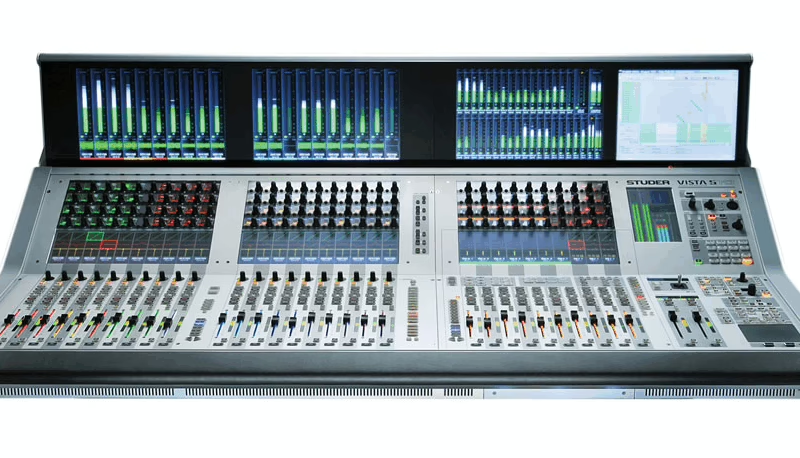
| Control surface | Bay architecture: one 10-fader master bay + up to six 10-fader channel bays (up to ~52 motorised faders) |
| Remote and tablet control | Redesigned central bay: 12 motorised faders and a 40-rotary Vistonics screen giving direct level access to up to 52 audio paths (master, group, matrix) |
| Monitoring and talkback | Monitoring rack: stereo, LCR, LCRS and 5.1 outputs |
Recording
| Onboard recording | No |
|---|
Networking
| Networking & protocols | MADI / AES/EBU / ADAT |
|---|---|
| Redundant PSU | Yes |
| Redundant networking | Yes |
| Redundancy | Redundant power supplies (DSP Core and D21m); Core reboots within seconds, restoring audio |
Strip & details
Rotate your phone to landscape for a better view of the strip.
Diagrams
Rotate your phone to landscape for a better view of the diagram.
Software
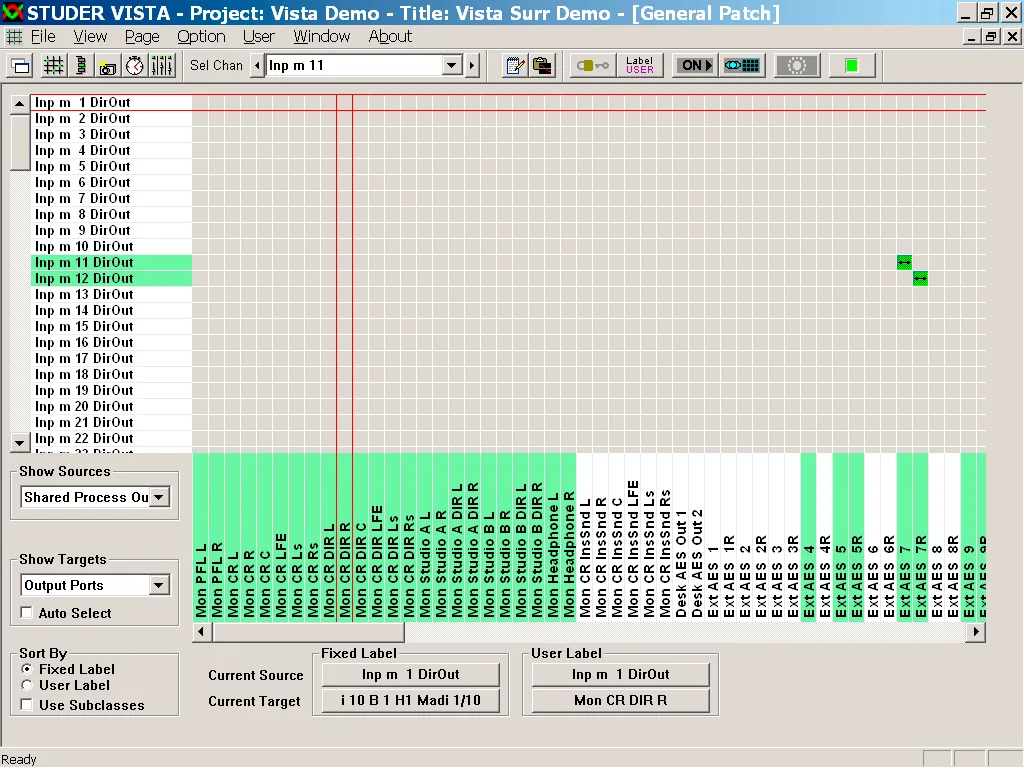
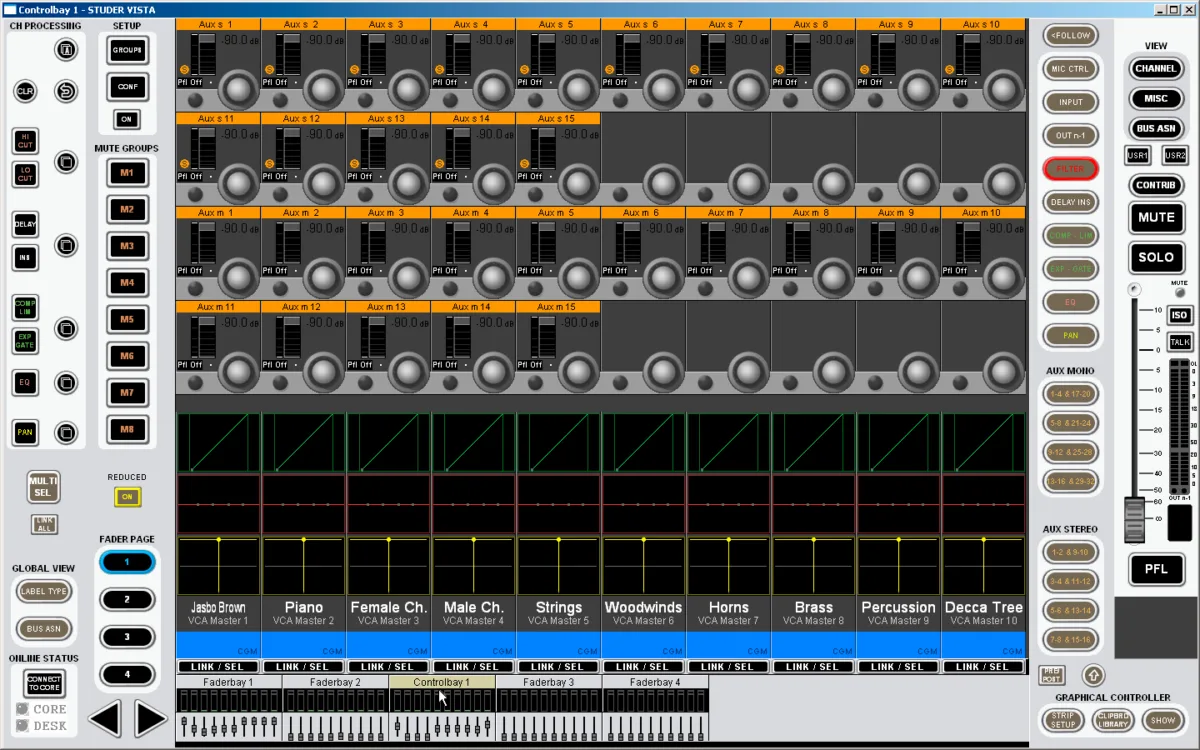
 Virtual Vista
Other screenshots
Accessories
Other
- DSP Core
Rackmount processing core (up to 20 DSP cards), redundant power.
I/O card
- D21m I/O system
High-density modular I/O (TDIF/ADAT/AES-EBU/MADI/analogue).
Editorial & artists
Our take
History & design
The Studer Vista 8 is a live-production and broadcast digital mixing console launched in 2004, combining the Vista 6’s broadcast features with the Vista 7’s automation. It is built on Studer’s Vistonics interface, which embeds 40 rotary controls and switches directly into TFT touchscreens placed above the channels. The surface is modular, organised in bays: a 10-fader master bay and up to six 10-fader channel bays, for configurations reaching around fifty motorised faders. The redesigned central bay offers 12 faders and a 40-rotary Vistonics screen giving direct level access to up to 52 audio paths.
Processing is handled by a rackmount DSP Core housing up to 20 DSP cards, with a parallel architecture and floating-point circuitry. I/O is via the high-density modular D21m system (TDIF, ADAT, AES/EBU, MADI, analogue mic and line cards), and a monitoring rack manages stereo, LCR, LCRS and 5.1 outputs. Reliability is a major theme: redundant power supplies for the DSP Core and D21m, automatic switchover to a spare DSP card, and Core reboot within seconds, restoring audio even if the surface is inactive.
Links
Related consoles
Some merchant links are affiliate links. Purchases may support Digital Mixing at no extra cost.
Documents are archived locally for preservation. Source credited. Takedown requests: [email protected]