


Description
Technical
Specifications
Processing
| Mix buses | 32 |
|---|---|
| Aux sends | 16 |
| Bit depth | 24 bits |
| Channels | 96 input channels (+ 16 aux mic/line inputs) |
| Matrices | 16 matrix buses |
| Groups and VCA/DCA | 12 VCA groups (Variable Control Association) |
| Effects and plug-ins | 16 stereo effects engines (incl. DN780 reverb) |
| Bit depth — details | 24-bit / 96 kHz |
| Audio performance | ≈ 2 ms system latency |
| Architecture | Linux platform, fully redundant architecture |
Surface
| Motorized faders | Yes |
|---|---|
| Touchscreen | No |
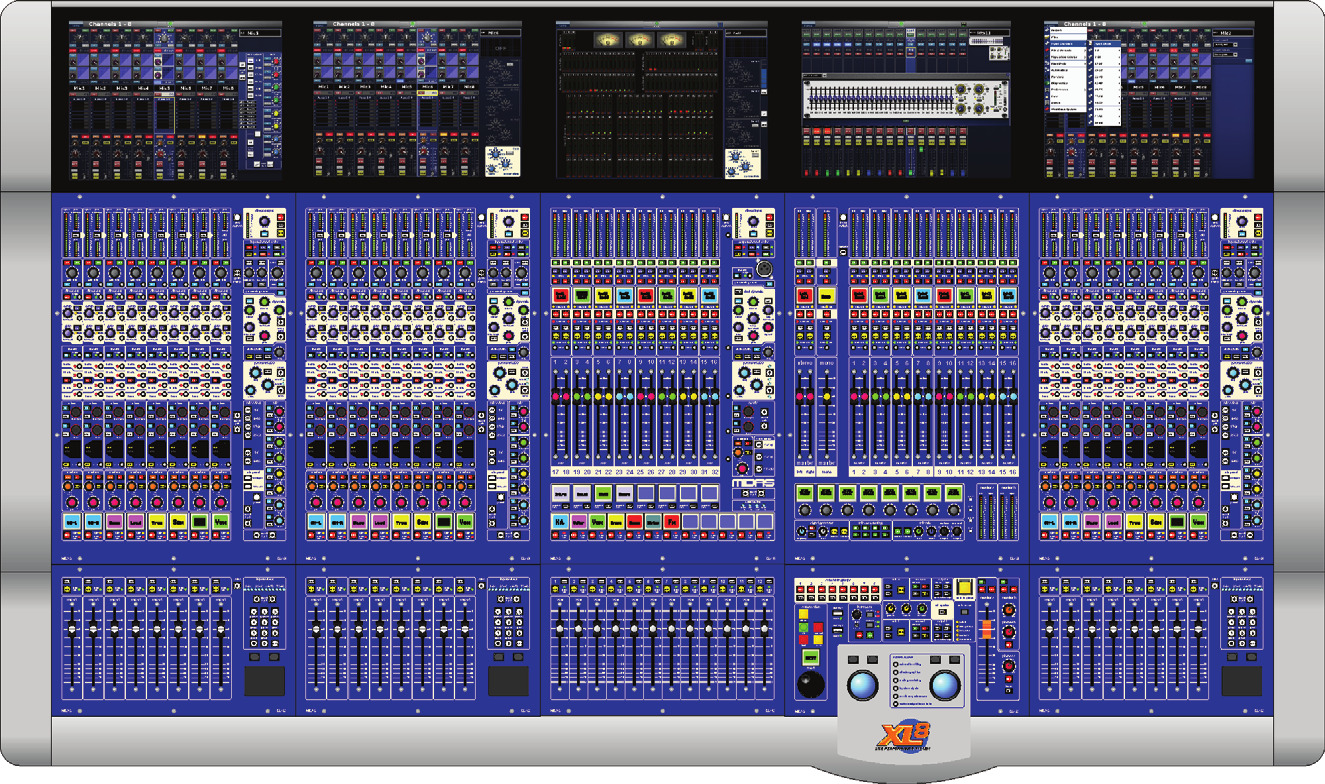
| Faders | 24 input + 12 VCA + 16 group/aux + 16 matrix + 3 master |
Recording
| Onboard recording | No |
|---|
Networking
| Networking & protocols | AES50 / AES/EBU |
|---|---|
| Redundant PSU | No |
| Redundant networking | No |
| Audio networking | MidasNET / AES50 (SuperMAC & HyperMAC, Sony Oxford) over fibre or copper |
| Stage boxes | Modular I/O racks DL431 (mic splitter), DL451, DL351 |
Other
| Price | Full system > US$300,000 (at launch) |
|---|
Strip & details
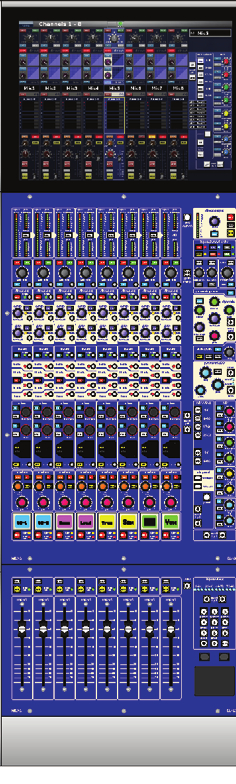
Rotate your phone to landscape for a better view of the strip.
Rotate your phone to landscape for a better view of the strip.
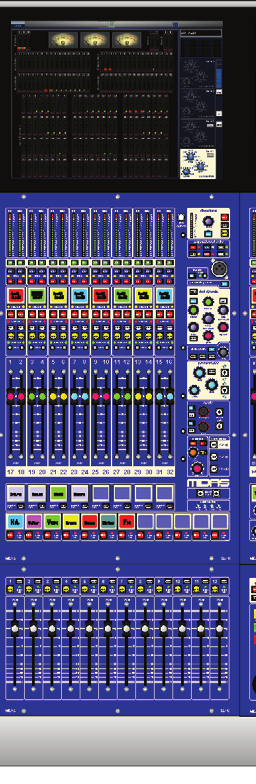
Rotate your phone to landscape for a better view of the strip.
Software
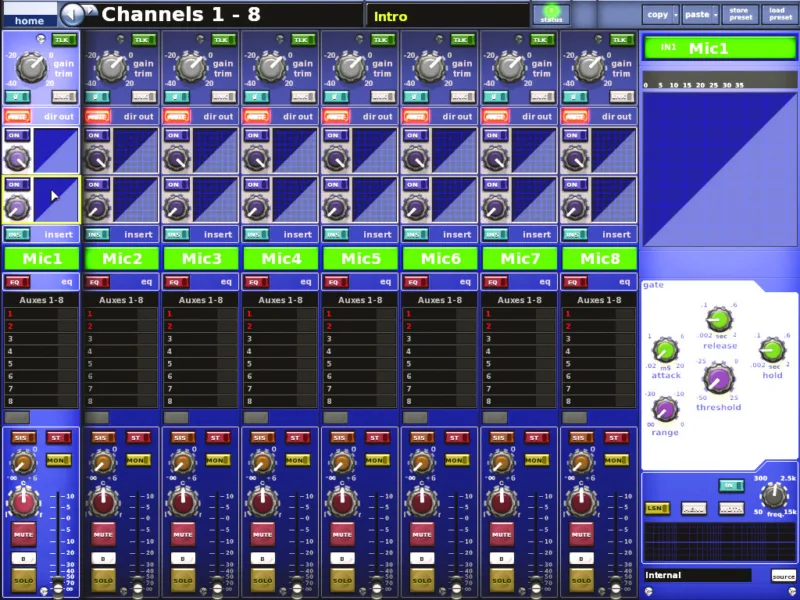
 Midas PRO Series Offline Editor
Other screenshots
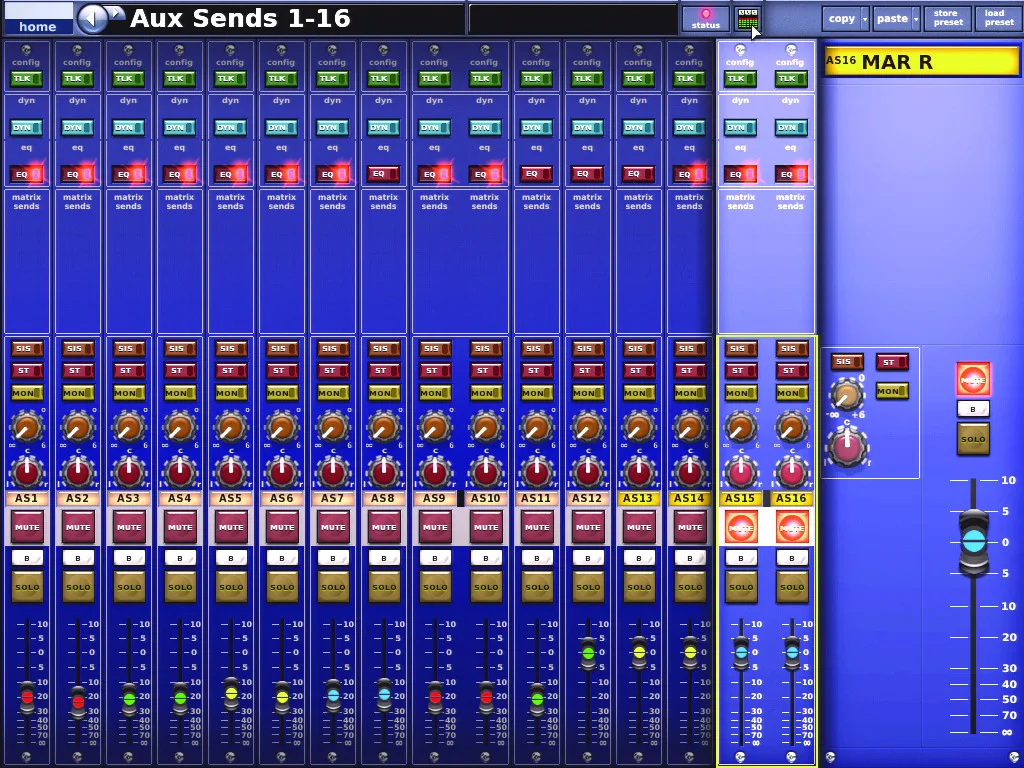
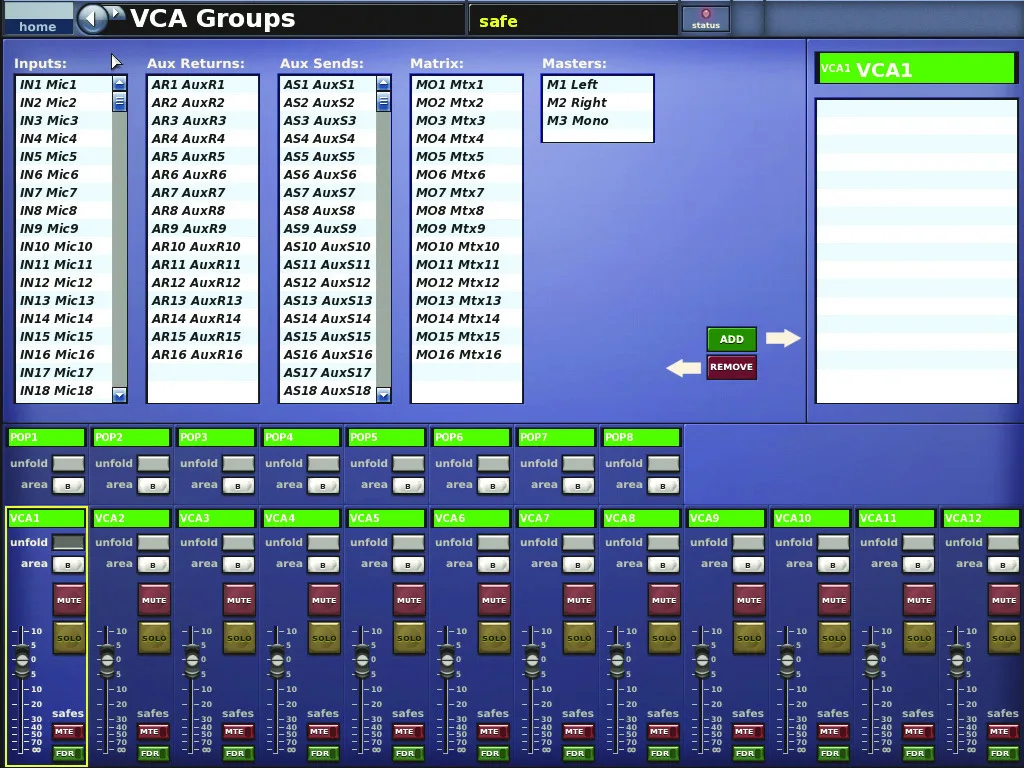
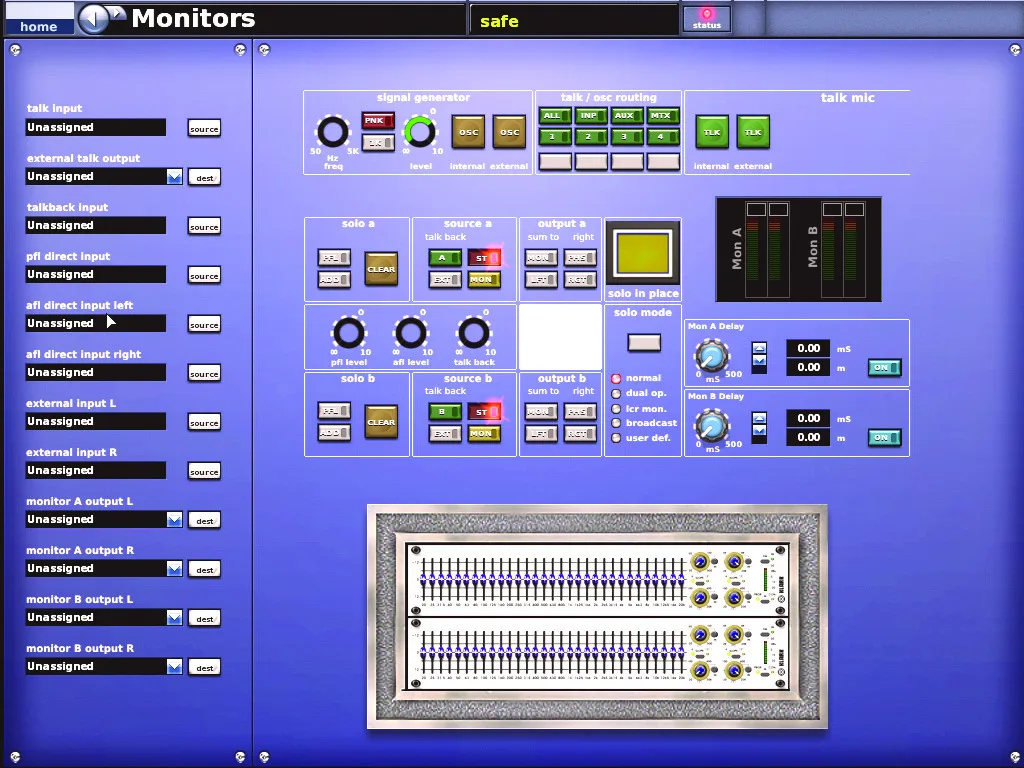
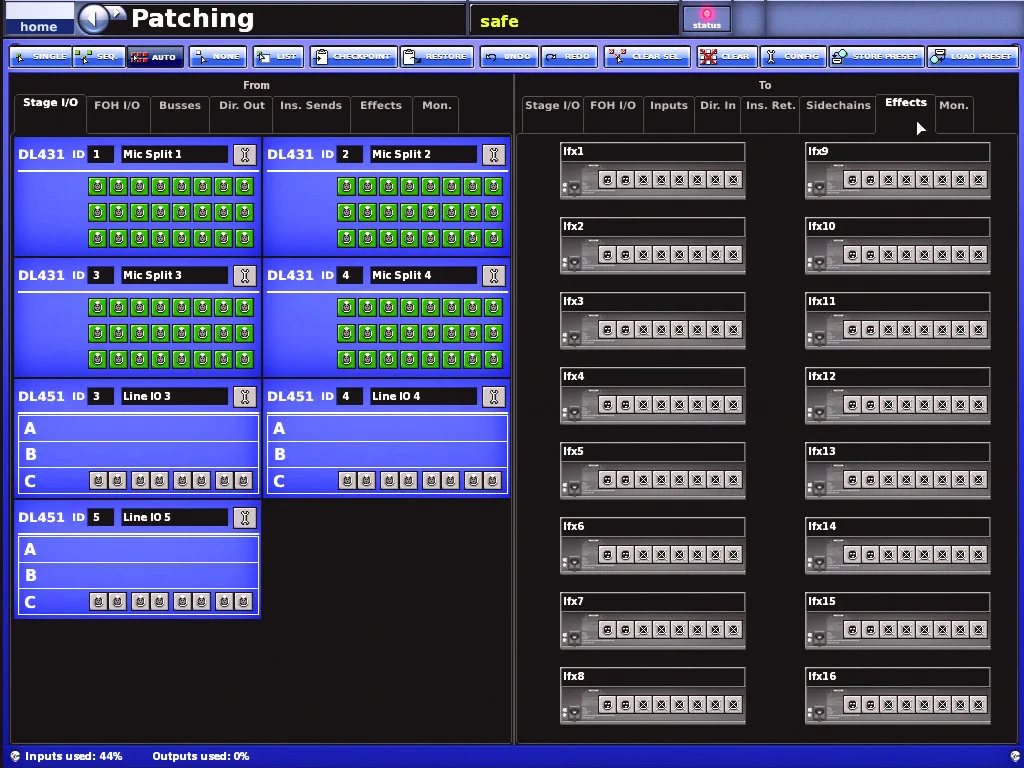
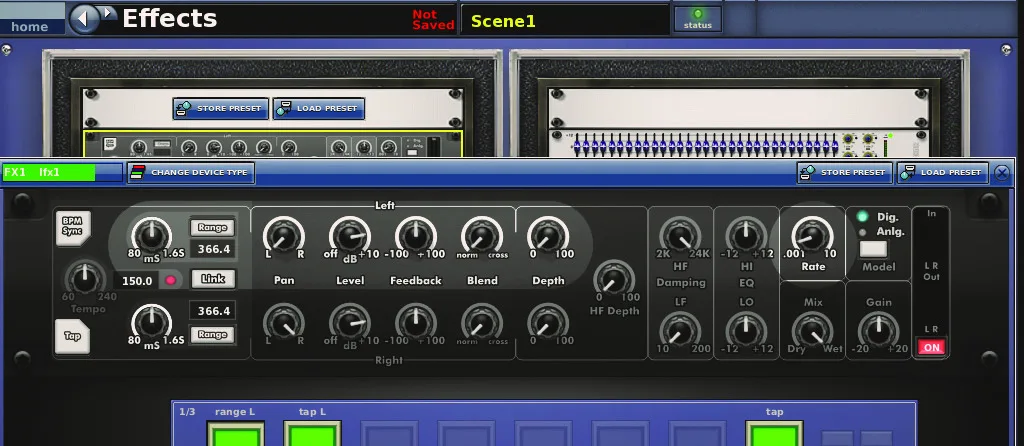
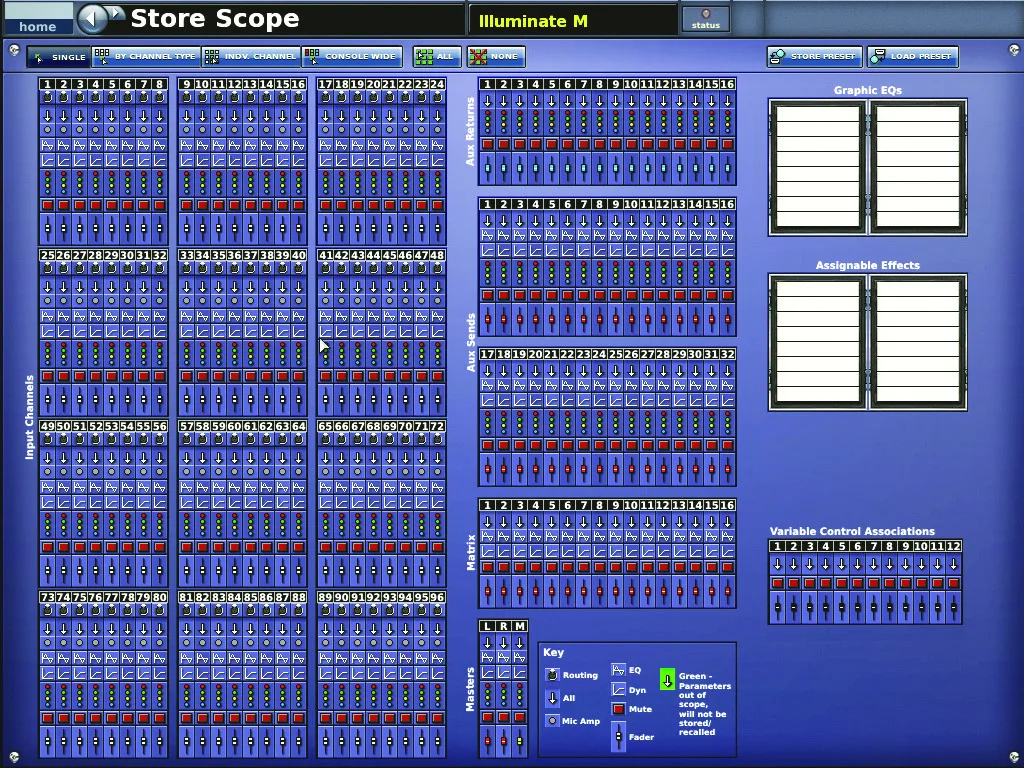
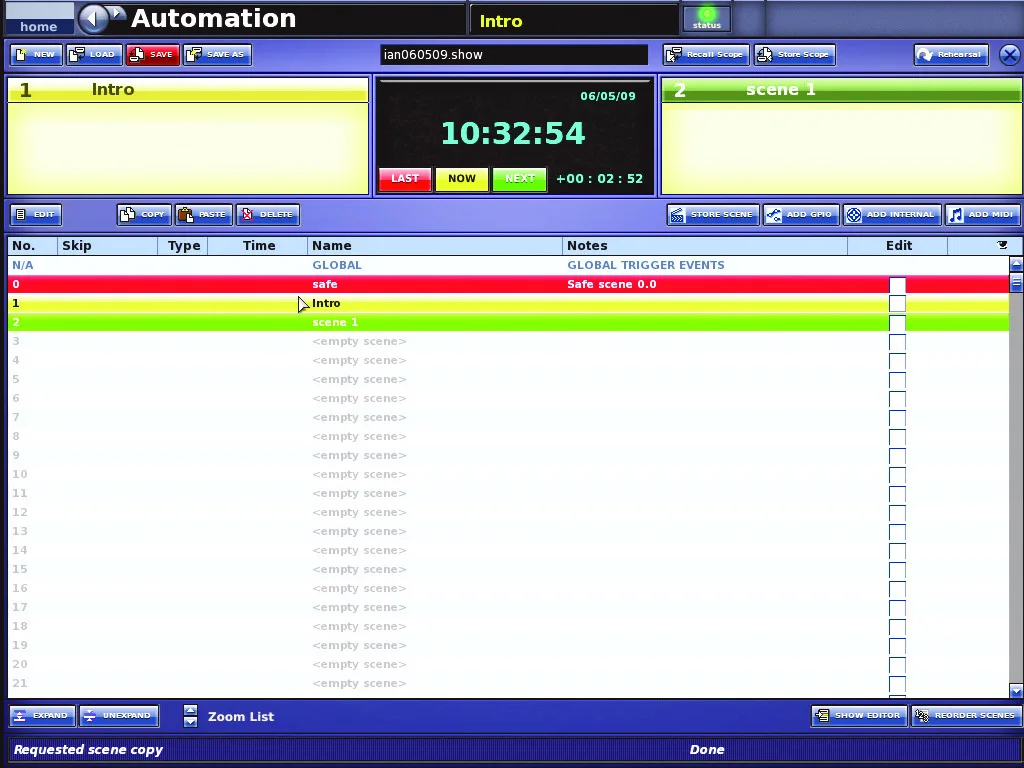
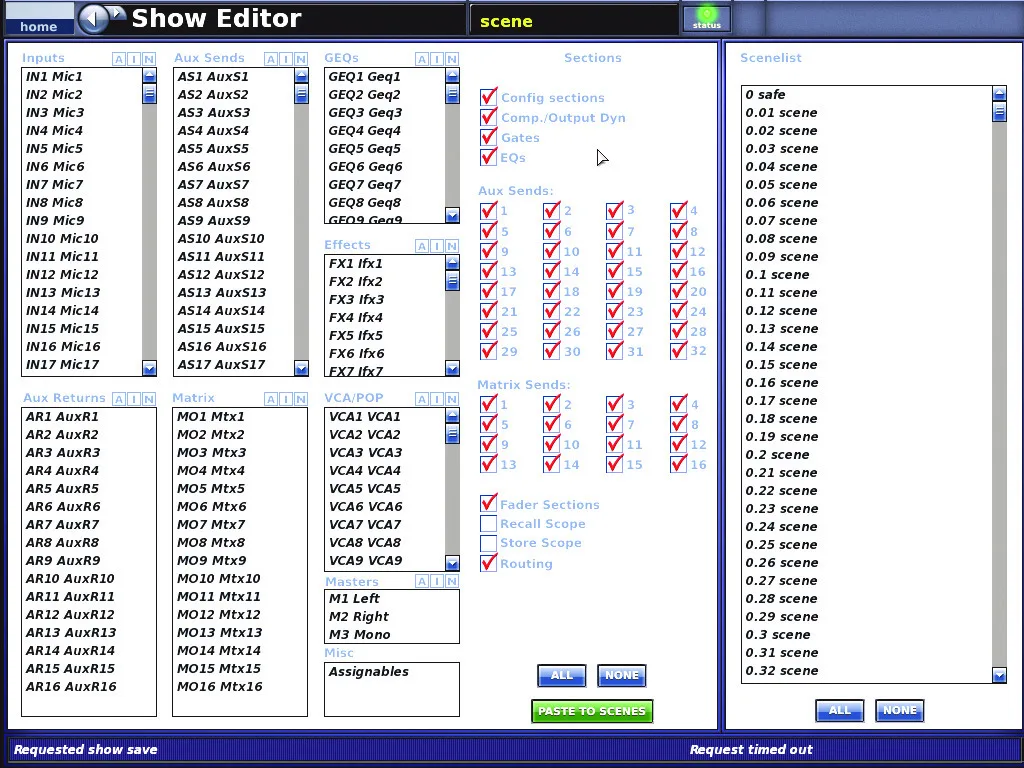
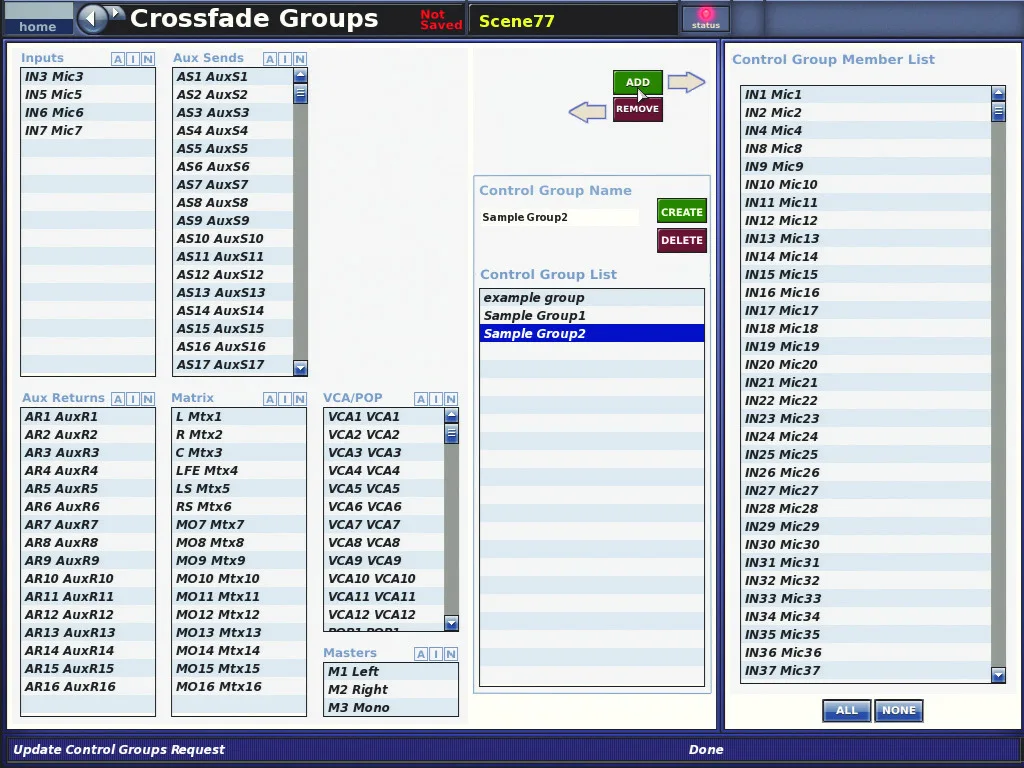
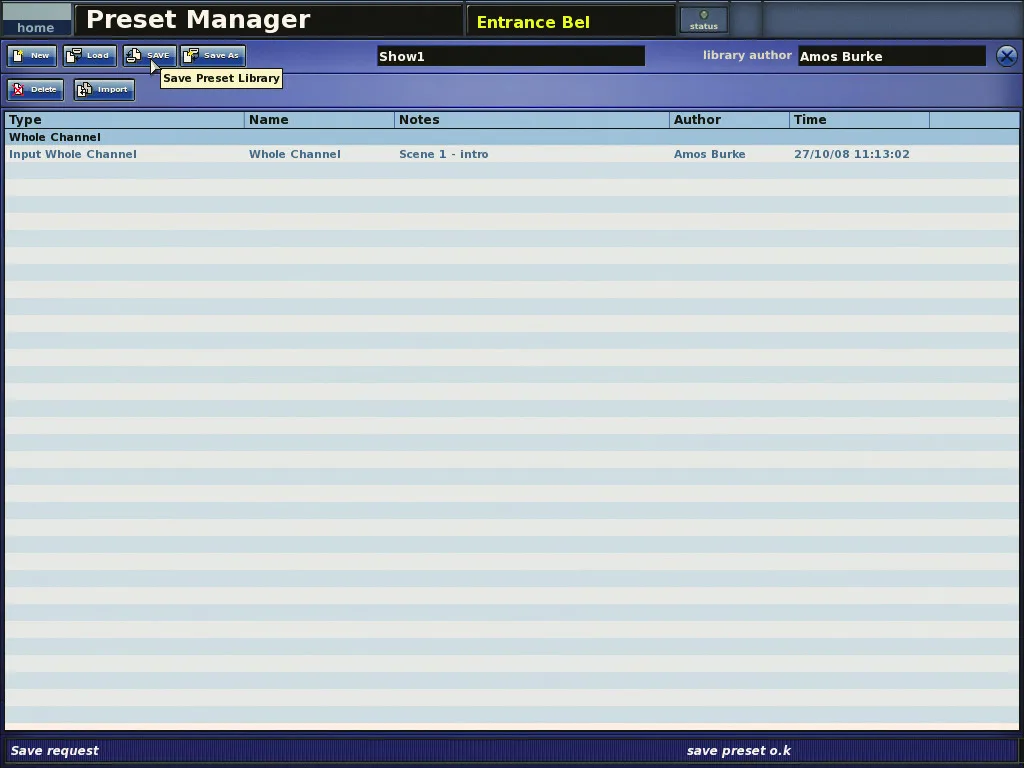
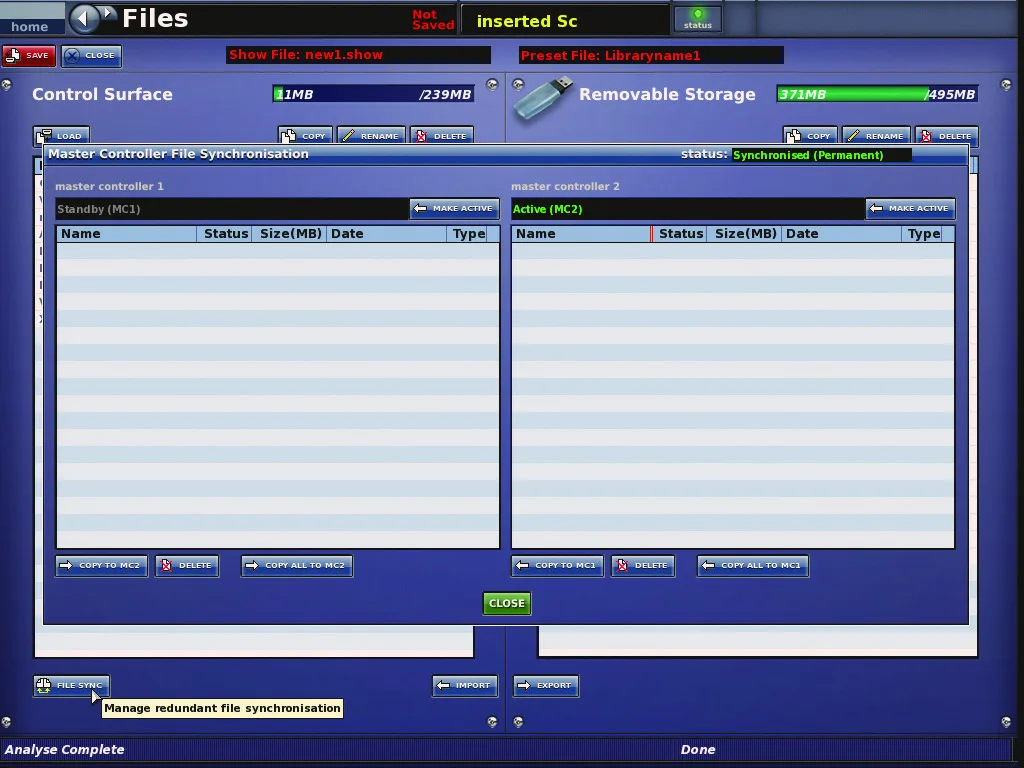
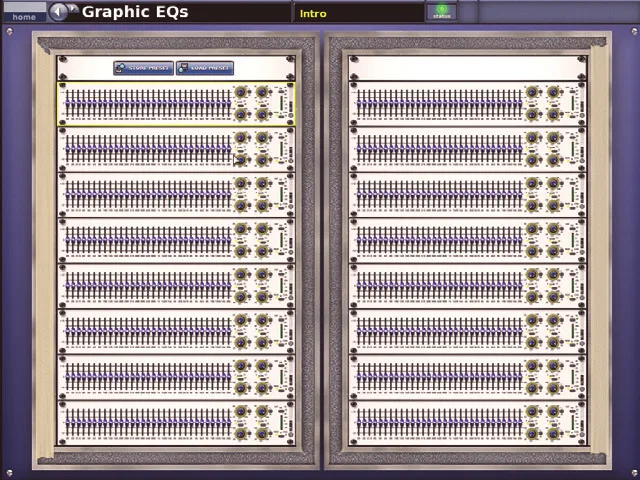
Accessories
Stagebox / rack
- DL431
24-input mic/line splitter for the XL8 (analogue split + digitisation).
- DL451
Modular 24-channel I/O rack, AES50 connection.
- DL351
Modular 7U I/O rack, up to 64 in / 64 out.
Documents
Editorial & artists
Our take
History & design
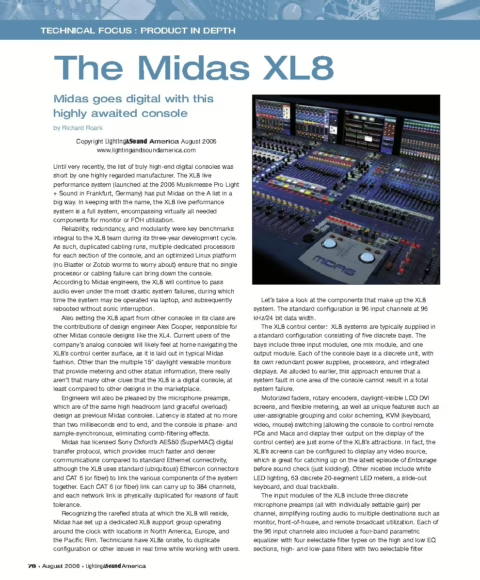
The XL8 is Midas's first digital console, the outcome of a three-year development programme launched in 2003 with a funding pool of around 10 million US dollars. Shown at Frankfurt's Prolight+Sound in 2006 and shipped in 2007, it set out to carry the sonic reputation of Midas's large-format analogue desks into the digital domain.
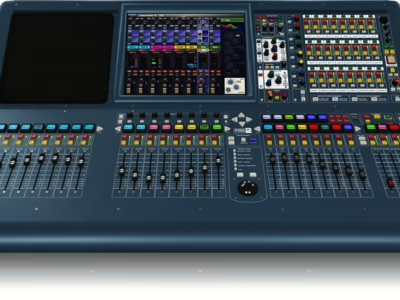
The system is built on a fully redundant, “no single point of failure” architecture running on Linux. Its MidasNET audio distribution relies on Sony Oxford's SuperMAC and HyperMAC protocols, codified in the AES50 standard. The standard configuration provides 96 processed input channels plus 16 auxiliary mic/line inputs, 32 configurable mix buses, 16 matrix buses and 12 VCA groups (which Midas re-branded “Variable Control Association”), all at 24-bit / 96 kHz. The surface carries 24 input faders, 12 VCA faders, 16 group/aux faders, 16 matrix faders and 3 master faders. Sixteen stereo effects engines include the Klark Teknik-derived DN780 reverb. Quoted system latency is around 2 ms.
Stage inputs are handled by modular I/O racks (DL431 mic splitter, DL451, DL351) connected over AES50 on fibre or copper. Positioned at the very top of the market (over 300,000 US dollars for a full system), the XL8 paved the way for the PRO series that later replaced it.
- Simon Harrison — R&D director
- Alex Cooper — Director of console engineering
Notable users
Links
Related consoles
Some merchant links are affiliate links. Purchases may support Digital Mixing at no extra cost.
Documents are archived locally for preservation. Source credited. Takedown requests: [email protected]