Granular processing has always been a gorgeous, frustrating playground: you slice a sound into tiny fragments, loop them, stretch them, and get textures you couldn’t make any other way. The catch is well known — push the process and the pitch scatters, leaving you with a cloud that refuses to sit in the track’s key. Lucid, the new plugin from Minimal Audio, tackles that head-on, and that’s what makes it interesting for anyone working in a mix rather than pure experiment.
A scale lock on every grain
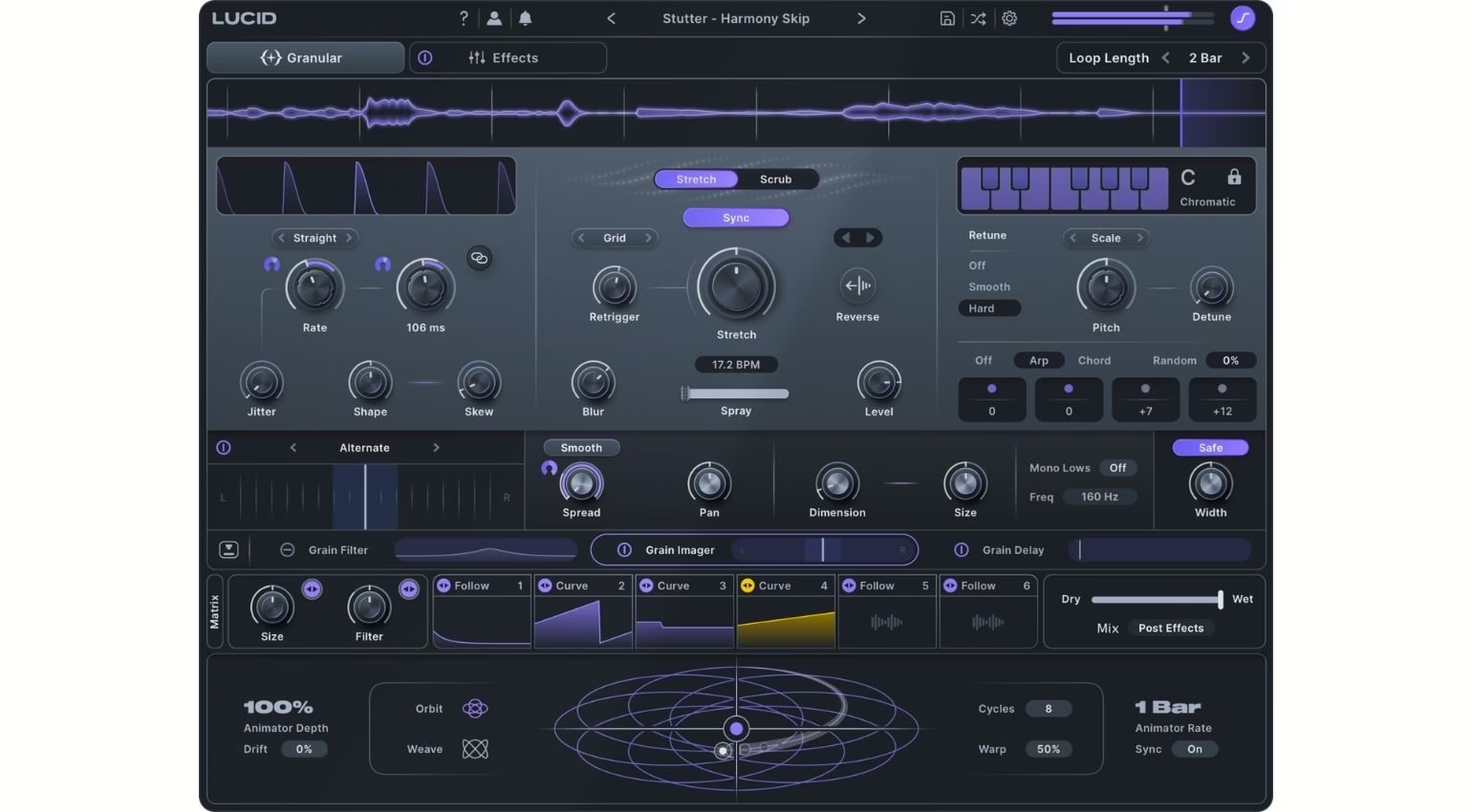
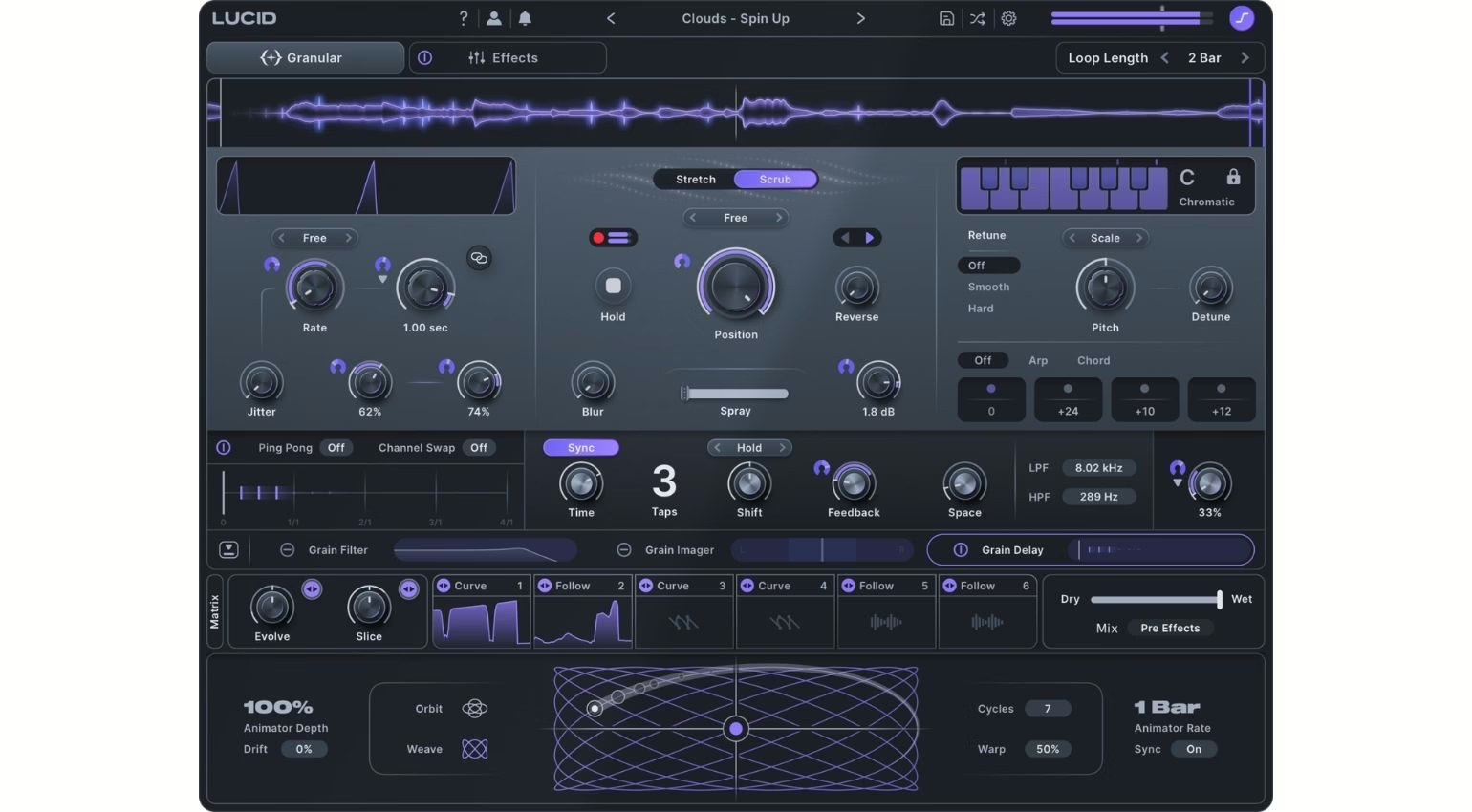
Lucid’s headline feature is grain-level scale locking: the plugin automatically retunes each individual grain to the key and scale you’ve dialed in, in real time. Put differently, you can stretch, freeze or scatter a sound as much as you like and the result stays musical instead of drifting. That’s the difference between an effect you save for an experimental bridge and a tool you’ll actually drop onto a lead or a pad in the heart of a tonal track.
On top of that comes timeline sync: stretching, freezing, scrubbing and playback all lock to your DAW session. The processed audio follows the arrangement instead of drifting away from it — crucial if you want the effect to stay reproducible across the whole track and on export.
Far more than a grain engine
Minimal Audio didn’t ship a one-trick effect. Lucid packs grain chord and arp modes that turn any source into rich chords, harmonies and evolving arpeggios. This is the border between effect and instrument: a single held note can become a whole progression.
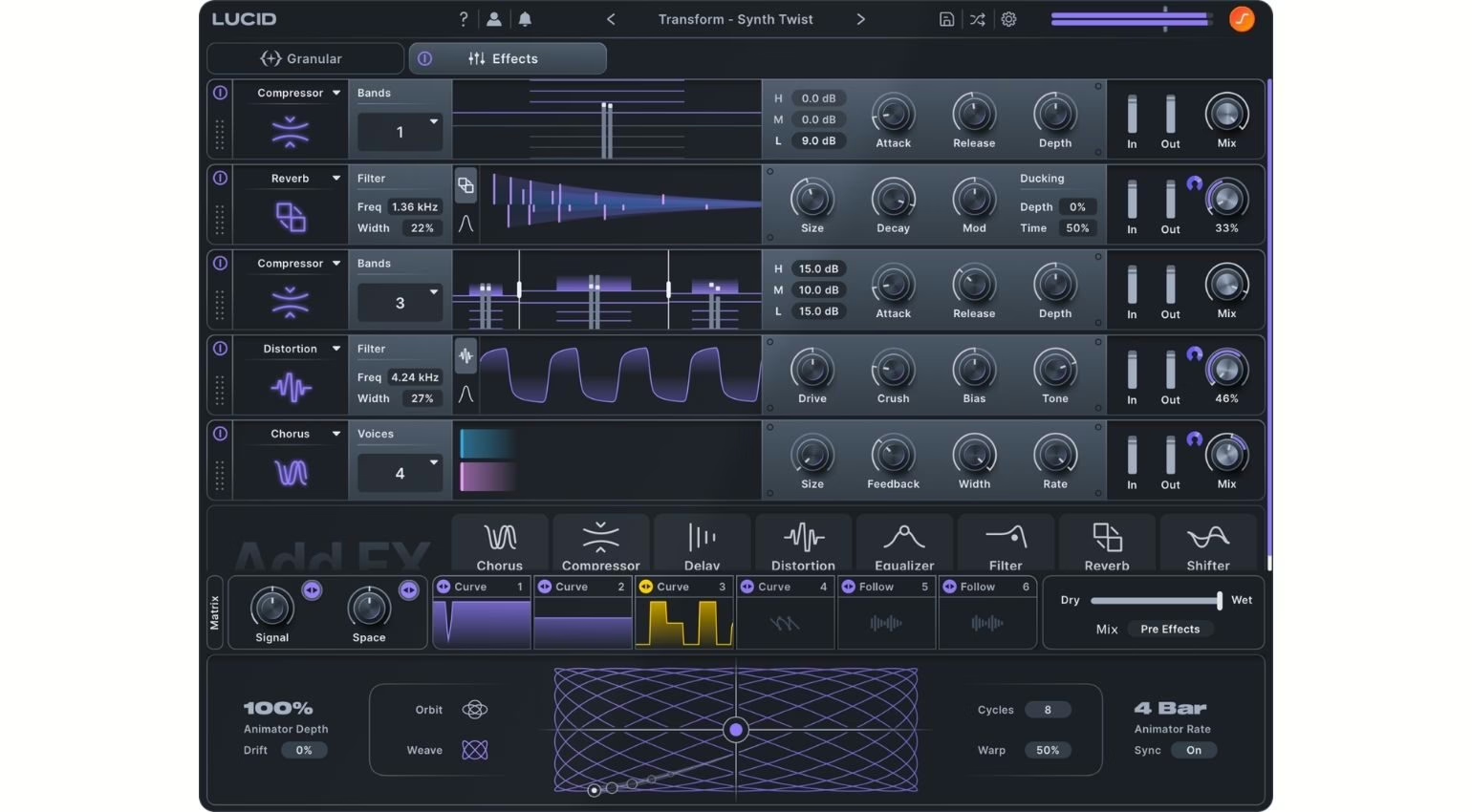
Processing doesn’t stop at the granular engine. A flexible effects rack offers eight swappable modules — multi-band compression, frequency shifter, reverb, distortion, among others — that you order as you please after the grains. That chain is what lifts Lucid from a texture generator to a genuine sound-design lab, able to sculpt the result as much as generate it.
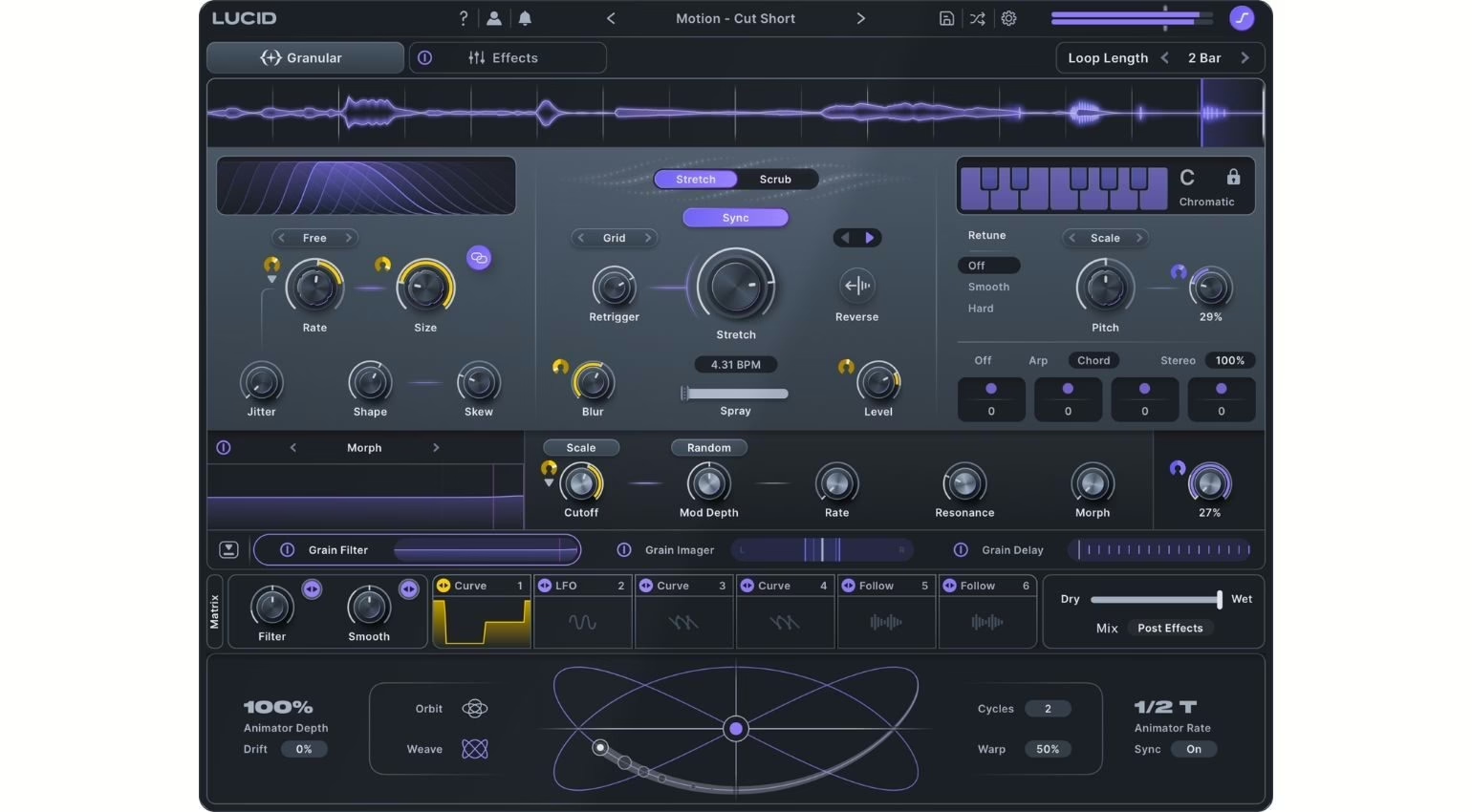
To drive all of it without drowning, an X-Y animator pad controls several parameters at once via an animated path — a very direct way to move the sound in performance or to automate complex gestures in one stroke. And to get going fast, the developer lists over 350 presets across 13 packs.
Price and availability
| Item | Detail |
|---|---|
| Intro price | $79 (down from $129) until 30 September 2026 |
| Formats | VST, VST3, AU, AAX |
| Platforms | Windows, macOS |
| Content | 350+ presets, 13 packs, 8 swappable effects |
My take
Lucid will inevitably be measured against Output’s Portal, the mainstream granular benchmark. The real question isn’t which has more knobs, but which makes granular usable in an actual mix — and grain-level scale locking answers precisely the problem everyone has hit. This is no gimmick: retuning grains to the key is what lets you place the effect on load-bearing elements without wrecking the harmony. It remains to be seen, in use, whether the algorithm holds on complex, polyphonic sources, where this kind of promise often cracks. On paper, it’s one of the best-thought-out granular tools for production I’ve seen in a while.
If textures are your thing, take a look at the sonicLAB Creation v2 granular synthesizer, built around generation rather than processing. On the studio-effects side, our roundup of harmonic saturation plugins and our piece on Universal Audio’s EMT reverbs round out the palette. Product page at Minimal Audio’s site.