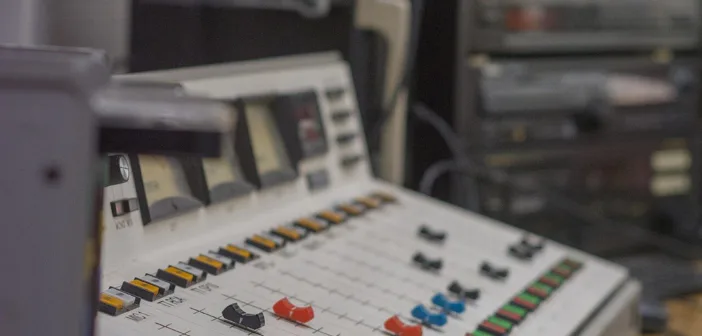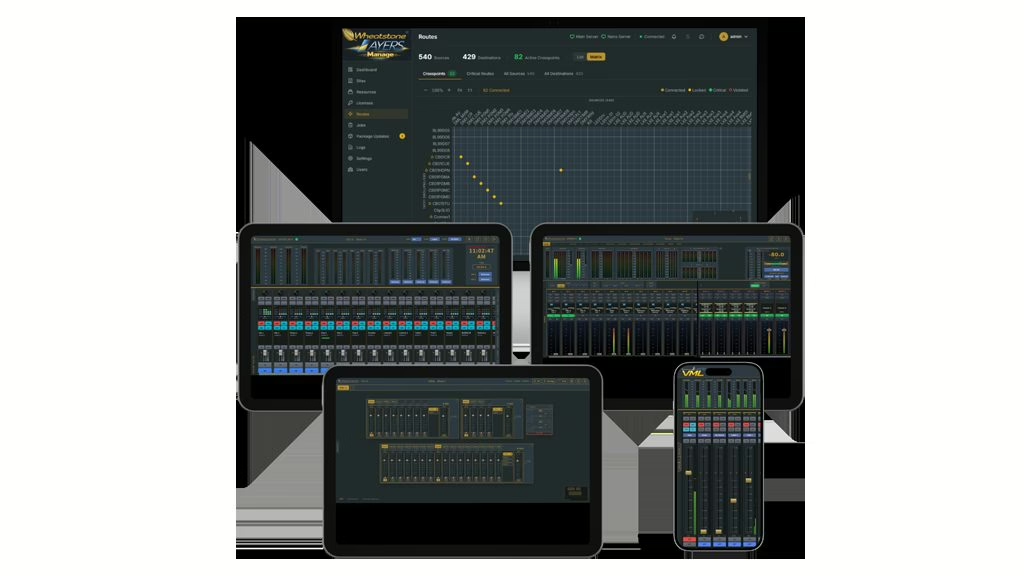
The broadcast mixing console has long been a piece of furniture: a large, wired, immovable surface at the heart of a studio. Wheatstone wants to turn it into software. A few weeks out from IBC 2026 (11–14 September, Amsterdam), the American manufacturer is spotlighting VMX, a server-based virtual mixing platform driven from a plain web browser. The idea: remove the physical limits of the studio and centralise the mixing of a station or a set into a single, virtualised back end.
A console that spins up on demand
VMX is built around creating consoles the moment you need them, on whatever device is at hand. The platform is browser-accessible, so you can add a newsroom, a control room, a voice-tracking booth or a remote point in a few clicks. Wheatstone describes an experience spanning from the recessed touchscreen in the studio to a tablet at the ballpark. It all rests on a set of tiles — functional building blocks — ranging from a simple utility mixer to a lightweight mixing interface, up to complete broadcast consoles for the TV newsroom or the radio on-air studio.
VMX sits within Wheatstone’s Layers software suite, dedicated to virtualising studio functions. There you find virtual versions of the house range — utility mixers, on-air consoles, access points — instanced by tile or by type of mixer depending on the need of the moment.
Built on audio-over-IP
None of this would be possible without a solid audio network underneath. VMX is AES67-compliant and integrates with the house WheatNet-IP network, which ties together virtual and physical consoles, talent stations and intelligent I/O units. An install wizard is meant to smooth the setup. If these notions are new to you, we laid out the foundations of this shift in our guide to audio over IP (Dante, AES67 and SMPTE ST 2110). It’s precisely this standardised plumbing that makes a purely software console credible: the streams already travel as packets — all that was left was to dematerialise the surface.
Redundancy and scaling
Broadcast doesn’t forgive dead air, and that’s often where virtual architectures raise eyebrows. Wheatstone highlights backup mirroring synchronised in real time, for instant failover if something goes down. On sizing, the platform stretches from enterprise systems to a VMX Nano tier, scaled and priced for remote or emergency broadcast use. It’s a pragmatic answer: you don’t replace a critical control room with a browser tab and no safety net.
My take
I’ve worked control rooms where moving a console was practically a house move, so the promise of spinning up an on-air mixer in a browser will appeal to anyone who’s run multi-site live events. The move is logical: once everything travels as AES67, the physical surface is just a habit. Still, the devil hides in latency, client-device reliability and security — a browser is also an attack surface and one more link in the chain. Real-time redundancy and the Nano tier show Wheatstone saw the objection coming. I’ll stay cautious before trusting a critical station to a tab, but for newsrooms, voice-tracking and above all remote production, the approach ticks a lot of boxes. The real IBC 2026 battle will be fought there: no longer over fader count, but over how much trust you place in the software.
The takeaway
VMX confirms a deep industry trend: after copper links gave way to IP streams, it’s the control surface’s turn to dematerialise. Wheatstone isn’t alone here, but the “full on-air console in a browser, backed by WheatNet-IP” angle is clear and coherent. We’ll see the platform demoed at the Amsterdam show; in the meantime, it extends the logic already at work on the infrastructure side, as with Lawo’s Edge One ST 2110 stagebox.