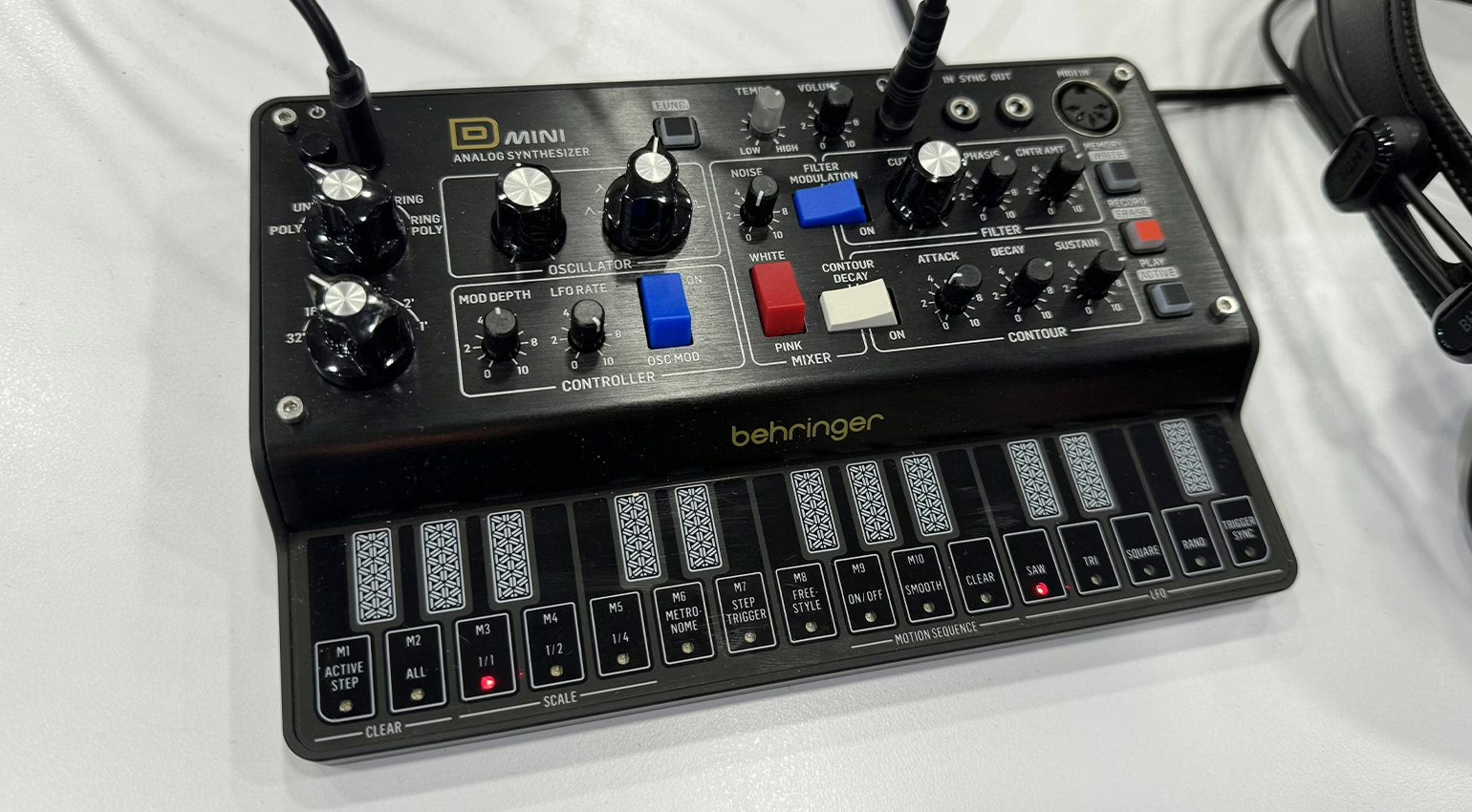
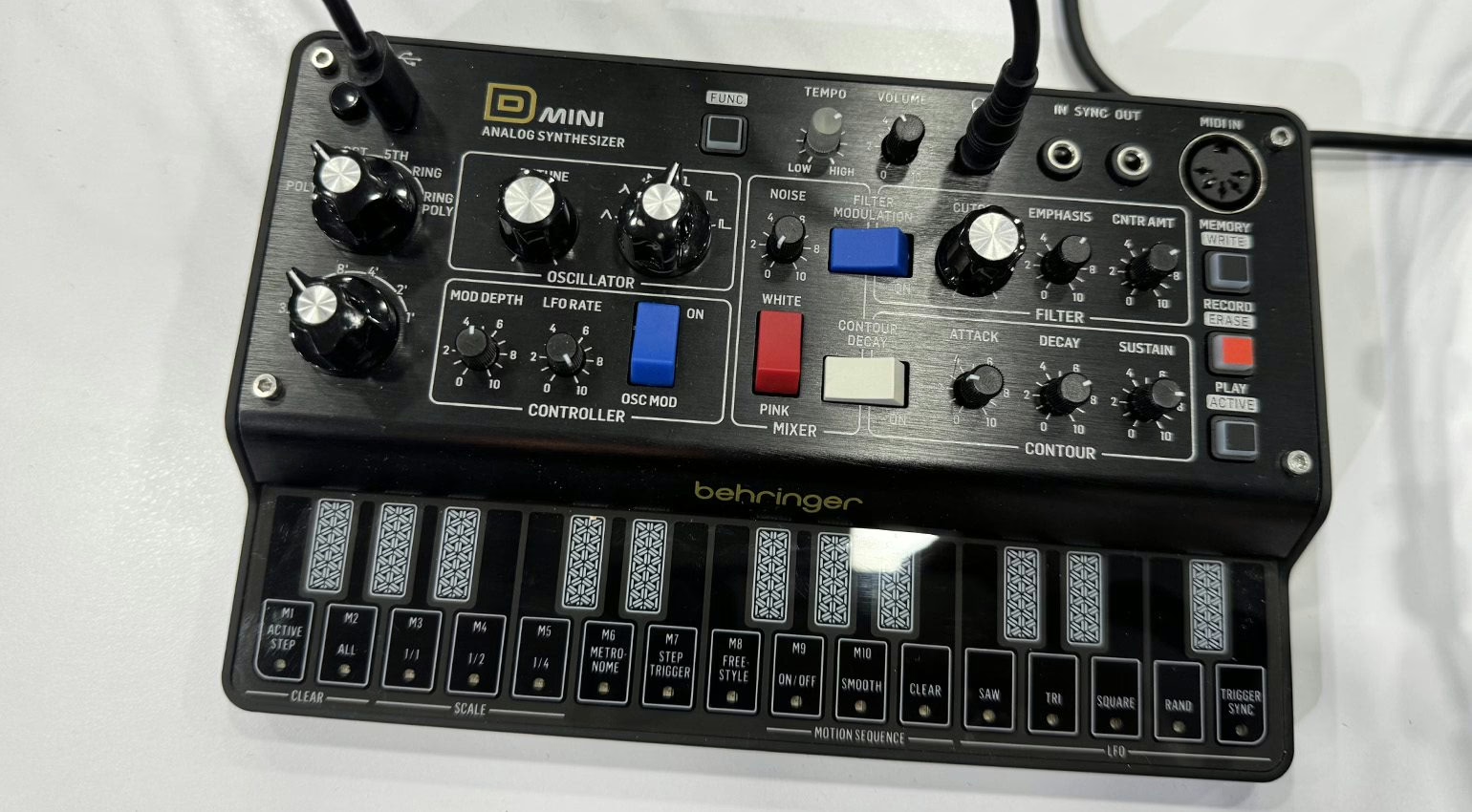
Behringer has made democratising the analogue synth something of a mission, and the D Mini is the latest example. After a spring announcement that got people talking, the instrument is finally available: a condensed Minimoog Model D selling for €99, slotting into the same pocket family as the brand’s other tiny machines. The idea isn’t to clone the 1970 monster note for note, but to extract its essence and squeeze it into a minuscule box, with a few welcome modern additions.
Three oscillators, a ladder filter
The sonic heart stays true to the Model D spirit: three oscillators, each offering five waveforms, sawtooth, triangle, sharktooth, square and pulse. Unlike its big brother, the three oscillators aren’t tuned individually but controlled together, an ergonomic choice dictated by the size of the panel. The famous Moog-style ladder filter, responsible for much of these machines’ warmth, is present to sculpt the round basses and liquid leads you’d expect from such an instrument.
Where the original Model D carries two envelopes, the D Mini makes do with a single ADS envelope, a logical compromise on a device this size and price. Behringer has, however, taken care over playing versatility with several voice modes: three-voice paraphonic, unison, ring modulation and more. In paraphonic mode, the three oscillators spread across three distinct notes while sharing the same filter and envelope, allowing small chords, a rare flexibility at this price.
A sequencer and a touch keyboard
This is probably the most interesting addition: the D Mini includes a step sequencer with motion recording. You can write into a pattern not just the notes, but also your moves on the knobs, for sequences that evolve on their own. A built-in scaler helps you stay in key, handy for improvising without wrong notes. In place of a traditional keyboard, you get 27 capacitive keys, in the same spirit as Arturia’s MicroFreak, a deliberate compromise to save space while keeping a playable surface.
Specifications
| Feature | Detail |
|---|---|
| Type | 3-voice paraphonic analogue synthesizer |
| Oscillators | 3 VCOs, 5 waveforms each, common tuning |
| Filter | Moog-style ladder filter |
| Envelope | 1 ADS envelope |
| Voice modes | 3-voice paraphonic, unison, ring modulation, etc. |
| Sequencer | Step sequencer with motion recording, built-in scaler |
| Keyboard | 27 capacitive keys |
| Price | €99 (around $120) |
My take
I’m not dogmatic about Behringer: when the brand designs a product well, I say so. And the D Mini strikes me as clever. For €99 you obviously won’t get the presence and dynamics of an original Model D or a current Moog, but you do get a genuine paraphonic analogue, with a filter that has grit, a sequencer that makes you want to play, and a form factor that fits anywhere. It’s exactly the kind of device that gets a beginner started or serves as a sandbox for a seasoned producer, guilt-free on the budget. The real risk, at this price, is the build and the longevity of the capacitive keys, two points a proper hands-on review will need to confirm. Either way, Behringer keeps feeding its catalogue at a brisk pace, between the BCR32 controller-sequencer and the Mini Pops 7 drum-machine clone. To place this little synth in the broader story of synthesis, our piece on East Coast vs West Coast synthesis puts the Model D back in its rightful place.