


Description
Technical
Specifications
Processing
| Mix buses | 32 |
|---|---|
| Aux sends | 24 |
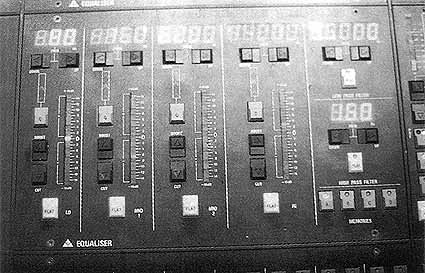
| Galiseur | EQ 4 bandes entièrement paramétriques + 2 filtres, avec 4 configurations mémorisables (A/B/C/D) comparables et automatisables. |
| Section Monitor | La section monitor dispose de son propre EQ identique à celui de la voie, avec fonction de copie voie↔monitor (rare pour l'époque). |
Surface
| Motorized faders | No |
|---|---|
| Screens | 0 |
| Touchscreen | No |
Recording
| Onboard recording | No |
|---|
Networking
| Redundant PSU | No |
|---|---|
| Redundant networking | No |
Other
| Nature | Console analogique à commande numérique (« DIgital ANalogue ») : chemin audio 100% analogique, mais tous les réglages passent par des encodeurs rotatifs / interrupteurs codés en binaire pilotant les circuits via convertisseurs N/A. Pas une console numérique. |
|---|---|
| Bus De Groupe | 32 bus de groupe (perçu comme un handicap face au format DASH 48 pistes qui poussait vers 48 bus). |
| D Parts Auxiliaires | 24 auxiliaires par voie et 24 par voie monitor (12 indépendants + 12 « miroirs », les niveaux aux 1 et 13 étant liés, etc.). |
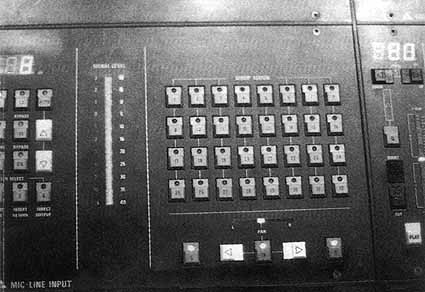
| R Glage De Gain Automatique | Concept unique : un seul bouton en section centrale ; on fait jouer les musiciens au plus fort et chaque gain d'entrée se cale automatiquement à 3 dB avant l'écrêtage. |
| M Moires Snapshots | 512 configurations mémorisables au total, dont 128 utilisables au sein d'un même mixage ; nommage via clavier informatique intégré ; deux lecteurs de disquettes sur la surface. |
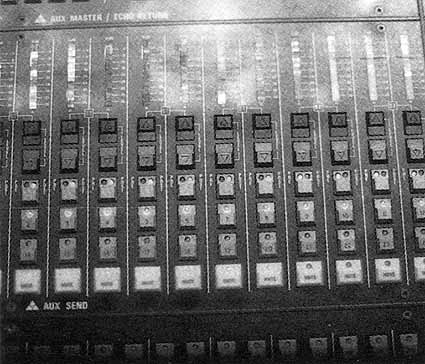
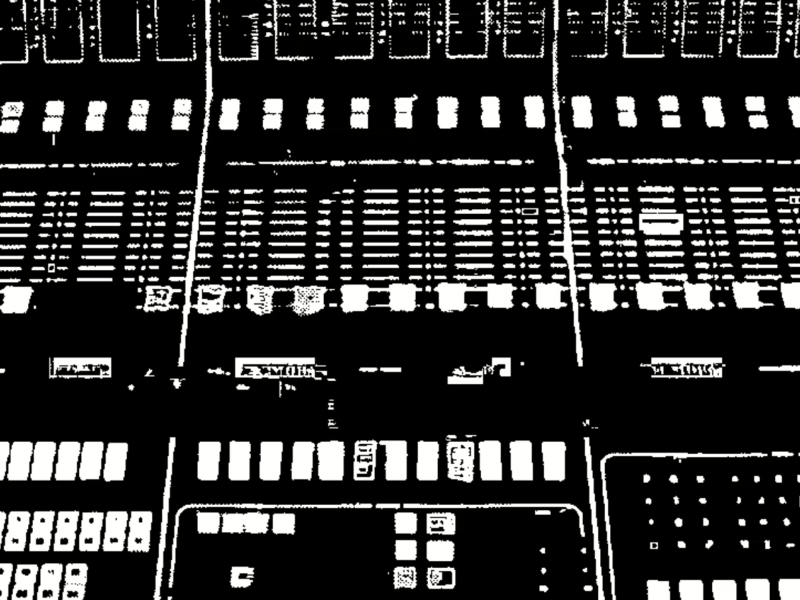
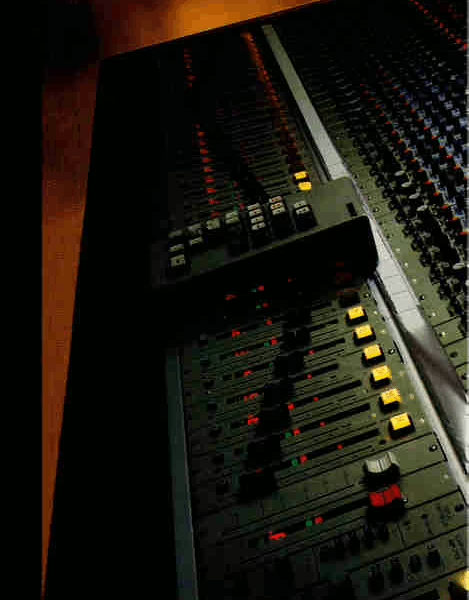
| Surface Modulaire | Les panneaux (entrée, routing, EQ, aux, pan) peuvent être réarrangés librement sur la surface pour tout atteindre sans quitter le fauteuil. Affichage de position de pan, pas d'écran vidéo. |
| Limite Des Premi Res Versions | Sur les toutes premières versions, impossible de couper (mute) deux faders simultanément ; corrigé par mise à jour logicielle sur les versions suivantes. |
Strip & details
Rotate your phone to landscape for a better view of the strip.
Rotate your phone to landscape for a better view of the strip.
Rotate your phone to landscape for a better view of the strip.
Editorial & artists
Our take
History & design
Born out of London's Trident studio (1967) and then the manufacturer Trident Audio Developments, the Di-An (a contraction of DIgital ANalogue) was unveiled in 1986 as the brand's first digitally controlled console. The principle: keep a 100% analogue audio path, but replace every direct pot and switch with encoders that translate each gesture into binary, sent to the audio circuits through digital-to-analogue converters. The result: full automation of every parameter, compact surfaces, and configuration memories where classic analogue desks only offered automated level mixing.
Technically the Di-An was crammed with forward-looking ideas: an automatic gain setting (one button, musicians play loud, each input sets itself 3 dB below clipping), a fully parametric 4-band EQ + 2 filters with 4 memories A/B/C/D, a monitor section with its own EQ copyable to the channel, 24 aux sends per path, 32 group buses, 512 memorizable configurations (128 per mix) named via keyboard, two floppy drives, and rearrangeable panels on the surface — all with no video screen whatsoever, against the grain of the SSL 4000 and, later, the Euphonix.
But boldness was not enough. Malcolm Toft, then head of Trident, himself called it 'vapourware': 'we made a number of fundamental errors, the major one being that we couldn't bring it to market in time.' Software-update problems (early on, you couldn't mute two faders at once), laborious on-site installations, only 32 buses in the age of 48-track DASH, and a baffling interface meant only a handful of units sold worldwide. It could not prevent Trident's sale to Reylon plc in 1988, nor the historic brand's disappearance in 2002.
- Malcolm Toft — Dirigeant de Trident Audio Developments et porteur du projet Di-An (rôle exact de conception à vérifier)
Notable users
Links
- Manufacturer Trident Audio Developments — History (chronologie des consoles, Di-An 1986) tridentaudiodevelopments.com
- Press article Sound On Sound — Malcolm Toft: MTA & Trident (Di-An qualifiée de vapourware) soundonsound.com
- Archive Jurassic Audio Park — Trident Di-An (fiche détaillée, photos, spécifications) chambinator.free.fr
- Archive Jurassic Audio Park — Consoles : 3 concepts (analogique / commande numérique / numérique) chambinator.free.fr
- Forum Gearspace — « Who has all the Trident DiAns? » (recensement des exemplaires) gearspace.com
Related consoles
Some merchant links are affiliate links. Purchases may support Digital Mixing at no extra cost.
Documents are archived locally for preservation. Source credited. Takedown requests: [email protected]