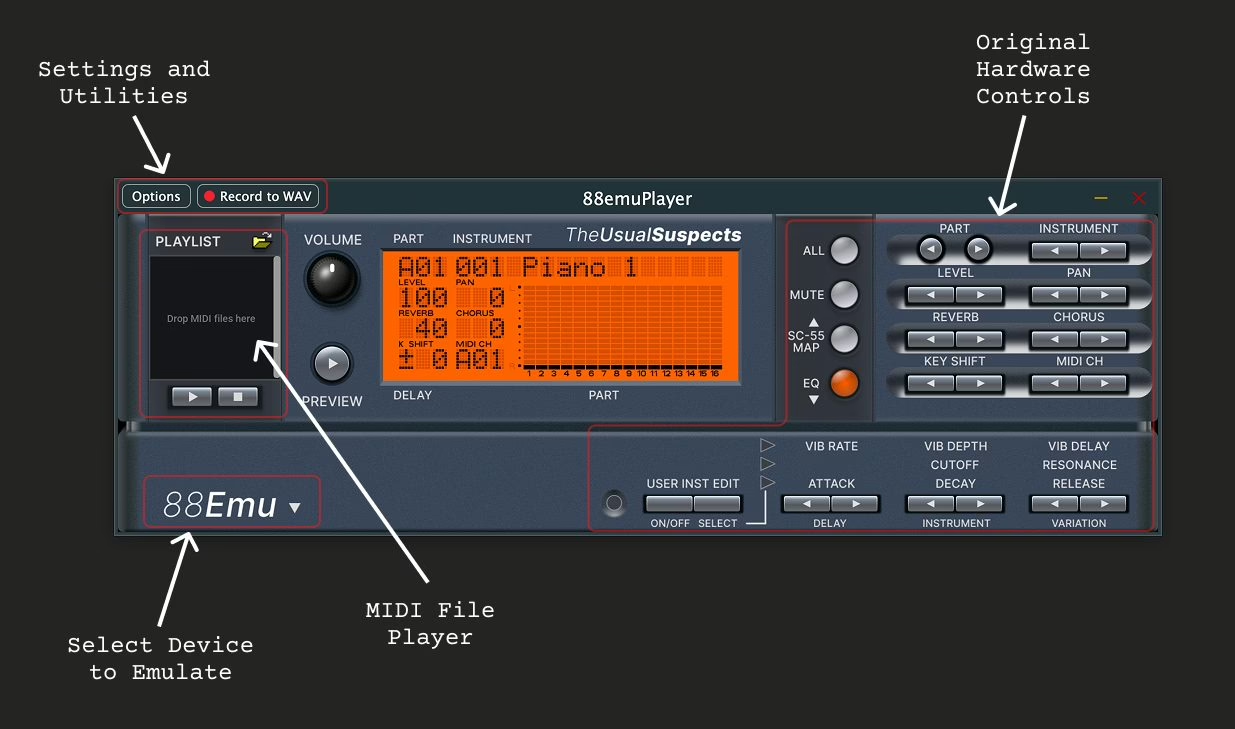
Some sounds define an era. The Roland Sound Canvas tone defined a whole generation of video-game music, MIDI files and 90s demos. That exact timbre is what The Usual Suspects brings back with 88emu, a free software emulator of the Sound Canvas modules. Announced on September 9, it is now publicly available to everyone.
What 88emu actually does
88emu is not a sampled sound bank replaying snippets of an SC-88. It is a low-level emulation: the software recreates the modules’ internal electronics and runs the original firmware. The Usual Suspects modelled the synthesis chips (the XP and LSP circuits) as well as the microcontrollers that drove the hardware, the H8/500 and SuperH families. As a result, voice allocation, MIDI handling, the onboard effects and even front-panel behaviour are meant to play out exactly as on the hardware, because it is the same code running underneath.
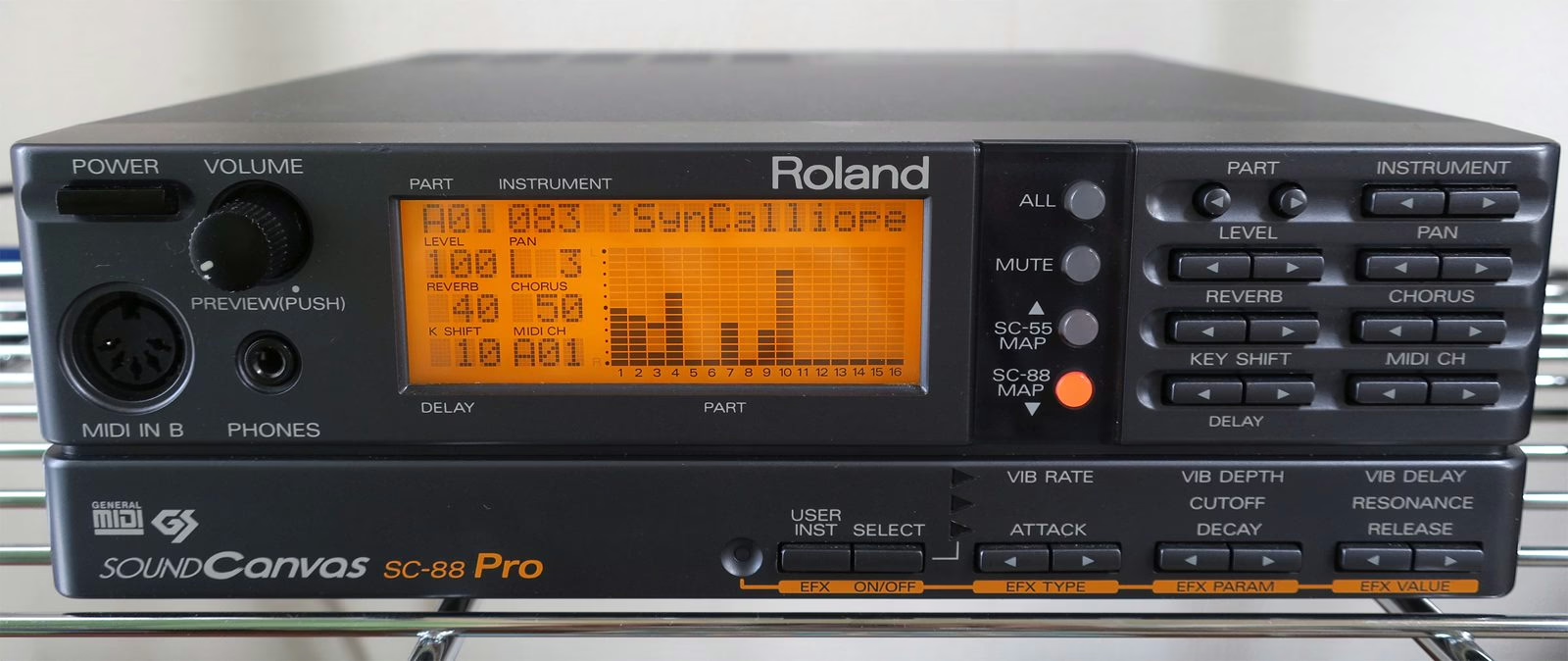
The difference from a sample library is fundamental. A sampler plays back a snapshot; an emulation rebuilds the mechanism. Note transitions, the built-in reverb and chorus, the way the module shares its polyphony under load — all of it becomes dynamic again, just as it was. It is the same philosophy the team applied to other vintage recreations, and the same one behind hardware revivals such as EMW’s FM patch player.
Modules covered and platforms
The scope is broad: 88emu targets “almost all” of the Sound Canvas family and related sound generators. At launch, the confirmed modules span a healthy chunk of the range.
| Emulated module | What it stands for |
|---|---|
| SC-55 / SC-55mkII | Consumer General MIDI, the reference for 90s .mid files |
| SC-88 / SC-88 Pro | The step up: more sounds and the extended GS command set |
| SC-8820 / SC-8850 | The end of the line, the widest sonic palette of the series |
| CM-32P and relatives | Older generators from the Roland ecosystem |
On the system side, the app ships natively for macOS (Apple Silicon and Intel), Windows and Linux. For now it is a standalone application: it does not yet load as a plug-in inside your DAW. The developers do, however, promise VST, VST3, AU, LV2 and CLAP builds, which will allow direct integration into a project alongside your other virtual instruments.
The talking point: the ROMs
Like the team’s previous work, 88emu contains no original sounds. The software emulates the electronics, but it needs ROM images from the real hardware to run — and you have to supply them. In plain terms: without data dumped from a Sound Canvas you own, the emulator produces nothing. That decision keeps the tool on solid legal ground by framing it as preservation, but it reserves the experience for those with ROM access. It is a deliberate trade-off, consistent with the project’s stated mission: preserving classic synthesizers through emulation, not distributing their intellectual property.
Why this one matters
Beyond nostalgia, 88emu answers a real need. An authentic rendering of a period MIDI file, a faithful game soundtrack, or simply the urge for a GM tone set that “sounds” like the era’s reference: these are cases where an approximate sample won’t do. For anyone who enjoys building a groove from dated source material, the approach echoes hardware sample playback and, more broadly, how a sampler works — except here it is the whole machine coming back to life. It is documented and distributed by the team on its official site (theusualsuspects.io).
My take
Emulating the chips rather than sampling the sounds is the right way to preserve an instrument: you keep the behaviour, not just the photograph. The Sound Canvas deserved this treatment, given how deeply its tone shaped a decade of music. The ROM requirement will frustrate plenty of people, and understandably so — it shuts the door on anyone who never owned the hardware. But that is the cost of a clean project, one that commits to preservation without turning into disguised distribution. The real good news is the plug-in version to come: the day 88emu opens inside a DAW, it becomes far more than a collector’s curiosity.