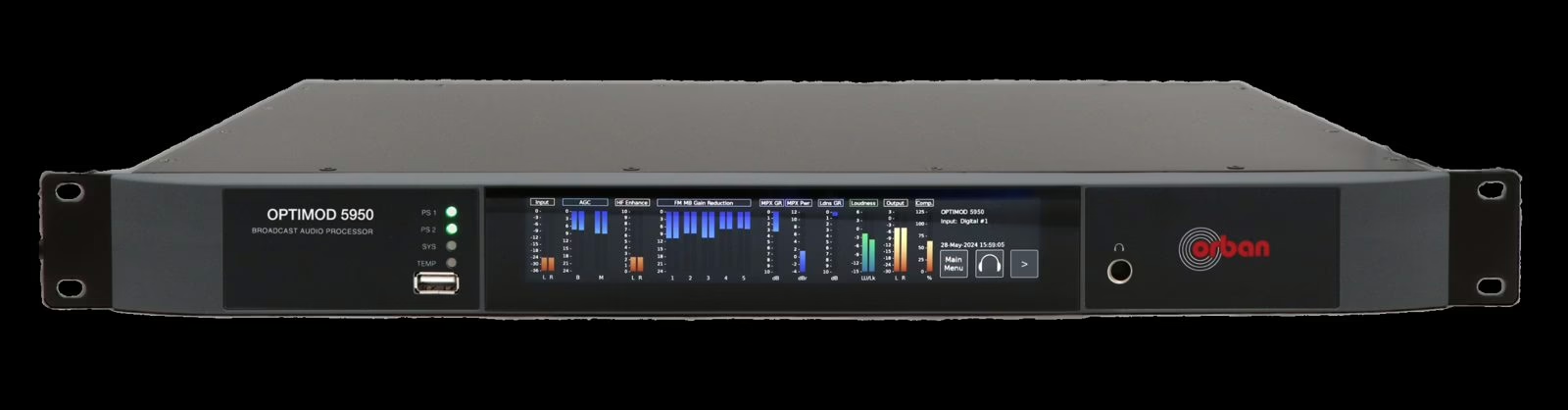
In a radio station, the on-air processor is the last link before the transmitter, and its final limiter shapes the sonic signature as much as the level. Orban, a long-standing reference in the field, used IBC 2026 to reveal an update that targets exactly that core: MXneo, a rework of the MX limiting built into the OPTIMOD 5950 and 5950 HD. And for once, the news isn’t measured in extra decibels, but in less distortion.
What MXneo changes
MX technology had set an aggressive trade-off between loudness and impact: lots of punch, lots of level, at the cost of audible distortion on some material. MXneo keeps the punch and loudness performance that made MX’s name, but markedly improves its distortion behaviour. In practice, Orban claims a clear reduction in midrange distortion on contemporary formats — pop, rock and the like — and better high-frequency behaviour on harmonically rich material.
Perceived level is inseparable from loudness measurement: if LUFS and true peak still feel fuzzy, our guide to broadcast loudness sets the stage in which a processor like the 5950 operates.
The real gain: controls that used to be fixed
The most interesting point for an operator isn’t just lower distortion, it’s the control you get back. Where the MX algorithm imposed fixed balances, MXneo exposes user-adjustable parameters: you can now shape the trade-off between distortion, loudness, punch and high-frequency energy yourself. In other words, each broadcaster can put the slider where their editorial line and format demand, instead of living with a single factory setting. The factory presets have been recalibrated accordingly.
Orban also adds a dedicated Classical Music Mode that bypasses the processing tied to punch and density — exactly what a classical station or a dynamics-conscious webradio wants.
| Aspect | MX (before) | MXneo |
|---|---|---|
| Loudness and punch | MX signature | Retained |
| Midrange distortion | Audible on some material | Clearly reduced |
| Distortion / level trade-off | Fixed in the algorithm | User-adjustable |
| Classical music | — | Dedicated mode (punch and density bypassed) |
Which units, and at what price
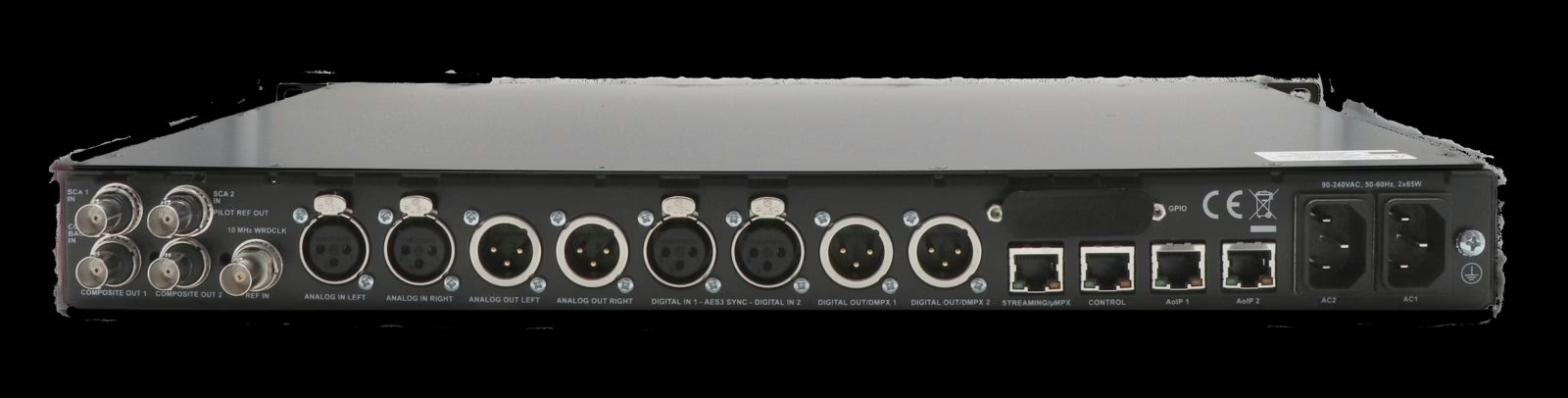
MXneo targets the OPTIMOD 5950 and 5950 HD processors, Orban’s 1U platform for FM, DAB+ and HD Radio, controllable remotely from any web browser. Good news for stations already equipped: the update is free and will be offered as a download from Orban. It was demonstrated on the maker’s stand at IBC 2026.
MXneo joins a wave of on-air processing updates — we recently saw Telos Alliance reveal its Omnia XII. To understand exactly what this chain does before the transmitter, our article on on-air processing breaks down each stage. The official page is at orban.com.
My take
Making adjustable what used to be locked is the best gift Orban could give its users. The loudness race long trapped stations in a frustrating dilemma: push the level or keep the sound clean, with no real way to meter it out. Being able to set that trade-off yourself, format by format, changes the daily reality for a programme director. And the fact that the update is free for existing 5950 fleets deserves a nod — loyalty rewarded is rare enough to mention. What’s left is to hear the classical mode at work: that’s where the regained finesse will really be judged.