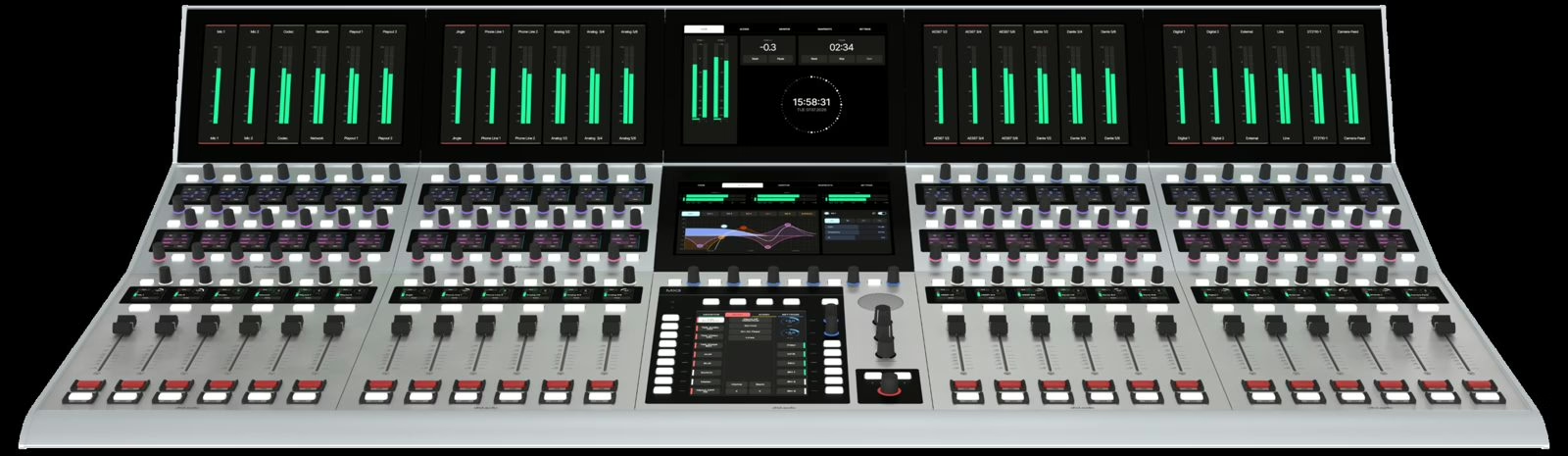
The live demo was expected; here it is, in the flesh. After announcing it without a name, DHD made its third-generation surface official on day one of IBC 2026: the MX3. The German maker, celebrating its 30th anniversary with more than 10,000 installations to its name, positions it as the direct successor to its Series 52 surfaces, with no clean break for studios already equipped.
Modular to the core, right down to the network
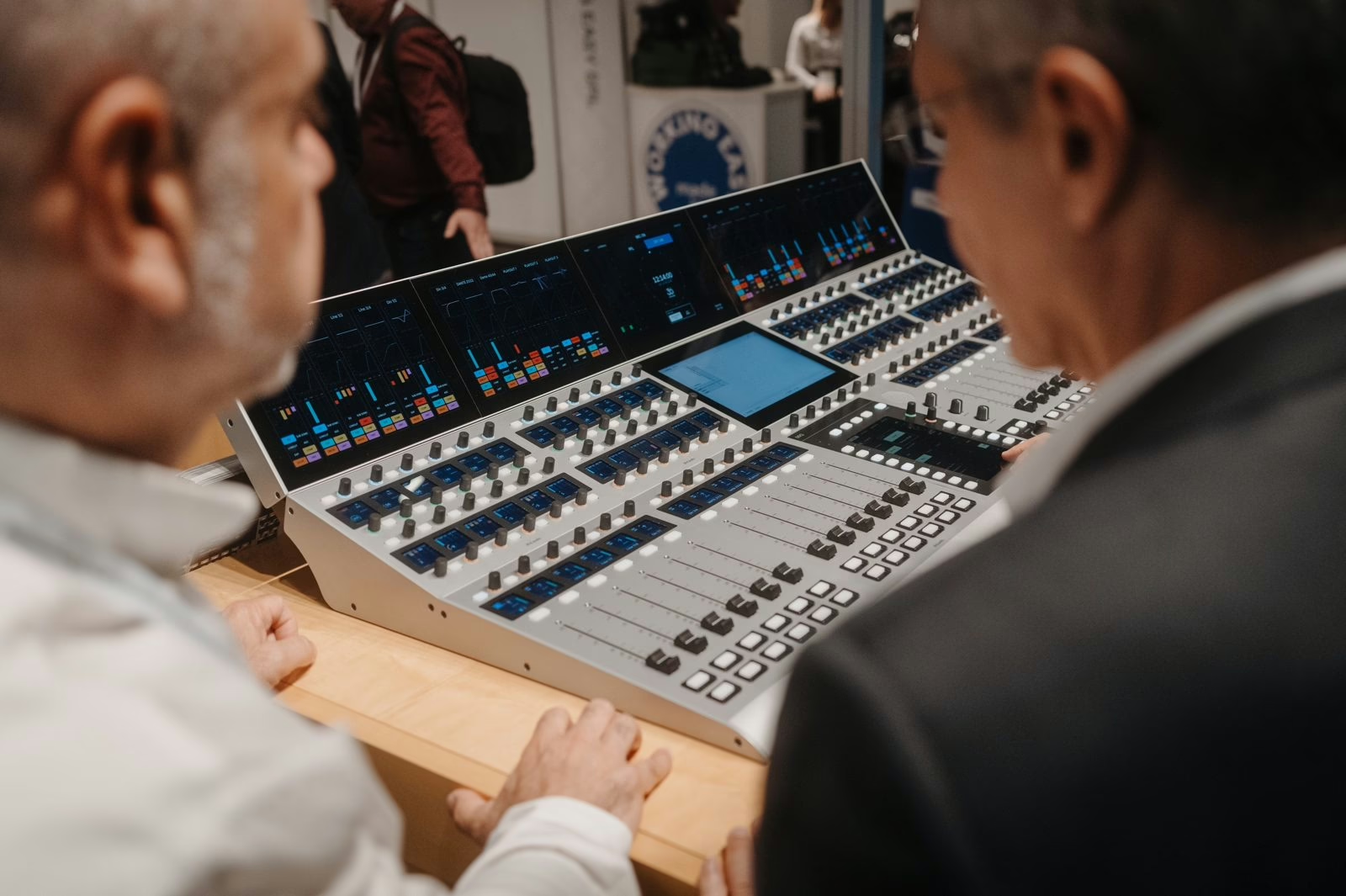
The MX3’s principle fits in one line: every module is a self-contained network device. Elements connect over standard Ethernet with PoE+ power, one cable per console column. You assemble a surface from building blocks — typically a central module surrounded by six-fader expansion modules, in a frame supplied with or without over-bridge metering, and optional displays mounted above. Modules can be added, swapped or repaired in operation, and the assignment between the surface and the processing core is no longer fixed.
What actually changes under the hood
The real technical leap is protocol-level. Current Series 52 systems rely on DHD’s in-house APC (audio/power/control) protocol; the MX3 replaces it with secure standard IP networking between the desktop control panels and the processing cores, whether local or remote. Audio-over-IP stays true to form: AES67, Dante, Ravenna and SMPTE ST 2110 compatibility to handle very large channel counts when needed. The operating concept follows a simple rule, “what you see is what you control”: displays across the surface constantly show what the adjacent controls do, according to the selected view.
Invest without ripping it all out
This is the argument DHD hammers home, and it lands as newsroom headcount shrinks: the MX3 is fully compatible with the external digital processing cores already running DHD installations. You can grow an existing infrastructure by adding targeted modules rather than replacing the whole system. DHD frames it as an answer to what the EBU calls the Dynamic Media Facility: formats that change, staff wearing more hats, and technology expected to keep up without wholesale reinvestment each cycle. The MX3 targets radio and TV control rooms, self-operated studios, OB trucks and SNG vans, ingest stations and edit suites. Like the Calrec Type RT at the compact end, it shows broadcast moving to surfaces decoupled from their processing and driven over the network.
My take
Dropping the in-house APC protocol for standard IP networking is the big deal here, and very good news: it decouples the surface from the core and opens the door to remote control without workarounds. The other strength is continuity — keeping your cores when you change the surface speaks to any facility that has amortized its kit. The “self-contained PoE+ network modules” bet simplifies cabling as much as it shifts reliability onto the network, which becomes the link to look after. For a broadcaster thinking in ten-year horizons rather than purchase cycles, the MX3 ticks the right boxes. Pricing and real-world configurations, still under wraps, are what is left to see.
Frequently asked questions
What sets the MX3 apart from current Series 52 surfaces?
The MX3 is the third generation of the Series 52 surfaces. The key change: it drops the in-house APC (audio/power/control) protocol in favor of secure standard IP networking between control panels and processing cores, local or remote.
Do you have to replace existing processing cores?
No. The MX3 is fully compatible with the external DHD digital processing cores already deployed. The idea is to grow an installation by adding modules, not by replacing the whole system.
How are the modules connected and powered?
Every module is a self-contained network device connected over standard Ethernet with PoE+, one cable per console column. Modules can be added, swapped or repaired while the system is running.
Which audio-over-IP networks does the MX3 support?
It stays compatible with AES67, Dante, Ravenna and SMPTE ST 2110, in line with the Series 52, to handle very large channel counts when required.
How is an MX3 console assembled?
From modular building blocks: typically a central module plus six-fader expansion modules, in a frame with or without over-bridge metering, and optional displays mounted above.