There are the big production consoles, built for OB trucks and flow studios, and then there is everything else: small radio stations, podcast studios, stadiums, houses of worship, corporate events. It is that everything else, long underserved, that the Calrec Type RT unveiled at IBC 2026 is going after. The pitch is simple: take the Type R ecosystem, already designed for remote production, and condense it into a self-contained tabletop console you set down, plug in and run without heavy infrastructure.
A Type R folded into a tabletop chassis
The Type RT is not a brand-new platform built from scratch: it runs Type R software and belongs to the same family, sharing its soft panels and operating logic. What changes is the integration. Everything now lives in the unit: DSP, control processing, I/O, monitoring and a USB audio interface. Connect power and the network, and the surface is ready to work, with no separate processing rack alongside.
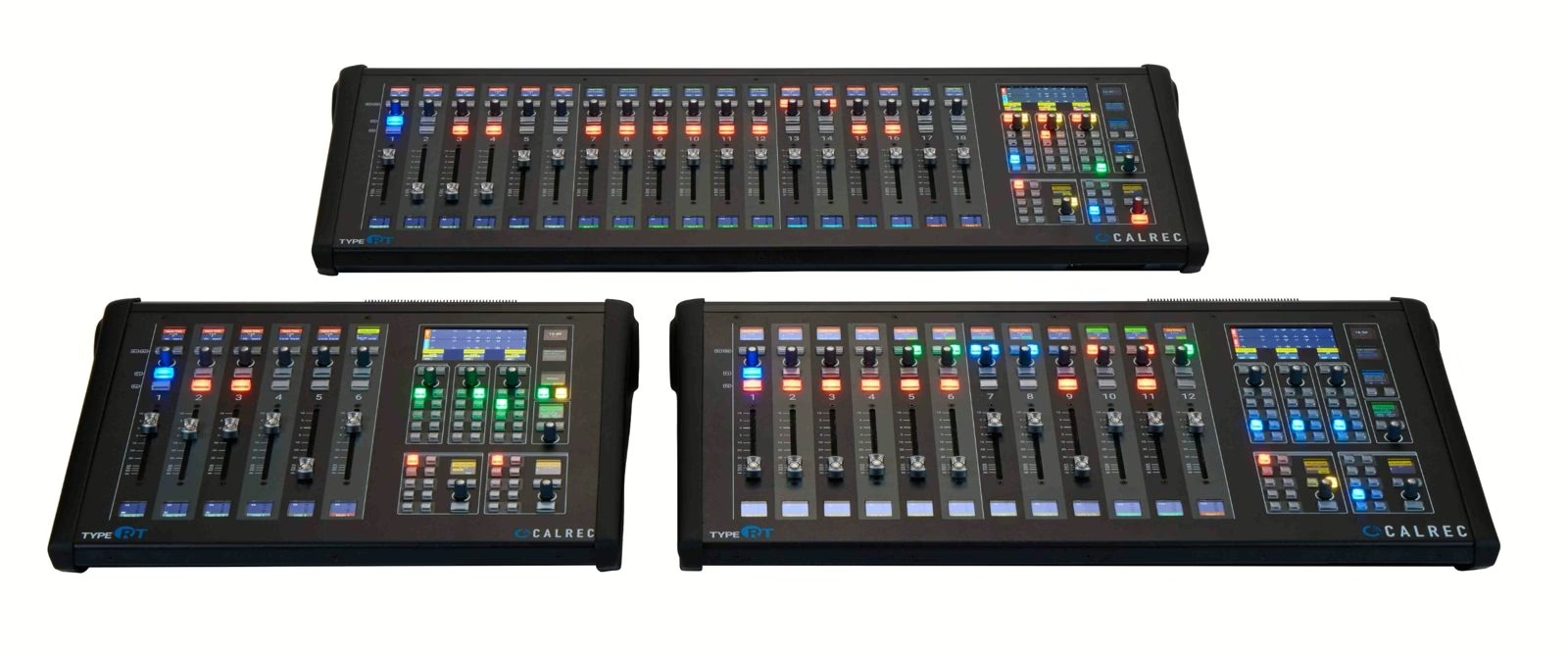
The chassis is fanless, and therefore completely silent: hardly a trivial detail once the console shares a room with an open mic, in a radio studio or a commentary booth. The surface comes in 6, 12 or 18 motorised faders, covering everything from a small station’s on-air position to a local gallery or an event mix. For control, Calrec quotes up to 138 assignable buttons, 24 rotary encoders with displays, a per-channel display beneath each fader and a four-inch TFT screen: enough to stay in command without diving through endless menus.
IP-native, but not only
The Type RT is built around an Ethernet backbone and speaks SMPTE ST 2110 natively through a dedicated card; Dante is an optional card, MADI unlocks via a software licence, and analogue stays on board for local I/O. In other words, the console slots into a modern all-IP infrastructure just as easily as into a more classic setup, without forcing an overnight switch.
The continuity with the rest of the Calrec range is deliberate. The Type RT plugs into the house ecosystem: the virtualised audio engine ImPulseV, the browser-based control interface Calrec Assist — included as standard — and an optional True Control 2.0 for remote production. It was announced alongside the modular Apex M6 I/O platform, with which it shares the same philosophy: audio resource wherever you need it, tied together over the network.
Who the Type RT is for
Calrec makes no secret of the target: productions that want the brand’s know-how without the footprint or the price tag of its large surfaces. In practice:
- Radio and pro podcast studios: a compact, silent on-air desk, with Calrec Assist for browser control.
- Stadiums and sports venues: a rugged surface for live reinforcement and event capture.
- Local TV galleries, corporate events, houses of worship: where budget and space are tight, but reliability is not up for negotiation.
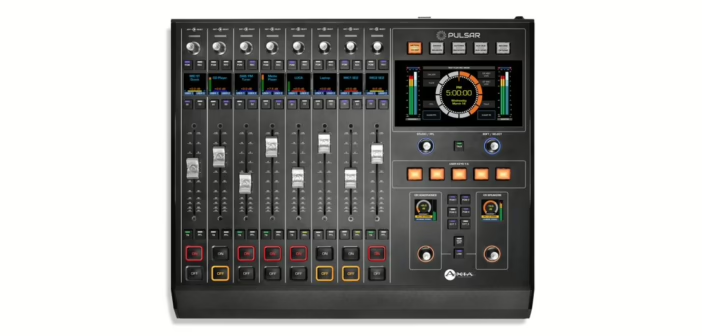
That positioning puts it head to head with the compact IP consoles that have multiplied in recent months, such as Telos Alliance’s Axia Pulsar. Calrec’s stated difference is the direct lineage with its production engines: you drop in size, not in sound. Anyone who already knows the bigger Calrec desks — the Summa and its siblings — will find familiar bearings straight away.
Pricing was not announced at launch, and exact availability remains to be confirmed after the show. Still, the promise is clear: a real Calrec, with no rack and no endless cabling, ready to sit on a table. For more, the manufacturer’s site gathers the product details.
My take
The self-contained tabletop format is the smartest broadcast idea of the season. A fanless console that integrates everything and runs from a browser is exactly what was missing between the cobbled-together small mixer and the out-of-reach big surface. The fanless part alone changes life in a radio studio or a commentary booth, where the faintest hiss ends up in the mic. The real question is price: on this segment, a Calrec will fight already very aggressive players, and that is where the Type RT will win or lose. If the entry ticket is sensible, small radio and podcast studios have a serious tool here, not a toy.