Telos Alliance is using IBC 2026 to put its new radio console in the spotlight: the Axia Pulsar, a compact AoIP surface built for control rooms where space is tight. First shown at the NAB Show in the spring, it is now slated to ship in the fourth quarter of 2026. Eight faders, a full engine packed into 2U, and the whole Livewire+ AES67 ecosystem behind it: here is what it brings.
Built for cramped control rooms
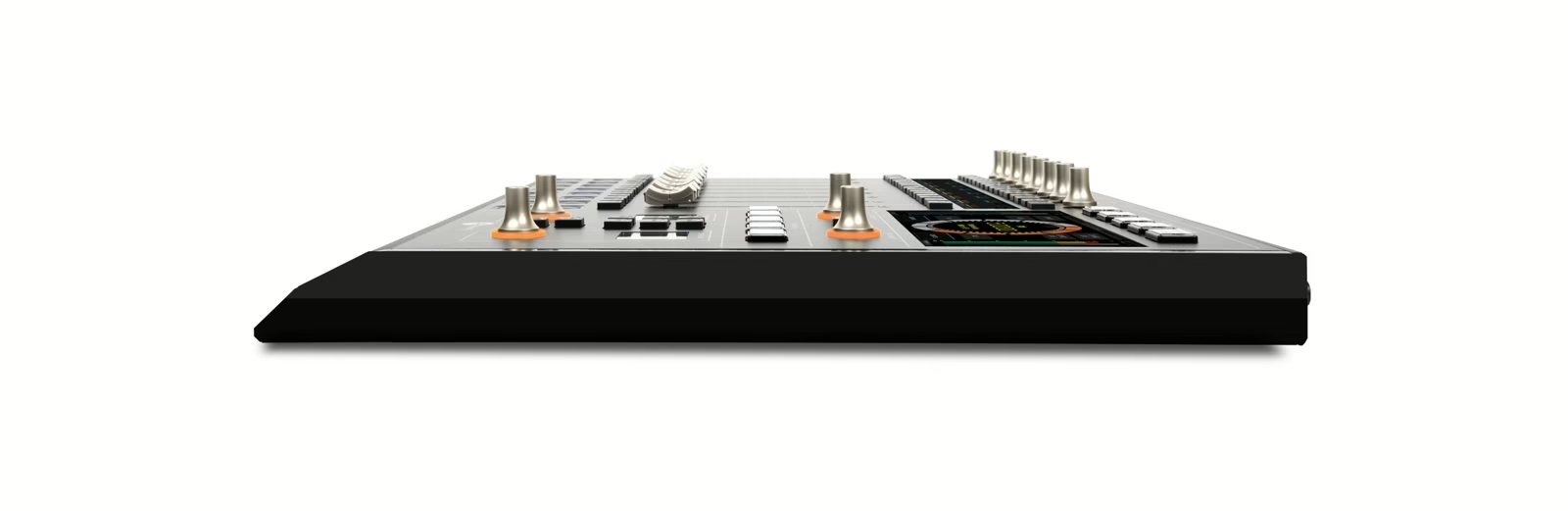
The Pulsar answers a very concrete need: a real hardware surface where a full-size console simply will not fit. Secondary studios, newsrooms, sports commentary booths, OB trucks and remote setups are its natural home. The footprint is small (roughly 463 mm wide for the main surface), and its dark, anti-glare finish makes it camera-friendly for the visual-radio studios that now film the show as much as they mix it.
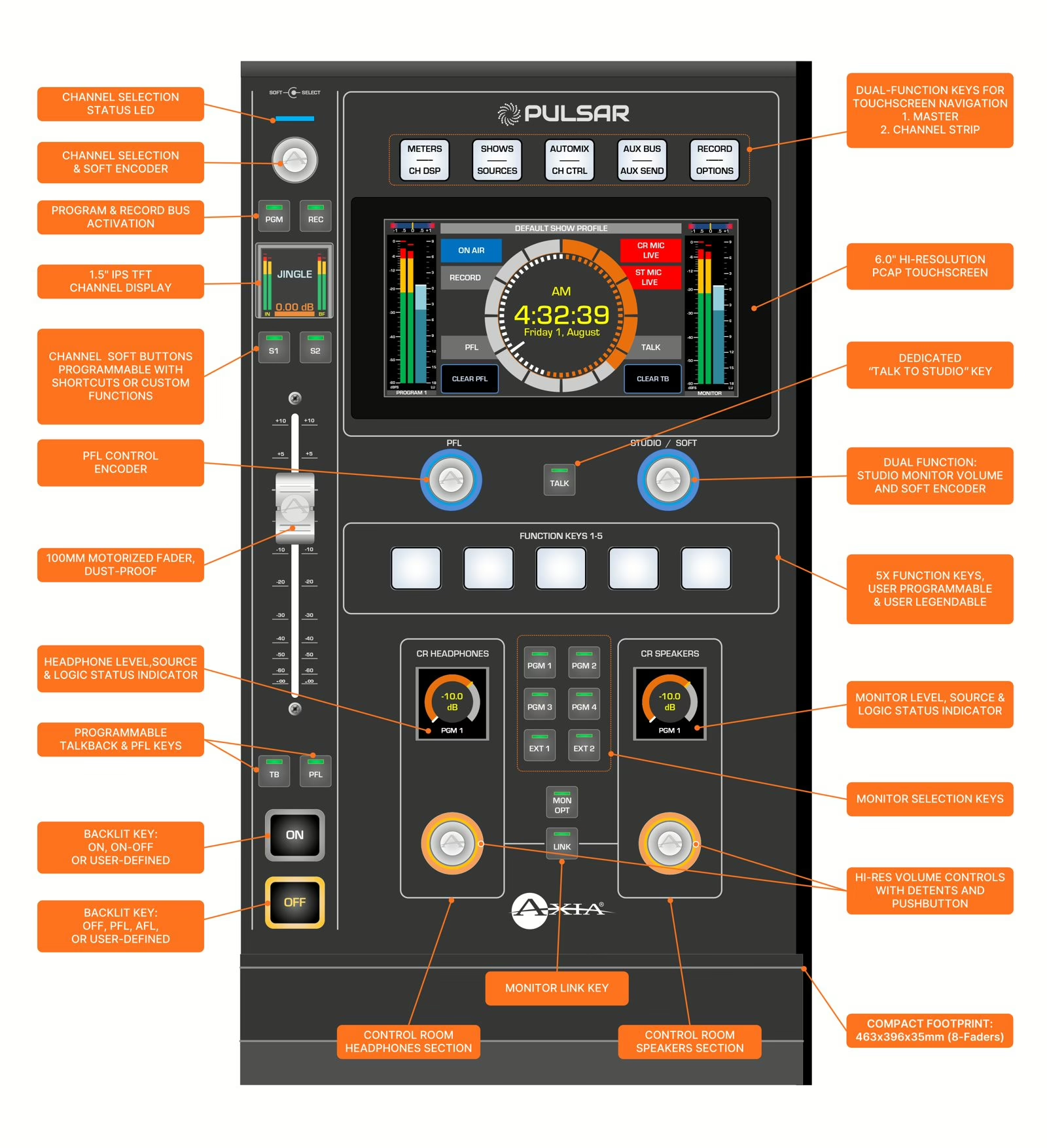
The base surface carries eight motorised 100 mm faders, touch-sensitive, each with two user-programmable buttons. Need more strips? An expansion unit adds eight more, up to sixteen total, joined to the console or installed remotely in a split configuration.
StudioCore: the whole engine in 2U
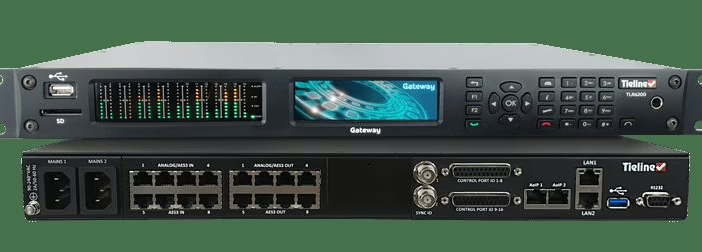
At the heart of the Pulsar sits the Axia StudioCore engine, a fanless 2RU box that combines the power supply, a five-port AoIP network switch, a full set of I/O and the mixing engine. In other words, the noisy, bulky part of a traditional console vanishes into a single silent rack unit. Inside, a latest-generation ARM platform running 64-bit Linux drives up to sixteen stereo input channels and four dedicated stereo program mixes.
The surface connects to the StudioCore over a single Gigabit Ethernet link powered by PoE+. The StudioCore itself offers optional onboard analogue I/O: two mic inputs with phantom power on StudioHub connectors, a stereo line input and output, and a headphone output.
Processing, buses and mix-minus
Every channel gets full processing right in the console: high- and low-pass filters, a compressor, an expander/gate, a three-band parametric EQ, a de-esser and a peak limiter. Telos adds its gain-sharing Automixer, a real help on debate panels or round tables where several mics stay open at once.
The output count is generous for such a small format: up to 36 stereo outputs, including four program buses, record and phone buses, AFL/PFL, talkback, control-room and studio monitor buses, four auxiliaries and, crucially, up to sixteen mix-minus. That last point is decisive in radio and podcasting: every remote guest gets a return cleaned of their own voice. EBU R128 loudness metering is built into the surface, with no extra meter bridge required.
Specs at a glance
| Item | Details |
|---|---|
| Main surface | 8 motorised 100 mm faders, TFT IPS displays, 463 x 396 x 55 mm, PoE+ powered |
| Expansion | 8 extra faders (16 total), joined or split, 292 x 396 x 55 mm |
| StudioCore engine | 2RU fanless, power supply + 5-port AoIP switch + I/O + mix engine, 100-240 VAC |
| Per-channel processing | HPF/LPF, compressor, gate/expander, 3-band EQ, de-esser, limiter, Automixer |
| Outputs | up to 36 stereo outputs, up to 16 mix-minus, built-in R128 loudness |
| Network | native Livewire+ AES67, no licensing or I/O limits, Pathfinder Core PRO control |
Web control: Pulsar Soft and Pulsar Cast
Two HTML5 tools round out the surface. Pulsar Soft mirrors the entire console in a browser: you can drive the Pulsar from a computer, tablet or phone, opening the door to remote work and operational redundancy. Pulsar Cast streams any Livewire+ channel to a browser for remote monitoring. The surface displays are industrial-grade TFT IPS panels (Telos deliberately avoided OLED, more prone to burn-in), with a per-channel colour strip to spot source groups at a glance. An HDMI output and a USB-A port let you mirror the display onto an external screen.
The Pulsar slots into the company’s Livewire+ AES67 ecosystem alongside the Quasar consoles, the VX phone systems and the Infinity IP intercom, all managed by Pathfinder Core PRO. Mix-minus remains the keystone of any remote-guest setup: we walked through it in our guide to recording multitrack on the RØDECaster Pro II. For the networking side, see our piece on the Calrec Type RT compact IP console and our explainer on intercom in broadcast production.
Availability
Shown at NAB and highlighted at IBC 2026, the Axia Pulsar is slated to go on sale in the fourth quarter of 2026. Telos has not yet published a firm list price; the positioning, however, is clear: give small rooms a credible hardware surface where they used to make do with a software controller or an entry-level board.
My take
The clever move here is not the fader count: it is packing the whole engine, switch and I/O into a silent 2U box while keeping sixteen mix-minus. That is exactly what small control rooms and podcast studios need when they want hardware without building an infrastructure. Full browser control is the bonus: a console you can shadow from a laptop is cheap insurance on a live night. Price is the one real unknown. If Telos pitches it right, the Pulsar could become the default for newsrooms that kept putting off the jump to AoIP.