The broadcast console is going virtual, and Calrec is among those pushing the idea furthest. At IBC 2026, the British manufacturer expands ImPulseV, its fully virtualised audio mixing engine, with two lighter configurations and pay-as-you-go licensing. The message is blunt: processing power should no longer be sized at purchase, but sized to the job.
ImPulseV, the engine with no dedicated hardware
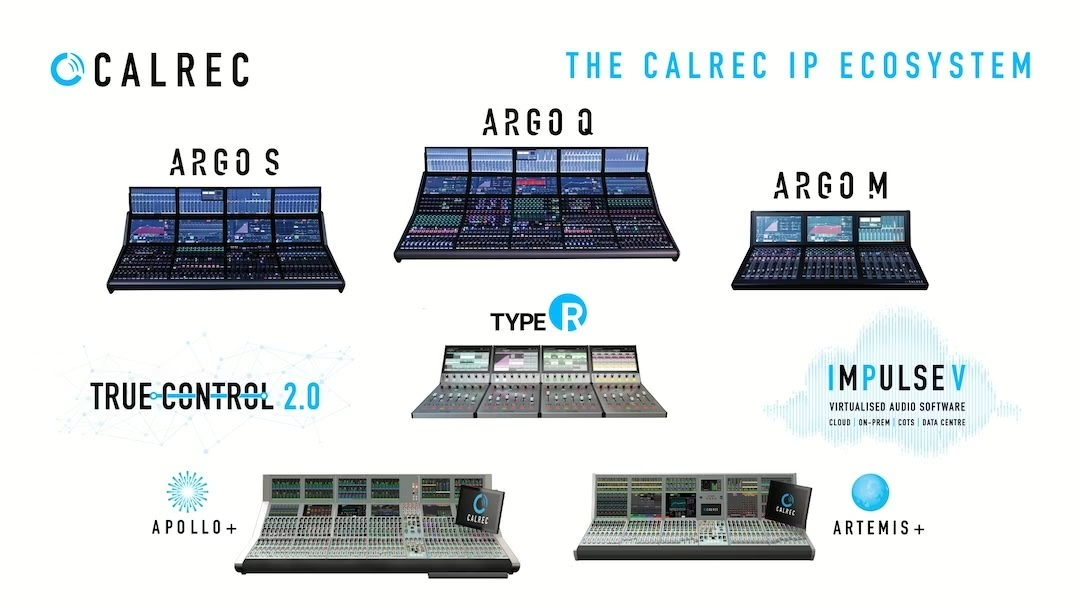
ImPulseV is the DSP of a large Calrec console lifted out of its frame. Processing runs in software on commercial off-the-shelf (COTS) hardware, on private cloud or across distributed resources, with no proprietary card or in-house rack. Until now the engine came in one useful size: 256 processing paths. That is a lot, sometimes too much for a mid-sized gallery paying for capacity it never touched.
The two new tiers fix that imbalance. Calrec adds 96-path and 140-path packages alongside the existing 256-path option. Crucially, all three offer exactly the same per-path processing, immersive formats up to 7.1.4 included. You lose nothing by stepping down except the number of simultaneous paths. A small radio studio, a dubbing suite or a lightweight capture can finally match the engine to reality.
Licensing that tracks the production
The other change may be the most structural. Alongside perpetual licences, Calrec introduces short terms: one year, twelve weeks, four weeks. A broadcaster spinning up a gallery for a summer tournament, election coverage or a run of events no longer has to tie up a licence for a full year. Calrec sums up the logic in a line that rings true: the cost of the production should track the scale of the job, not the other way round.
That flexibility only makes sense because the engine is software. On a hardware console, DSP capacity is fixed in metal; here it becomes a variable you tune before each big date. It is the very argument that pushed much of broadcast toward all-IP galleries: pool resources rather than multiply under-used hardware islands.
Surfaces that drive the engine, not the reverse
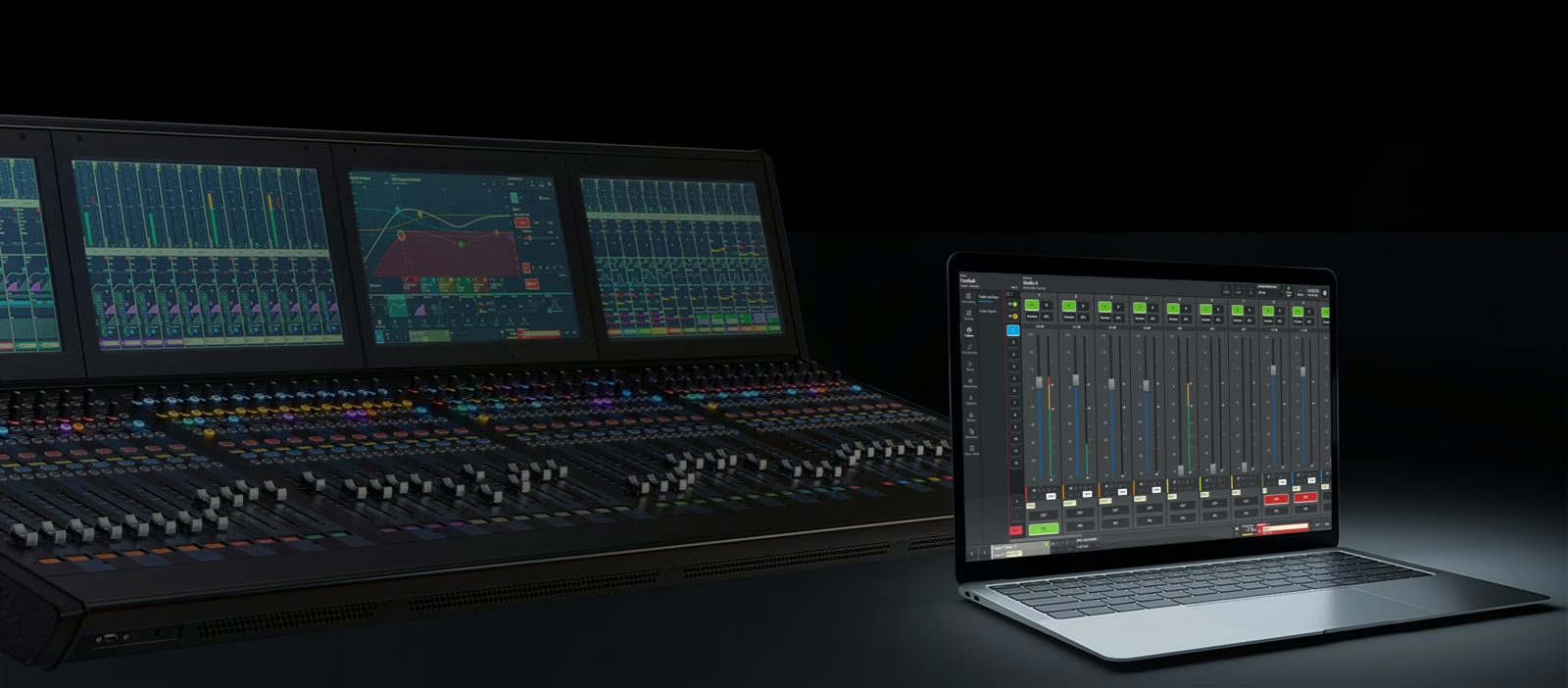
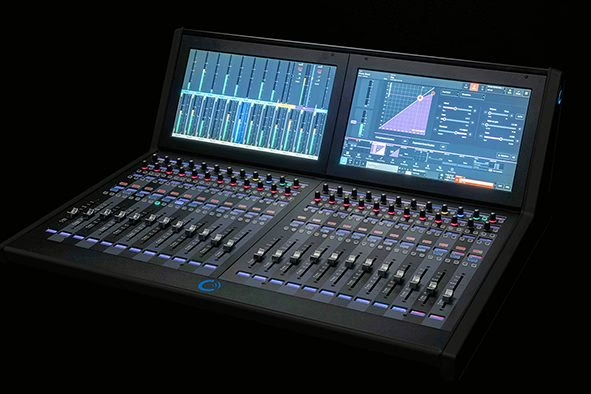
ImPulseV is controlled from any Argo surface, from a True Control 2.0-enabled console, or directly through the Assist web UI. The Argo range — the compact M in 24 and 36 faders, the more ambitious modular S — deliberately splits the control plane from the engine: one surface can drive internal DSP, an IP core or an ImPulseV instance as needed. True Control 2.0 takes it further, letting one console take over five other consoles or processing cores, with full access to EQ, dynamics, routing, direct outputs and delays.
Calrec is using the show to preview Argo Offline Assist, offline configuration due in Q4 2026: build and check a show on a laptop before touching the surface. All of it stays IP-native, over SMPTE ST 2110 and AES67, in line with the ST 2110 infrastructure that now underpins modern galleries.
Where broadcast is heading
Software-defined is no longer a trade-show promise. After the mixing console moving into the browser and the rise of audio-over-IP radio consoles, the ImPulseV expansion confirms the direction: decouple processing from the surface, bill by usage, deploy where it pays.
Still, virtualising an audio engine is no small thing. The real test is robustness on air: controlled latency, transparent failover, a clock that does not drift. Calrec’s console pedigree helps, but it is reliability in real conditions — not commercial flexibility — that will decide adoption. And for anyone handling these feeds daily, a useful reminder: whatever the topology, EBU R128 loudness management remains the same requirement, on-prem or in the cloud. Calrec shows the full ecosystem at IBC 2026, Hall 8, stand C47.