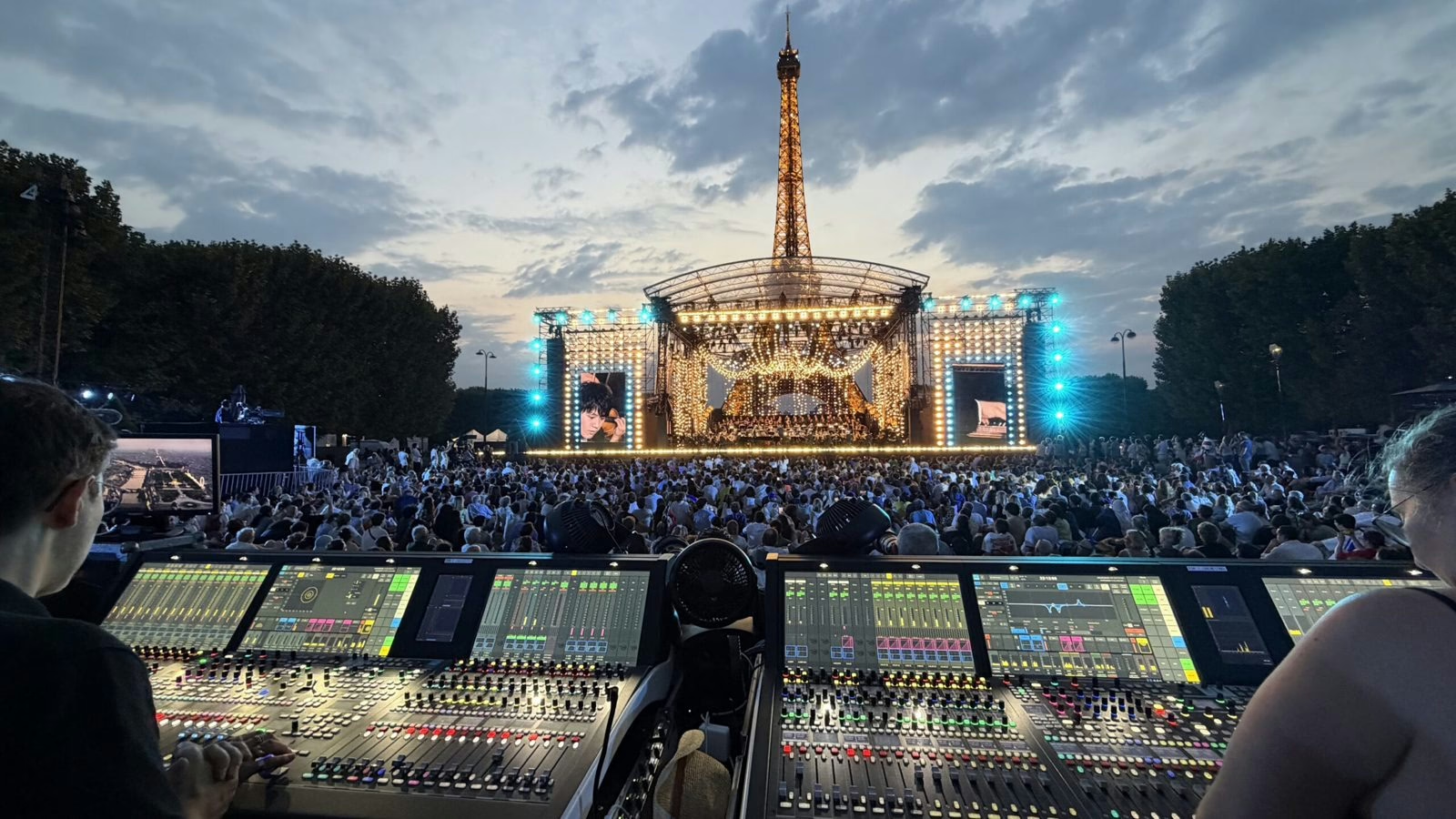
Every 14 July, the Concert de Paris draws tens of thousands to the foot of the Eiffel Tower and many more to their screens. Behind the orchestra, the choir and the soloists, the technical stakes are dizzying: reinforcing an open-air classical event while broadcasting it live, with no room for error. For the 2026 edition, Radio France rested the whole thing on a fully redundant audio-over-IP backbone built around Lawo gear.
Three mc²56 consoles and a doubled core
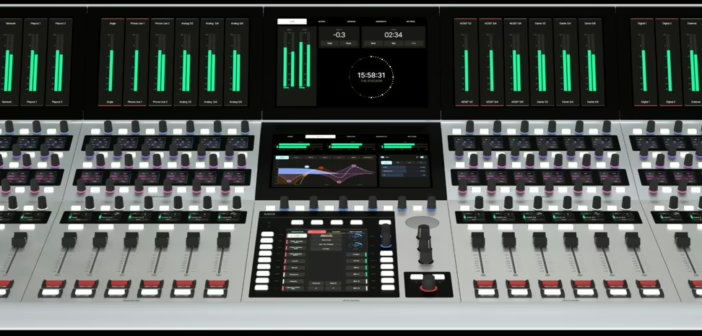
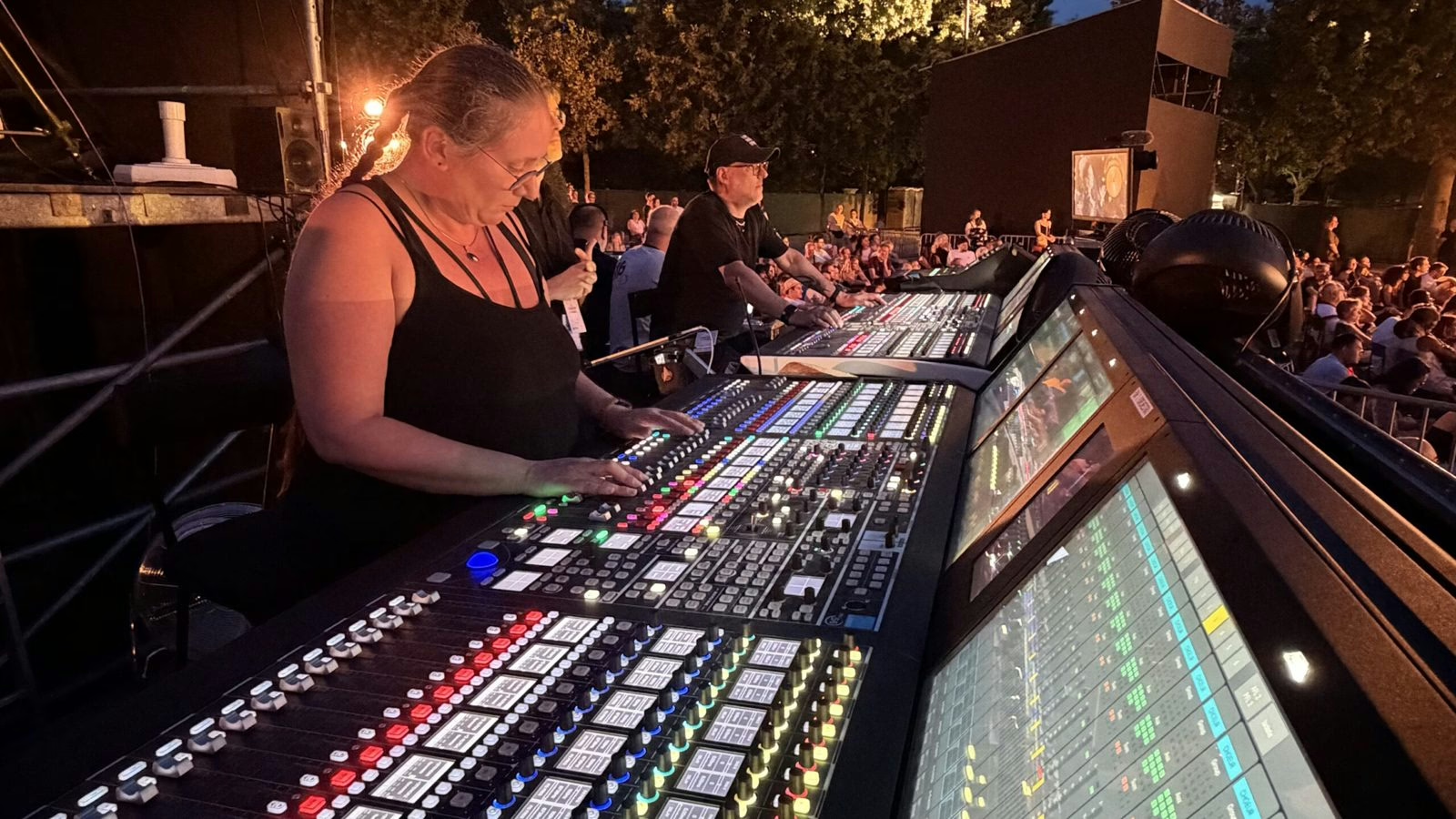
The heart of the rig comes down to a few network meshes. Three Lawo mc²56 consoles drive the sound, backed not by one but by a redundant pair of A__UHD Core engines, each ready to take over instantly if the other fails. Everything travels over an equally doubled RAVENNA network, while a Lawo HOME cluster centralises device management, routing, security, connection control and monitoring.
This architecture is no luxury. In audio-over-IP, redundancy isn’t a comfort but a requirement: on a live feed captured by several parallel chains, the slightest network drop would be heard on air. Doubling the processing core and the transport guarantees the concert keeps running even if a link fails, without the audience, in the venue or at home, ever noticing.
Front-of-house, monitoring and broadcast on one backbone
The strength of all-IP is letting worlds coexist that once each demanded their own cabling. At front-of-house, operators split the orchestra, choir and soloists. On stage, a second mc²56 configured for two operators handles the performers’ monitoring and communications. And the broadcast mix itself is produced from Radio France’s OB facilities around an mc²66 MkII console.
The result leaves the Champ-de-Mars for France 2 and France Inter, then reaches out internationally via the Eurovision and Euroradio networks to more than seventy countries. A single capture must therefore satisfy the on-site audience, the TV viewer, the radio listener and dozens of foreign broadcasters at once, each with its own constraints. That’s exactly why building the production on one coherent foundation matters.
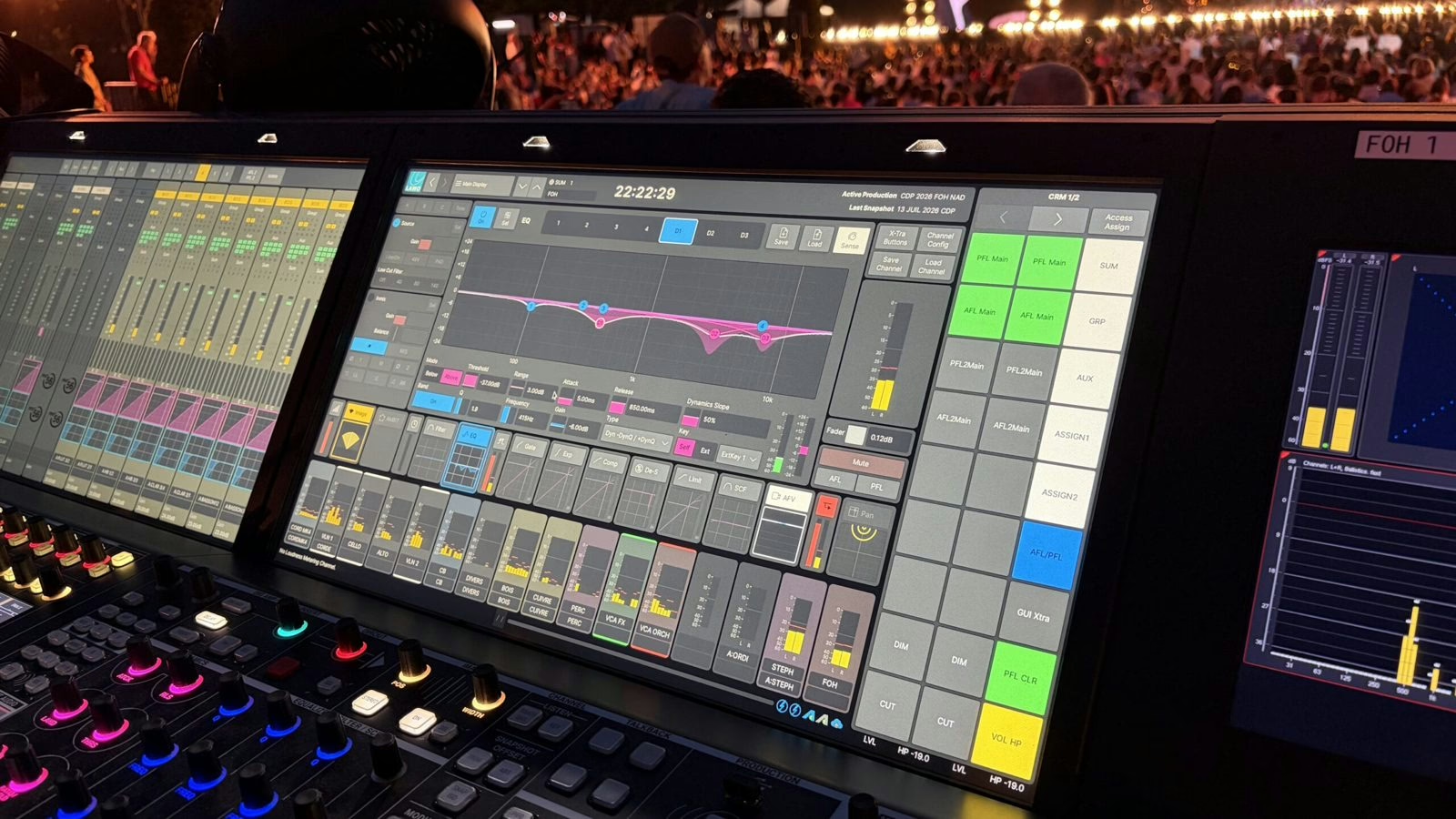
Dynamic EQ makes its debut
The 2026 edition also served as a full-scale test bed for one novelty: it was the first time Lawo’s Dynamic EQ was deployed at the Concert de Paris. Folded straight into the live-sound flow, it offered extra tonal control across the orchestra, choir and soloist mixes — where a static EQ struggles to keep up with the dynamic swings of an acoustic ensemble in the open air.
That kind of detail shows where broadcast quality is really decided today: less in the race for decibels than in the finesse of the processing and control of level, a topic we broke down on the loudness and EBU R128 side.
Why redundancy changes everything
Having run festival control positions myself, I know what a live show with no safety net feels like. The move to audio-over-IP long worried engineers raised on copper, precisely for fear of those invisible drops. A rig like the Concert de Paris one shows the technology has matured: properly doubled, an IP backbone is now safer and vastly more flexible than traditional analogue cabling, while making it far easier for stage, monitoring and broadcast to share one system.
The real lesson of this kind of production remains: technology doesn’t make the concert. When it’s well designed, it disappears, leaving only the music. Choosing a fully redundant architecture, right down to the processing core, has one aim — that nobody, at the Champ-de-Mars or across seventy countries, has to think about the control room. On that front, the bet paid off.