


Description
Technical
Specifications
Processing
| Architecture | IKIS platform (Linux, Ethernet, USB) |
|---|---|
| Processing engine | Xrange digital engine (Linux/Ethernet, 64-bit audio), from a 3-year R&D project |
| Channels | Up to 384 channels, each with 2 inputs + 8-band EQ + dynamics + Harrison Digital Tools effects |
Surface
| Motorized faders | Yes |
|---|---|
| Touchscreen | No |
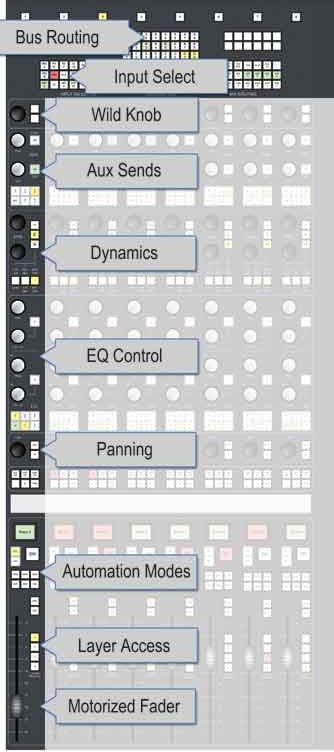
| Control surface | “Generation-3” traditional channel-strip surface, no central shared-knobs panel |
| Screens | Per-channel PreView display: name, stems, EQ, dynamics, aux, metering, surround panning |
Recording
| Onboard recording | No |
|---|
Networking
| Networking & protocols | Network |
|---|---|
| Redundant PSU | No |
| Redundant networking | No |
Other
| Variants and configurations | Typical install: 288 mic inputs, 160 digital 40-bit channels, 96+ fader strips (surface linked to engine by fibre) |
|---|---|
| Applications | Reconfigurable: recording/mixing, live, broadcast, post; dynamic profiling and knob-per-function mode across 8 channels |
Strip & details
Rotate your phone to landscape for a better view of the strip.
Rotate your phone to landscape for a better view of the strip.
Editorial & artists
Our take
History & design
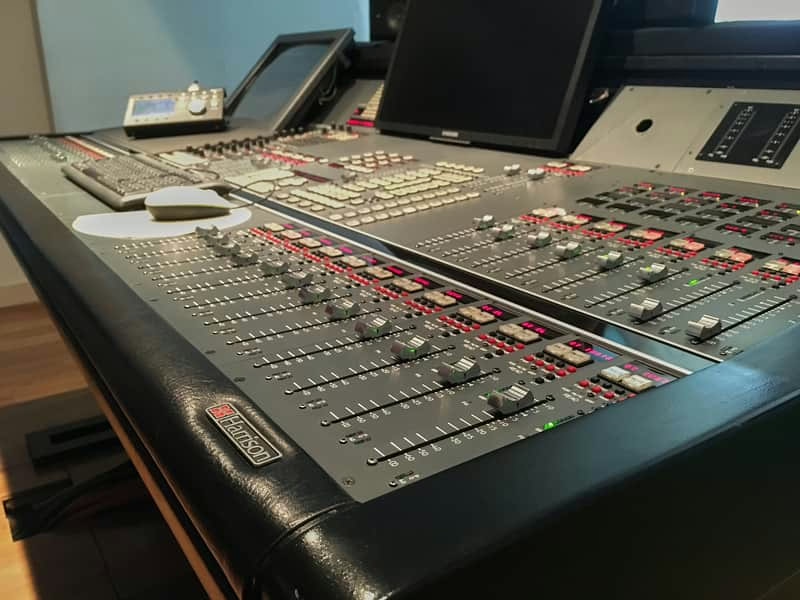
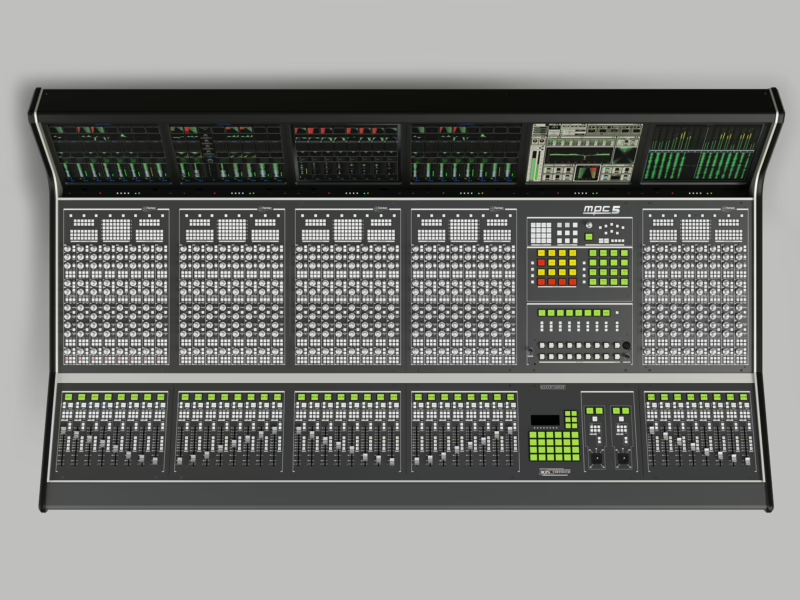
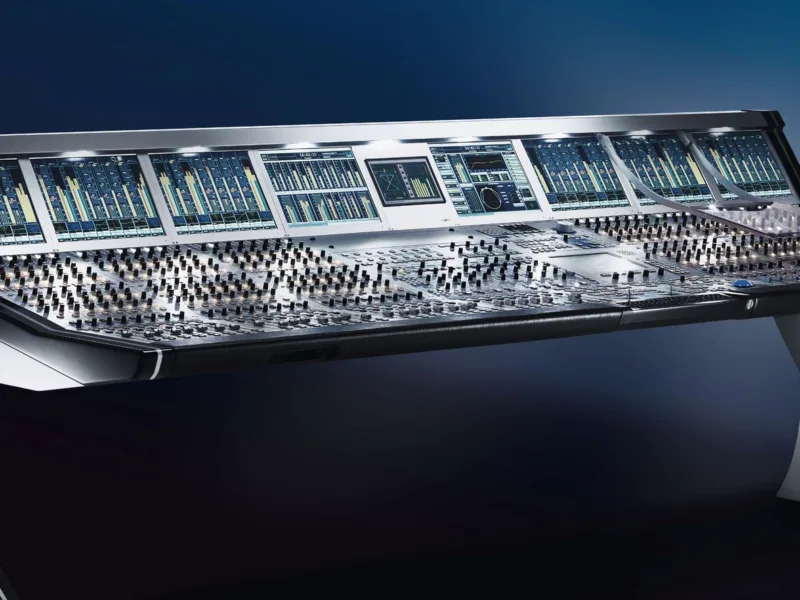
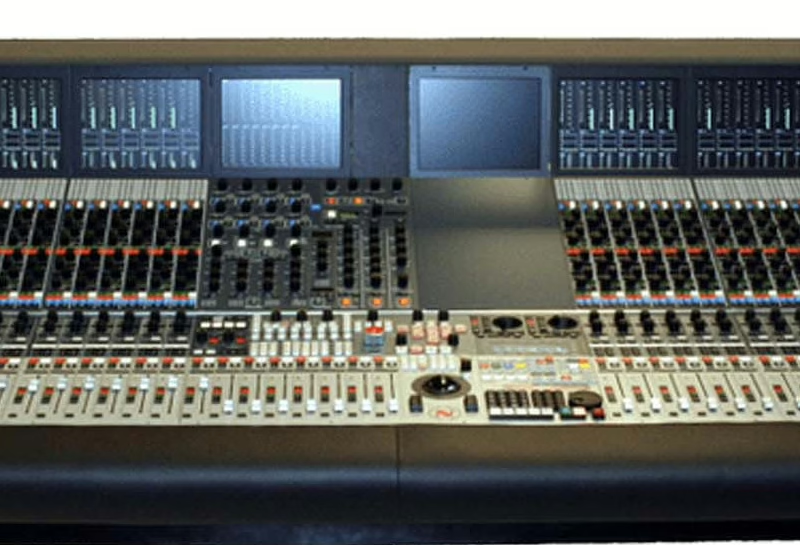
The Trion is a Harrison “Generation-3” digital control surface, unveiled in the mid-2000s in the line of the reconfigurable Series Twelve. Its stance: a “traditional” channel-strip surface architecture that removes the central shared-knobs panel typical of assignable consoles of the era. Hardware and software reconfigure for studio recording/mixing, live, broadcast and post-production.
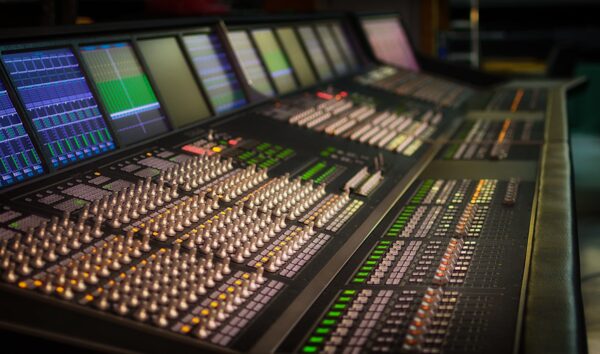
Each Trion runs on Harrison's IKIS platform (Linux, Ethernet, USB) and carries built-in 15-inch screens above each group of 8 faders, giving a dedicated per-channel view; a second row of 7-inch screens can be added for broadcast, avoiding costly monitor walls. The exclusive PreView display shows, for each channel, the name, stem assignments, EQ curve, dynamics curve, aux sends, input metering and surround panning. Strips appear as traditional vertical panels or in an expanded “knob-per-function” mode spread across 8 channels, with dynamic profiling (recalling any set of channels to any fader strip).
Processing is handled by the Xrange digital engine, the result of a three-year research project: a Linux / Ethernet architecture in 64-bit audio offering up to 384 channels, each with two inputs, an 8-band EQ, dynamics processing and Harrison Digital Tools effects. A typical installation linked the surface by fibre to the engine with 288 mic inputs, 160 digital 40-bit channels and over 96 fader strips.
Notable users
- Église (mega-church, Corée du Sud)
Korean megachurch equipped with three Harrison Trion consoles.
Links
Related consoles
Some merchant links are affiliate links. Purchases may support Digital Mixing at no extra cost.
Documents are archived locally for preservation. Source credited. Takedown requests: [email protected]