


Description
Technical
Specifications
Processing
| Mix buses | 176 |
|---|---|
| DSP engine | Harrison Xrange (Linux, Ethernet, 64-bit) |
| Processing resolution | 40 bits |
| Architecture | Control surface separate from the processing racks; the racks live in the machine room. MPC/MPC2 generations are digitally controlled analogue; MPC3-D, MPC4-D and MPC5 move to all-digital via the Xrange DSP platform (to be verified case by case depending on generation). |
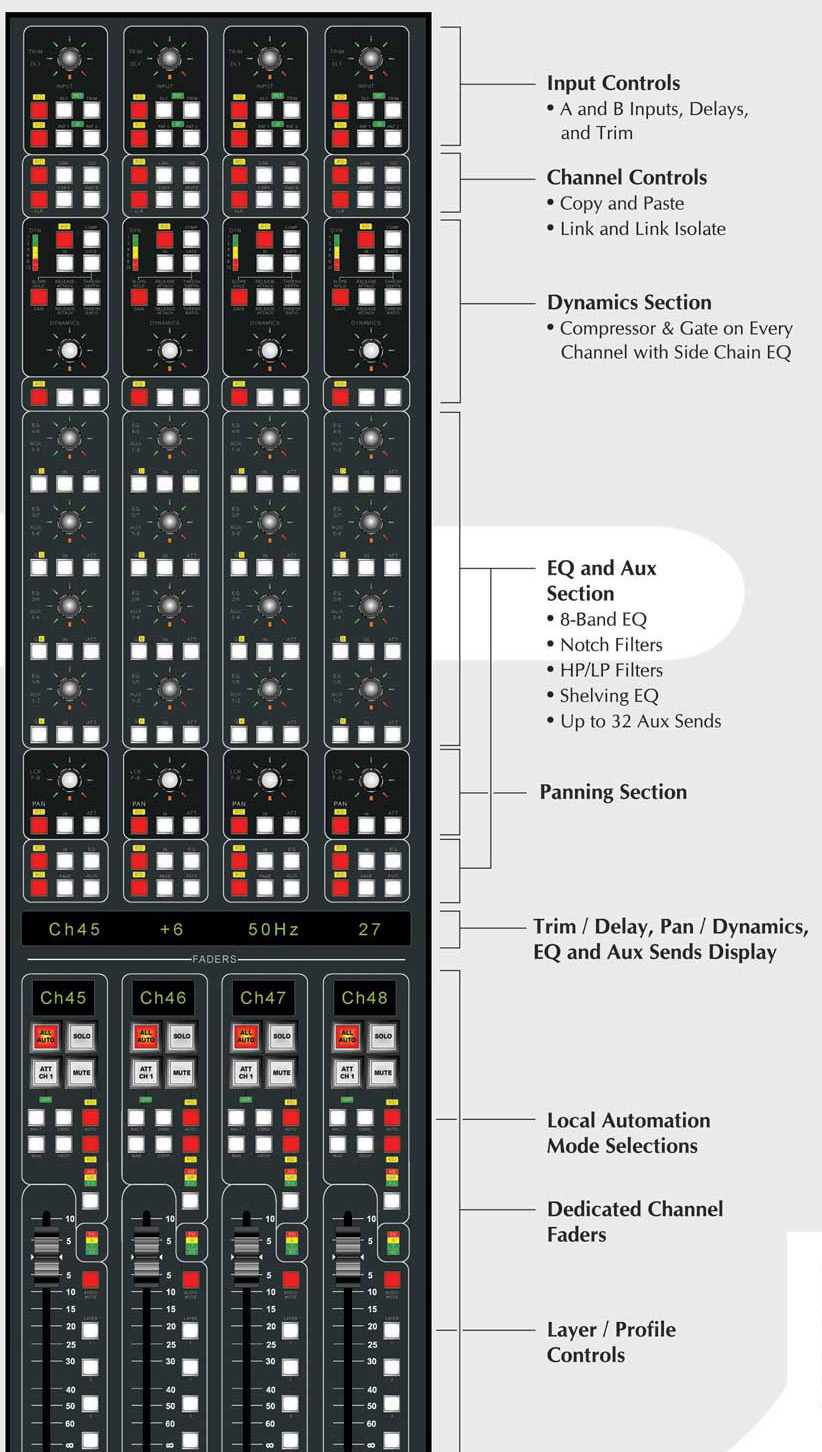
| Channels | 384 processing channels (MPC4-D), each with 2 inputs (A/B), 8-band EQ and full dynamics · up to 384 processing channels in the largest configurations (e.g. Universal Dub Room 4) · Scalable channel count (unlimited on the MPC5 generation) |
| DSP engine — details | Harrison Xrange 64-bit DSP engine (MPC4-D generation); Xrange 96 kHz on the MPC5 generation |
| Dynamics | 64 dedicated bus limiters (32 look-ahead limiters per card, linkable for stereo/5.1) |
| Routing and patching | 2240 × 2240 internal router · Integrated Xrouter: large-format Dante and/or MADI routing (MPC5) |
| Buses | up to 64 main buses and 16 auxiliaries (configurable), look-ahead limiter on every main bus |
| Channel processing | per channel: 2 inputs, 8-band EQ, gate and compressor · End-to-end 40-bit floating-point “Wide Pipe” processing |
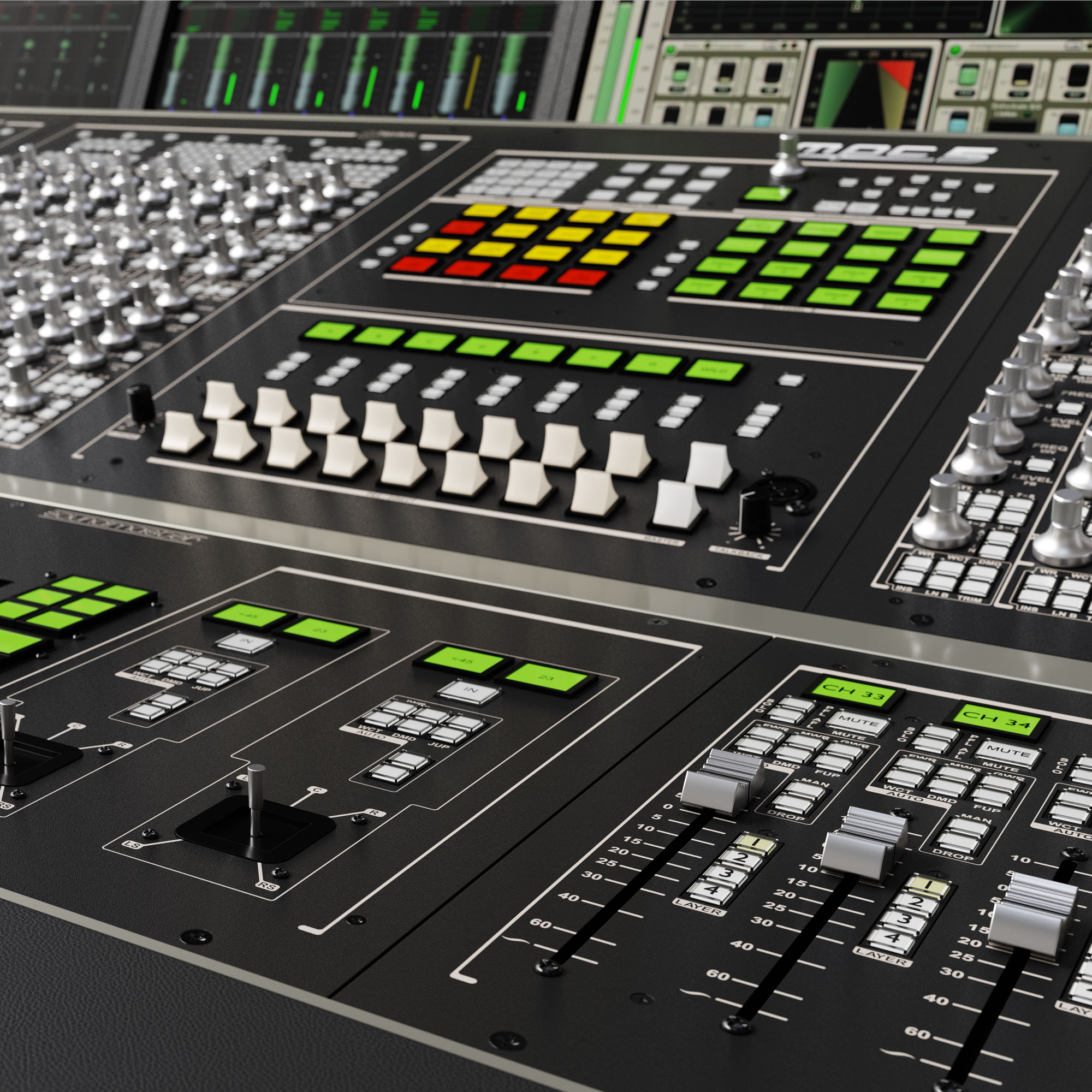
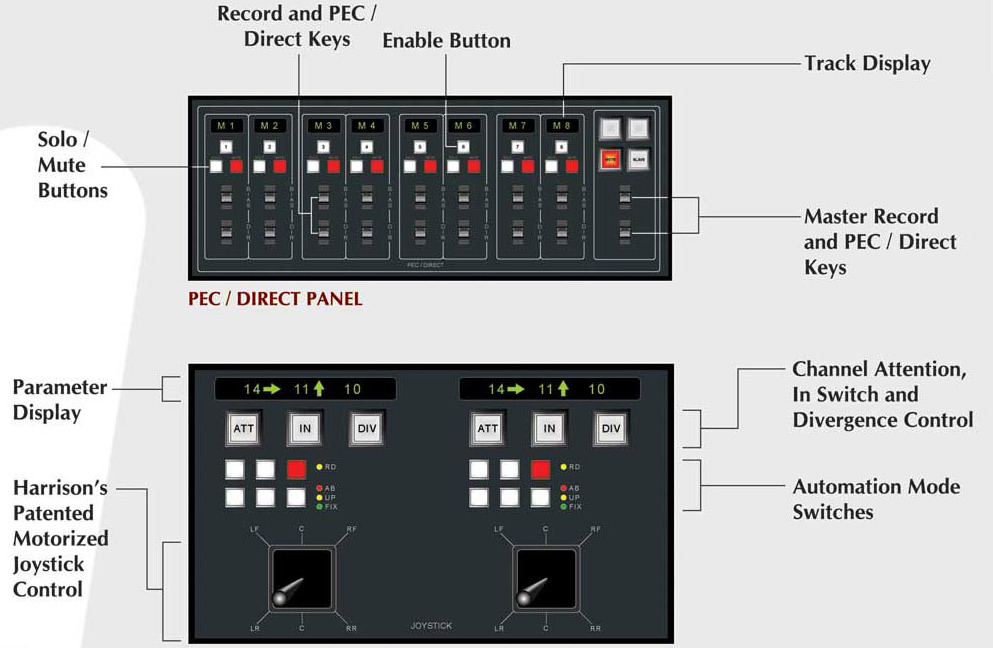
| Panning | motorised, touch-sensitive joysticks for surround panning (patented technology) |
| Surround and immersive | Dolby Atmos monitoring and object routing with motorised panning joysticks (MPC5) |
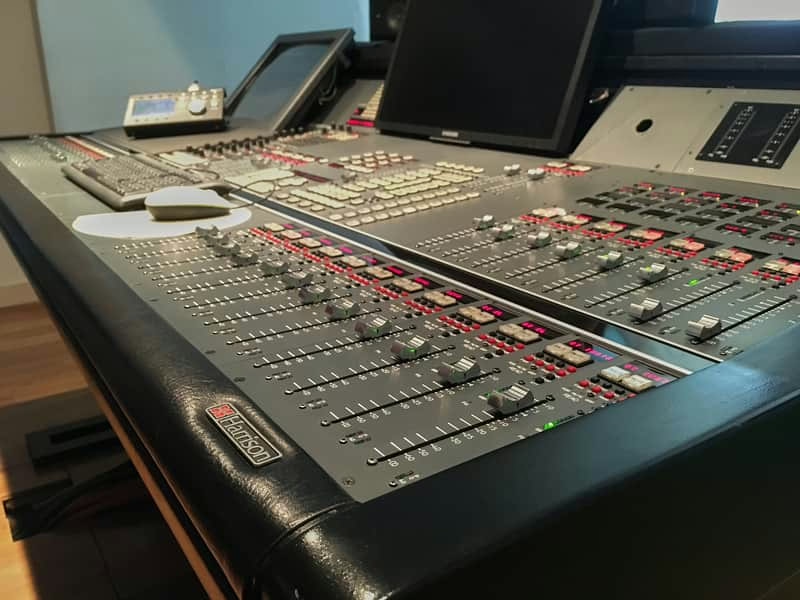
| Frame | extruded aluminium frame; up to 8 Pec/Direct monitoring panels |
| Bit depth | sample rate up to 96 kHz (Xrange platform, MPC5 generation) — MPC4-D generation to be verified |
Surface
| Motorized faders | No |
|---|---|
| Touchscreen | No |
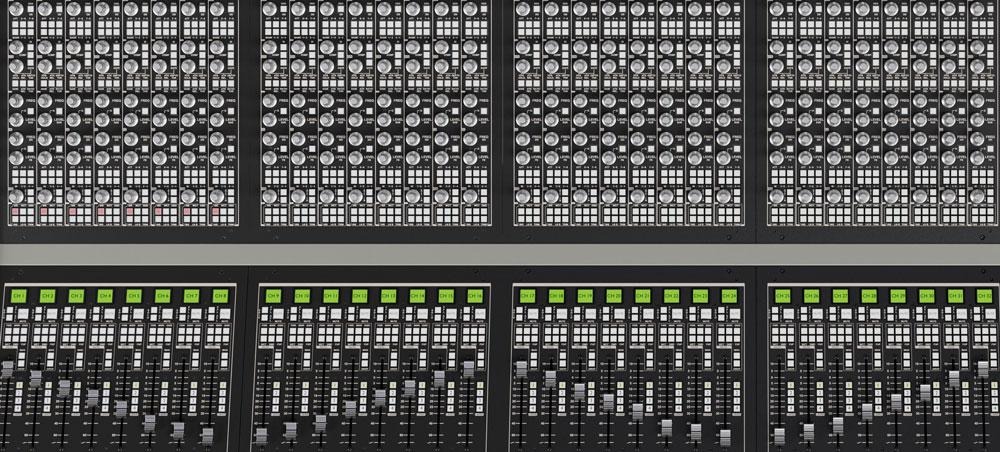
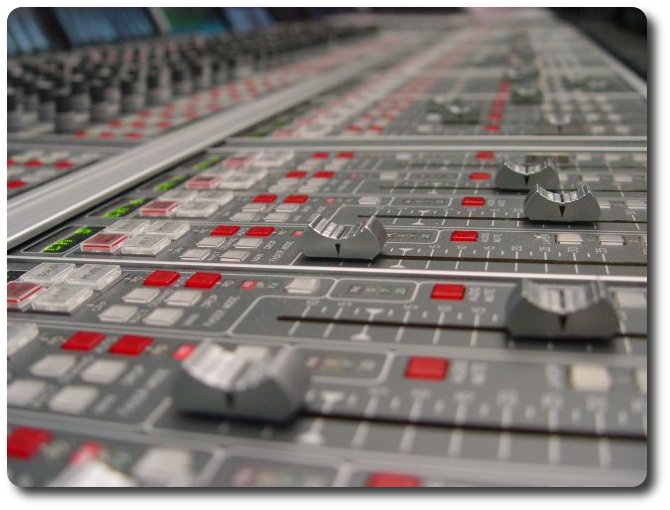
| Faders | Expandable chassis, multi-operator configuration possible. Universal Dub Room 4 installation: over 30 feet long, described as having 'more faders than any other console in the world'. |
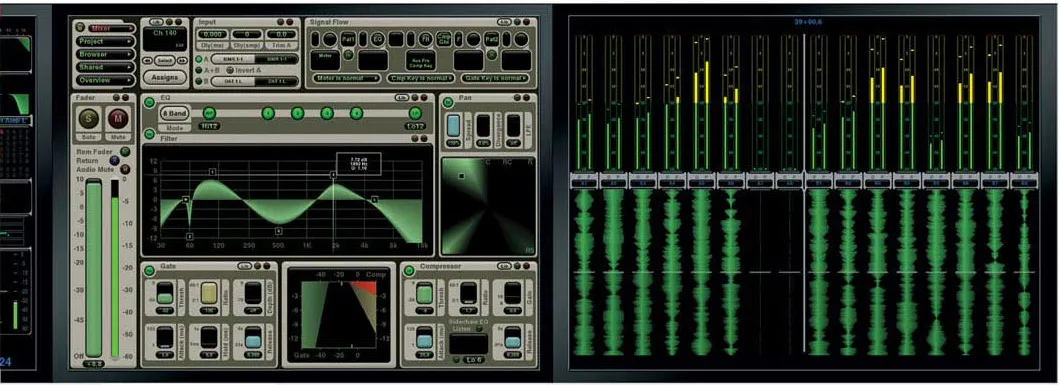
| Screens | TFT displays above every channel; wide-viewing-angle graphics and PreView meters (10 s look-ahead waveform + 10 s history) · TFT waveform displays (PreView/ESP) above every channel |
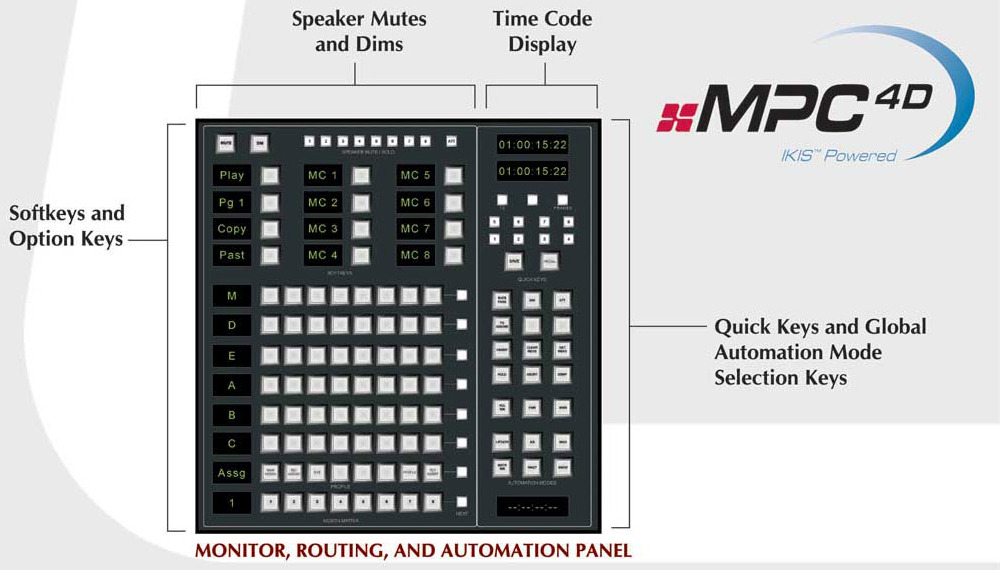
| Automation | Multi-operator IKIS automation platform; IKISdirect to drive Pro Tools and Pyramix from the faders |
| Multi-operator | multi-operator surface (up to 3 simultaneous mixers: dialogue, effects, music) |
| Monitoring and talkback | Multiple, scalable PEC/Direct panels (56 typical), scalable monitor inputs (160 typical), Harrison film monitoring system |
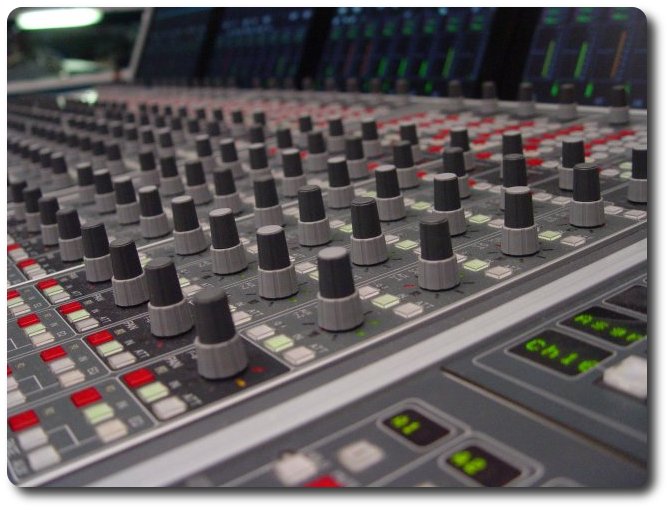
| Encoders | 7 dual-concentric knobs per channel strip (MPC4-D). |
Recording
| Onboard recording | No |
|---|
Networking
| Networking & protocols | AES/EBU |
|---|---|
| Redundant PSU | No |
| Redundant networking | No |
Physical
| Build | Large-format extruded-aluminium frame; installations over 30 ft long (Universal Hitchcock Theater) |
|---|
Other
| Applications | large-format film re-recording (mixing) console for cinema post-production · Large-format digital re-recording console for film / post-production |
|---|---|
| Year / dates | First MPC installed at Sony Pictures (Hollywood) on 14 February 1992 |
Strip & details
Rotate your phone to landscape for a better view of the strip.
Rotate your phone to landscape for a better view of the strip.
Rotate your phone to landscape for a better view of the strip.
Rotate your phone to landscape for a better view of the strip.

Rotate your phone to landscape for a better view of the strip.
Rotate your phone to landscape for a better view of the strip.
Rotate your phone to landscape for a better view of the strip.
Rotate your phone to landscape for a better view of the strip.
Software
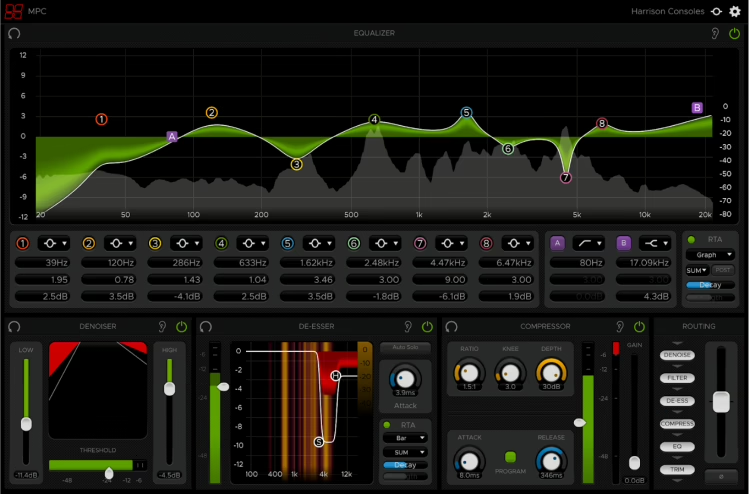
 Harrison MPC Channel StripPlugin port of the MPC5 DSP (EQ, dynamics, Xtools) with dedicated layouts for Avid S6, S3, Dock, D-Command and D-Control surfaces, aimed at film post-production.Download
- Xrange DSP64-bit Linux DSP platform underpinning the MPC4-D and MPC5, including the Xrange plug-ins (dialog cleanup, de-noising, de-essing, phone sim, LFE enhancement).
- XtoolsFilm-specific processing plug-in suite running on the Xrange platform of MPC consoles (MPC5 generation).
- IKISdirectDirect control of Pro Tools and Pyramix rigs from the MPC4-D faders through the IKIS PCI interface.
Other screenshots
Accessories
I/O card
- Xrouter 2240
MADI I/O router used with the MPC4/MPC4-D, with sample-rate conversion on every AES/EBU input and output.
Other
- Xrouter
Large-format Dante and/or MADI audio routing system integrated into the MPC5, designed for multi-studio facilities.
- DTC (Digital Tools Card)
Processing card carrying film-specific plug-ins, integrated into the console's automation (40-bit floating-point engine).
- Limiter card
Card adding 32 look-ahead limiters to the processing path, linkable for multichannel (5.1) work.
- Motorized surround joysticks
Motorized touch-sensitive joysticks for surround panning and Object++ 3D (Dolby Atmos on MPC5).
Surface / module
- Trion control surface
Customisable control surface introduced in 2005, used on the MPC5 with touch-sensitive knobs and motorized joysticks.
Documents
Editorial & artists
Our take
History & design
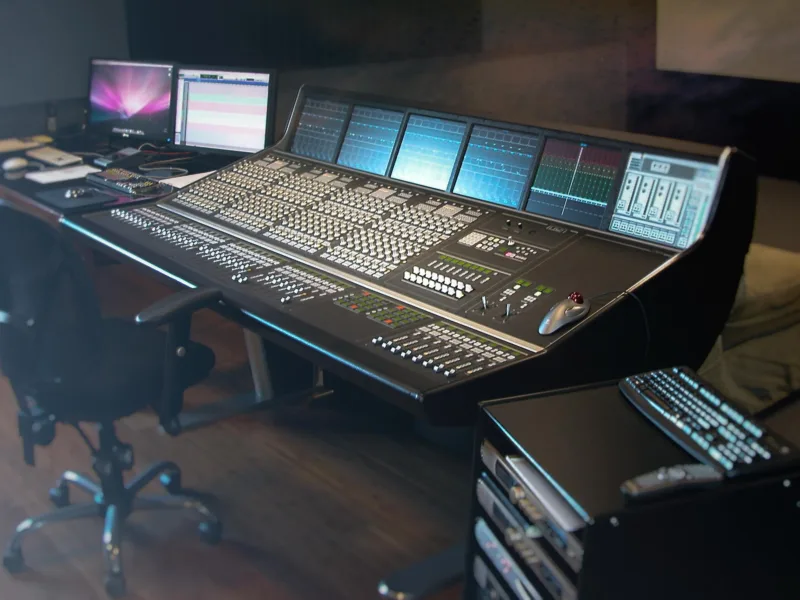
The MPC (Motion Picture Console) is Harrison's family of film mixing consoles. The first MPC was installed at Sony Pictures in Hollywood in 1992 as the first fully automated large-format re-recording console. The range moved to digital with Harrison's digital.engine in 1998 and peaked with the MPC4-D, a fully digital version built on the Xrange DSP system (Linux, Ethernet, 64-bit audio) and end-to-end 40-bit floating-point “Wide Pipe” processing.
Every channel offers two inputs (A/B), 8-band EQ, full dynamics and a dedicated display. The MPC4-D claims up to 384 processing channels, a 2240 × 2240 internal router, 176 busses and 64 dedicated bus limiters. Its most visible signature is the PreView displays above each channel strip, showing roughly ten seconds of upcoming waveform and as much history. Multi-operator IKIS automation and the IKISdirect module drive Pro Tools or Pyramix rigs straight from the surface. The line continues today with the MPC5.
- Jeff Taylor — co-design (chief engineer, Sony Pictures)
- Dave Harrison — Founder of Harrison (1975), originator of the in-line philosophy and of the digital control inherited from the SeriesTen
Notable users
- Universal Studios
Dub Room 4 / Alfred Hitchcock Theater: 384-path MPC4-D configuration on a console more than ten metres long.
- Paul Massey
Multi-award-winning re-recording mixer (Bohemian Rhapsody), an almost exclusive user of MPC hardware for about 15 years at the time of the source.
- Soundfirm
Film post-production studio (Roger Savage and Ian McLaughlin testimonials in the MPC4-D brochure)
- CinePostproduction
MPC4-D installation for film post-production.
- Universal Studios
Alfred Hitchcock Theater: re-recording theatre equipped with an MPC4-D
- Deluxe Sound & Picture (Toronto)
MPC4-D equipment (Ed Ballard testimonial, brochure)
- Sony Pictures Post Production Services
First MPC installation (1992); fleet of mix stages equipped with Harrison MPC
- Sony Pictures
First MPC installation (1992), design collaboration with chief engineer Jeff Taylor
Links
- Manufacturer Harrison Audio — history harrisonaudio.com
- Press article Harrison Audio — Wikipedia en.wikipedia.org
- Manufacturer Harrison MPC5 product page harrisonaudio.com
- Manufacturer Harrison Audio — consoles harrisonaudio.com
- Press article Vintage King — The History of Harrison Consoles vintageking.com
- Press article Mix Online - Sony Pictures Posts with Harrison mixonline.com
- Press article History of Recording — Harrison MPC4-D historyofrecording.com
- Press article Resurface — Harrison MPC resurface.audio
- Press article SonicScoop - Harrison Debuts MPC5 Film Console sonicscoop.com
- Merchant Reverb — Harrison MPC4D (used) reverb.com
- Press article SSL - Paul Massey relies on MPC console solidstatelogic.com
Related consoles
Some merchant links are affiliate links. Purchases may support Digital Mixing at no extra cost.
Documents are archived locally for preservation. Source credited. Takedown requests: [email protected]