


Description
Technical
Specifications
Processing
| Mix buses | 4 |
|---|---|
| Bit depth | 16 bits |
| Channels | 8-input / 4-bus mixer, up to 22 inputs at mixdown (4 mic/line + 4 line + 8 secondary + stereo buss) |
| EQ | Two-band sweepable EQ per channel (Hi-Mid, Low-Mid with Shift frequency control) |
| Aux sends | 2 aux sends, 2 stereo aux returns |
Surface
| Touchscreen | No |
|---|
Recording
| Onboard recording | No |
|---|---|
| Recording | 8 hard-disk tracks, 16-bit / 44.1 kHz (uncompressed) · Up to 4 tracks recorded simultaneously · Internal 540 MB Quantum IDE drive ≈ 12 min of 8-track |
Networking
| Redundant PSU | No |
|---|---|
| Redundant networking | No |
| Sync | MIDI Time Code (out), MIDI Machine Control, tempo map |
Other
| Applications | Non-destructive editing: copy / paste / erase / undo / redo, jog/shuttle wheel |
|---|---|
| Price | US$1,995 at launch (1996) |
Strip & details
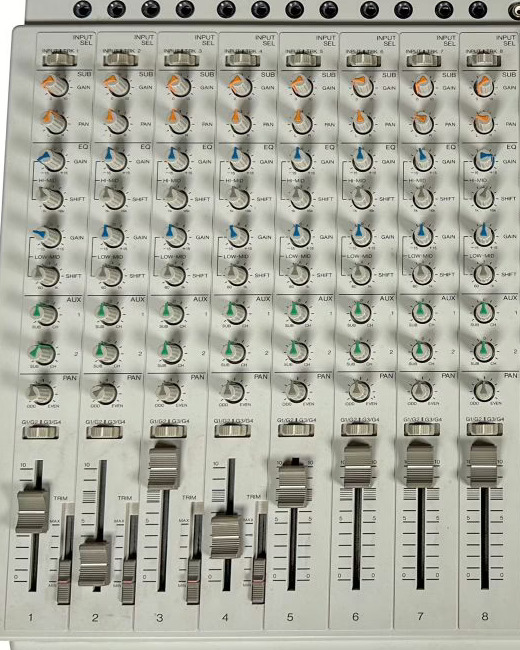
Rotate your phone to landscape for a better view of the strip.
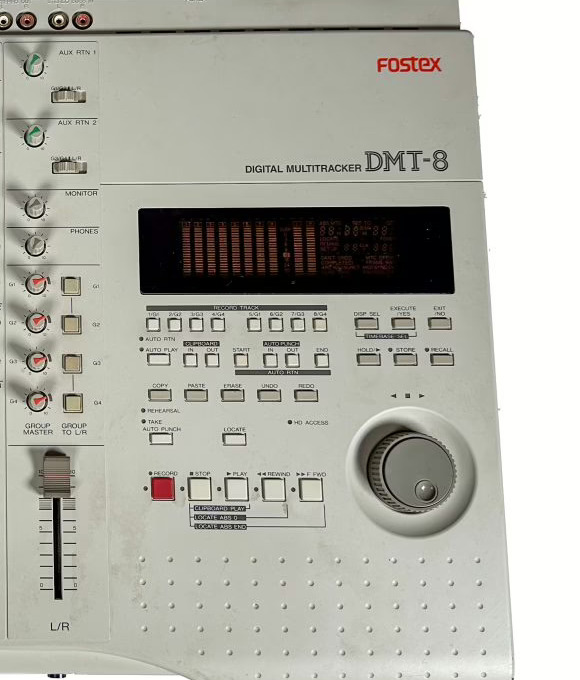
Rotate your phone to landscape for a better view of the strip.
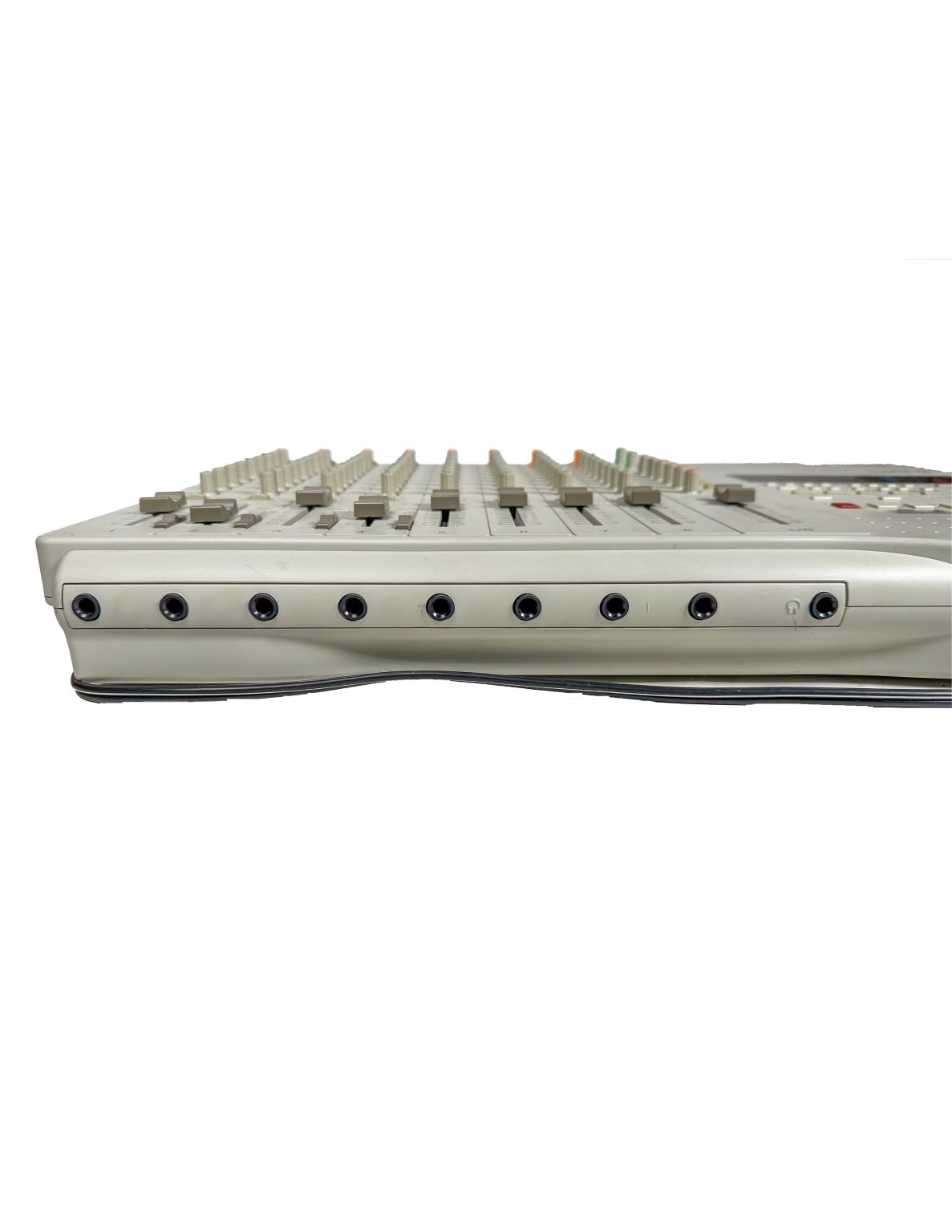
Rotate your phone to landscape for a better view of the strip.
Editorial & artists
Our take
History & design
The DMT-8 (Digital MultiTracker), previewed in late 1995 and shipped in 1996, is one of the first hard-disk digital multitrackers designed as a “Portastudio”: mixer and recorder integrated in a single chassis, at a launch price of US$1,995 — the cheapest hard-disk recorder on the market at the time.
It records 8 tracks at 16-bit / 44.1 kHz (uncompressed CD quality) to an internal 540 MB Quantum IDE drive, giving about 12 minutes of 8-track recording, up to 4 tracks simultaneously. Editing is non-destructive: copy / paste / erase / undo / redo, with a jog/shuttle wheel to place edit points precisely.
The mixer is an 8-input / 4-bus section offering up to 22 inputs at mixdown: 4 mic/line channels (unbalanced), 4 line channels and 8 secondary channels (monitor returns / extra inputs), plus a stereo sub-mix buss input. Each channel has a two-band sweepable EQ (Hi-Mid and Low-Mid with a “Shift” frequency control), two aux sends and two stereo aux returns. Sync is via MIDI Time Code, MIDI Machine Control and a tempo map. A separate monitor section lets you keep two mixes running in parallel.
Links
Related consoles
Some merchant links are affiliate links. Purchases may support Digital Mixing at no extra cost.
Documents are archived locally for preservation. Source credited. Takedown requests: [email protected]