


Description
Technical
Specifications
Processing
| Mix buses | 192 |
|---|---|
| Max sample rate | 96 kHz |
| Bit depth | 24 bits |
| Channels | Up to 1,000 paths at 96 kHz (USP card, 2007); 250 originally (SSP, 1996), 500 with the ESP card. |
| Sample rate | 96 kHz / 24-bit (USP versions). |
| Surround and immersive | Stereo, 5.1, SDDS; 6-stem mixing (12 stems from the USP card). |
Surface
| Touchscreen | No |
|---|---|
| Automation | Encore system (then Encore Plus / Encore 2), total automation of all parameters. |
Recording
| Onboard recording | No |
|---|
Networking
| Networking & protocols | MADI / AES/EBU |
|---|---|
| Redundant PSU | No |
| Redundant networking | No |
| Stage boxes | MIOS and AES960 racks connected via MADI (2002). |
Other
| Year / dates | Introduction year 1996 (Resurface source). The backlog listed 1994 — to be verified. |
|---|
Strip & details
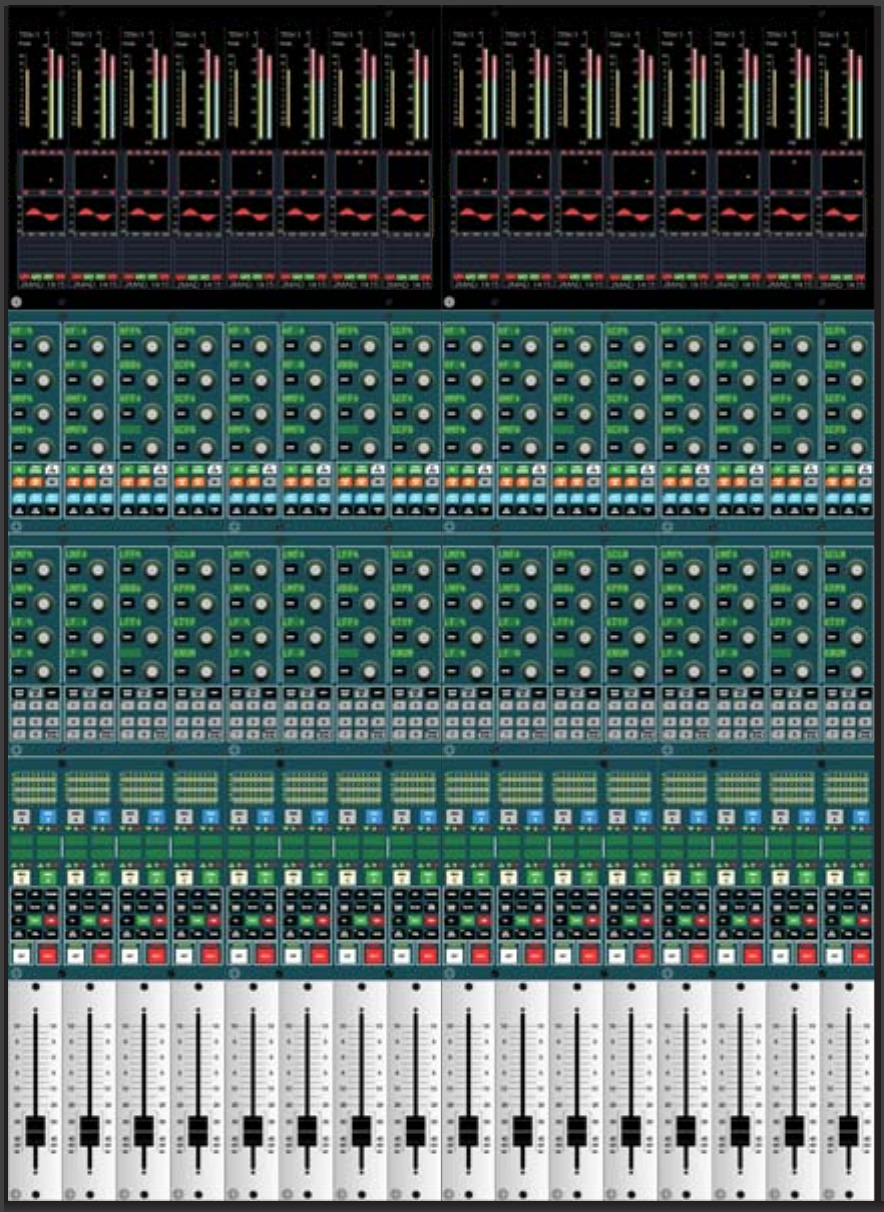
Rotate your phone to landscape for a better view of the strip.

Rotate your phone to landscape for a better view of the strip.
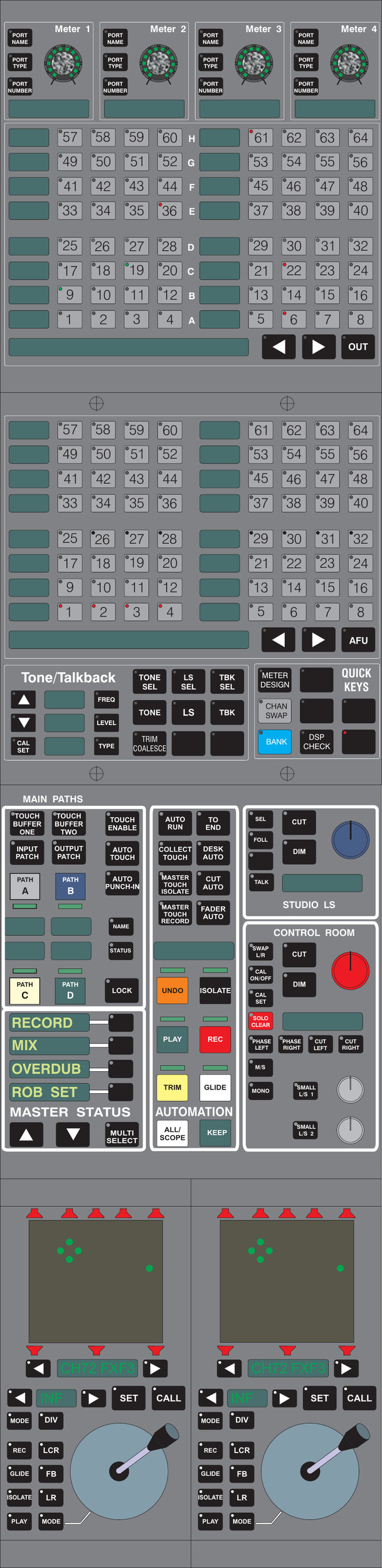
Rotate your phone to landscape for a better view of the strip.

Rotate your phone to landscape for a better view of the strip.
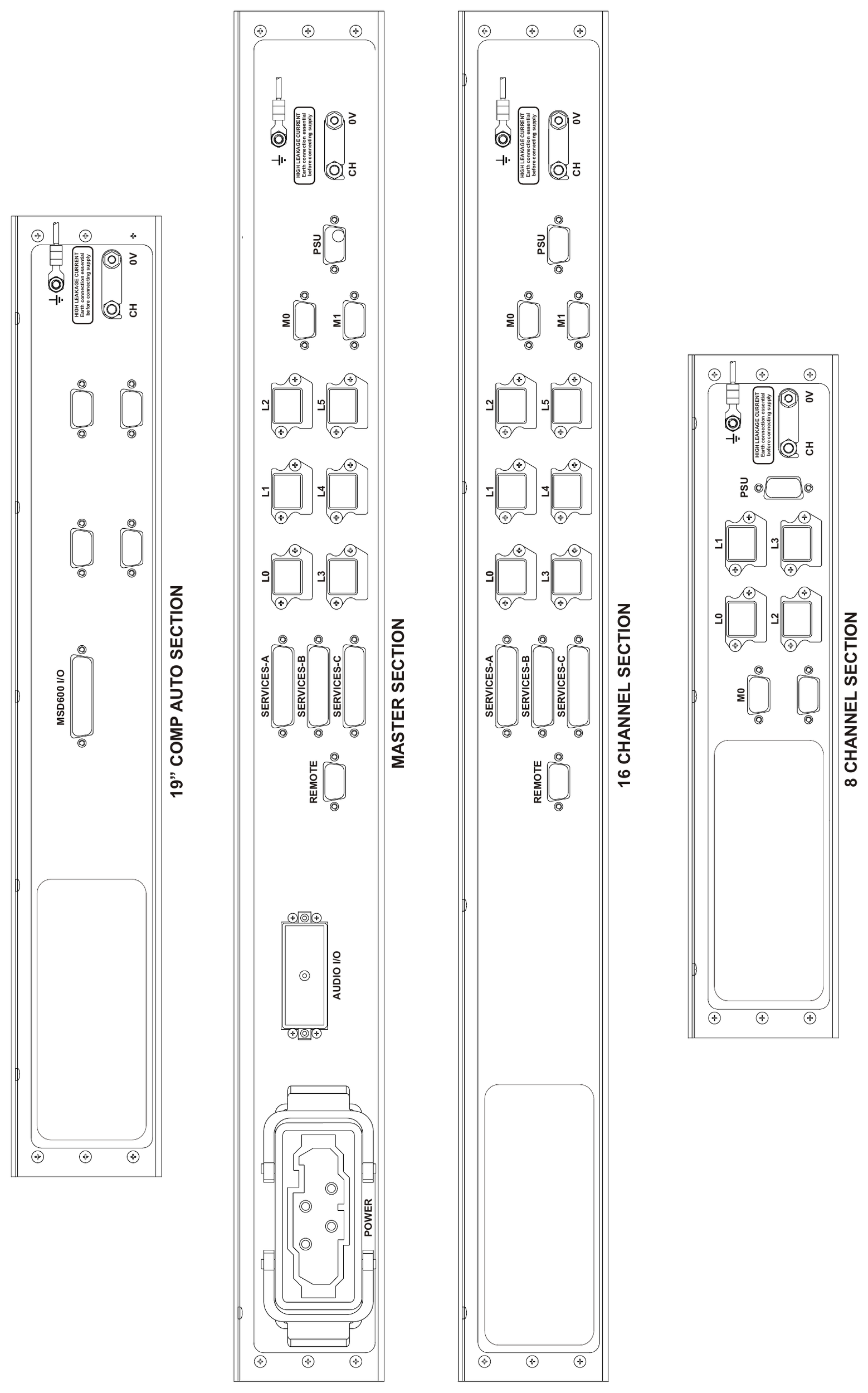
Rotate your phone to landscape for a better view of the strip.
Software
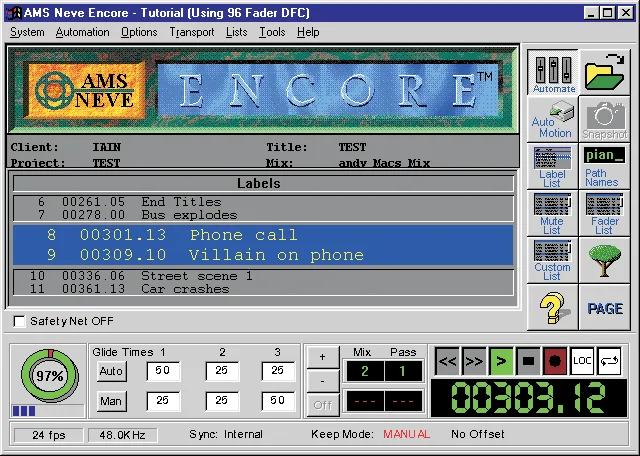
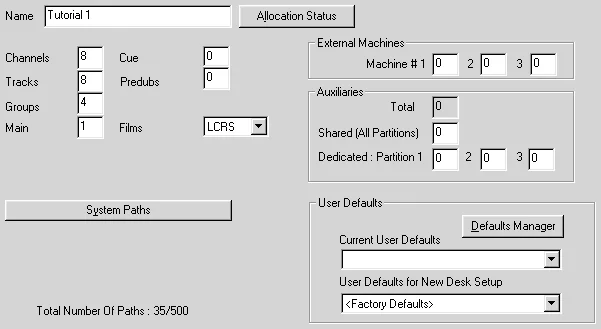
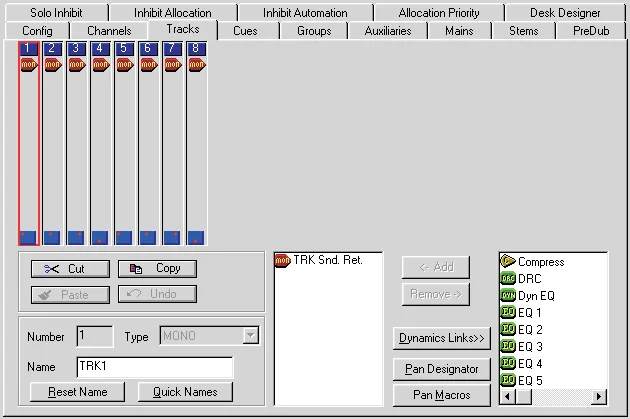
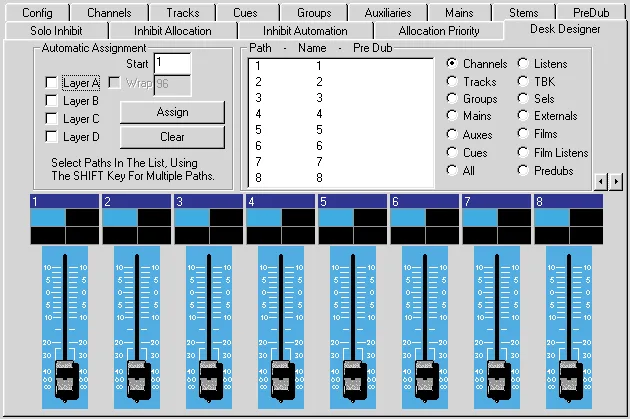
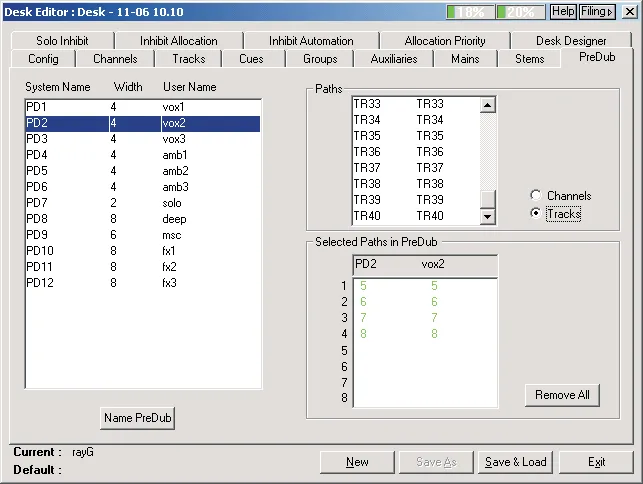
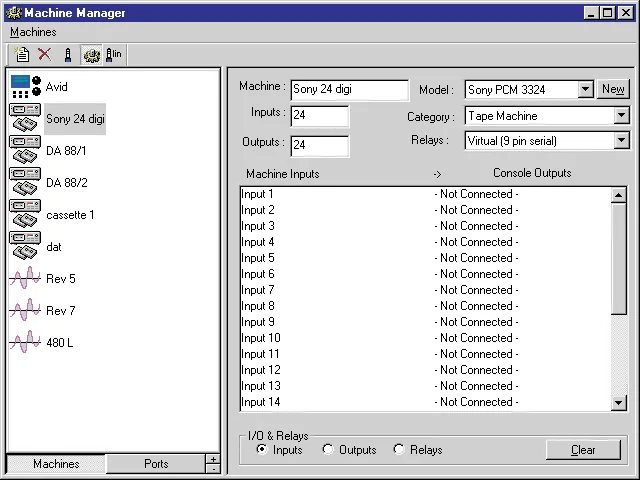
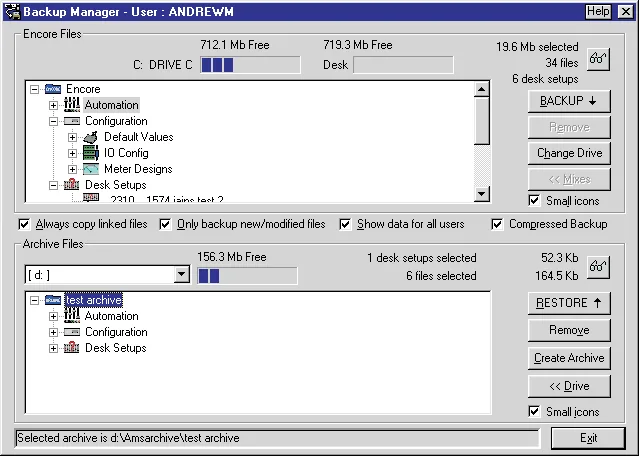
 Encore (Offline)Standalone PC version of the Encore automation system: offline preparation of console configurations and editing of automation data, then instantly installed on the desk.
Other screenshots
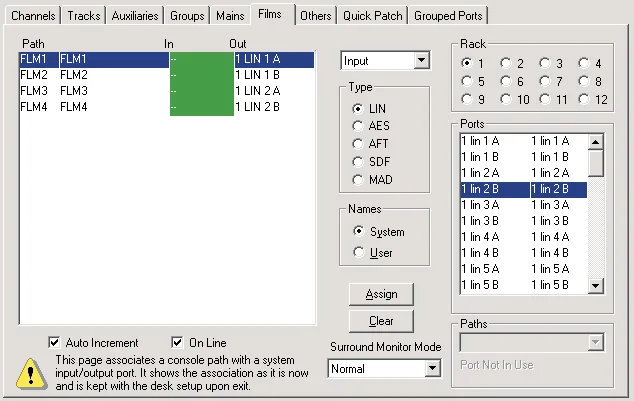
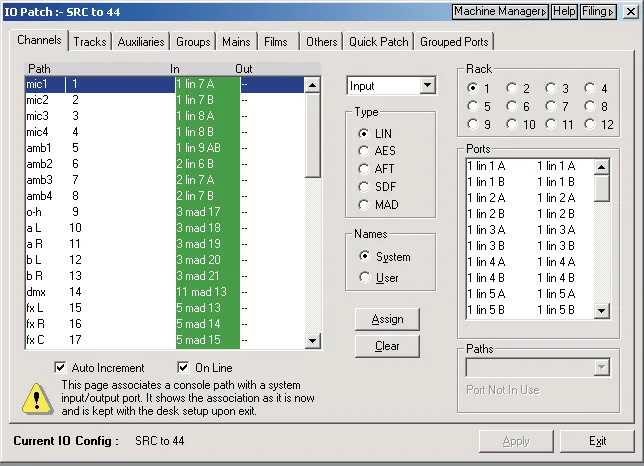
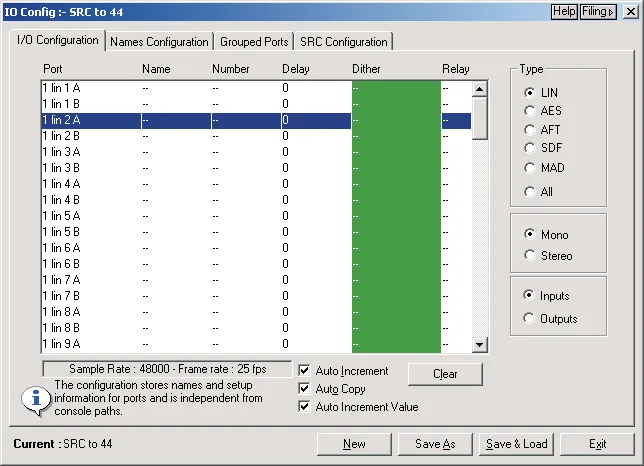
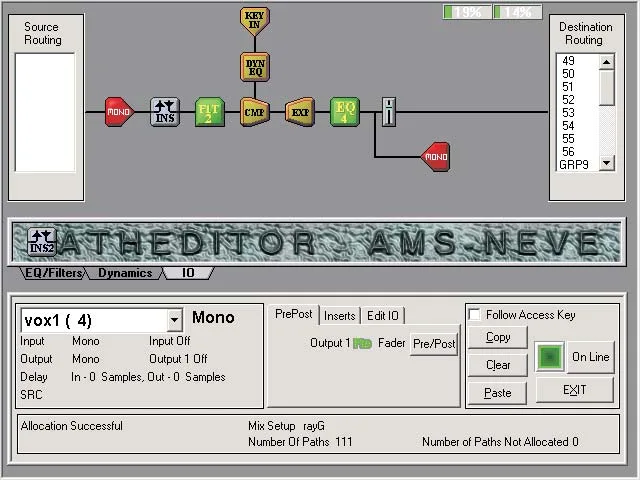
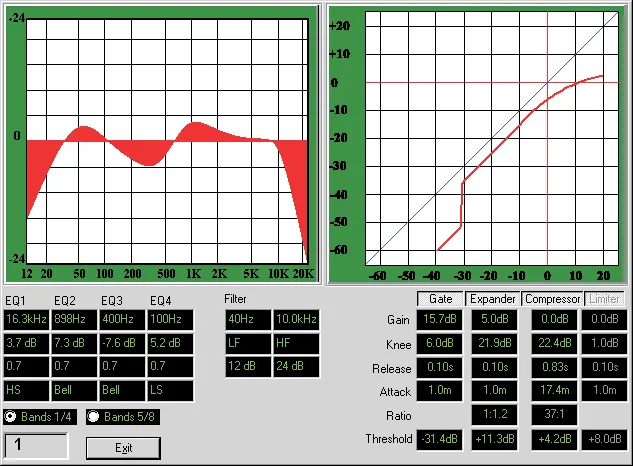
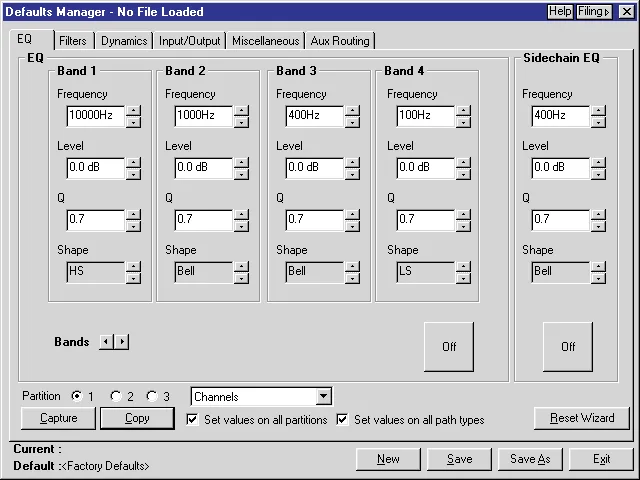
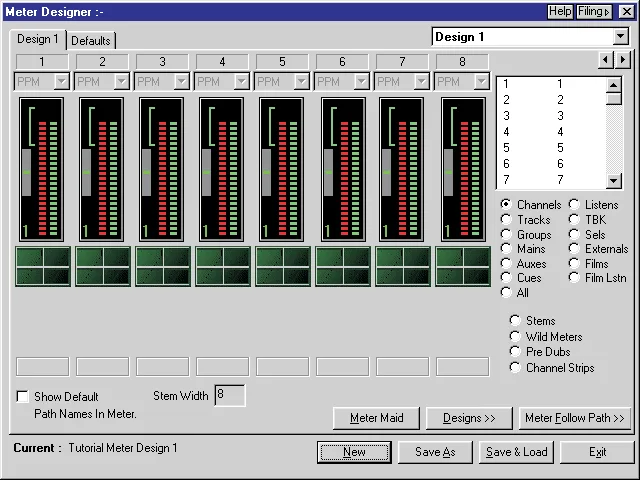
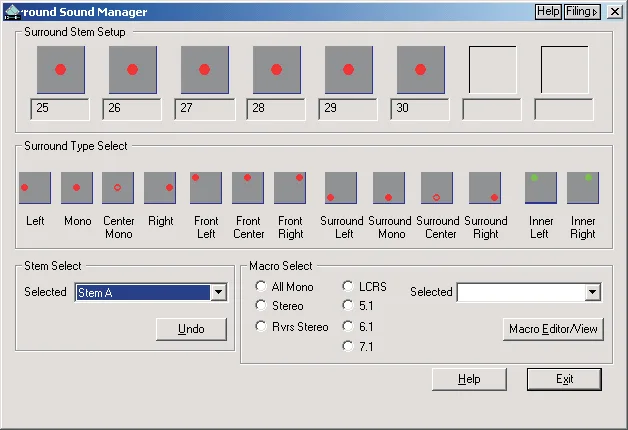
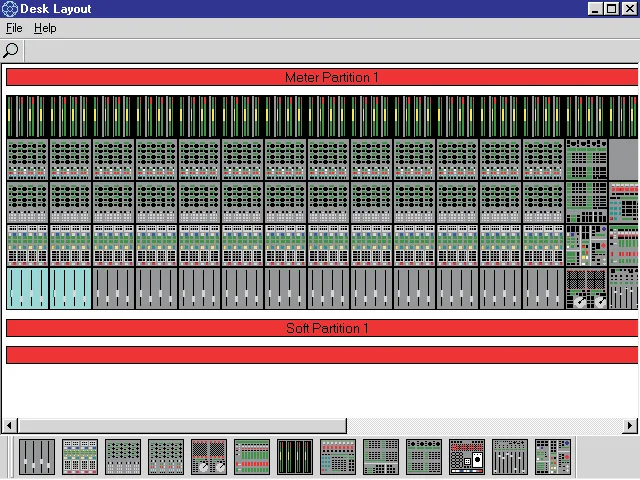
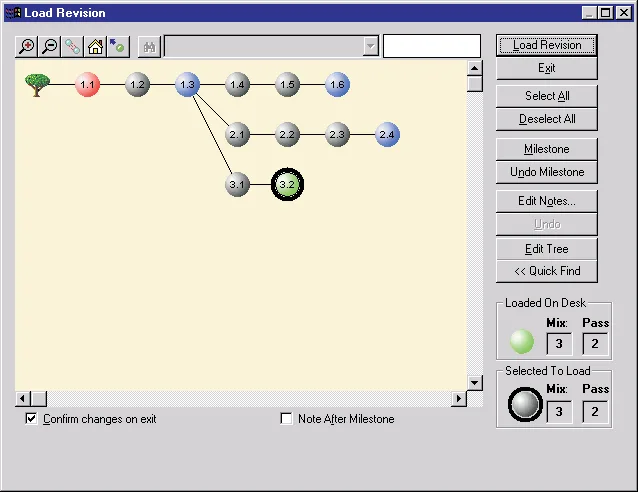
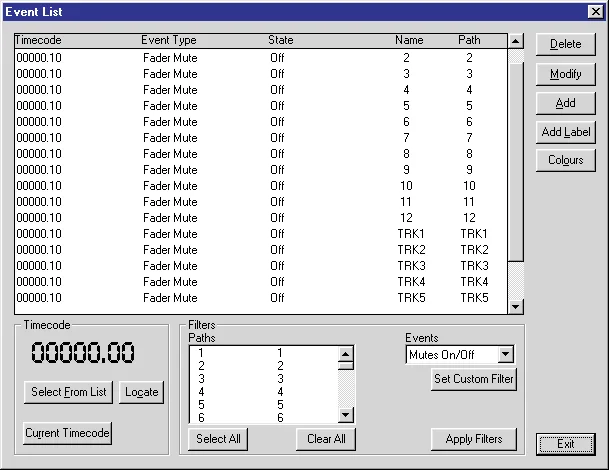
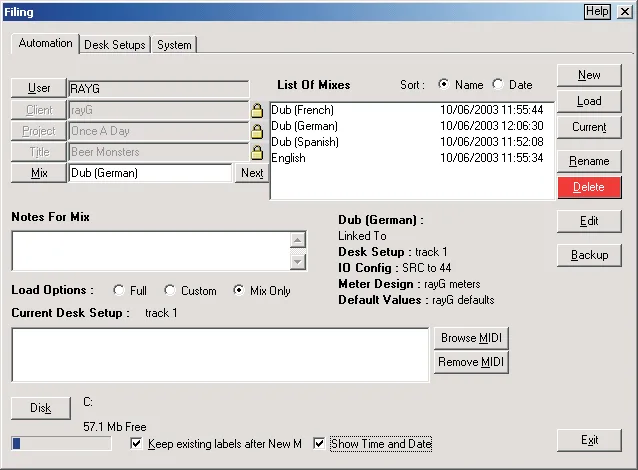
Accessories
I/O card
- MIOS rack (Modular Input/Output System)
Modular I/O rack (up to 6 modules: mic/line, 16-channel A/D and D/A converters), MADI-connected (2002).
- AES960 rack
Bidirectional AES digital I/O rack, MADI communication and audio transport to the DFC.
Editorial & artists
Our take
History & design
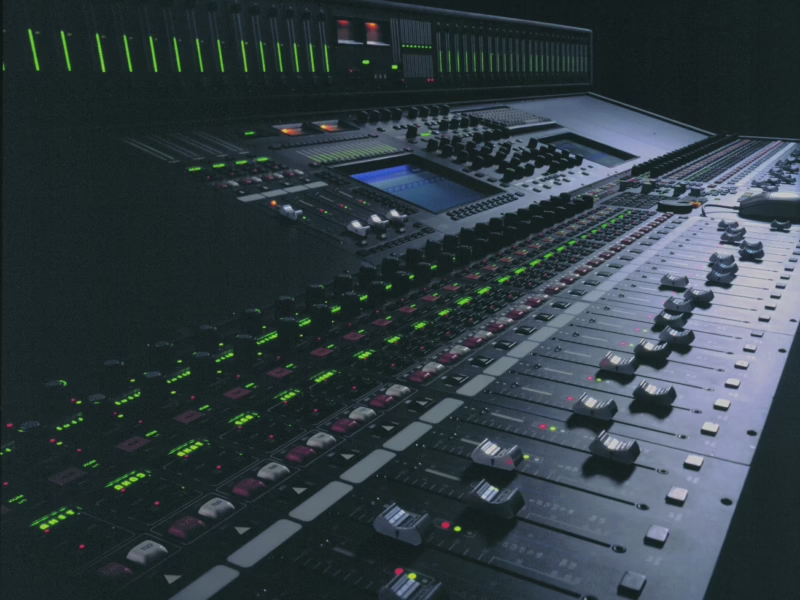
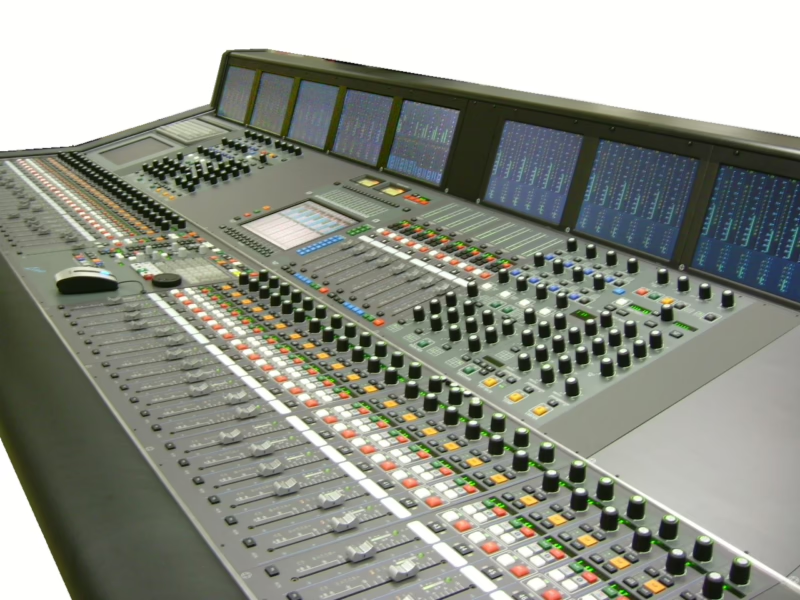
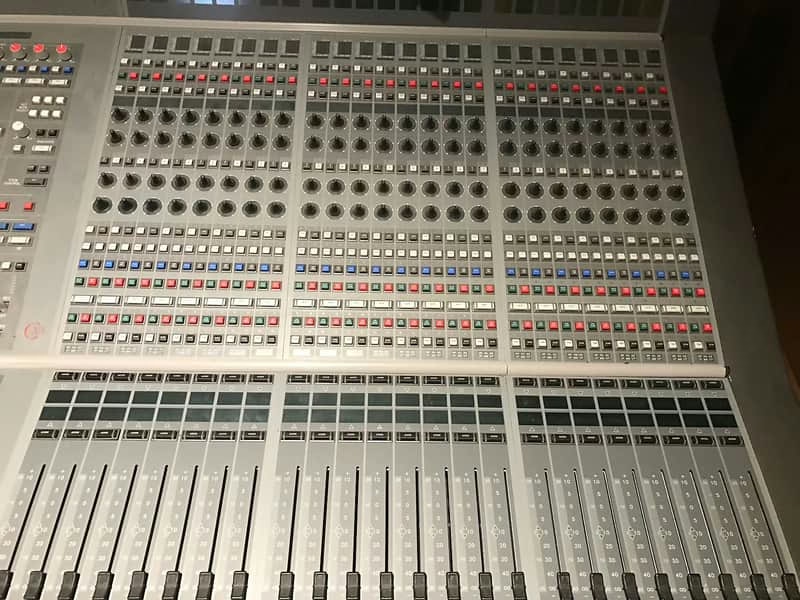
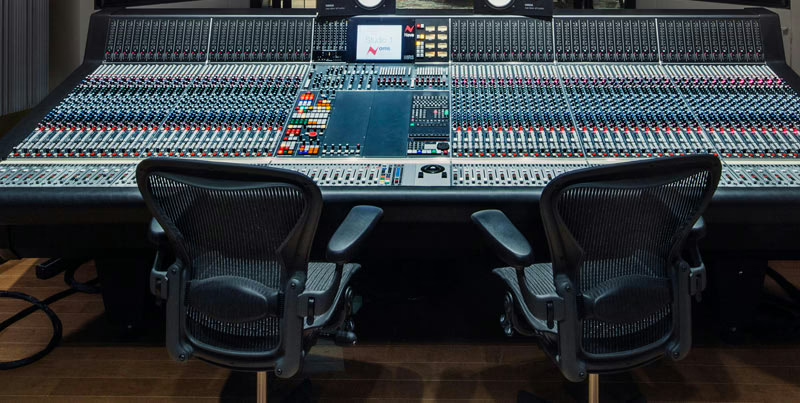
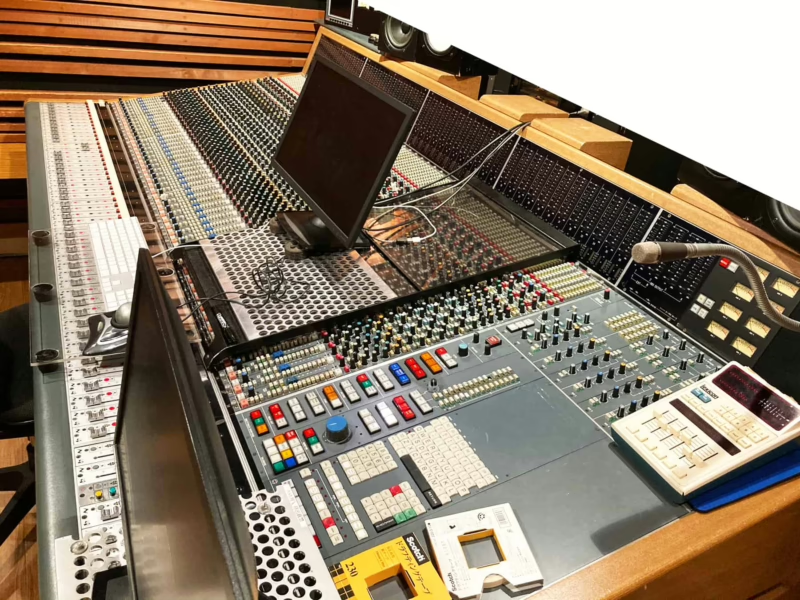
The AMS Neve DFC (Digital Film Console), introduced in 1996, is the first fully digital mixing console designed specifically for large-format film and television mixing. Built around SSP digital processing cards, the initial version handles routing of 250 individual paths, supports stereo, 5.1 and SDDS delivery formats and 6-stem surround, all driven by the Encore automation system.
The platform evolved continuously: the ESP card doubled capacity to 500 paths and introduced Offline Encore software; the MADI-connected MIOS (Modular Input/Output System) and AES960 racks arrived in 2002; the DFC Gemini (2003) added TFT metering, the XSP card and Encore Plus; and the USP card (2007) enabled over 1,000 paths at 96 kHz and 12 stems. The first DFC consoles were installed at Warner Bros in Los Angeles, and The Matrix is among the earliest films with a soundtrack produced on a DFC.
Notable users
- Skywalker Sound
Gary Rizzo mixed there on a DFC.
- Gary Rizzo
Re-recording mixer (Skywalker Sound) on DFC.
- Andy Nelson
Mixer (Fox) on DFC.
- Vincent Arnardi
Mixed Amélie (Le Fabuleux Destin d'Amélie Poulain) on a DFC.
- Robert Farr
Worked on Star Wars Episode III and V for Vendetta on a DFC.
- Warner Bros.
Early DFC installations; The Matrix soundtrack produced on a DFC.
Links
- Manufacturer AMS Neve — DFC3D (official page) ams-neve.com
- Press article Resurface — AMS Neve DFC, history and evolution resurface.audio
- Press article ProSoundWeb — DFC at the heart of the Parasite sound (Oscar) prosoundweb.com
- Press article Universal Audio — DFC Channel Strip emulation uaudio.com
- Merchant Pro Audio Design — DFC PS-1 (used) proaudiodesign.com
Related consoles
Some merchant links are affiliate links. Purchases may support Digital Mixing at no extra cost.
Documents are archived locally for preservation. Source credited. Takedown requests: [email protected]