


Description
Technical
Specifications
Inputs / Outputs
| Total inputs | 256 |
|---|---|
| Mic inputs | 32 |
| Inputs / outputs | 24-bit MADI and AES/EBU digital I/O · 2 MADI I/O cards in standard configuration |
| Mic preamps | AMS Neve Logic mic/line preamps on dedicated cards |
Processing
| Aux sends | 16 |
|---|---|
| DSP engine | 32-bit floating-point DSP (proprietary "26E6" format), dedicated air-conditioned DSP racks (~5 kW). Assignable FAC/AFU surface. |
| Max sample rate | 48 kHz |
| Bit depth | 20 bits |
| Processing resolution | 32 bits |
| Channel processing | Up to 256 signal paths (240 assignable) · Per path: expander/gate, compressor, limiter, filters, equaliser and a movable insert point |
| Channels | Up to 240 signal paths (256 depending on configuration) |
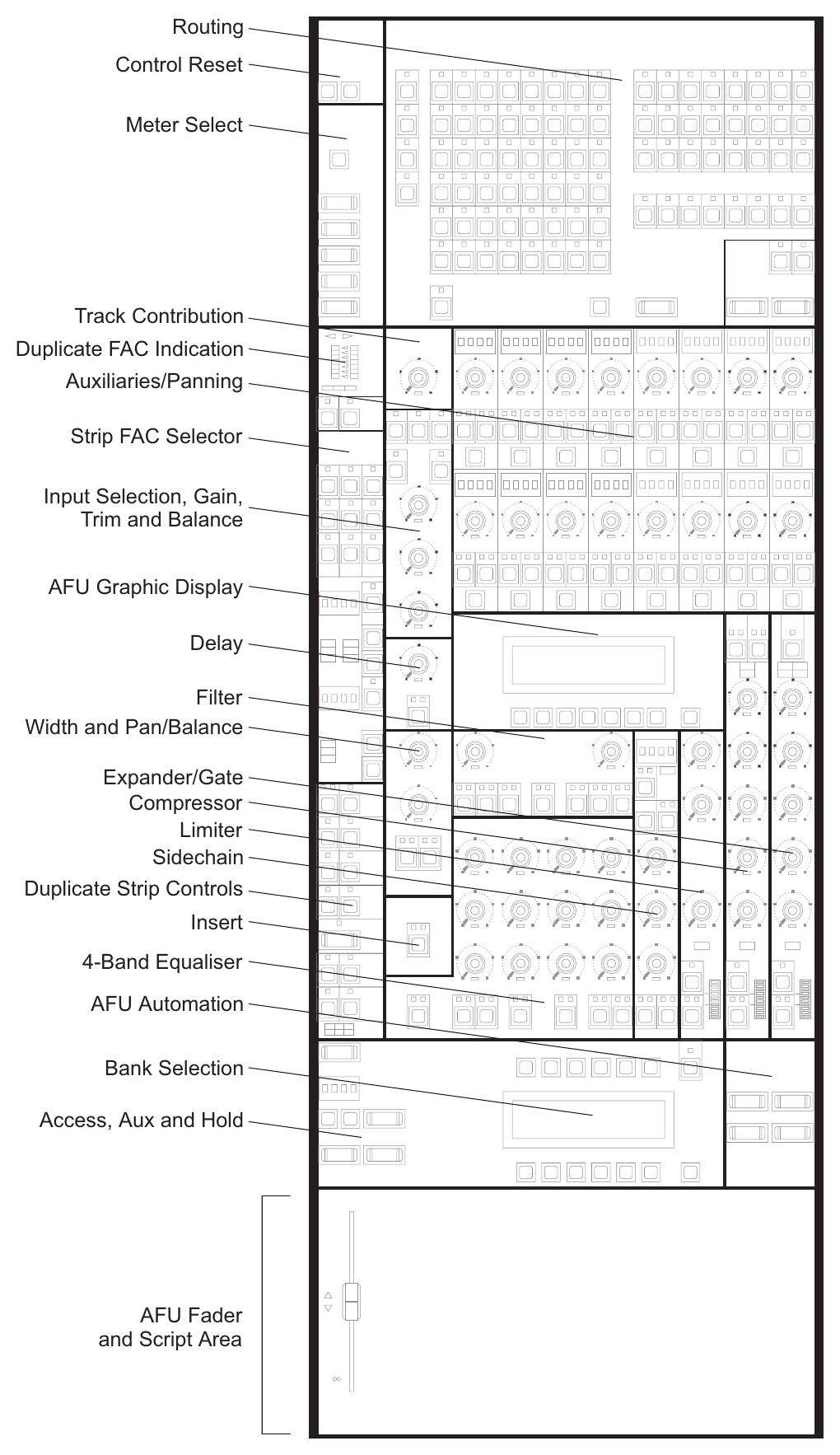
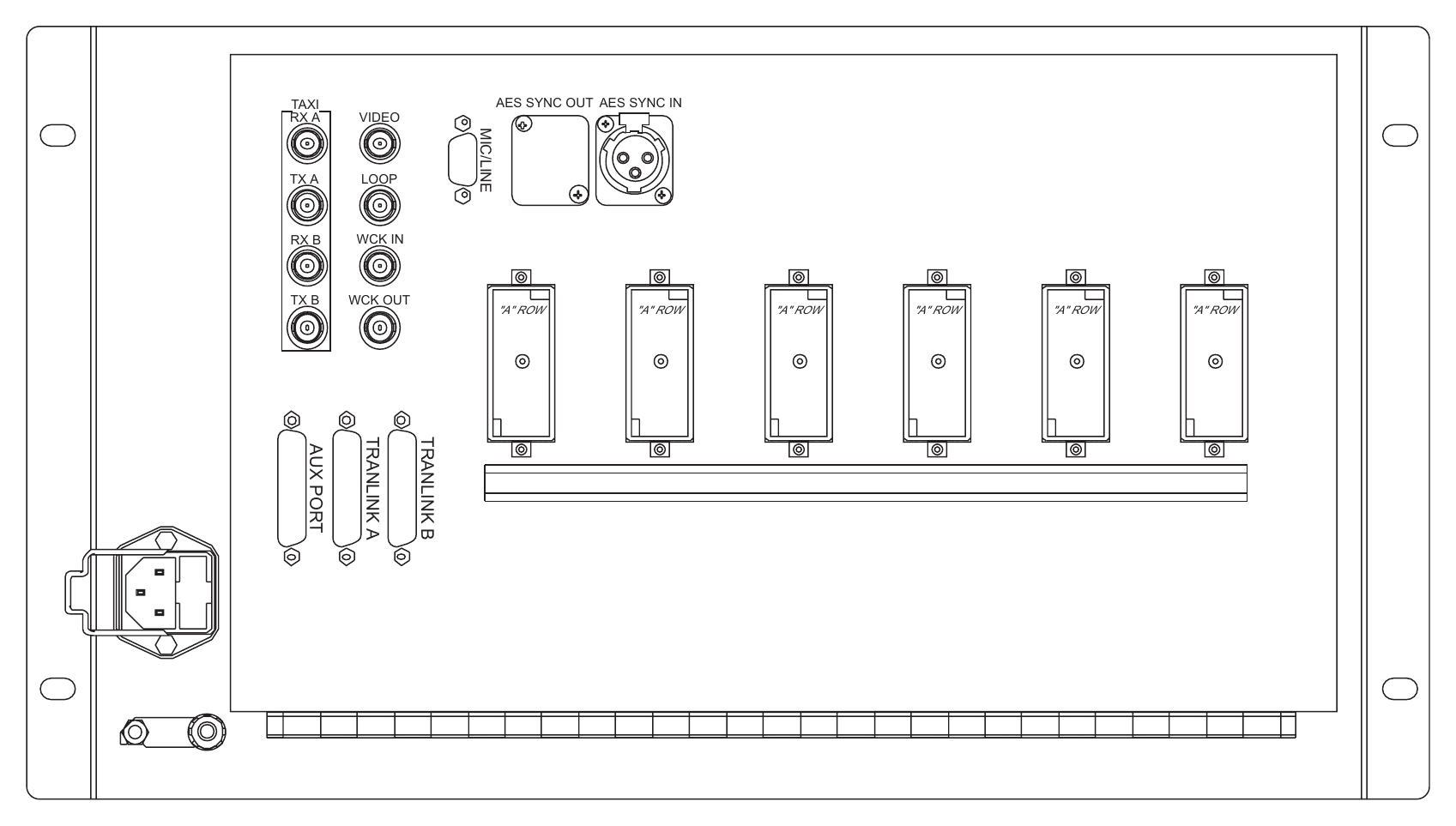
| Routing and patching | Assignable surface: physical strips (minimum 24, e.g. 48 in installs) drive up to ~240-256 signal paths via Function Assignable Controls (FAC) and the Assignable Facilities Unit (AFU). Exact count varies across sources (240 vs 256). · Assignable surface (AFU, Assignable Facilities Unit) |
| Buses | Cited “System 112” config: 32 mic/line inputs, 48 track sends / 64 returns, 16 sub-groups, 4 main outputs, 16 auxes + 8 cues, 32 movable insert points. |
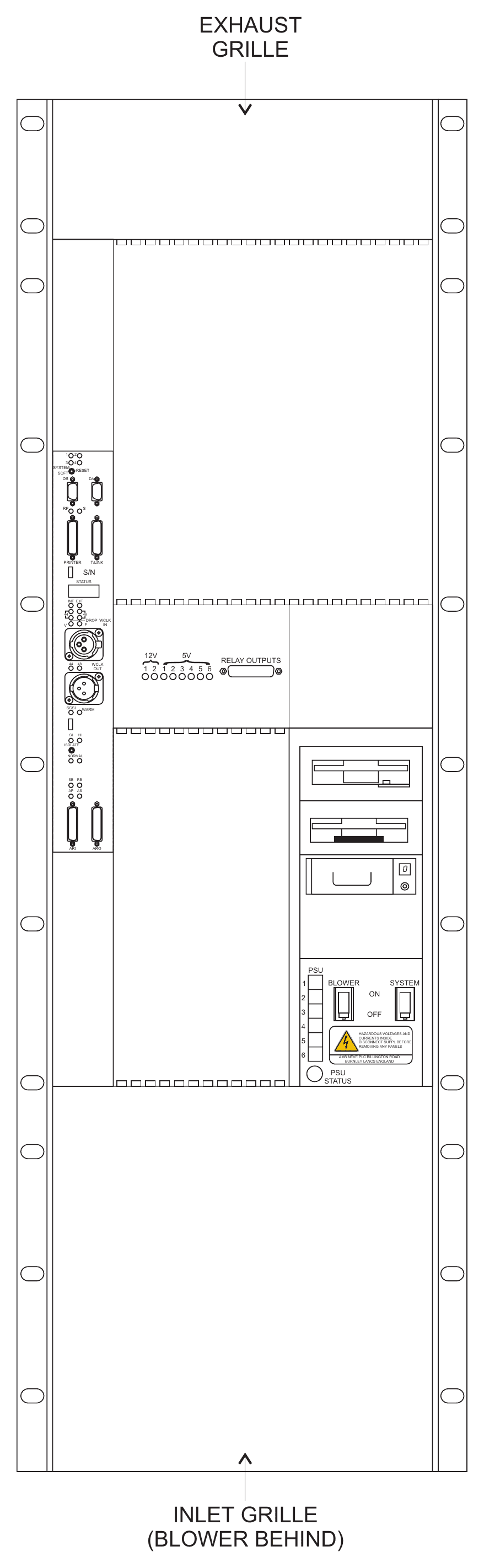
| DSP engine — details | 32-bit floating-point DSP, proprietary 26E6 format · Standard DSP rack: 12 Con cards (16 paths/card), 3 EQ cards (96 EQ), 2 DRC cards (64 compressors/limiters) |
| Architecture | Assignable console: physical strips + AFU (Assignable Facilities Unit); any strip can control any signal path |
| Conversion | 20-bit A/D-D/A converters; 24-bit over MADI; 48 kHz sample rate. · 20-bit converters |
| Surround and immersive | CXS Surround option (late 1990s): 5.1 and 7.1 |
| Sample rate | To be verified (sample rate/resolution not confirmed from a primary source) |
Surface
| Touchscreen | No |
|---|---|
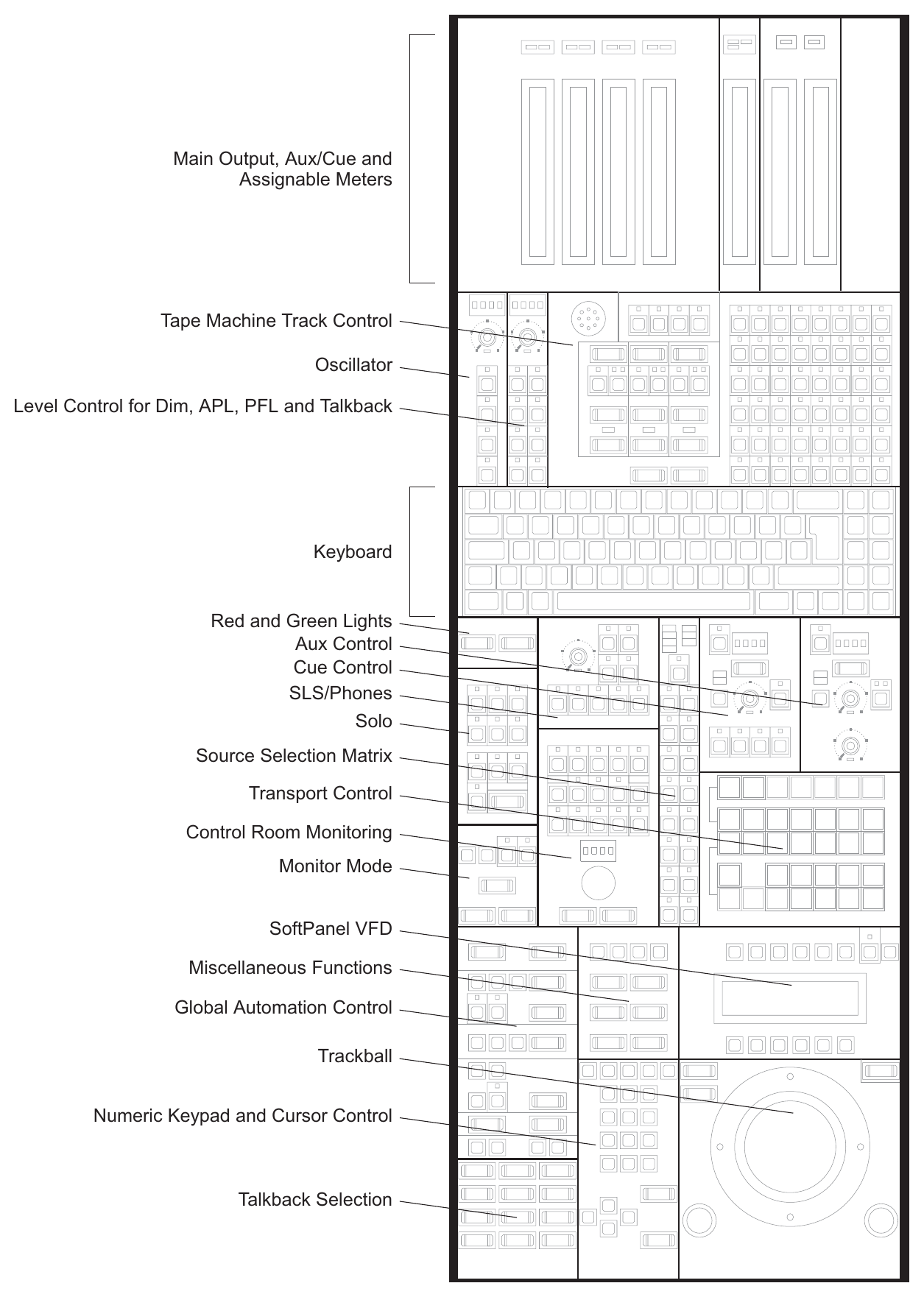
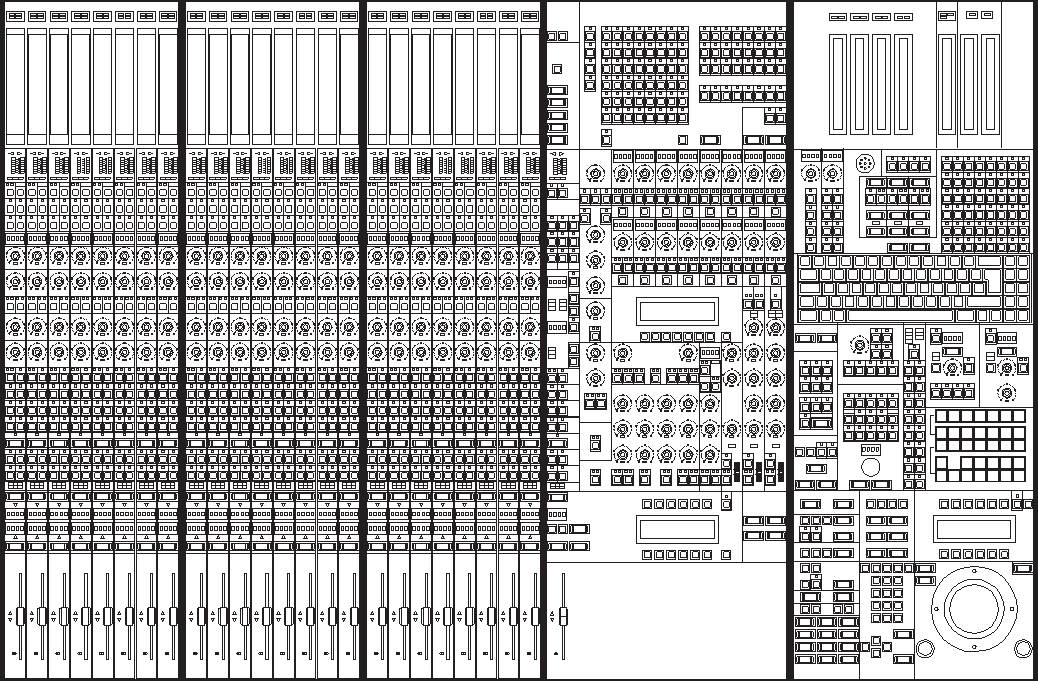
| Control surface | 24 strips minimum, scalable frame · Assignable surface, minimum 24 physical strips |
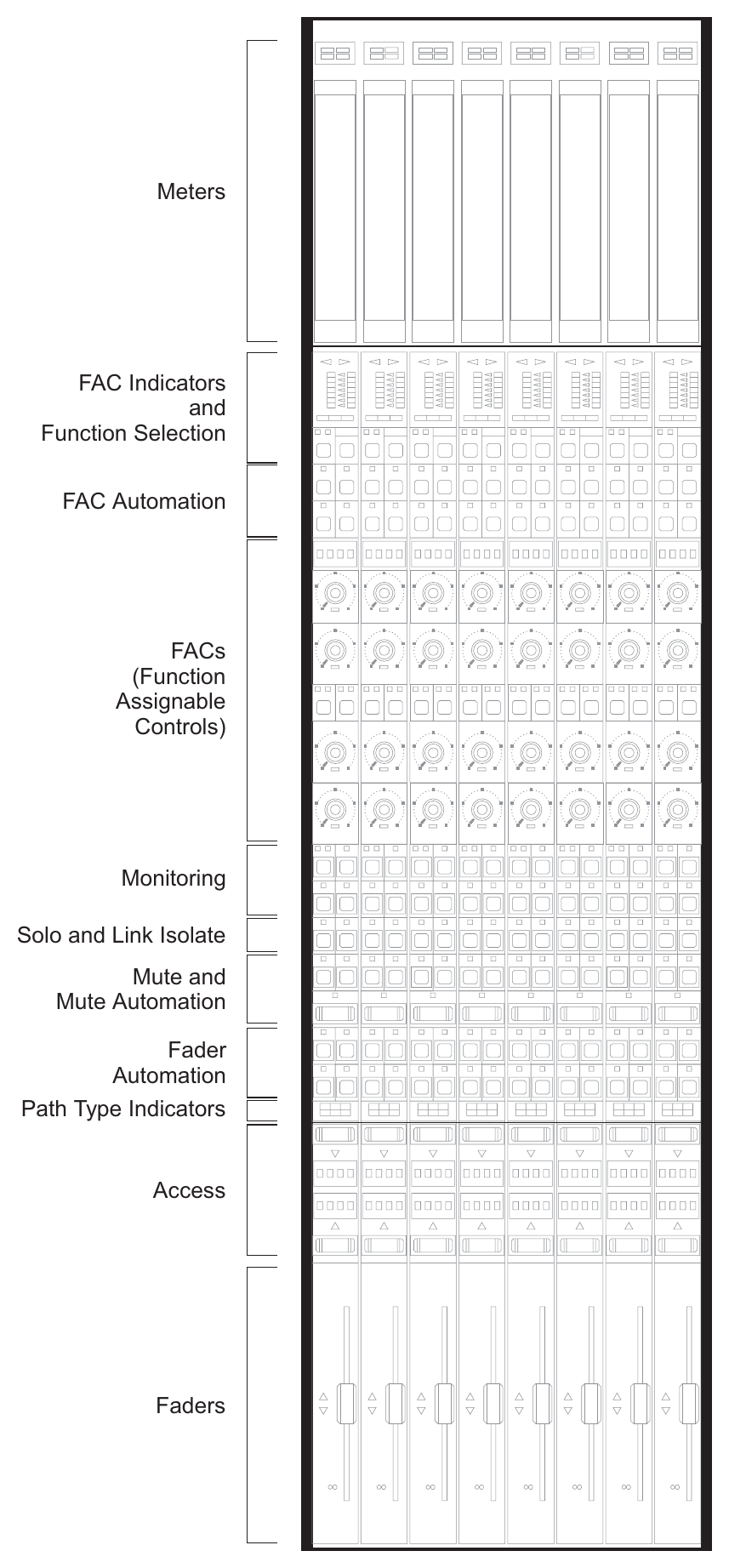
| Faders | Modular surface from 24 to 72 faders (minimum 24 strips; large systems fitted with 72 faders) · 24-strip sections, up to 5 sections for 120 faders |
| Ergonomics | FACs: endless rotary encoders with LED collars, fully assignable |
| Encoders | FAC (Function Assignable Controls) rotaries with LED collars, assignable to gain, aux sends, pan/width or EQ functions |
| Automation | Full dynamic automation (faders, mutes, aux, pan, EQ, dynamics) with parameter storage and recall |
Recording
| Onboard recording | No |
|---|
Networking
| Networking & protocols | MADI |
|---|---|
| Redundant PSU | No |
| Redundant networking | No |
Power
| Power supply | Rack electronics power draw of approximately 5 kW |
|---|
Other
| Variants and configurations | Example configuration (System 112): 32 mic/line inputs, 24 AES/EBU stereo digital I/O, 48 track sends, 64 track returns, 16 auxes, 8 cues, 16 sub-groups, 4 main outputs, 32 repositionable insert points |
|---|---|
| Applications | 105 units manufactured (1993-2001) |
| Awards | About 105 units built |
Strip & details
Rotate your phone to landscape for a better view of the strip.
Rotate your phone to landscape for a better view of the strip.
Rotate your phone to landscape for a better view of the strip.
Rotate your phone to landscape for a better view of the strip.
Rotate your phone to landscape for a better view of the strip.
Rotate your phone to landscape for a better view of the strip.
Diagrams
Rotate your phone to landscape for a better view of the diagram.
Accessories
Other
- CXS Surround option
Surround extension introduced in the late 1990s, giving the Capricorn 5.1 and 7.1 mixing capability.
- DSP / electronics racks
Remote, air-conditioned DSP processing racks (~5 kW).
- CXS surround option
5.1/7.1 surround extension with optional joystick panner.
I/O card
- MADI and AES/EBU I/O cards
MADI and AES/EBU digital I/O cards.
Editorial & artists
Our take
History & design
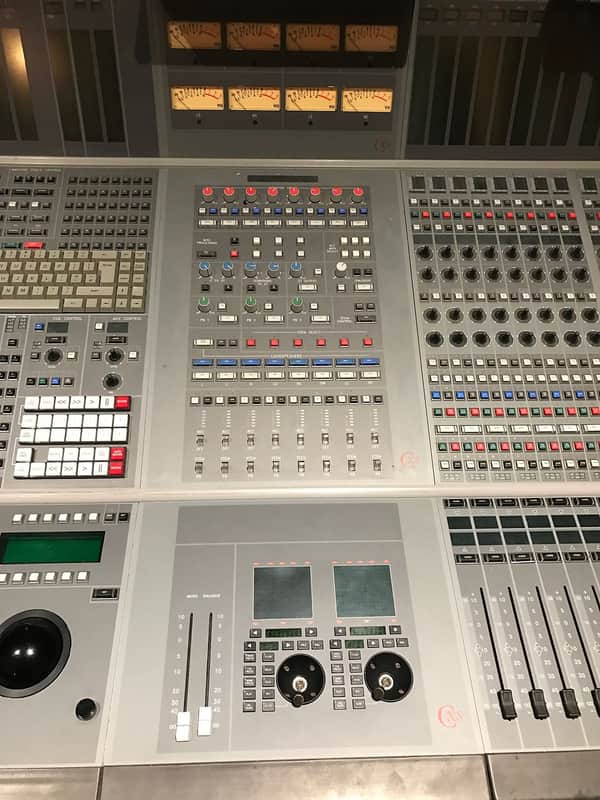
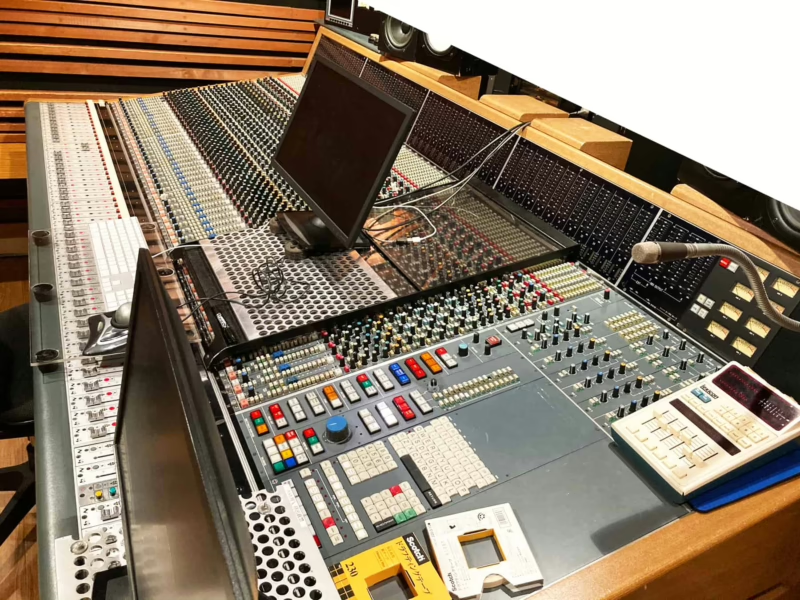
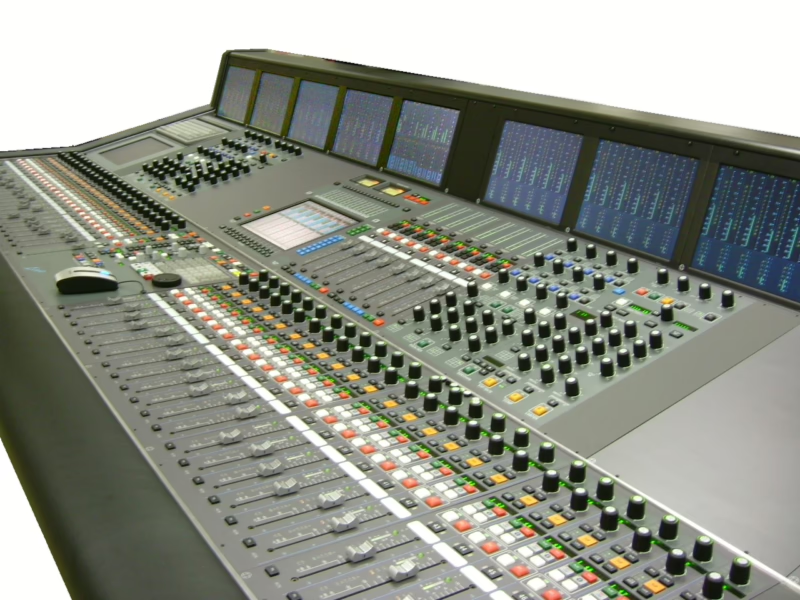
Introduced in 1993, the AMS Neve Capricorn is recognised as the first large-format digital mixing console. Its architecture is built on an assignable surface (AFU) arranged in 24-strip sections, expandable to five sections (120 faders) controlling up to 240 signal paths regardless of the physical surface size.
Processing lives in a modular DSP rack: a standard configuration holds 12 Con cards (16 paths each), 3 EQ cards (96 EQ), 2 DRC dynamics cards (64 compressors/limiters) and 2 MADI I/O cards. The CXS Surround option, added in the late 1990s, brought 5.1 and 7.1 handling. Built until 2001 in about 105 units, the Capricorn served music, broadcast and post-production; AMS Neve still supports it and supplies parts.
- Mark Crabtree — AMS founder, technical director of the AMS Neve group
Notable users
Links
- Manufacturer AMS Neve (manufacturer) ams-neve.com
- Manufacturer AMS Neve — history ams-neve.com
- Manufacturer AMS Neve ams-neve.com
- Press article Audio Masterclass - AMS-Neve Capricorn (series) audiomasterclass.com
- Manufacturer AMS Neve - Honours (Capricorn) ams-neve.com
- Press article Audio Masterclass — AMS-Neve Capricorn (feature) audiomasterclass.com
- Archive Wikipedia - AMS Neve en.wikipedia.org
- Press article AudioMasterClass — Capricorn (detailed review, parts 1-8) audiomasterclass.com
- Press article Mix — World Wide Audio installs a Capricorn (5.1) mixonline.com
- Forum Gearspace — Neve Capricorn discussion gearspace.com
Related consoles
Some merchant links are affiliate links. Purchases may support Digital Mixing at no extra cost.
Documents are archived locally for preservation. Source credited. Takedown requests: [email protected]