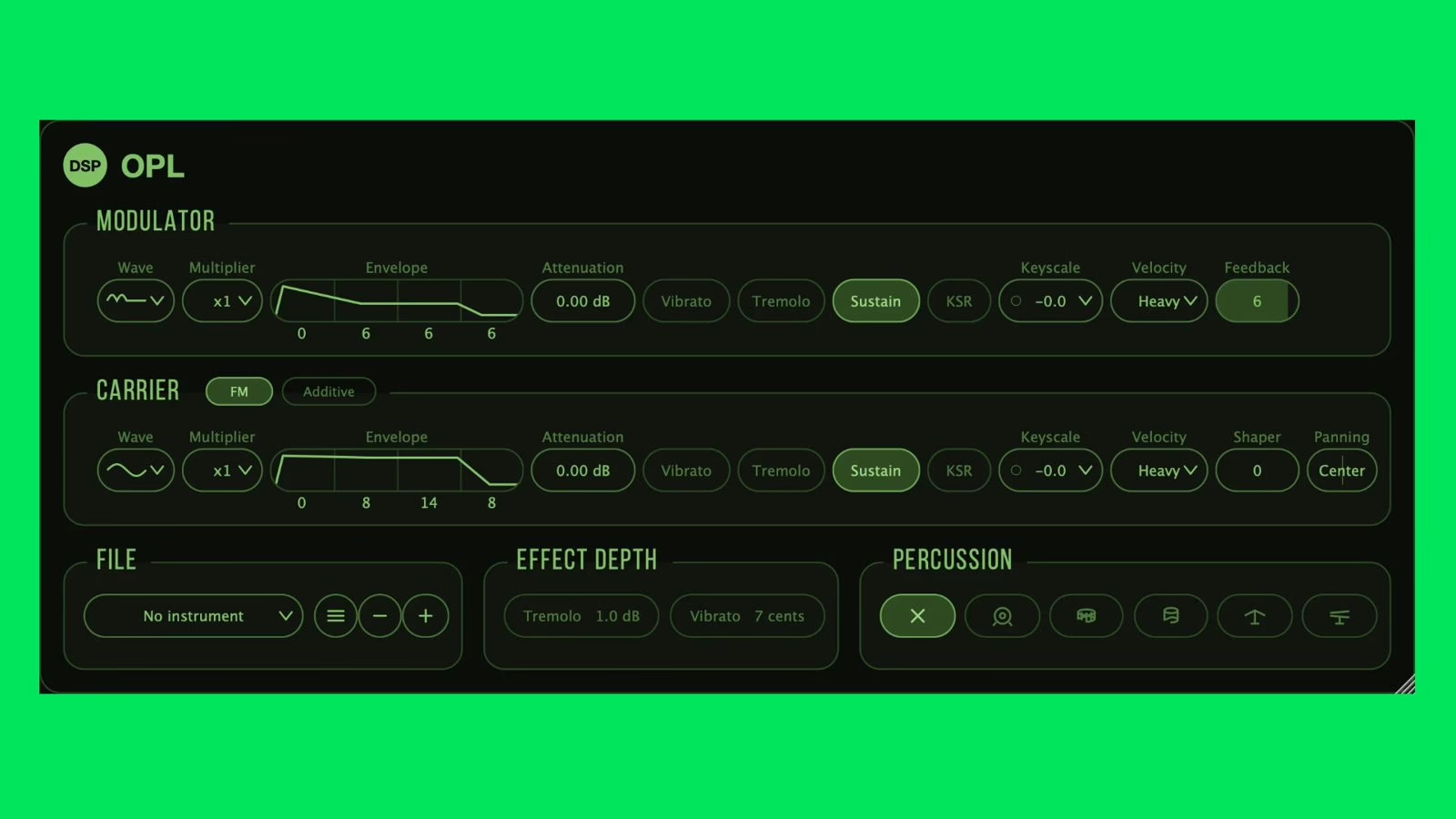
discoDSP pushes its OPL FM synth to version 3.0, a ground-up rewrite that drops the old OPL2 emulation for Yamaha’s YMF262 chip, better known as OPL3. Eight waveforms per operator, up to 16x oversampling and a resolution-independent GUI: that unmistakable ’90s soundcard tone gets sharper without losing its bite.
From OPL2 to OPL3: a new chip, not a facelift
To grasp what 3.0 really changes, remember what OPL was. Until now, discoDSP’s plugin emulated the Yamaha YM3812 — the OPL2 — the FM synthesis chip behind AdLib cards and the earliest Sound Blasters of the late 1980s. That’s the sound of DOS game soundtracks: metallic FM stabs and that slightly shrill synth bass a whole generation ties to their first PC. Instantly recognizable, but limited: four waveforms per operator and a modest sonic resolution.
Version 3.0 moves the entire engine to the YMF262, the OPL3, the chip that powered the Sound Blaster Pro 2 and Sound Blaster 16. This isn’t cosmetic: it’s a new synthesis core. discoDSP describes a full rewrite of the engine, the register layer, parameter handling and the interface. It’s still old-school two-operator FM, but with the wider OPL3 palette.
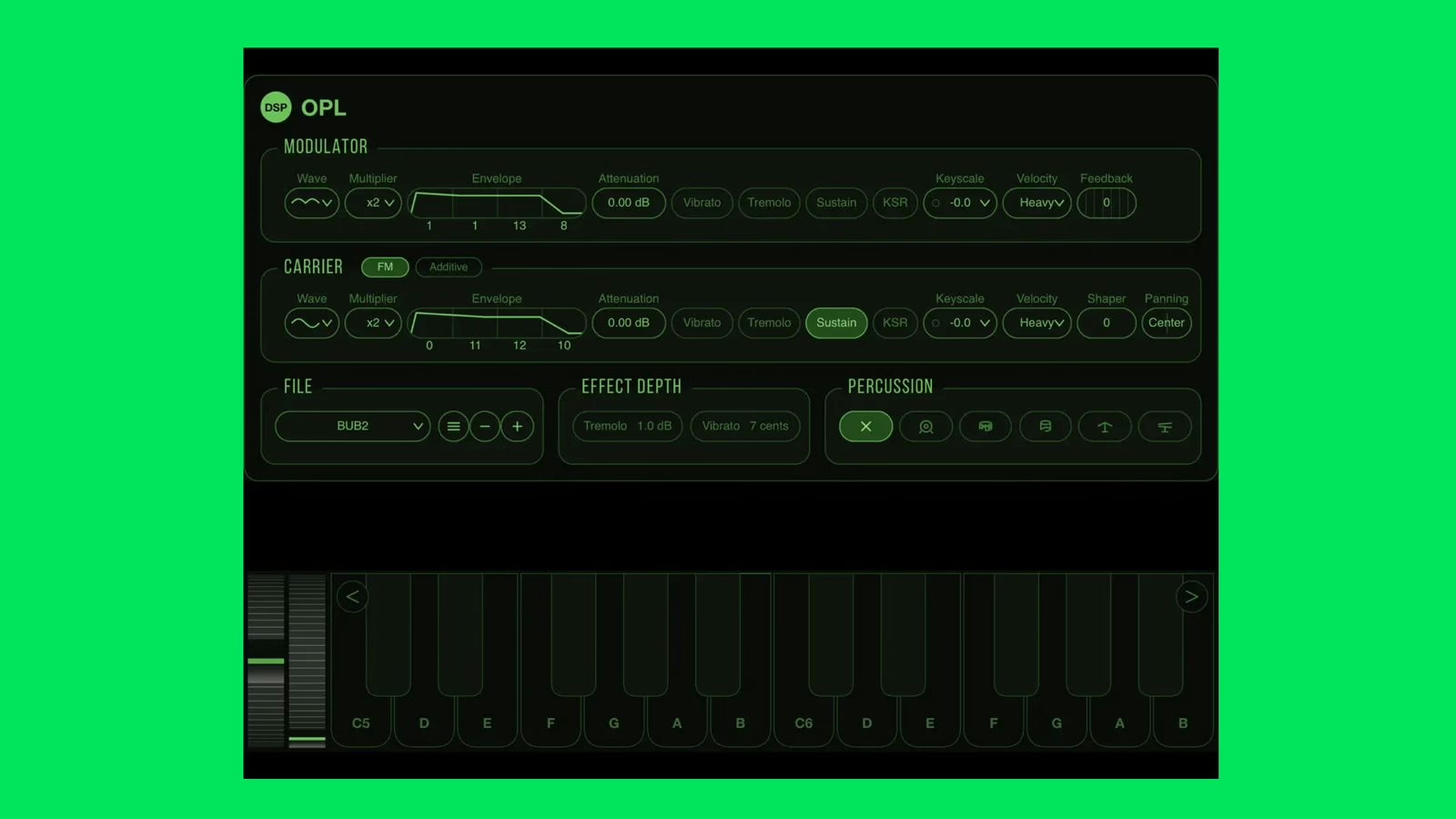
What 3.0 actually adds
The most audible gain is a single number: eight waveforms per operator, up from four. On top of the classic sine, half-sine and rectified sine, OPL3 adds more jagged, harmonically richer variants that unlock timbres the OPL2 simply couldn’t reach. In FM, doubling the operators’ raw material doubles the playground.
The second big move is up to 16x oversampling applied to the chip itself. FM produces a lot of aliasing as soon as you push modulation indices, and it was exactly in those extreme settings that OPL2 turned ugly in an uncontrolled way. Oversampling the compute core pushes that aliasing back: you keep FM’s bite but choose your grain instead of suffering it. Just as welcome, pitch, envelope timing and key scaling now stay constant across every setting — the kind of reliability chip emulations often lacked.
- Vector-drawn interface, resolution-independent, in a freely resizable window with a zoom menu — no more fixed-size bitmaps.
- Live voice activity shown on the envelope displays, handy for tracking what’s actually sounding.
- Separate bounce oversampling: offline renders use a linear-phase filter and report their latency, so an export matches exactly what you monitored.
Who it’s for
It’s tempting to file OPL under chiptune nostalgia, and it does nail a retro game soundtrack or a shrill 1991 FM pad. But that sells it short. Two-operator FM is still a superb source of bells, percussive basses, brittle electric keys and metallic textures that subtractive synthesis can’t make. With richer waveforms and finally tameable aliasing, 3.0 becomes a genuine little FM instrument for modern productions, not just a memory machine.
On pricing, the desktop version stays at $49 — and 3.0 is a free update for existing owners, which is rare for a rewrite this deep. It ships as VST, VST3 and AU on macOS (Apple Silicon and Intel), Windows and Linux, with an iOS AUv3 build around $9.99 that now includes an onboard MIDI keyboard.
I’ve been all-in on the box for years, and projects like this show why: emulating a chip cycle-accurately, with oversampling that was unthinkable back then, delivers authentic vintage character and a level of control the original hardware never had. OPL3 grain was never an audiophile fantasy — it’s a color, and a well-restored color beats a temperamental second-hand chip every time.
Related synth reading: the East Coast vs West Coast schools of synthesis, the 1977 Clavinet D6 turned into a Rhodes plugin, the five free plugins Steinberg gave away for 30 years of VST, and our roundup of free software synths worth installing now.