Some anniversaries speak to an entire profession. Back in 1996, Steinberg quietly slipped a technology called VST, for Virtual Studio Technology, into Cubase. Thirty years on, those three letters have become the lingua franca of music production: almost every effect and instrument plugin on the planet speaks VST. To mark the date, Steinberg is re-releasing five of its very first plugins for free, rebuilt for today’s workstations.
1996-2026: thirty years that changed everything
Before VST, processing a signal inside the computer meant proprietary DSP cards, expensive and closed. By opening a format any developer could adopt, Steinberg blew the lock off: suddenly a reverb, a compressor or a synth could run on the host CPU and, crucially, travel from one program to another. Paired with the arrival of ASIO for low latency, VST made the idea of an all-software studio credible.
I lived that shift from the inside, as studios gradually shelved their effects racks for a screen and a mouse. The early “digital sound” got plenty of ridicule, often deservedly. But history has settled the argument: fully in-the-box work is now perfectly viable, and this four-letter acronym is a big part of why.
Five classics rebuilt as VST3
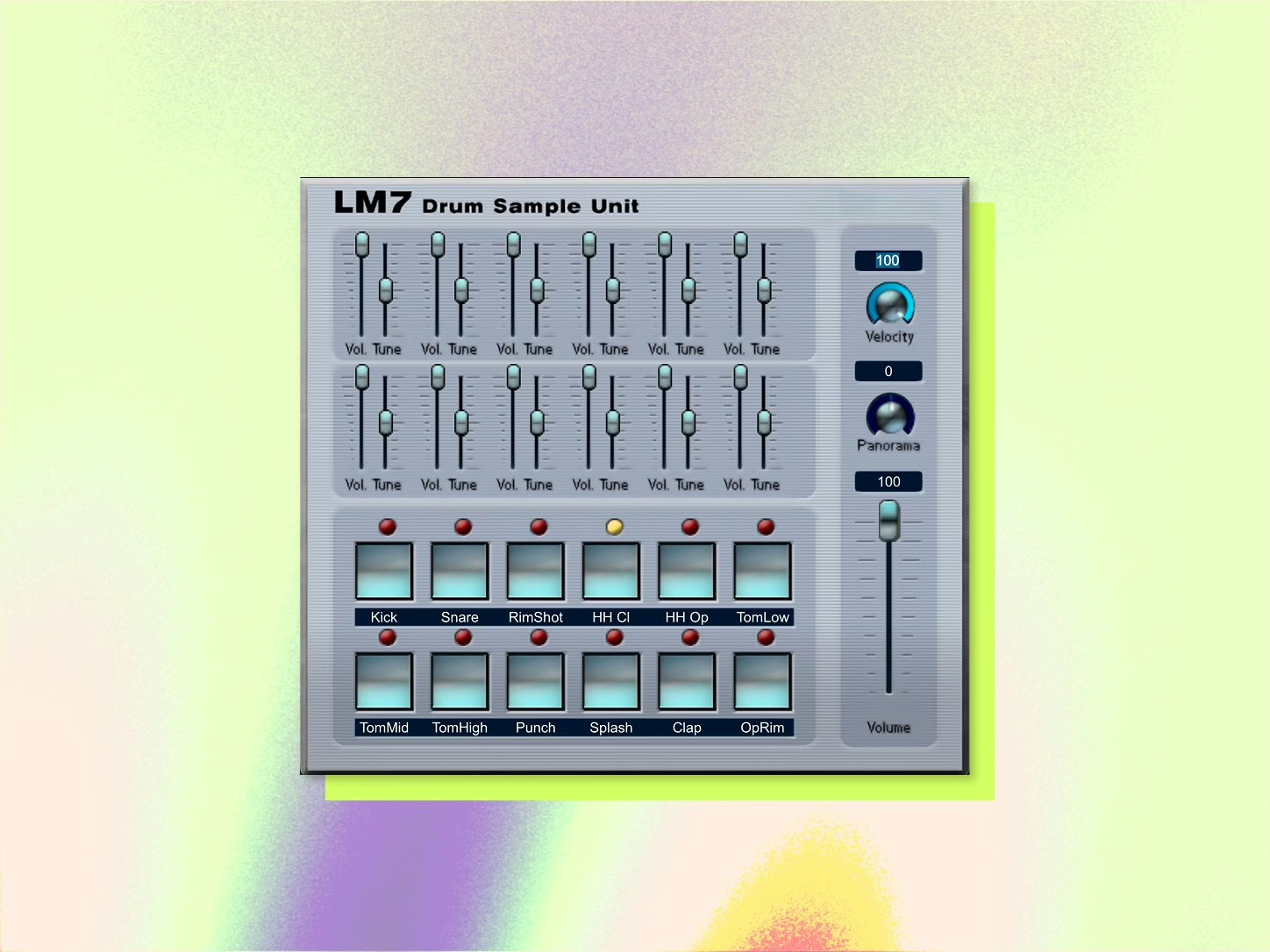
The Steinberg Classics collection gathers five instruments and effects that shaped the format’s early years, updated to run as 64-bit VST3 on macOS and Windows, and therefore inside modern DAWs. The most iconic is Neon, which appeared in 1999: this little two-oscillator subtractive synth was the first VST instrument ever, living proof that a synth could exist without a single circuit.
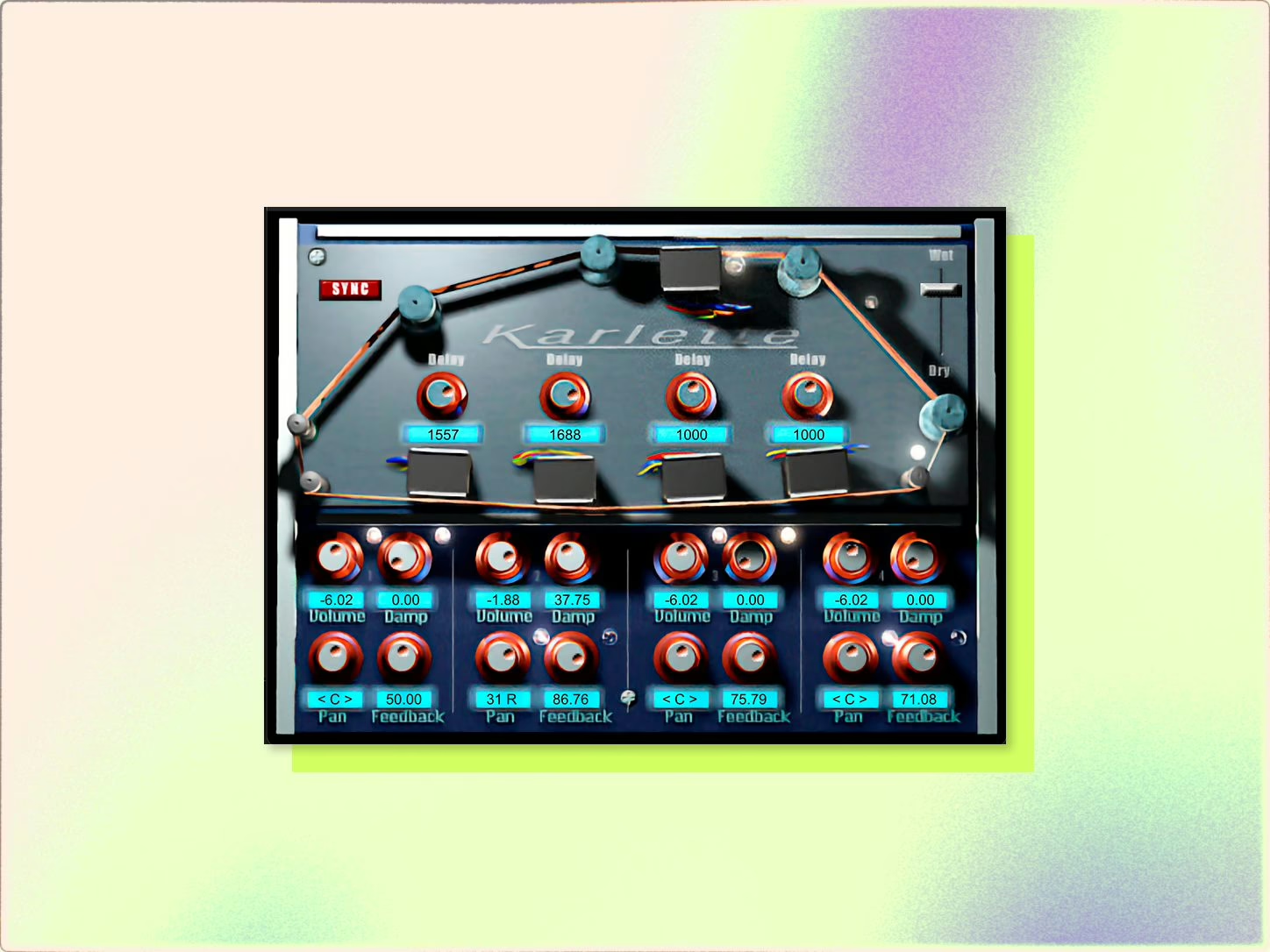
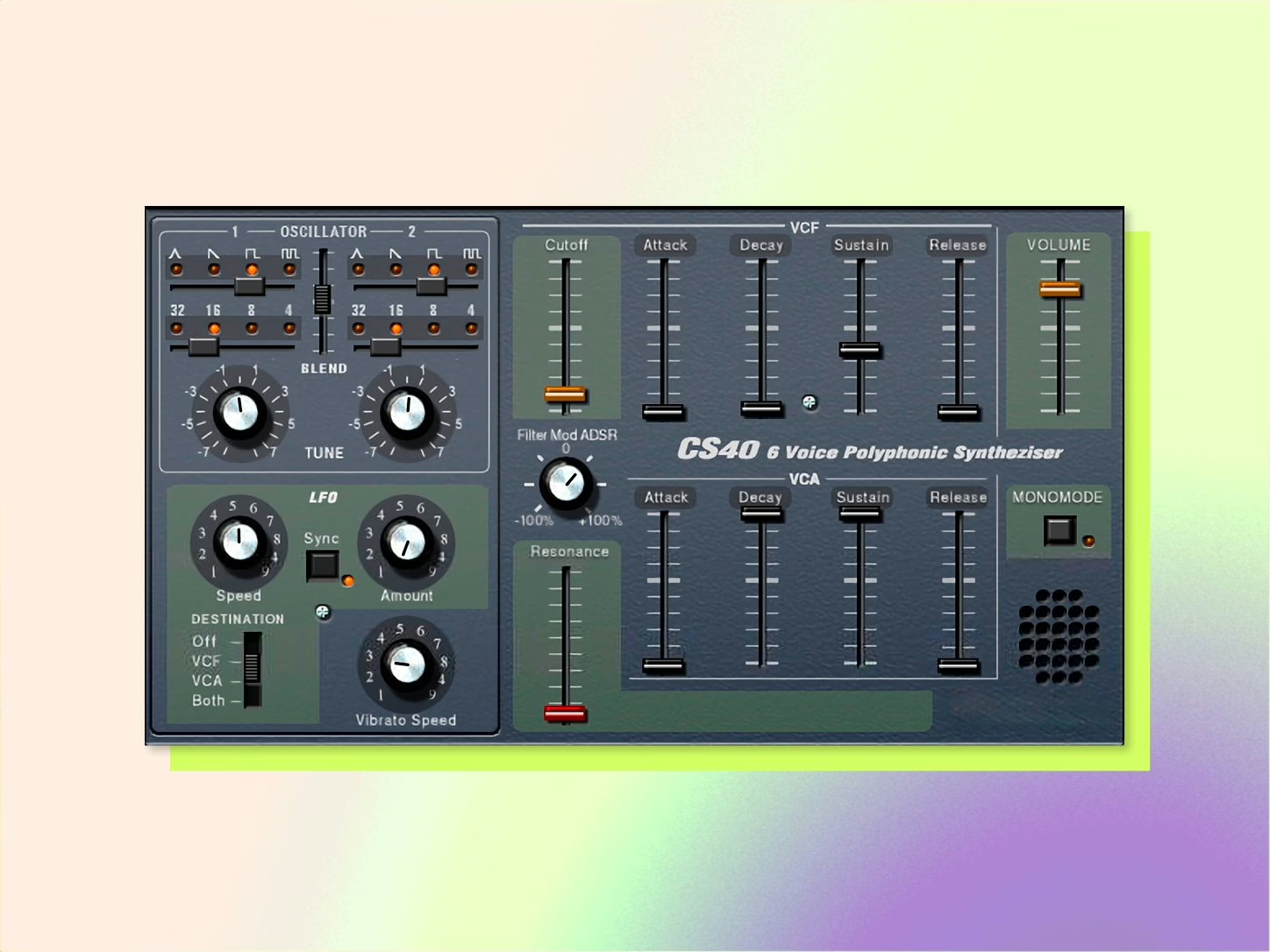
Alongside it, VB-1 modelled an electric bass with pickup and pick-position controls, wrapped in a graphic interface that stuck in the memory. CS-40 adds a second polyphonic synth to the set, LM7 revives the era’s sample-based drum machine, and Karlette emulates a four-head tape echo, with the grain of instability people still chase today. None of these plugins will transform a mix in 2026; the point lies elsewhere.
HALion 7.5 and an anniversary sale
Steinberg is using the occasion to flag another milestone: HALion turns 25. The in-house sampler moves to version 7.5, offered free to existing licence holders, and the company is running a promotion from 4 to 24 August, with advertised discounts of 50 to 60% across much of its virtual-instrument catalogue.
This is celebration and loyalty-building more than technical revolution. But for anyone getting into computer-based production, or wanting to understand where their working environment came from, downloading Neon and opening it in a project is genuinely instructive. It’s also a reminder that Steinberg keeps investing in advanced processing, as the recent SpectraLayers 13 release showed.
My take
Free is always welcome, and these five plugins cost nothing but a download. Don’t lean on them to finish a mix: they’re museum pieces, not production tools. Their real value is educational and historical. Rebuilding an instrument like the MKS-80 as a VST3 today takes an entirely different order of power; measuring how far we’ve come since Neon is exactly why my main workstation is now, unapologetically, a computer.