


Tascam TM-D8000
Tascam's first digital console, 52-input in-line desk for DTRS/DA-88 studios (Japan, 1997)
Description
Technical
Specifications
Inputs / Outputs
| Total inputs | 52 |
|---|---|
| Mic inputs | 16 |
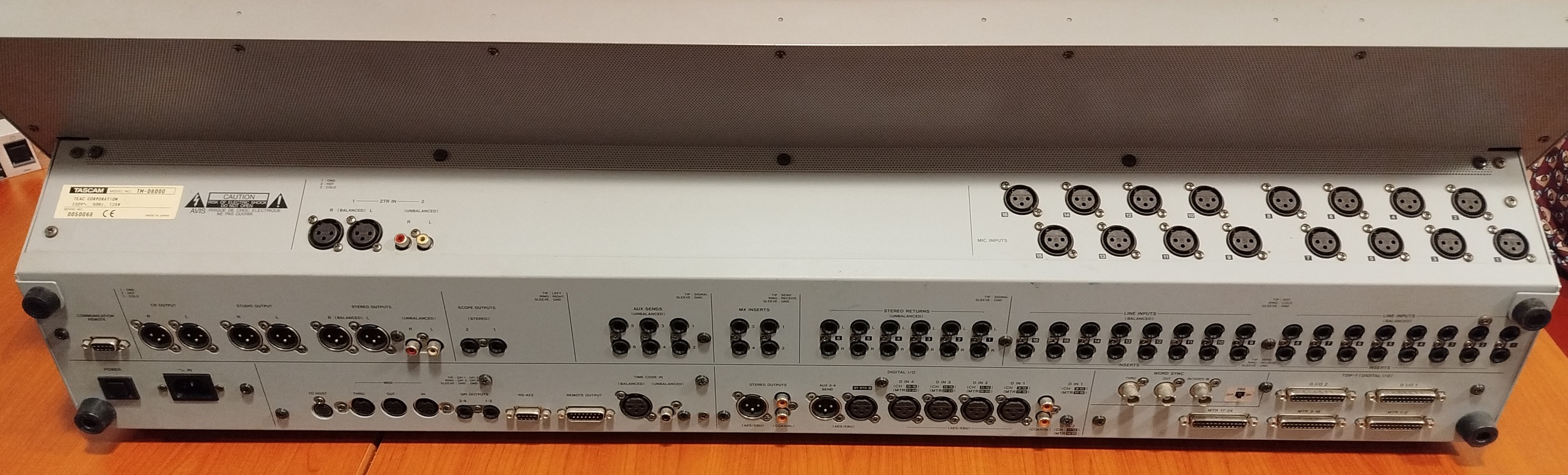
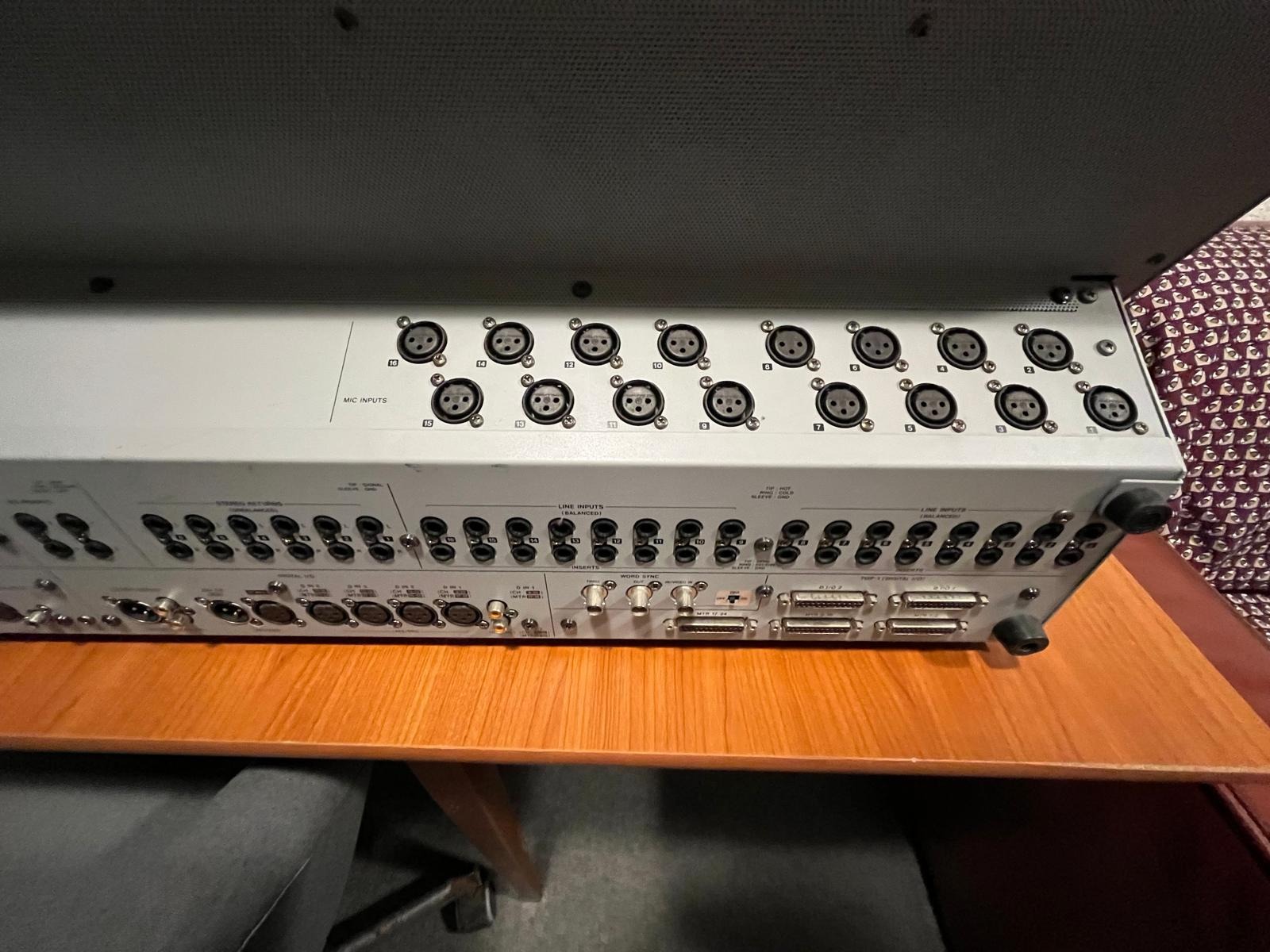
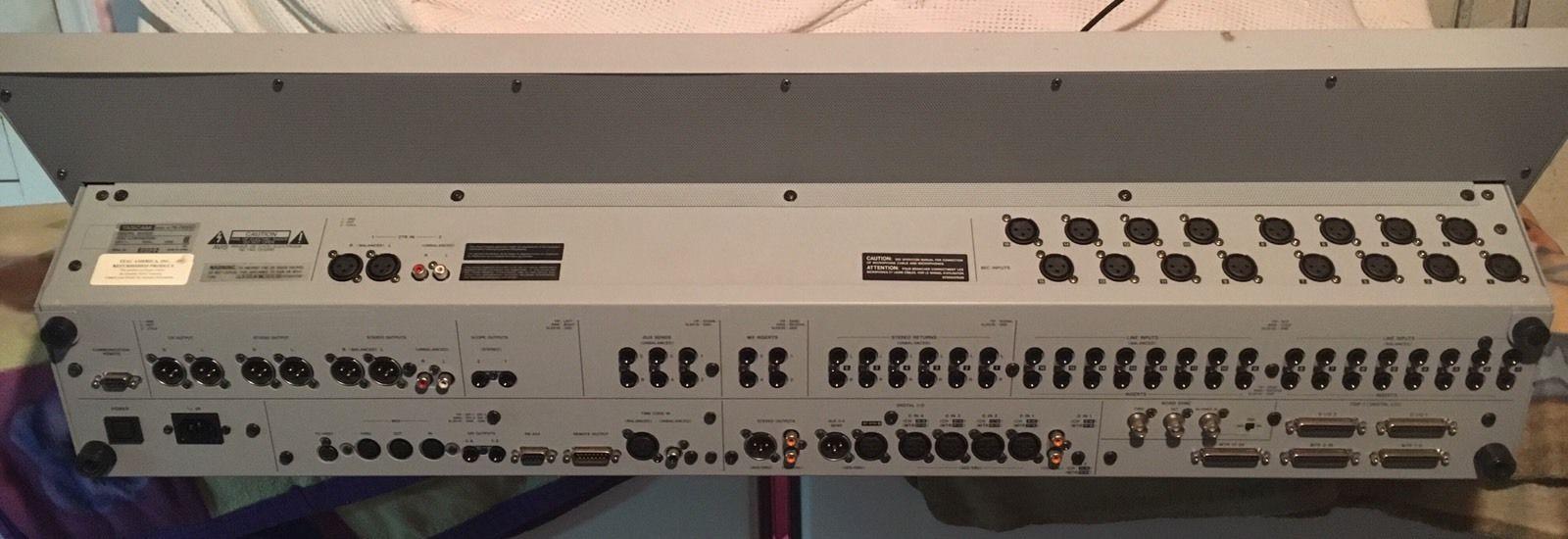
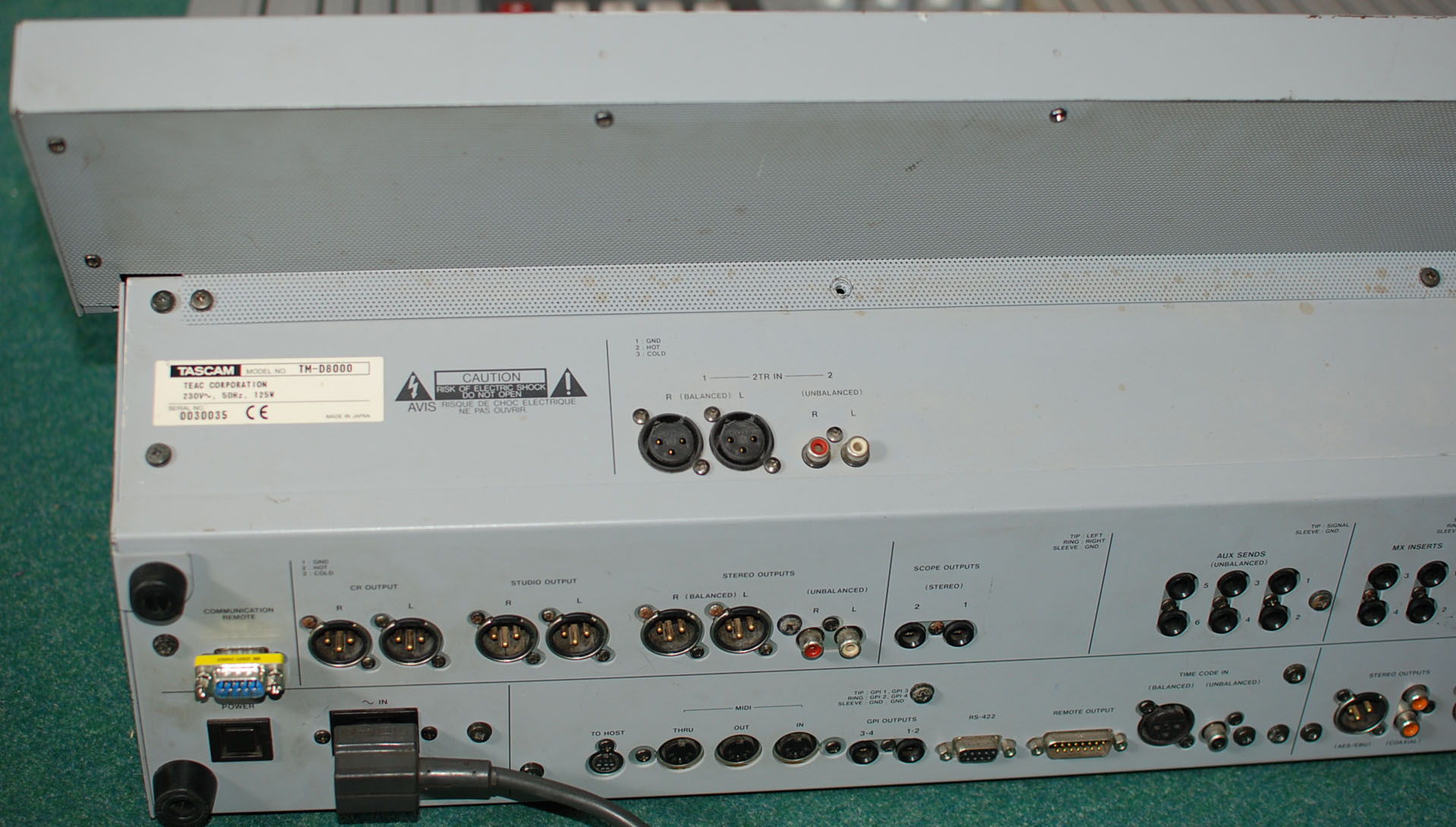
| Inputs / outputs | 16 analog inputs (jack or XLR, each with an insert); 5 TDIF-1 connectors (25-pin D-sub); 4 assignable stereo AES/EBU inputs (XLR); 2 S/PDIF inputs (RCA). No ADAT interface. |
Processing
| Mix buses | 8 |
|---|---|
| Aux sends | 6 |
| DSP engine | Tascam digital processing (the brand's first digital console) |
| Max sample rate | 48 kHz |
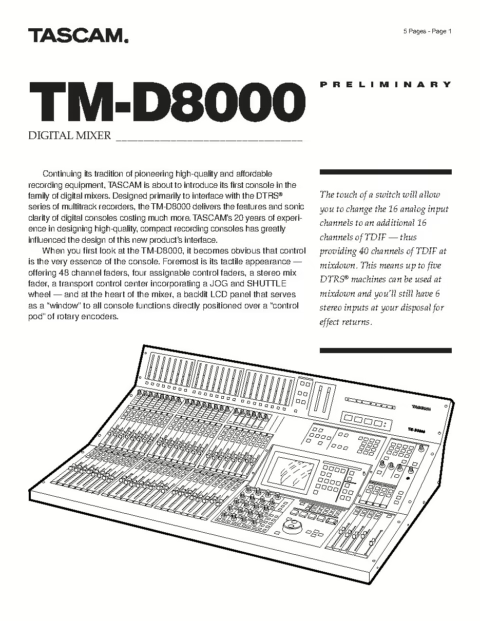
| Architecture | Tascam's first digital console, of in-line format, designed to interface DTRS multitrack recorders (DA-88/DA-98) via the TDIF format. A single button switches the 16 analog inputs to 16 extra TDIF channels, i.e. up to 40 TDIF channels at mixdown (up to 5 DTRS machines) while keeping 6 stereo inputs for effect returns. |
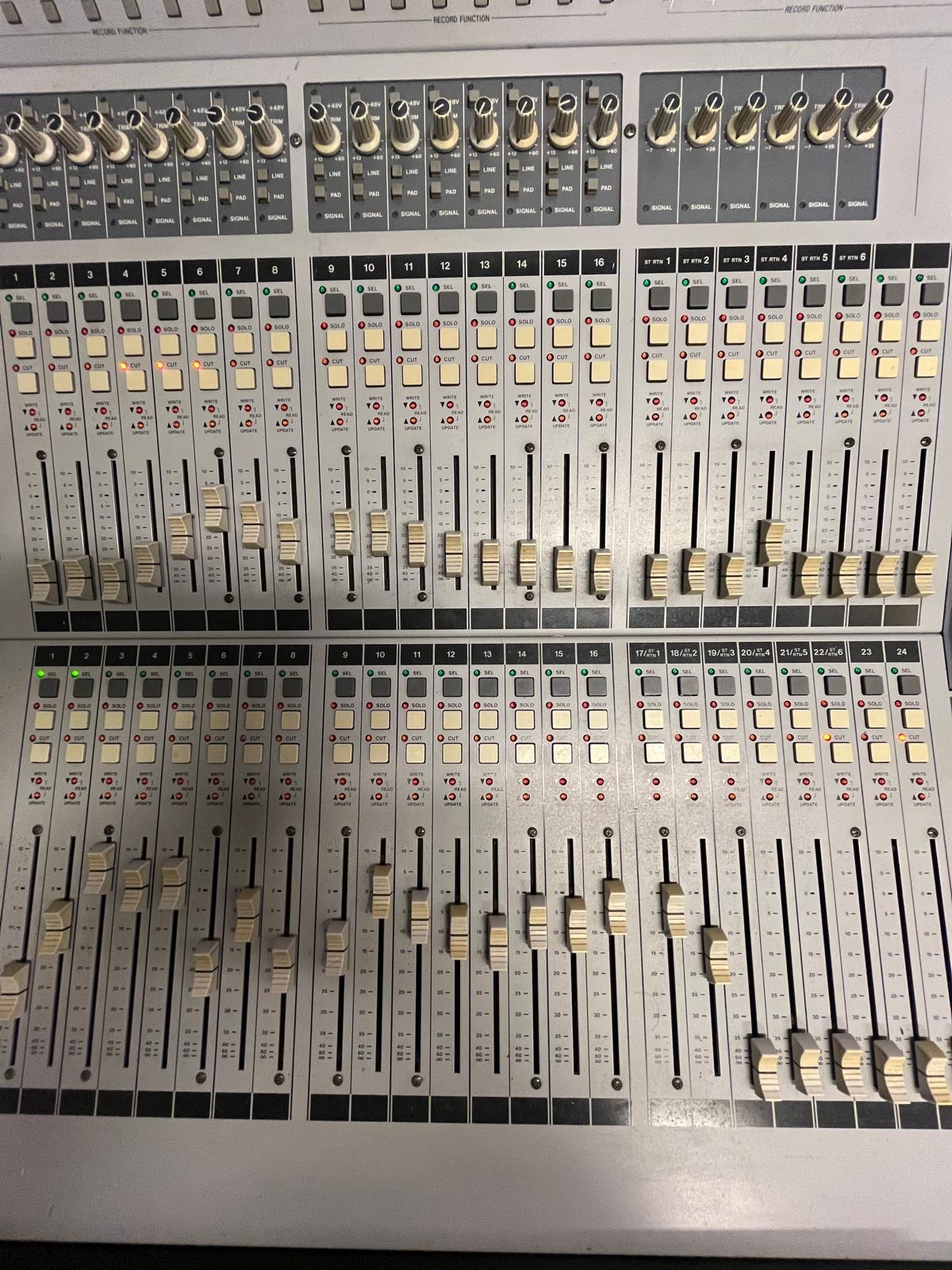
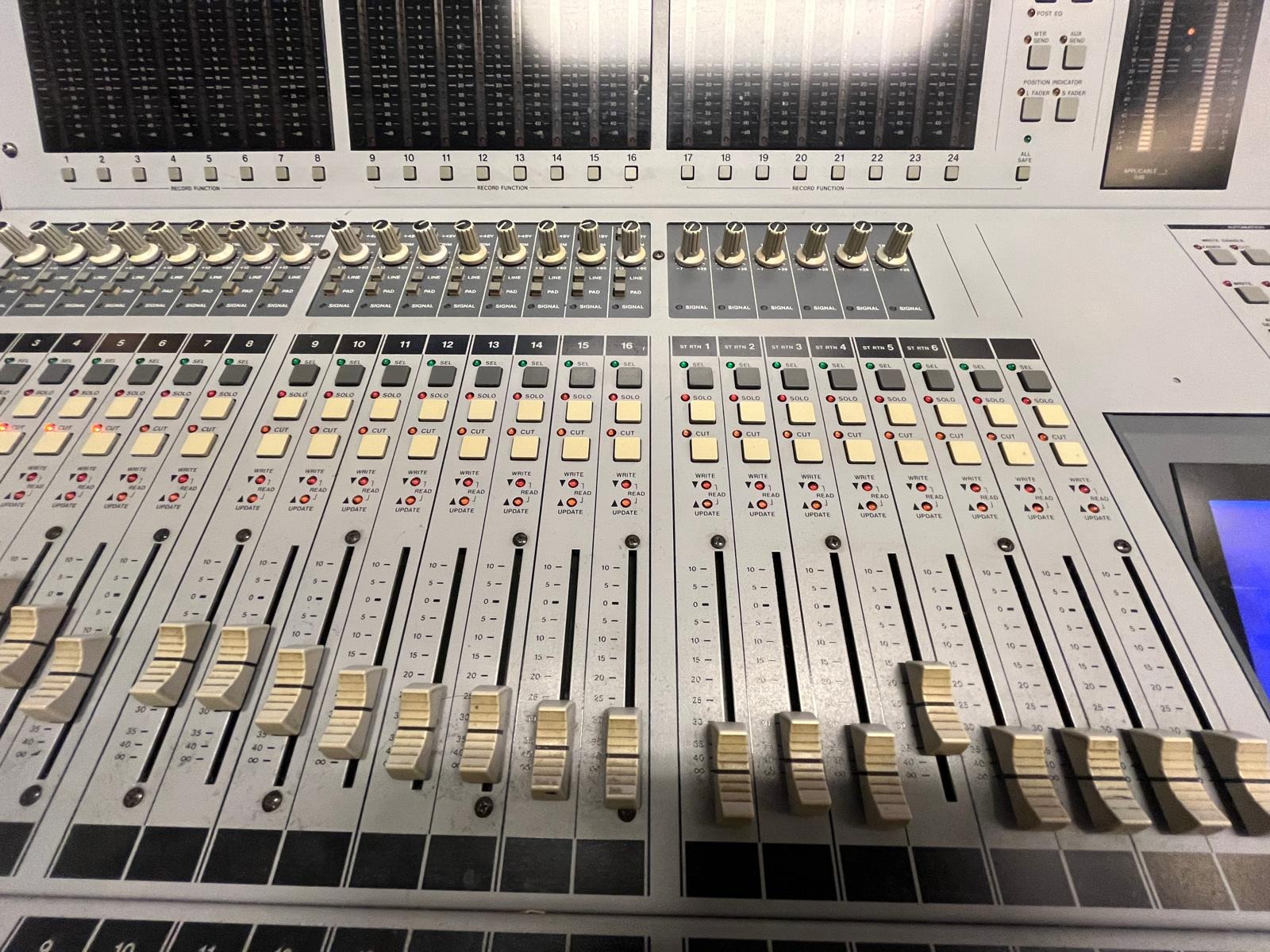
| Channels | 16 mic/line channels + 6 stereo line channels + 24 tape returns = 52 inputs; 8 multitrack buses + 6 mono aux + stereo master; 16 direct outs (first 16 channels). |
| EQ | 4-band parametric EQ and delay (up to ~180 ms) on every channel and tape return, EQ on the stereo master, plus 8 dynamics processors (compressor/limiter/gate) freely assignable (patchable) to any channel. |
| Conversion | Converter resolution not specified by the manufacturer; the Sound On Sound review presumes DTRS-type 16-bit converters (to be verified). 44.1/48 kHz sampling. |
Surface
| Physical faders | 48 |
|---|---|
| Motorized faders | No |
| Touchscreen | No |
| Faders | 48 channel faders (24 strips with dual faders: 60 mm upper, 100 mm lower) + 4 assignable control faders + 1 stereo mix fader. No motorized faders (VCA-style approach). |
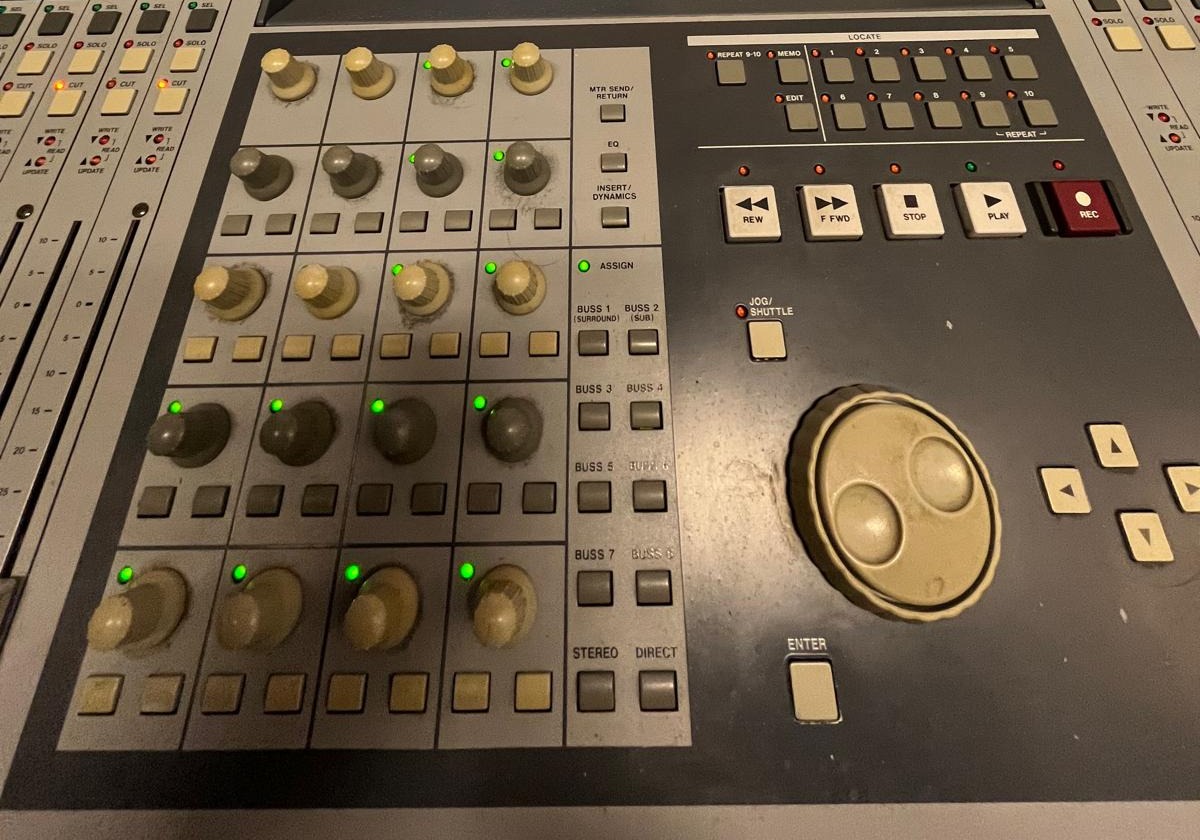
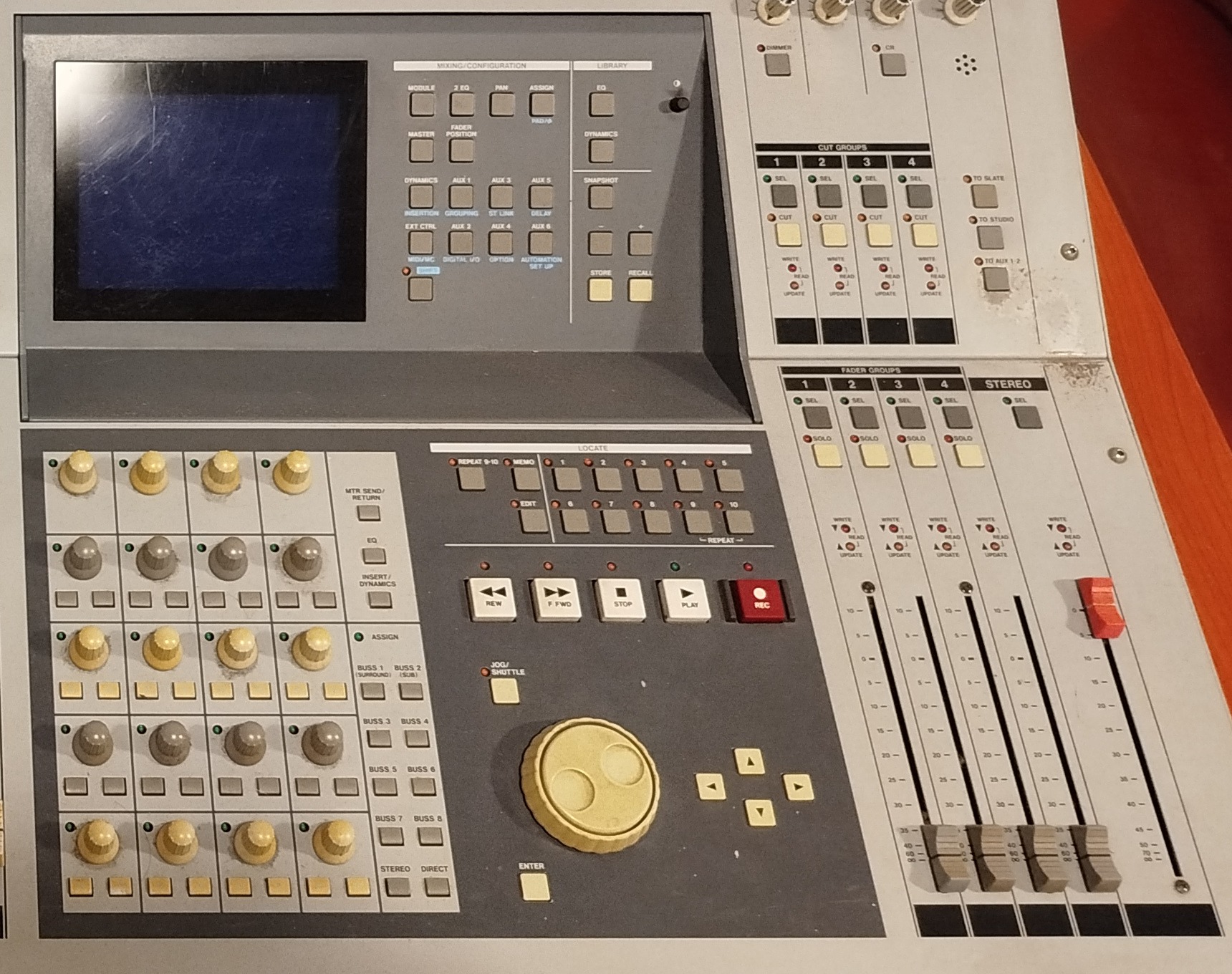
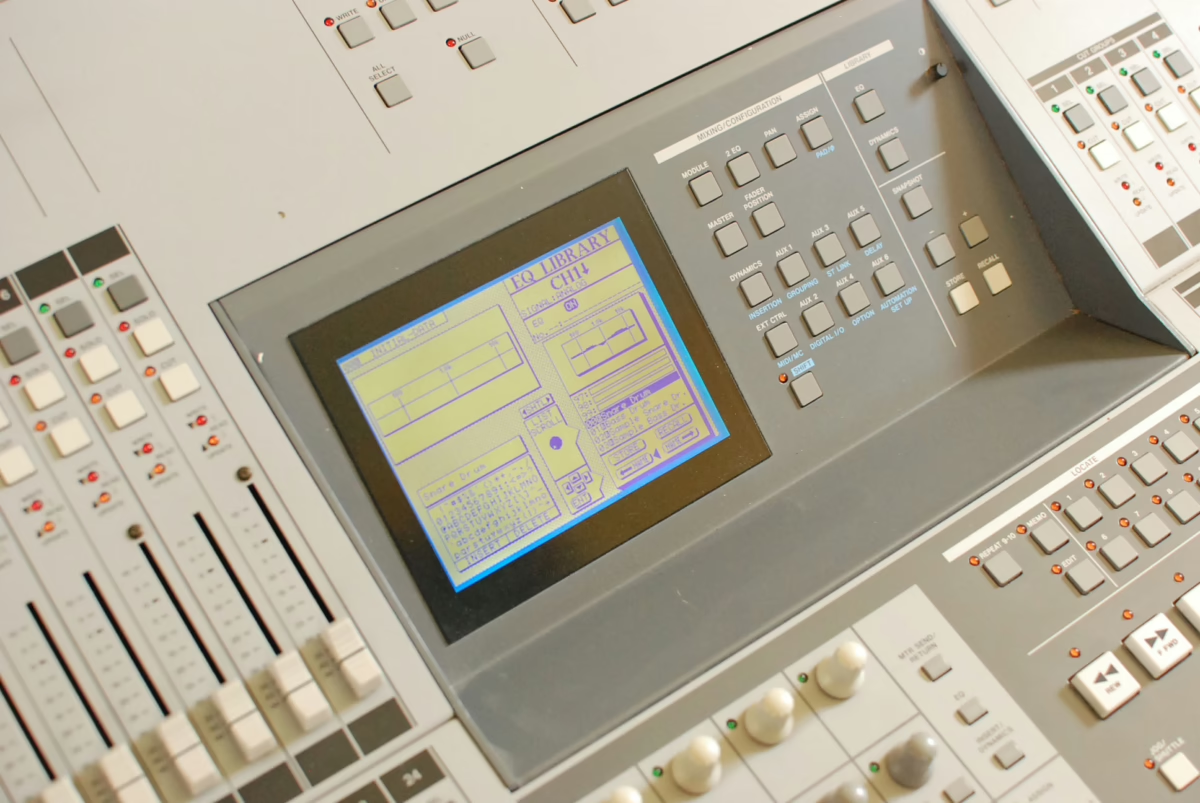
| Ergonomics | Backlit LCD screen acting as a “window” onto all functions, positioned above a rotary-encoder “control pod”; transport centre with a JOG/SHUTTLE wheel for machine and video control. |
| Automation | 4 fader groups and 4 mute groups; snapshot automation (internal) and dynamic automation via an external computer. |
Recording
| Onboard recording | No |
|---|
Networking
| Networking & protocols | AES/EBU |
|---|---|
| Redundant PSU | No |
| Redundant networking | No |
Physical
| Width | 1,020 mm |
|---|---|
| Depth | 717 mm |
| Height | 315 mm |
| Weight | 40 kg |
Strip & details
Rotate your phone to landscape for a better view of the strip.
Rotate your phone to landscape for a better view of the strip.
Rotate your phone to landscape for a better view of the strip.
Rotate your phone to landscape for a better view of the strip.
Rotate your phone to landscape for a better view of the strip.
Rotate your phone to landscape for a better view of the strip.
Rotate your phone to landscape for a better view of the strip.
Rotate your phone to landscape for a better view of the strip.
Diagrams
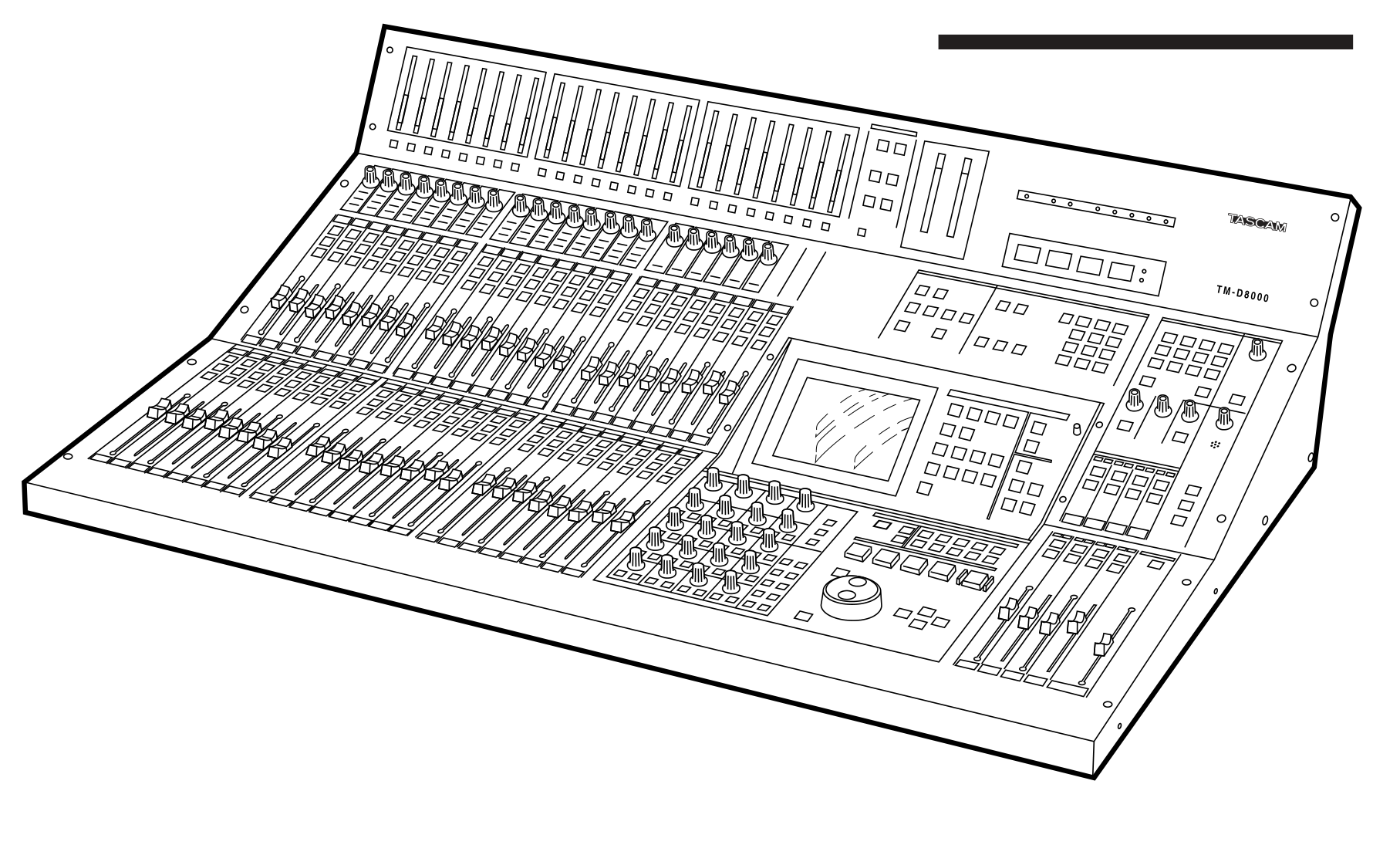
Rotate your phone to landscape for a better view of the diagram.
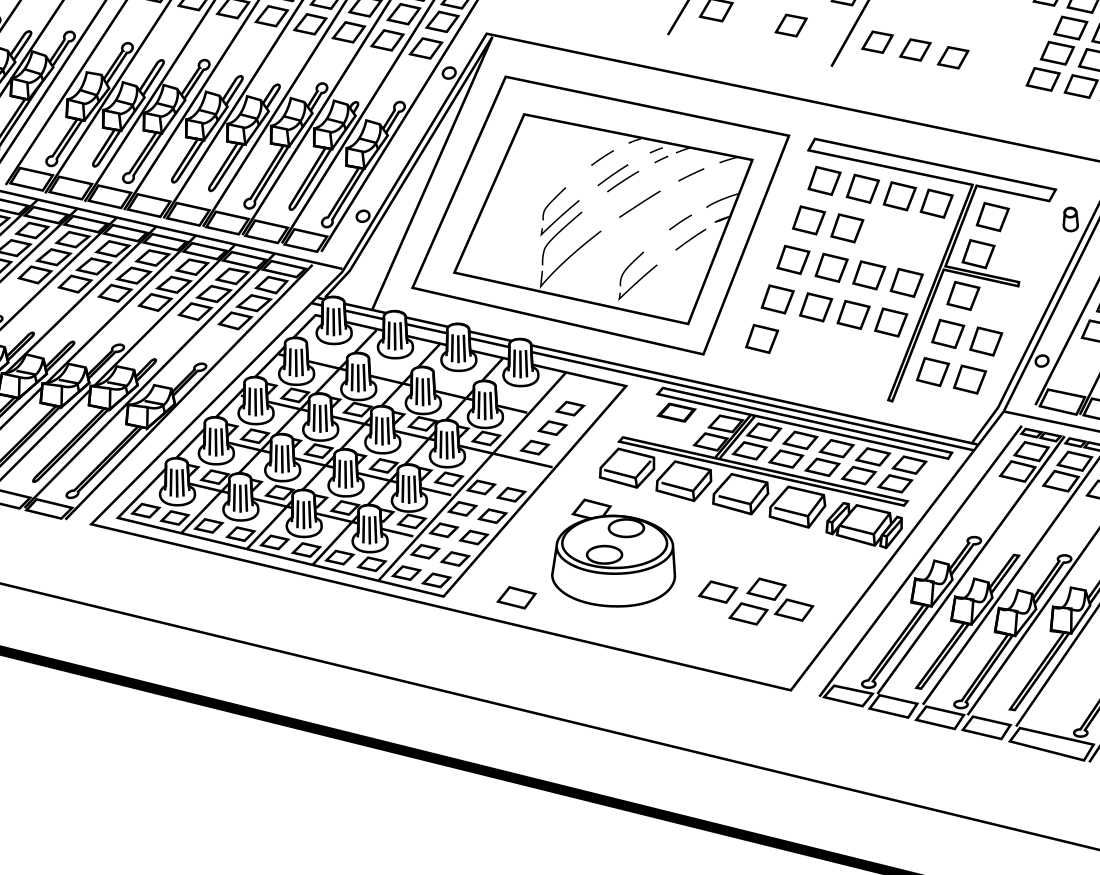
Rotate your phone to landscape for a better view of the diagram.
Software
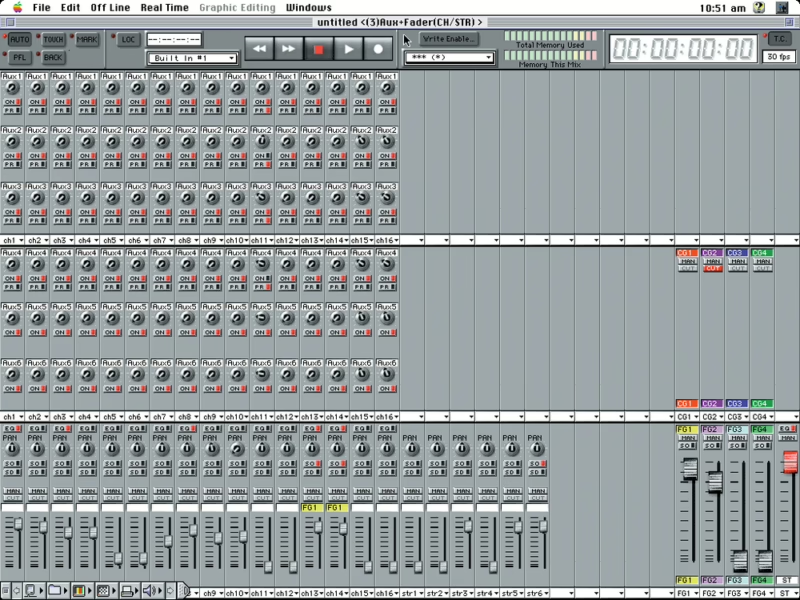
 Logiciel de contrôle TM-D8000 (Mac OS)
Other screenshots
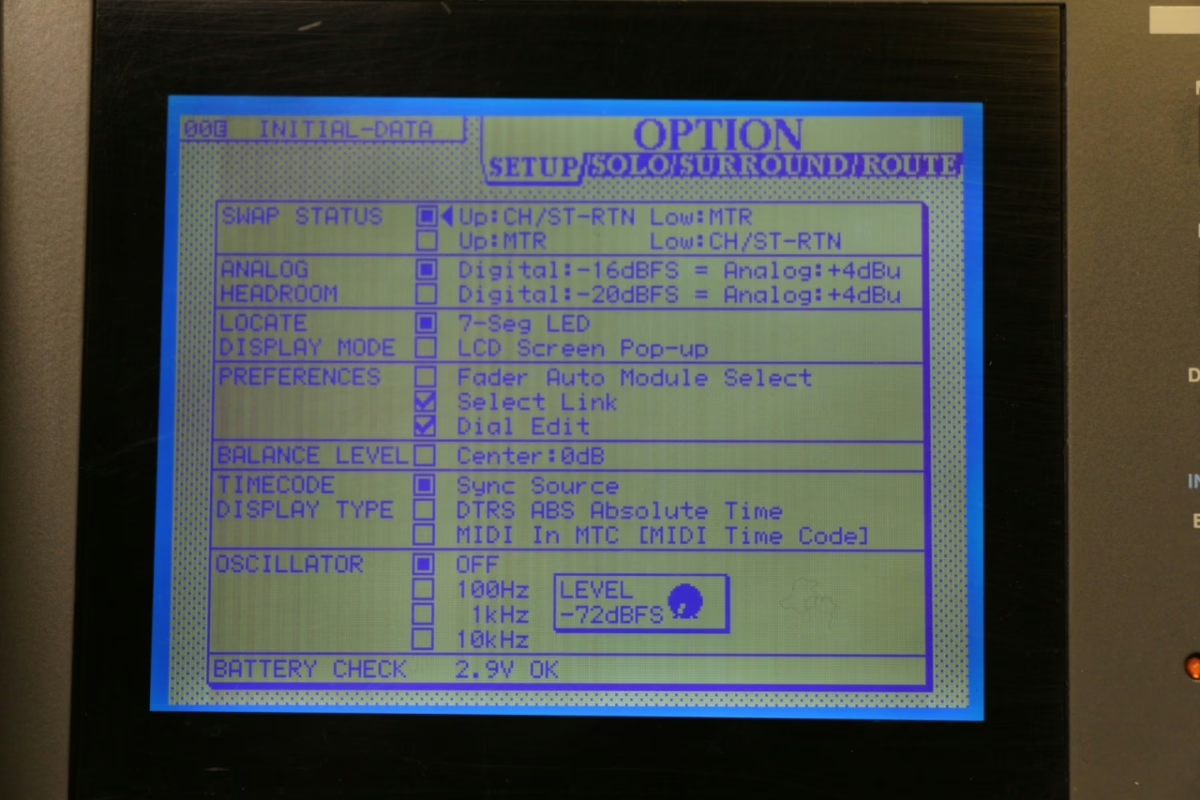
Documents
Editorial & artists
Our take
History & design
Links
Related consoles
Some merchant links are affiliate links. Purchases may support Digital Mixing at no extra cost.
Documents are archived locally for preservation. Source credited. Takedown requests: [email protected]